
Description
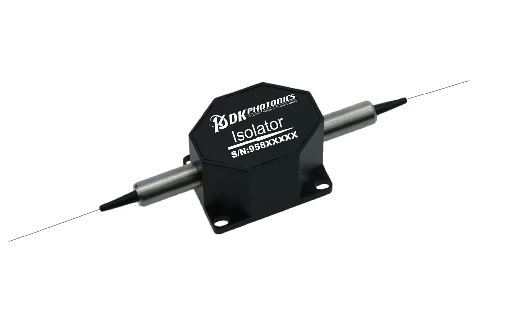
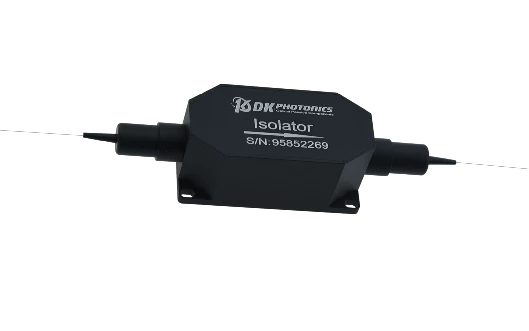
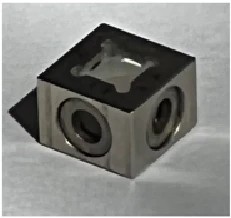
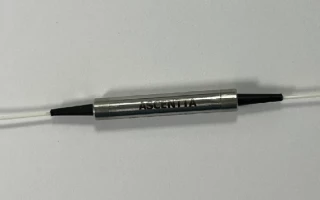
The 500–1100 nm TGG‑Based Optical Isolator from DK Photonics is designed to protect sensitive laser sources and optical components from harmful back‑reflections over a broad visible to near‑infrared wavelength range. Using a high‑quality terbium gallium garnet (TGG) Faraday rotator crystal, this free‑space isolator delivers high isolation with very low insertion loss, making it a robust choice for precision optical systems where beam quality and power stability are critical. Compared with typical single‑wavelength isolators, the wide operating window from 500 nm up to 1100 nm supports a variety of diode, DPSS, and solid‑state laser platforms commonly used in research, industrial, and biomedical environments.
Engineered for demanding applications, this isolator is optimized for excellent environmental stability and long‑term reliability. Careful material selection and optical design minimize thermal drift and polarization‑related performance variations, ensuring consistent isolation even under fluctuating temperature and power conditions. The low insertion loss helps preserve optical power and maintain signal‑to‑noise ratio, which is especially important in high‑gain fiber amplifiers and high‑sensitivity measurement setups. The compact package format is suitable for integration into laser heads, optical benches, and OEM modules where space is at a premium.
In real‑world laser systems, back‑reflections can lead to intensity noise, wavelength instability, and even catastrophic damage to laser diodes or amplifier stages. This TGG‑based optical isolator is specifically designed to suppress backward‑propagating light and back‑scattering, greatly improving system robustness and operational safety. It is well‑suited for fiber optic amplifiers, fiber lasers, and free‑space solid‑state lasers, as well as for test and measurement instruments and precision optical benches. By stabilizing the optical environment seen by the laser, it contributes to cleaner output beams, better pointing stability, and improved long‑term reproducibility of experimental results.
DK Photonics supports a wide range of configuration options to match different system requirements, similar to high‑performance isolators found in advanced photonics catalogs and research‑grade platforms. Standard products can be specified at common wavelengths within the 500–1100 nm band, and are available as polarization‑insensitive or polarization‑maintaining solutions depending on the needs of the application. Power handling levels can be tailored from typical sub‑watt continuous‑wave operation up to multi‑watt regimes, allowing the same isolator family to be used in both low‑power instrumentation and higher‑power laser or amplifier chains. The design is compatible with a variety of beam diameters and focusing conditions, enabling straightforward integration into existing optical layouts.
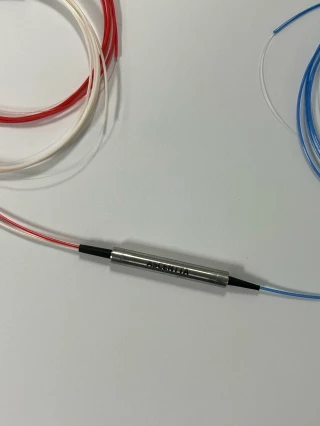
To simplify system integration, the isolator platform is offered with flexible input and output interface options. Users can choose from different fiber pigtails, fiber jacket diameters, and connector types, or opt for connector‑free configurations for direct splicing in higher‑power systems. This flexibility makes it possible to optimize for minimal back‑reflection, reduced connector‑related loss, and higher power throughput, which are key factors in modern high‑brightness laser and amplifier architectures. For OEMs and system integrators, the stable mechanical housing and repeatable optical performance support efficient scaling from prototype to volume production.
As photonics applications continue to advance in areas such as precision metrology, microscopy, spectroscopy, and material processing, the need for reliable, broadband isolation in the visible and near‑infrared has become increasingly important. The 500–1100 nm TGG‑Based Optical Isolator from DK Photonics is designed to meet these evolving requirements by combining high isolation, low insertion loss, and robust environmental performance in a cost‑effective package. It provides an effective way to safeguard laser sources, enhance measurement accuracy, and improve overall system uptime across a wide variety of scientific, industrial, and medical photonics platforms.
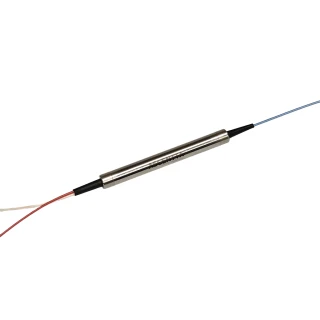
500nm - 1100nm TGG Based Optical Isolator
Specifications
| Type Of The Device: | Isolator |
|---|---|
| Operating Wavelength: | 500 nm |
| Max Power: | 0.5 W |
| Min Isolation: | 25 dB |
| Product Type: | TGG Based Optical Isolator |
| Wavelength Range: | 500–1100 nm |
| Power Handling Range: | 300 mW to 150 W |
| Pass Optical Power With Connector: | 2 W |
| Operation Type: | Continuous wave |
| Fiber Type Example: | 1060-XP fiber |
| Fiber Jacket Example: | 0.9 mm OD loose tube |
| Fiber Pigtail Length Example: | 1.0 m |
| Connector Type Example: | FC/APC at all ports |
| Insertion Loss Increase Per Connector: | 0.3 dB |
| Return Loss Decrease Per Connector: | 5 dB |
| Recommended Pigtail (High Power): | Direct splicing, no connector; avoid 250 µm bare fiber with connector |
Got questions about specs? Use the inquiry form to ask.
 Download Data Sheet

Features
- Wide Operating Wavelength Range (500–1100 nm) – TGG-based free-space / in-line design covers key visible and near‑IR bands (e.g. 532 nm, 633 nm, 780 nm, 850 nm, 980 nm, 1064 nm) commonly used in diode lasers, DPSS lasers, and fiber laser systems.
- High Optical Isolation – Engineered for strong suppression of back‑reflections and back‑scattering, protecting sensitive laser diodes and amplifiers and improving system stability and SNR.
- Low Insertion Loss – Precision magneto‑optic design and high‑quality AR‑coated TGG crystals minimize transmission loss, maintaining high throughput and maximizing available output power.
- Excellent Return Loss – Optimized optical interfaces and high‑grade polishing deliver high return loss, significantly reducing reflected power back into the source.
- High Power Handling Capability – TGG (Terbium Gallium Garnet) crystal and robust thermal design support power levels from hundreds of mW up to tens of watts (typ. 300 mW–150 W for fiber versions in the DK Photonics family) for CW and pulsed operation.
- Superior Environmental Stability & Reliability – Rugged construction ensures stable performance over a wide temperature range, with excellent resistance to vibration, humidity, and long‑term optical power exposure.
- Polarization-Insensitive & PM Options – Available in polarization insensitive (PI) configurations for general systems and polarization maintaining (PM) versions for high‑performance and coherent applications.
- Multiple Fiber & Interface Configurations – Supports popular fiber types (e.g. 1060‑XP, SM, PM fibers), bare fiber pigtails, loose tube pigtails, and standard connector options (FC/PC, FC/APC, others on request) for easy integration.
- Optimized for Laser & Amplifier Protection – Designed specifically for use with fiber lasers, solid‑state lasers, semiconductor lasers, and EDFAs/YDFAs to prevent damage and intensity noise caused by back‑propagating light.
- Compact Package Design – Small, lightweight housing enables straightforward integration into OEM modules, lab setups, benchtop instruments, and field‑deployed systems.
- Cost-Effective Performance – Competitive pricing combined with high optical performance and robust reliability makes these isolators ideal for volume OEM integration and cost‑sensitive research setups.
- Custom Wavelengths and Power Levels – DK Photonics can tailor center wavelength, bandwidth, isolation, and power handling to match specific laser lines or special requirements across 500–2100 nm.
- Custom Fiber Pigtails & Connectorization – Options for pigtail length, fiber type (SM, PM, LMA, specialty), buffer diameter (e.g. 0.9 mm loose tube), and connectors at any port; direct splicing recommended for high‑power use.
- CW and Pulsed Operation – Suitable for continuous‑wave sources as well as many pulsed laser regimes (including ns and ps) when configured correctly for the required peak power.
- Ideal for Diverse Applications – Well suited for fiber optic amplifiers, fiber and solid‑state lasers, test & measurement systems, scientific instrumentation, medical and bio‑imaging systems, microscopy, and precision sensing.
- Scalable OEM and R&D Solution – Designed to support both one‑off research builds and large‑scale OEM production, with consistent performance and documentation.
- Responsive Custom Design Support – If a standard 500–1100 nm TGG isolator does not perfectly fit your needs, DK Photonics offers rapid engineering support to define custom configurations, power ratings, and mechanical packages.
Applications
Applications of 500–1100 nm TGG Based Optical Isolators
- Fiber Laser Systems (CW and Pulsed)
Used to protect pump lasers and seed lasers from harmful back‑reflections in high‑power fiber lasers, picosecond and femtosecond lasers, and narrow‑linewidth single‑frequency lasers. - Solid-State and DPSS Lasers
Integrated in diode‑pumped solid‑state laser cavities (e.g., Nd:YAG, Nd:YVO4, Yb‑doped systems) to enforce unidirectional lasing, stabilize output power, and improve beam quality. - Fiber Amplifiers and Pre-Amplifiers
Deployed at the input and output stages of EDFAs, YDFAs, and other rare‑earth‑doped fiber amplifiers from 500–1100 nm to block backward propagating ASE and reflections. - Laser Diode Protection
Installed directly after free‑space or fiber‑coupled laser diodes to prevent damage and wavelength drift caused by feedback from optics, fibers, or test setups. - Optical Communication Links (VIS–NIR)
Applied in short‑wavelength fiber optic links, research‑grade free‑space communication setups, and specialty communication channels operating in the 500–1100 nm band. - Sensing and Metrology Systems
Used in interferometers, optical coherence tomography (OCT) in the 800–1060 nm range, and precision length/position metrology to suppress parasitic reflections that degrade fringe contrast and measurement accuracy. - Spectroscopy and Microscopy
Integrated into laser‑excited fluorescence, Raman, and absorption spectroscopy setups, as well as confocal, multiphoton, and nonlinear microscopy systems to stabilize laser sources and reduce background noise. - Test and Measurement Instrumentation
Incorporated in optical spectrum analyzers, power meters with fiber‑coupled inputs, tunable laser sources, and characterization benches to ensure stable unidirectional light flow and protect internal components. - Optical Isolator Modules for OEM Integration
Built into OEM laser engines, laser processing heads, and turnkey optical subsystems where compact, reliable isolation is required from 500–1100 nm. - Quantum Optics and Atomic Physics Experiments
Used with lasers at rubidium (780 nm), cesium (852 nm), and other alkali transition lines to prevent cavity feedback in magneto‑optical traps, cooling and trapping experiments, and quantum information setups. - Biomedical and Life Science Instruments
Applied in flow cytometers, DNA sequencers, fluorescence readers, and other bio‑photonics platforms that use visible and near‑infrared excitation lasers and require stable, low‑noise beams. - Laser Material Processing (Low to Medium Power)
Implemented in marking, micro‑machining, and lithography systems operating in the visible/NIR to protect laser heads from back‑scatter off metals, semiconductors, and polymers. - Free‑Space Optical Setups and Beam Delivery
Placed in free‑space beamlines for research and industrial labs to prevent back‑reflections from mirrors, lenses, isolating windows, and samples from coupling back into the source. - Stabilized Frequency and Reference Lasers
Used in narrow‑linewidth reference lasers, frequency‑locked and cavity‑stabilized sources to minimize optical feedback that broadens linewidth and introduces frequency noise. - Laser Safety and Reliability Enhancement
Adopted as a protective component to extend laser diode and amplifier lifetime by reducing reflected power incident on sensitive gain media and coatings.
Typical Use Environment
- R&D laboratories and university optics benches
- OEM laser and photonics modules for industrial systems
- Medical, analytical, and life‑science instruments
- Precision optical metrology and inspection equipment
- Specialty fiber optic communication and sensor networks in the 500–1100 nm band
Frequently Asked Questions
What is a 500–1100 nm TGG based optical isolator and what does it do?
What are typical applications of DK Photonics TGG based optical isolators?
What are the key performance advantages of these TGG based optical isolators?
How do I specify or order a DK Photonics TGG based optical isolator (part number ISO‑①‑②‑③‑④‑⑤‑⑥‑⑦)?
What power handling options are available and how do connectors affect power rating?
Should I use fiber connectors or direct splicing with these isolators, especially for high power?
Can DK Photonics customize TGG based optical isolators for specific wavelengths, fibers, or mechanical packages?
Got more questions? Use the inquiry form to ask the supplier directly.
Similar Products



Your inquiry has been received.
Create an account by adding a password
Why create an account?
- Auto-complete inquiry forms
- View and manage all your past messages
- Save products to your favorites
- Close your account anytime — no hassle