
Description
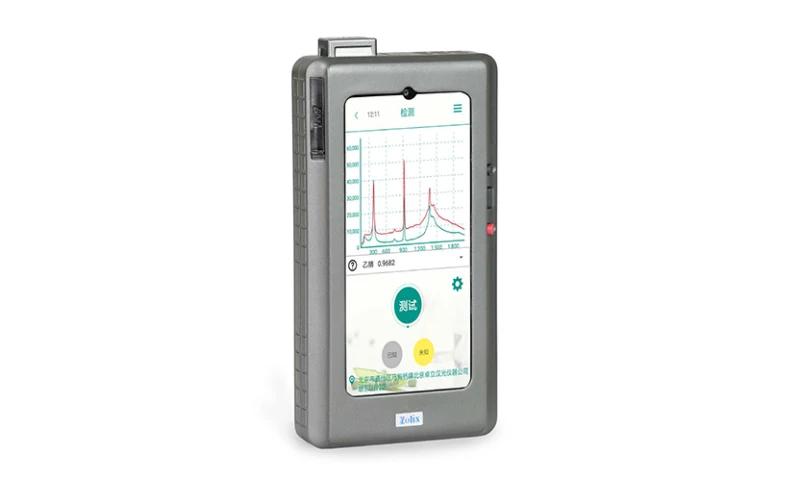
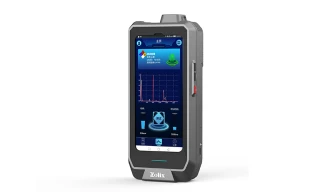
Finder Edge ( FE) is instant and compact handheld Raman analyzer. It ensures efficient processing, can be on-site used flexibly by non-technical users to rapidly identify samples in the lab, warehouse etc. The non-contact analysis can be performed through transparent containers by Raman technology. Strong hardware performance and diversified library are your reliable partner.
Handheld Raman spectrometers enable rapid, non-destructive chemical identification directly in the field without requiring laboratory sample preparation. Using laser-based Raman spectroscopy, these portable analyzers identify solids, powders, liquids, gels, and unknown substances by comparing measured Raman spectra against reference libraries.
Modern handheld Raman systems are widely used in pharmaceuticals, hazardous material response, customs inspection, forensics, industrial process control, airport security, and raw material verification. Advanced systems can even analyze substances through transparent or opaque packaging, improving operator safety while accelerating field analysis workflows.
Why Use Handheld Raman Spectrometers?
Handheld Raman spectrometers provide fast, portable molecular identification without destroying or contaminating samples. Compared to traditional laboratory analysis, portable Raman analyzers offer:
Key Advantages
- Non-destructive chemical identification
- Portable field operation
- Rapid analysis within seconds
- Minimal or no sample preparation
- Through-container analysis capability
- Reduced laboratory workload
- Improved operator safety
- Real-time decision making
- Easy deployment in industrial environments
- Modern handheld Raman systems are especially valuable for hazardous material identification, pharmaceutical verification, customs inspection, and industrial QA/QC workflows.
How Handheld Raman Spectroscopy Works
Handheld Raman spectrometers use laser excitation to illuminate a sample and measure the resulting Raman-scattered light. The measured Raman spectrum acts as a molecular fingerprint that can be compared against spectral databases for material identification. Because Raman spectroscopy is highly specific to molecular structure, it enables rapid identification of chemicals, pharmaceuticals, explosives, polymers, and other materials directly in the field.
Through-Container Raman Analysis
Advanced handheld Raman spectrometers can identify materials through transparent or semi-opaque packaging such as glass, plastic, bags, and containers. This capability improves safety when working with hazardous or unknown substances by reducing direct operator exposure.
Handheld Raman Spectrometer
Specifications
| Excitation Wavelength: | 785 nm |
|---|---|
| Laser Power: | 450 mW |
| Raman Shift Range: | 200 – 2000 cm^-1 |
| Spectral Resolution: | 12 cm^-1 |
| Special Attributes: | Handheld, Mini |
| Connectivity: | Bluetooth, WiFi |
| Weight: | 0.48 kg |
| Certification: | CE, ROHS |
| Electrical Power Source: | Battery and DC Adapter |
| Collection Optics: | 10mm and 15mm focus lens |
Got questions about specs? Use the inquiry form to ask.
 Download Data Sheet

Features
- Small and convenient on-site inspection
- Running capacity up to 6 hours
- One-click recognition, all in control
Applications
- Pharmaceutical Raw Material Verification
Portable Raman systems are widely used for incoming raw material inspection and GMP-compliant verification workflows. - Hazardous Material Identification
First responders and hazmat teams use handheld Raman analyzers to identify unknown chemicals, narcotics, explosives, and toxic substances. - Customs and Border Inspection
Rapid field identification helps detect counterfeit, illicit, or hazardous materials. - Industrial QA/QC
Manufacturers use handheld Raman spectroscopy for incoming inspection, process validation, and contamination analysis. - Forensics and Law Enforcement
Portable Raman analyzers support forensic investigations and field evidence analysis. - Food and Agricultural Analysis
Raman spectroscopy can help verify food authenticity and detect contamination.
Fluorescence Reduction and Laser Wavelength Selection
Modern handheld Raman systems may use optimized excitation wavelengths such as 785 nm, 830 nm, or 1064 nm to reduce fluorescence interference and improve spectral quality for challenging samples. Some advanced instruments also employ dual-laser or fluorescence mitigation technologies for improved material identification.
Frequently Asked Questions
What is a handheld Raman spectrometer used for?
Can handheld Raman spectrometers analyze materials through containers?
What are the advantages of Raman spectroscopy?
What laser wavelengths are commonly used in handheld Raman systems?
Can handheld Raman spectrometers identify hazardous chemicals?
Got more questions? Use the RFQ form to ask the supplier directly.
Similar Products
Need pricing for this product? Send a quick inquiry
Your inquiry has been received.
Create an account by adding a password
Why create an account?
- Auto-complete inquiry forms
- View and manage all your past messages
- Save products to your favorites
- Close your account anytime — no hassle