

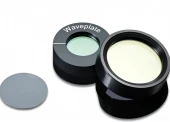
Description
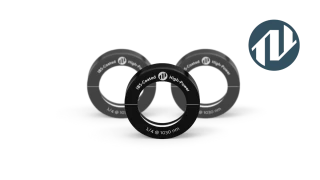
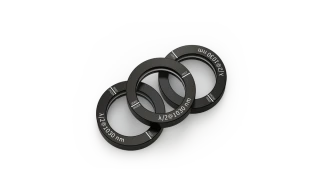
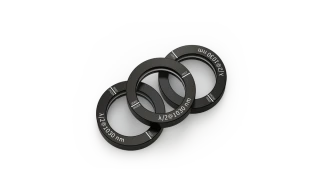
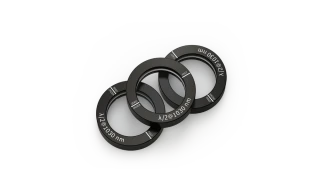
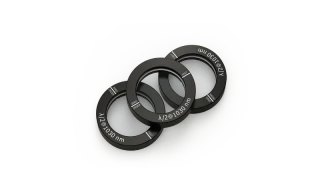
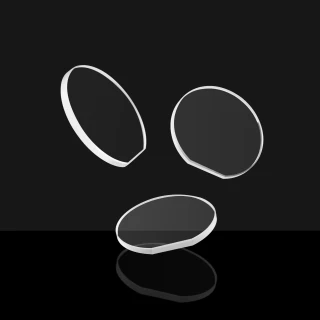
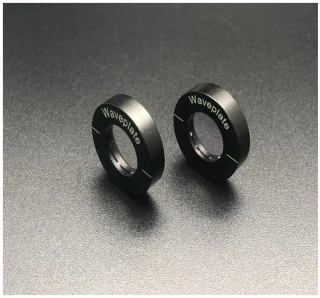
Tempotec produces custom waveplates for precise polarization control from 240 to 2100 nm. The range covers low-order and zero-order crystal quartz waveplates, achromatic waveplates (quartz + MgF2), dual-wavelength waveplates for frequency-doubled lasers, and low-cost polycarbonate film waveplates. Retardation tolerance down to λ/500 and wavefront distortion down to λ/10 suit precision laser and metrology work.
NOTE - Price range is for reference only, final quotation subject to actual specifications & quantity.
Custom Waveplates: Zero-Order, Achromatic & Dual-Wavelength – Tempotec
Specifications
| Waveplate Type (Retardation Order): | Zero Order, Multiple Order, Achromatic |
|---|---|
| Material: | Quartz, Crystalline Quartz, MgF2, Quartz and MgF2, Fused Silica, UV Grade Fused Silica (UVFS), IR Grade Fused Silica (IRFS), N-BK7, Polymer |
| Mounting: | Mounted, Unmounted |
| Shape: | Round, Square, Rectangle, Custom |
| Size (Largest Dimension): | Not Specified |
| Design Wavelength: | Not Specified |
| Surface Quality (Scratch-Dig): | 10-5, 20-10, 40-20, 60-40, 80-50 |
| Retardation: | Lambda/2, Lambda/4 |
| Retardation Tolerance: | +/- Lambda/500 |
| Transmitted Wavefront Distortion (TWD): | <= Lambda/10 |
| Polycarbonate Waveplate Diameter Tolerance: | up to ±0.05 mm |
| Polycarbonate Waveplate Retardation Options: | λ/4, λ/2, λ (typical) |
| Polycarbonate Waveplate Wavelength Range 1: | 400–700 nm |
| Polycarbonate Waveplate Wavelength Range 2: | 700–1100 nm |
| Substrate Wavelength Range - Fused Silica: | 185 nm – 2.1 μm |
| Substrate Material - Fused Silica: | JGS1 / Corning 7980 / Heraeus |
| Substrate Wavelength Range - Optical Glass: | 350 nm – 2.0 μm |
| Substrate Material - Optical Glass: | CDGM / SCHOTT / OHARA |
| Substrate Wavelength Range - Sapphire: | 0.15 – 5.0 μm |
| Substrate Wavelength Range - MgF2: | 0.12 – 6.0 μm |
| Substrate Wavelength Range - CaF2: | 0.18 – 8.0 μm |
Got questions about specs? Use the inquiry form to ask.
 Download Data Sheet

Features
- Low-order quartz waveplates: λ/8, λ/4, λ/2 or λ retardation, tolerance down to λ/500, 240–2100 nm
- Optically contacted zero-order (true zero-order) waveplates with excellent temperature stability
- Achromatic waveplates (quartz + MgF2) with near-constant retardation over a broad band
- Dual-wavelength waveplates, e.g. λ/2 @ 532 nm + λ/4 @ 1064 nm, or λ/2 @ 532 nm + λ @ 355 nm
- Polycarbonate waveplates: λ/4, λ/2 or λ for 400–700 nm and 700–1100 nm
- Diameter tolerance down to ±0.05 mm; wavefront distortion down to λ/10 @ 632.8 nm
- Surface quality up to 10-5 scratch-dig; AR coated
Applications
- Rotating linear polarization (half-wave plates)
- Converting linear to circular polarization (quarter-wave plates)
- Laser power control with a polarizer
- Harmonic generation and frequency-doubled lasers (dual-wavelength plates)
- Broadband and tunable lasers, ultrafast optics (achromatic plates)
- Optical isolators, polarimetry and display testing
Frequently Asked Questions
1. What is the difference between low-order and zero-order waveplates?
When do I need an achromatic waveplate?
What is a dual-wavelength waveplate?
How accurate is the retardation?
When is a polycarbonate waveplate a good choice?
Got more questions? Use the inquiry form to ask the supplier directly.
Similar Products


Your inquiry has been received.
Create an account by adding a password
Why create an account?
- Auto-complete inquiry forms
- View and manage all your past messages
- Save products to your favorites
- Close your account anytime — no hassle