

Description
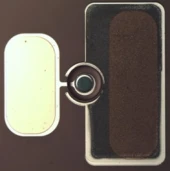
The CCSiCUVAPD1p0 Silicon Carbide (SiC) Ultraviolet Avalanche Photodiode is engineered for precision UV detection in demanding scientific, industrial, and safety-critical applications. Designed to operate specifically in the 200–375 nm ultraviolet range, this device provides strong responsivity in the UV while remaining inherently blind to visible light. This visible-blind characteristic greatly simplifies optical design, as it minimizes the need for external filters that are typically required when using conventional silicon-based photodiodes or photomultiplier tubes for UV measurements.
Fabricated on high-quality SiC epitaxial layers using advanced proprietary processes, the CCSiCUVAPD1p0 combines low-noise linear operation at modest reverse bias with the option of avalanche gain at higher voltages. At a reverse bias below 3 V and a wavelength of 280 nm, the photodiode typically achieves a peak linear responsivity of about 0.05 A/W and a peak linear quantum efficiency of approximately 22%. The effective spectral response is tightly focused in the UV: the 90% maximum quantum efficiency window is centered around 265–290 nm, while the full-width at half-maximum quantum efficiency range extends from about 240 nm to 325 nm. This narrow UV-centric response makes the device ideal for applications such as germicidal UV monitoring, UV-C LED characterization, and spectroscopy in the deep and mid-UV.
One of the key advantages of this SiC avalanche photodiode is its exceptionally low dark current. At a reverse bias below 3 V and 25 °C, the dark current is typically less than 5 pA per mm² of active area. This ultralow dark current significantly improves signal-to-noise ratio, particularly in low-light or single-photon-level environments, and reduces or eliminates the need for active cooling. In addition, the device demonstrates outstanding visible blindness, with the ratio of peak UV responsivity to responsivity at 400 nm exceeding 5000. As a result, background interference from ambient room lighting or solar radiation in the visible band is greatly suppressed, improving measurement accuracy in real-world environments.
When operated in avalanche mode, the CCSiCUVAPD1p0 provides very high internal gain for photon-starved detection tasks. The avalanche breakdown voltage is typically in the range of 180–181 V at room temperature, with achievable gain values greater than 106 at 280 nm. This combination of high gain and low intrinsic noise makes the device suitable for single-photon detection and other ultra-low-signal applications where alternatives such as bulky photomultiplier tubes or cooled CCDs may be less practical. The small active area of approximately 0.019 mm² further supports low capacitance and fast temporal response, which is beneficial in time-resolved measurements, high-speed counting, and pulsed UV source monitoring.
Leveraging the inherent physical robustness of SiC, this ultraviolet avalanche photodiode offers excellent performance stability over a wide temperature range, with no degradation reported up to 400 °C in typical operating scenarios. SiC’s wide bandgap and strong atomic bonding confer high resistance to long-term UV exposure and ionizing radiation, making this device well suited for deployment in harsh or remote environments. Compared with conventional silicon photodiodes or photomultiplier tubes, systems built around this SiC APD can be more compact and reliable, as they can often dispense with elaborate cooling assemblies, UV-protective measures, and complex filtering schemes.
These characteristics make the CCSiCUVAPD1p0 a strong choice for a broad spectrum of UV-centric applications. In environmental monitoring and water treatment, it supports reliable UV intensity tracking in disinfection and filtration systems, including real-time validation of germicidal UV-C dosage. In safety and industrial monitoring, its fast and selective response to UV enables accurate flame detection, corona discharge monitoring, and early-warning systems in high-voltage equipment. In biomedical and analytical instrumentation, the device contributes to sensitive pathogen detection, fluorescence and chemiluminescence measurements in the UV, and defect inspection in semiconductor or optical manufacturing where UV signatures are critical. Its combination of high gain, low dark noise, and visible blindness also makes it attractive for specialized scientific experiments that rely on single-photon UV detection or time-correlated photon counting.
Supplied as a bare die (part number CCSiCUVAPD1p0), this SiC ultraviolet avalanche photodiode can be integrated into custom detector modules, hybrid assemblies, or multi-element arrays.
CoolCAD SiC Ultraviolet Avalanche Photodiode 200-375nm Low Dark Current
Specifications
| APD Type: | Silicon Carbide (SiC) |
|---|---|
| Operational Wavelength (Typical): | 270 nm |
| Operational Wavelength Range: | 200 – 375 nm |
| Peak Linear Responsivity (Rmax): | 0.05 A/W |
| Peak Linear Quantum Efficiency: | 0.22 |
| Active Area: | 0.019 mm^2 |
| Peak Linear Responsivity: | 0.05 A/W @ VR < 3 V, λ = 280 nm, TA = 25 °C |
| Peak Linear Quantum Efficiency: | 0.22 (dimensionless) @ VR < 3 V, λ = 280 nm, TA = 25 °C |
| Spectral Range (90% Max QE): | 265–290 nm @ VR < 3 V, TA = 25 °C |
| Spectral Range (FWHM QE): | 240–325 nm @ VR < 3 V, TA = 25 °C |
| Dark Current Density: | < 5 pA/mm² @ VR < 3 V, TA = 25 °C |
| Visible Blindness Ratio: | > 5000 (peak responsivity / responsivity at 400 nm, VR = 2 V) |
| Active Area: | 0.019 mm² |
| Avalanche Reverse Breakdown Voltage: | 180–181 V @ ID = 1 µA, TA = 25 °C |
| Gain: | > 1×10^6 @ VR = Vbd,av, λ = 280 nm |
| Maximum Operating Temperature (no Degradation): | up to 400 °C |
| Part Number: | CCSiCUVAPD1p0 |
| Package: | Bare Die (no package) |
Got questions about specs? Use the inquiry form to ask.
 Download Data Sheet

Features
- Wide Ultraviolet Sensitivity (200–375 nm) – Optimized for UV-C and UV-B detection with a spectral range (FWHM QE) of 240–325 nm and 90% maximum QE between 265–290 nm, ideal for short-wavelength UV applications where silicon photodiodes are inefficient.
- High Quantum Efficiency in Deep UV – Peak linear quantum efficiency of approximately 22% at 280 nm delivers strong UV response for precise measurement in germicidal and analytical UV bands.
- Inherently Visible-Blind Response – Strong intrinsic rejection of visible light with a visible blindness ratio > 5000 (peak responsivity vs. 400 nm), eliminating the need for additional optical filters and simplifying system design in solar-blind and flame-detection systems.
- Ultra-Low Dark Current – Dark current < 5 pA/mm² (at VR < 3 V, 25 °C) minimizes background noise, enabling high signal-to-noise ratio in low-light and single-photon-level UV detection.
- Avalanche Gain Over 106 – Operated near its avalanche breakdown voltage (~180–181 V), the device provides internal gain > 106, supporting single-photon counting and extremely weak UV signal detection without external preamplification.
- Robust Silicon Carbide (SiC) Technology – Fabricated on high-quality SiC epitaxial layers, offering higher breakdown field, low leakage, and better radiation hardness compared to silicon APDs, for stable, long-lifetime UV operation.
- High-Temperature Operation up to ~400 °C – Wide operating temperature range with no degradation reported up to approximately 400 °C, allowing deployment in harsh and high-ambient-temperature environments where conventional silicon detectors fail.
- Excellent UV and Radiation Robustness – Resistant to long-term UV exposure, ionizing radiation, and high-fluence environments, maintaining performance in demanding industrial, aerospace, and scientific applications.
- Eliminates Cooling and Filtering Requirements – Combination of low dark current, visible-blind response, and high-temperature tolerance significantly reduces or removes the need for cooling systems and optical filters, lowering system volume, weight, and cost.
- Compact Active Area for High Spatial Resolution – Small active area of about 0.019 mm² supports focused-spot measurements, high-resolution detection, and integration in dense detector arrays or compact optical heads.
- Stable Linear Mode Performance at Low Bias – At low reverse bias (VR < 3 V), provides predictable linear responsivity (~0.05 A/W @ 280 nm) suitable for calibrated UV power measurements and monitoring applications.
- Customizable Device Design – Proprietary CoolCAD fabrication processes allow customization of active area, geometry, and packaging to fit specific OEM requirements in UV spectroscopy, security, medical, or industrial systems.
- Ideal for UV-C and Bio-Detection Systems – Wavelength range and high gain make it well suited for water and air purification monitoring, pathogen detection, DNA/protein fluorescence excitation monitoring, and other bio-analytical instruments operating in 200–300 nm.
- Optimized for Flame and Fire Detection – Solar-blind UV sensitivity and visible rejection provide reliable flame detection even in bright daylight or industrial lighting environments, with reduced false-alarm rates.
- Reliable for Industrial and Process Control – High durability and UV robustness support continuous operation in defect monitoring, semiconductor inspection, and plasma process diagnostics where intense UV radiation is present.
- Supports Single-Photon and Low-Light UV Applications – Avalanche gain and low noise make the device well suited for single-photon detection, time-correlated photon counting, and other ultra-low-light UV metrology tasks.
- Bare-Die Configuration for Flexible Integration – Supplied as bare die (Part Number: CCSiCUVAPD1p0), enabling direct integration onto custom PCBs, hybrid modules, or specialized optical assemblies for compact and application-specific designs.
Applications
- Solar-Blind Ultraviolet (UV) Flame Detection – Ideal for industrial burners, gas turbines, boilers, furnaces, and combustion chambers where fast, reliable detection of UV emissions from hydrocarbon flames is required, without interference from visible or IR background light.
- Fire and Explosion Early Warning Systems – Used in UV/IR and multi-spectral flame detectors for petrochemical plants, fuel storage depots, aircraft hangars, offshore platforms, and mining operations to enable rapid identification of ignition events.
- UV Single-Photon and Low-Light-Level Detection – High avalanche gain (>106) and very low dark current support ultra‑sensitive photon counting in the 200–375 nm band for scientific, industrial, and defense-grade low‑signal measurements.
- Spectroscopy and Analytical Instrumentation – Detection of UV emission and absorption lines in compact or benchtop spectrometers for chemistry, biochemistry, materials science, thin‑film characterization, and process monitoring.
- Water Quality and Filtration Monitoring – Real-time monitoring of 254–280 nm UV intensity in water purification and disinfection systems (municipal, industrial, and point‑of‑use) to ensure proper UV dose delivery and lamp/LED performance.
- UV-C Disinfection System Feedback Control – Integrated as a UV sensor in closed‑loop control of germicidal UV‑C LED or mercury lamp systems used for air, surface, and water sterilization in healthcare, HVAC, food-processing, and laboratory environments.
- Pathogen and Bio-Contaminant Detection – Detection of UV-induced fluorescence from biological agents, microorganisms, and organic contaminants in medical diagnostics, environmental monitoring, and biosecurity systems.
- Semiconductor and Wafer Defect Monitoring – UV inspection of wafers, die, and semiconductor surfaces to reveal defects, micro-cracks, and contamination not visible at longer wavelengths, improving yield and process control.
- Photolithography and Mask Inspection – Monitoring and alignment in deep-UV lithography tools, reticle/mask inspection stations, and critical dimension metrology where solar-blind UV sensitivity and low noise are required.
- High-Temperature UV Sensing in Harsh Environments – Operation up to approximately 400 °C enables direct installation in engines, turbines, exhaust systems, and industrial reactors without cooling, for in-situ UV emissions monitoring.
- Combustion Chemistry and Plasma Diagnostics – Time-resolved detection of UV emission lines from combustion processes, plasma discharges, and high-energy experiments in research laboratories and test facilities.
- UV Astronomy and Spaceborne Instrumentation – Suitable for UV telescopes, star trackers, and space science payloads where radiation hardness, UV sensitivity, and visible blindness are critical for accurate detection of UV emissions from celestial sources.
- Missile Warning and UV Threat Detection – Integration in military and aerospace warning systems that rely on solar-blind UV signatures from missile plumes and rocket exhaust for rapid threat identification against bright daytime backgrounds.
- Corona, Arc, and Partial Discharge Detection – Monitoring UV emissions from high-voltage equipment, transformers, and power lines to detect corona discharge, arcing, and insulation failures for preventive maintenance in power grids.
- Leak and Flame Detection in Gas and Fuel Systems – UV-based detection of invisible flames and leaks in hydrogen, natural gas, and other fuel systems where visible emissions may be weak or masked.
- UV Laser Monitoring and Beam Diagnostics – Power and pulse monitoring of UV lasers (e.g., 248 nm, 266 nm, 280 nm, 308 nm) used in materials processing, medical equipment, and scientific research, providing precise feedback even at very low intensities.
- Non-Destructive Testing (NDT) and Crack Detection – Detection of UV-induced fluorescence from penetrants and dyes in NDT processes for aerospace, automotive, and critical infrastructure components.
- Security Marking and Anti-Counterfeiting – Reading of UV-fluorescent security inks, markers, and tags on documents, currency, and branded products using compact, visible-blind detectors that reject ambient light.
- Environmental UV Index and Solar-Blind Sensing – Monitoring narrow UV bands while rejecting visible and IR radiation for specialized environmental and atmospheric measurements, including narrowband UV index metering and ozone-related studies.
Frequently Asked Questions
What is the CCSiCUVAPD1p0 SiC Ultraviolet Avalanche Photodiode and what makes it different from silicon UV photodiodes?
What are the key optical and electrical specifications of the CCSiCUVAPD1p0 SiC UV avalanche photodiode?
In what applications is the CCSiCUVAPD1p0 SiC UV photodiode typically used?
What does “visible-blind” mean for this SiC UV avalanche photodiode, and why is it useful?
How should the CCSiCUVAPD1p0 be biased and used in linear mode versus avalanche (Geiger-like) mode?
What are the thermal and environmental advantages of a SiC UV APD like CCSiCUVAPD1p0 compared to other UV photodetectors?
What packaging and customization options are available for the CCSiCUVAPD1p0 SiC UV avalanche photodiode?
Got more questions? Use the inquiry form to ask the supplier directly.
Similar Products


Your inquiry has been received.
Create an account by adding a password
Why create an account?
- Auto-complete inquiry forms
- View and manage all your past messages
- Save products to your favorites
- Close your account anytime — no hassle