
Description
The VENUS Series L-band ASE light sources, models VASS-L-B for single-mode (SM) output and VASP-L-B for polarization-maintaining (PM) output, are high-performance broadband light sources engineered for demanding laboratory, industrial, and field applications. Based on an optimized Erbium-doped fiber architecture, these sources deliver a wide L-band emission spectrum from approximately 1570 nm to 1602 nm, combining broad bandwidth with excellent spectral flatness and high output stability. This makes them ideal for applications where uniform spectral power density and long-term reliability are essential, such as precision optical testing, coherent and incoherent fiber sensing, and advanced photonics research.
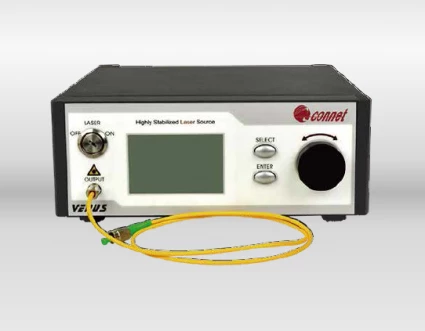
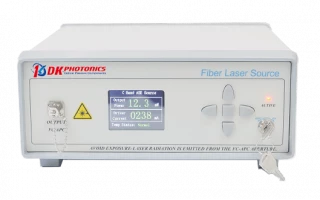
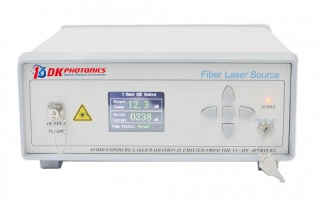
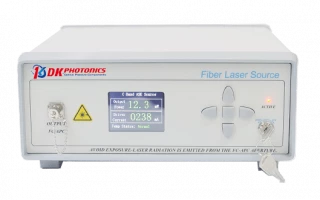
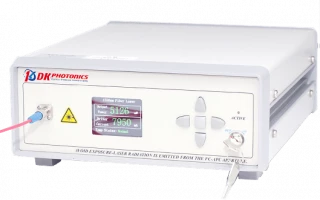
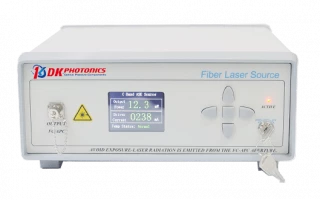
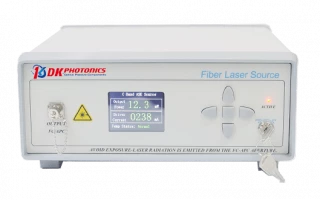
Designed as highly integrated systems, VENUS Series L-band ASE sources are available in a convenient benchtop format with an intuitive front-panel interface and high-definition LCD display. Users can monitor operating current and voltage in real time while continuously adjusting the output power over a wide tuning range. Typical output power levels include 10 mW, 20 mW, 30 mW, and up to 100 mW, providing ample flexibility to match a variety of test and measurement scenarios. The benchtop unit also incorporates high-quality optical isolation (typically around 30 dB) and carefully managed thermal control to ensure excellent power stability over both short (15 minutes) and extended (8-hour) timeframes, even across the full specified operating temperature range.
Spectral performance is a key strength of the VENUS Series. The sources offer a full-width at half-maximum (FWHM) bandwidth spanning tens of nanometers in the L-band with spectral flatness on the order of a few dB (typical values near 3.5 dB across the usable band). This level of flatness is particularly advantageous for component characterization, dense wavelength-division multiplexing (DWDM) testing, and spectral analysis where non-uniform sources can introduce measurement errors. The high degree of flatness, combined with excellent power repeatability and low intensity ripple, positions these sources favorably among L-band ASE light sources used in optical communications and fiber sensor interrogation systems.
Output configuration options make the VENUS Series suitable for diverse experimental setups. The VASS-L-B model delivers light through standard SMF 9/125 µm fiber (NA ≈ 0.13), ensuring compatibility with most telecom-grade components and networks. The VASP-L-B model provides polarization-maintaining PM1550 fiber output (NA ≈ 0.13) with a polarization extinction ratio exceeding 17 dB, making it ideal for polarization-sensitive systems such as interferometric fiber-optic gyroscopes, coherent detection schemes, and advanced optical coherence tomography (OCT) configurations operating in the L-band. Both models are supplied with FC/APC optical connectors as standard, with other connector types available on request, and are typically shipped with a convenient output fiber length suitable for integration into laboratory benches or OEM setups.
For users developing compact instruments or embedded photonic systems, the VENUS Series also comes in a space-saving module package in addition to the benchtop unit. The module version preserves the same optical performance while allowing easy integration into larger systems. It operates from a universal AC input (100–240 VAC) with modest power consumption, and its internal control electronics provide stable drive conditions for the Er-doped gain medium. Together with a broad operating temperature range and robust mechanical design, this ensures high reliability in both controlled lab environments and more challenging industrial settings.
Typical applications for the VENUS Series L-band ASE light sources include optical component and subsystem testing, broadband source illumination for spectrum analysis, and as reference or probe sources in optical fiber sensing networks. They are widely used in Brillouin and Rayleigh-based distributed fiber sensing, fiber-optic gyroscope development, and R&D on L-band amplification and transmission technologies. The combination of tunable output power, wide L-band coverage, high spectral flatness, and exceptional power stability allows researchers and engineers to perform accurate, repeatable measurements and system characterization without the need for multiple discrete sources or complex gain-flattening schemes.
Overall, the VASS-L-B and VASP-L-B models of the VENUS Series provide a robust and versatile platform for L-band ASE generation. Their optimized Erbium-doped fiber design, integrated control electronics, and user-friendly benchtop or compact module formats meet the needs of advanced optical laboratories, manufacturing test lines, and OEM system builders seeking a dependable, high-stability broadband L-band
VENUS Series L-band High Stability ASE Light Source
Specifications
| Bandwidth: | 32 nm |
|---|---|
| Center Wavelength: | 1602 nm |
| Output Power: | 100 mW |
| Polarization: | Linear |
| Product Series: | VENUS series L-band ASE light source |
| Models: | VASS-L-B (SM), VASP-L-B (PM) |
| Output Power (typical Options): | 10 mW, 20 mW, 30 mW, 100 mW |
| Operating Wavelength Range: | 1570–1602 nm |
| Spectral Flatness: | ≤ 3.5 dB |
| Output Isolation: | ≥ 30 dB |
| Output Power Stability (15 Min): | ±1.0 % |
| Output Power Stability (8 H): | ±2.0 % |
| Output Power Tunable Range: | 0–100 % |
| Output Power Tunable Mode: | Coarse / Fine |
| Operating Voltage: | 100–240 VAC |
| Power Consumption (max): | 50 W |
| Operating Temperature: | 0–85 ℃ |
| Storage Temperature: | -40–100 ℃ |
| Output Fiber Type (SM Model): | SMF 9/125 μm, NA=0.13 |
| Output Fiber Type (PM Model): | PM1550, NA=0.13 |
| Polarization Extinction Ratio (PM Output Fiber): | > 17 dB |
| Output Fiber Length: | > 1 m |
| Optical Connector: | FC/APC (other options available) |
| Dimensions (benchtop): | 340(L) × 240(W) × 100(H) mm |
Got questions about specs? Use the inquiry form to ask.
 Download Data Sheet

Features
- Wideband L‑Band ASE Spectrum (1570–1602 nm) – Optimized Er‑doped fiber design delivers a broad L‑band amplified spontaneous emission (ASE) spectrum, ideal for telecom, sensing, and test applications across the 1570–1602 nm range.
- High Spectral Flatness (≤ 3.5 dB) – Extremely flat output power spectral density minimizes wavelength‑dependent variations, providing more uniform illumination for spectrum analysis, component characterization, and fiber sensing.
- High Output Power with Multiple Power Levels – Supports a range of output powers (typical 10 mW, 20 mW, 30 mW, up to 100 mW), enabling use from low‑power lab setups to demanding system‑level tests and integrations.
- Excellent Power Stability – Output power stability of up to ±0.5% (15 min) and ±1.0% (8 h) after warm‑up at 25°C ensures repeatable measurements and long‑term reliability in critical experiments and production environments.
- Continuously Tunable Output Power – Built‑in power control with coarse/fine tuning modes allows precise adjustment of output level over a wide tuning range, simplifying device characterization and system optimization.
- Single‑Mode (SM) and Polarization‑Maintaining (PM) Versions – Available as:
- VASS‑L‑B – SM fiber output using SMF‑28 type 9/125 μm fiber (NA = 0.13) for general telecom and test applications.
- VASP‑L‑B – PM fiber output using PM1550 fiber (NA = 0.13) with PER > 17 dB for polarization‑sensitive systems such as interferometers and gyroscopes.
- High Output Isolation (≥ 30 dB) – Integrated optical isolator protects the internal source from back‑reflections, enhancing lifetime, measurement accuracy, and system robustness.
- High Reliability over Wide Temperature Range – Designed for stable operation from 0°C to 50°C (typical), with storage down to –40°C and up to +85°C, supporting both lab use and field‑deployed equipment.
- Integrated Benchtop Platform with LCD Display – Compact benchtop unit provides:
- High‑definition LCD showing current, voltage, and output power in real time.
- Front‑panel control of power setpoints and tuning mode.
- Intuitive operation for R&D and production testing.
- Compact Module Version for OEM Integration – In addition to the benchtop, a module package (M) is available for system builders, enabling easy integration into optical instruments, sensing platforms, and automated test systems.
- Flexible Optical Interface – Standard FC/APC connector for low back‑reflection; other connector options available on request, simplifying compatibility with existing fiber networks and test benches.
- Low Noise, Incoherent Source – ASE emission provides broadband, low‑coherence light, reducing interference effects and speckle, ideal for fiber sensing, gyroscopes, and component testing where coherent lasers are not suitable.
- Universal AC Power Input – Wide‑range 100–240 VAC input with low power consumption (typical < 50 W, max up to 100 W under extreme conditions) supports global deployment and standard lab power setups.
- Rugged Mechanical Design – Benchtop unit with typical dimensions of 340 (L) × 240 (W) × 100 (H) mm provides a stable platform for continuous lab and production use.
- Optimized for Precision Measurement and Sensing – Engineered specifically for:
- Optical component and subsystem testing (filters, EDFAs, WDM devices, couplers, multiplexers).
- Optical fiber sensing systems (DTS, DAS, FBG interrogation, structural health monitoring).
- Optical fiber gyroscopes where stable broadband L‑band sources are essential.
- Spectrum analysis and instrument calibration across the L‑band window.
- General laboratory and R&D applications requiring a stable, broadband L‑band light source.
Applications
- Optical Component Characterization and Testing
Used as a broadband, high-stability L-band source for testing insertion loss, return loss, and spectral response of passive components such as WDMs, filters, couplers, splitters, isolators, and circulators in the 1570–1602 nm region. - L‑Band DWDM System Development and Qualification
Provides a spectrally flat ASE background for evaluating L‑band DWDM channels, gain equalization, OSNR performance, and spectral shaping in advanced telecom systems and optical network laboratories. - Erbium‑Doped Fiber Amplifier (EDFA) and Raman Amplifier Testing
Serves as a stable, tunable input source to characterize gain, noise figure, saturation behavior, and transient response of L‑band EDFAs and distributed Raman amplifiers. - Optical Fiber Sensing Systems
Acts as an L‑band broadband light source for interferometric and intensity‑based fiber sensors, including temperature, strain, pressure, and acoustic sensing in civil engineering, oil & gas, and aerospace applications. - Distributed Fiber Sensing (DTS, DAS, DVS)
Provides high spectral flatness and stability required for distributed temperature sensing (DTS), distributed acoustic sensing (DAS), and distributed vibration sensing (DVS) systems based on scattering mechanisms in the L‑band. - Optical Coherence and Interferometry Experiments
Used as a low‑coherence, broadband source for Michelson, Mach‑Zehnder, and Sagnac interferometers in metrology and fundamental research where L‑band operation is preferred. - Fiber Optic Gyroscopes (FOG)
Employed as a depolarized, broadband light source for high‑precision fiber optic gyroscopes, reducing coherent noise and bias drift to improve rotation sensing accuracy and long‑term stability. - Optical Spectrum Analysis and Instrument Calibration
Provides a smooth, well‑characterized spectral profile for calibrating optical spectrum analyzers (OSA), verifying wavelength accuracy, and checking resolution and dynamic range in the L‑band. - Photonic Integrated Circuit (PIC) and Waveguide Testing
Supplies a wideband input for characterizing planar lightwave circuits, silicon photonics devices, and integrated filters operating in the L‑band, enabling measurement of broadband transmission and reflection spectra. - Reliability and Burn‑In Testing of Optical Components
Used in long‑term stability and aging tests of L‑band components and modules, where high output power stability and reliability over extended periods and temperature ranges are critical. - Laboratory Light Source for Telecom and Datacom R&D
Acts as a general‑purpose, user‑friendly bench light source with tunable output power for research on modulation formats, nonlinear effects, and system prototypes in the L‑band window. - Nonlinear Fiber Optics and Supercontinuum Research
Provides a high‑power, broadband pump source for experiments on four‑wave mixing, self‑phase modulation, and other nonlinear processes in specialty fibers and waveguides in the L‑band. - Optical Coating and Filter Characterization
Enables broadband reflection and transmission measurements of thin‑film coatings, interference filters, and bandpass / notch filters designed for the 1.57–1.6 µm spectral region. - Polarization‑Sensitive Measurements (with PM Output Version)
The PM variant is used for polarization extinction ratio (PER) characterization, polarization maintaining component testing, and experiments where a stable polarization state in the L‑band is required. - System Integration in OEM Modules
Compact module versions are integrated into larger photonic systems such as sensing platforms, test equipment, or communication subsystems that require a stable, maintenance‑free L‑band ASE source. - Educational and Training Laboratories
Serves as a robust, easy‑to‑operate L‑band source for university and training labs to demonstrate optical amplification, WDM concepts, fiber sensing principles, and interferometry.
Frequently Asked Questions
What is the Connet VENUS series L-band ASE light source and what are its main features?
What are typical applications of the VENUS L-band ASE light sources (VASS-L-B SM and VASP-L-B PM)?
What is the wavelength range, spectral width, and spectral flatness of the VENUS L-band ASE source?
What output power levels and stability can I expect from the VENUS L-band ASE sources?
What is the difference between the SM (VASS-L-B) and PM (VASP-L-B) versions, and what is the polarization extinction ratio?
How is the output power controlled and what user interfaces and power requirements does the benchtop unit have?
What are the environmental, mechanical, and fiber interface specifications of the VENUS L-band ASE light source?
Got more questions? Use the inquiry form to ask the supplier directly.
Similar Products
Your inquiry has been received.
Create an account by adding a password
Why create an account?
- Auto-complete inquiry forms
- View and manage all your past messages
- Save products to your favorites
- Close your account anytime — no hassle