
Description
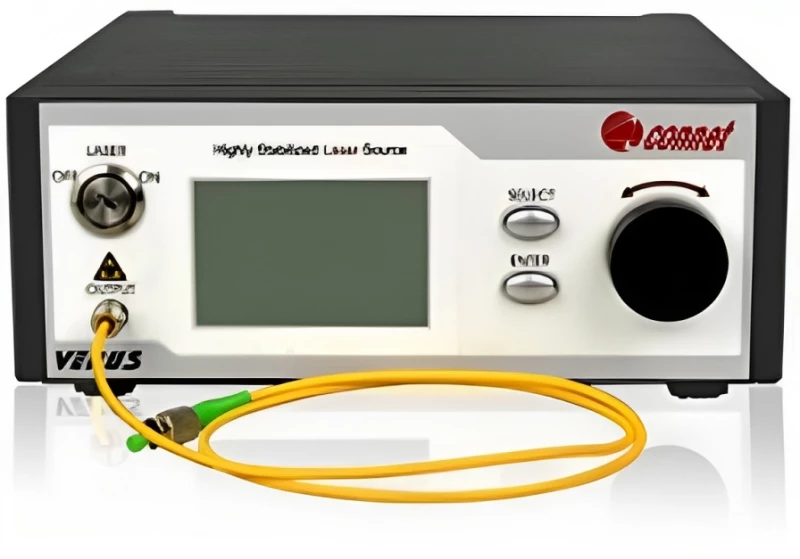
The VENUS Series 2.0 μm high‑stability ASE light source is a precision-engineered mid‑infrared broadband source designed for demanding laboratory and industrial environments. Built around a thulium-doped fiber ASE engine, it delivers a smooth, wide emission spectrum from 1820 nm to 2020 nm with a typical spectral width greater than 50 nm (FWHM). This makes it particularly suitable for applications where a stable, low‑coherence, broadband infrared source is essential, such as high‑resolution spectroscopy, gas sensing, and advanced biomedical research.
Compared with typical ASE and SLD-based broadband sources on the market, the VENUS 2.0 μm platform stands out through its exceptional output stability and system integration. The integrated benchtop configuration offers continuously tunable output power from 30% to 100% of the rated level (with typical options such as 10 mW, 20 mW, and 50 mW up to a maximum of 100 mW), while maintaining an output power stability better than ±0.5% over 15 minutes and within ±2% over 8 hours under standard conditions. These stability figures are on par with, or better than, many high-end mid‑IR ASE sources used in precision metrology and research, enabling long unattended measurement runs and repeatable data acquisition.
The optical path is carefully optimized to ensure low-noise, high-quality output. A high isolation of at least 30 dB at the output port protects the internal ASE engine from back-reflections, enhancing both stability and reliability in complex optical setups. The beam quality is specified with an M² value of less than 1.2, providing a near-diffraction-limited profile that can be efficiently coupled into test setups, free-space optics, or additional fiber components. The standard single-mode fiber output with FC/APC connector minimizes back‑reflection and enables straightforward integration with commonly used components in the 2.0 μm band. For applications requiring a defined polarization state, a polarization-maintaining (PM) fiber output can be provided as an option.
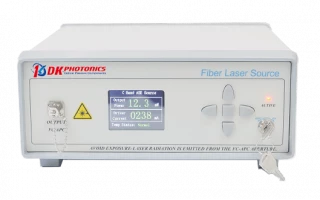
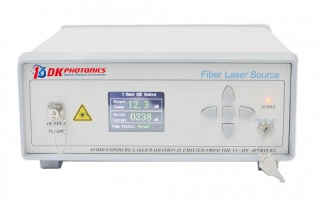
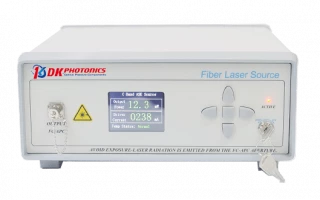
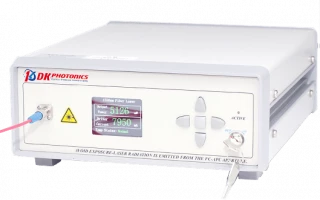
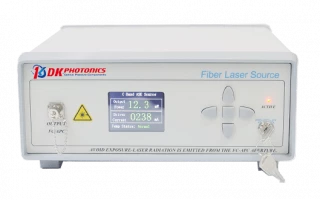
Engineered for practical use in both R&D and production environments, the VENUS benchtop unit incorporates a high‑definition LCD interface that simultaneously displays operating current, voltage, and output power. This allows users to monitor the source condition in real time and make fine adjustments via the built-in coarse and fine power control modes. The output can be precisely tuned within the 30–100% adjustable range, providing the flexibility needed to match detector ranges, avoid saturation in sensitive spectrometers, and carry out calibrated power-dependent experiments. The intuitive, turnkey system design helps reduce setup time and operator training compared with more basic fiber‑pigtailed ASE modules.
Thermal and electronic stability are central to the VENUS Series architecture. A proprietary heat treatment and thermal management process is used in conjunction with actively controlled drive electronics to ensure long‑term, drift‑free operation over the specified 0 °C to +50 °C operating temperature range. The high‑speed response protection circuitry continuously monitors key operating parameters and safeguards the light source in the event of sudden power surges, unexpected disconnections, or optical faults. This design approach increases overall system lifetime and enhances reliability in mission‑critical applications such as continuous environmental monitoring or OEM test platforms.
Typical use cases include broadband mid‑IR spectroscopy for molecular fingerprinting, where the 2.0 μm range is sensitive to overtone and combination bands of various gases and organic compounds. In gas sensing, the broad emission spectrum can be combined with tunable filters or spectrometers to detect multiple absorption lines simultaneously, supporting multi‑species measurements in industrial process control, environmental monitoring, and safety systems. Biomedical researchers can leverage the low‑coherence, broadband 2.0 μm output for tissue spectroscopy, optical diagnostics, and exploratory imaging modalities where deeper penetration and specific absorption contrast are required. Additionally, the source is well suited for general test and measurement tasks, component characterization in the 2 μm band, and other scientific investigations that demand a stable, broadband infrared source.
For system integrators, the VENUS Series is also available in a compact module configuration, offering the same core optical performance in a smaller footprint suitable for embedding into larger instruments and OEM platforms. Whether deployed as a stand‑alone benchtop source or integrated into a complex measurement system, this 2.0 μm ASE broadband light source provides a robust, low‑maintenance solution that aligns with the performance levels of leading mid‑IR ASE products used worldwide,
Connet VENUS C+L-Band ASE Broadband Light Source
Specifications
| Bandwidth: | 50 nm |
|---|---|
| Center Wavelength: | 1565 nm |
| Output Power: | 100 mW |
| Polarization: | Random |
| Output Isolation: | 30 dB |
| Polarization Extinction Ratio: | 15-20 dB |
| Output Power Adjustable Range: | 10-100 % |
| Power Consumption: | 20 W |
| Beam Quality: | <1.2 M2 |
| Output Fiber Type: | Single-mode Fiber(PM optional) |
| Operating Voltage: | 100-240 VAC |
| Operating Temperature: | 0 to +50 ℃ |
| Storage Temperature: | -40 to +85 ℃ |
| Dimension: | 340(L)×240(W)×100(H) mm |
Got questions about specs? Use the inquiry form to ask.
 Download Data Sheet

Features
- Broad 2.0 µm Infrared Coverage (1820–2020 nm) – Delivers a continuous, flat ASE spectrum across the mid‑infrared band, ideal for advanced spectroscopy, gas sensing, biomedical imaging, and general test and measurement applications.
- Wide Spectral Bandwidth >50 nm (FWHM) – Provides broadband emission suitable for high‑resolution spectral analysis, optical component characterization, and interferometric techniques requiring low coherence length.
- High Output Power Options up to 100 mW – Available with typical output powers of 10 mW, 20 mW, 50 mW and up to 100 mW, enabling flexible configuration for both laboratory research and production test setups.
- Exceptional Power Stability <±0.5% (15 min), <±2% (8 h) – Long‑term output power stability better than 1% ensured by a unique heat‑treatment process and optimized thermal design, reducing drift and improving measurement repeatability over hours of operation.
- Continuously Adjustable Output Power (30–100%) – Coarse and fine adjustment modes allow precise control of output level, simplifying system calibration, detector linearity tests, and sensitivity optimization.
- Integrated High‑Speed Protection Circuit – Professionally designed fast‑response protection electronics safeguard the ASE source and connected components from power surges, ESD, and unexpected load changes, improving system reliability and lifetime.
- Turn‑Key Benchtop Platform – Fully integrated, ready‑to‑use system requiring only AC mains power; no external controllers or drivers needed, minimizing setup time in labs and production lines.
- High‑Definition LCD Status Display – Front‑panel LCD simultaneously shows operating current, voltage, and output power for real‑time monitoring and straightforward operation.
- Excellent Beam Quality (M² < 1.2) – Near‑Gaussian beam from a single‑mode fiber output ensures efficient coupling into optical components, spectrometers, interferometers, and sensing setups.
- 30 dB Optical Isolation – Built‑in output isolator protects the internal ASE source from back‑reflections, maintaining stable operation and extending device lifetime in reflection‑prone measurement systems.
- Single‑Mode or PM Fiber Output – Standard single‑mode fiber output with optional polarization‑maintaining (PM) fiber for applications requiring improved polarization characteristics and higher measurement consistency.
- Random or PM Polarization Options – Standard random polarization minimizes polarization‑dependent effects in many measurements, while optional PM output supports polarization‑sensitive experiments and coherent detection schemes.
- Low Power Consumption (<20 W) – Energy‑efficient design reduces thermal load and operating cost, simplifying integration into compact test racks and portable systems.
- Wide Operating Temperature Range (0–50 °C) – Reliable performance across typical laboratory and industrial environments without the need for additional temperature‑conditioning infrastructure.
- Robust Mechanical Design (340 × 240 × 100 mm) – Compact benchtop chassis fits easily on crowded optical tables and in 19" rack systems (with shelf), suitable for both R&D labs and manufacturing lines.
- Universal AC Input (100–240 VAC) – Globally compatible power supply enables straightforward deployment in international facilities without external adapters.
- Standard FC/APC Connector Interface – Angled‑polish fiber connector minimizes back‑reflection and ensures plug‑and‑play compatibility with most telecom‑grade and lab‑grade fiber‑optic components.
- Optimized for Spectroscopy and Sensing – Broadband, low‑coherence emission at 2.0 µm is well suited for absorption spectroscopy, tunable filter characterization, gas cell evaluation, environmental monitoring, and industrial process control.
- Ideal for Biomedical and Mid‑IR Research – Output around 2.0 µm targets important absorption bands of water and biological tissues, supporting optical diagnostics, imaging, and therapeutic research applications.
- Available as Compact Module for OEM Integration – In addition to benchtop format, a compact module package is offered for seamless integration into OEM instruments, fiber‑optic sensing systems, and custom test platforms.
Applications
- Mid-Infrared Spectroscopy – Ideal broadband source (1820–2020 nm, >50 nm FWHM) for absorption, reflection, and transmission spectroscopy in the 2.0 µm band, supporting material characterization, chemical identification, and optical component testing.
- Gas Sensing and Environmental Monitoring – Provides stable, low-noise illumination for tunable and broadband gas sensors targeting absorption lines near 2 µm (e.g., CO2, CH4, H2O, NH3, and other greenhouse and industrial gases) in laboratory and field monitoring systems.
- Biomedical and Tissue Spectroscopy – Suitable for near- and mid‑infrared biomedical diagnostics, tissue optical property measurements, and spectroscopy of water-rich biological samples where the 2 µm window offers enhanced absorption contrast.
- Optical Coherence Tomography (OCT) and Imaging Research – Broadband ASE output can be used as a source for experimental 2.0 µm OCT, diffuse optical imaging, and depth-resolved imaging in highly scattering media.
- Optical Component and Fiber Characterization – Enables spectral testing of mid‑IR fibers, waveguides, couplers, filters, isolators, and interference components operating in the 2.0 µm region, including insertion loss and spectral response measurements.
- Fiber Laser and Amplifier Development – Acts as a seed or test source for Tm-doped and Ho-doped fiber amplifiers and lasers, supporting gain characterization, saturation measurements, and ASE noise evaluation in the 2 µm band.
- Wavelength-Dependent Loss and Spectral Response Testing – Provides a smooth, broadband spectrum for characterizing wavelength-dependent loss (WDL), spectral attenuation, and passband/stopband behavior of optical devices and sensor elements around 2 µm.
- Mid‑IR Optical Metrology and Test & Measurement – Turn-key benchtop platform for R&D labs requiring a stable reference source for calibrating spectrometers, optical power meters, detectors, and monitoring systems at 2.0 µm.
- Biomedical Sensor and Probe Development – Supports the design and validation of mid‑IR fiber probes, endoscopic sensors, and minimally invasive diagnostic tools utilizing the 2.0 µm spectral region.
- Material and Polymer Analysis – Useful for examining vibrational overtones and combination bands in polymers, glasses, liquids, and specialty materials that exhibit characteristic absorption features near 2 µm.
- Industrial Process Control and In‑Line Monitoring – Can be integrated into process analytical technology (PAT) platforms for real-time monitoring of gases and vapors in industrial plants, combustion systems, and cleanroom environments.
- Remote Sensing and LIDAR Subsystem Research – Serves as a broadband reference or calibration source in the development of 2 µm sensing heads, detectors, and filtering stages for emerging LIDAR and free-space sensing concepts.
- Optical Sensor Interrogation – Provides broadband illumination for specialty mid‑IR fiber sensors, interferometric sensors, and resonant devices (e.g., micro-ring resonators and etalons) operating in the 1820–2020 nm range.
- Photonic Device R&D and Prototyping – Facilitates rapid characterization of novel 2 µm photonic integrated circuits (PICs), planar waveguides, and mid‑IR on-chip components in academic and industrial research labs.
- Educational and Demonstration Systems – Well suited for university and training laboratories as a robust, user-friendly ASE light source for experiments in mid‑IR optics, spectroscopy, and fiber technology.
Frequently Asked Questions
What is the Connet VENUS 2.0 µm high‑stability ASE broadband light source and what makes it unique?
What are the key optical specifications of the VENUS 2.0 µm ASE source (VASS‑Tm‑2000‑B)?
How stable is the output power of the VENUS 2.0 µm ASE light source and under what conditions is it specified?
What applications is a 2.0 µm ASE broadband source like the VENUS VASS‑Tm‑2000‑B best suited for?
How do I select and order the correct VENUS 2.0 µm ASE model and output power?
What electrical and environmental requirements are needed to operate the VENUS ASE light source safely?
What are the mechanical interface and fiber output details of the VASS‑Tm‑2000‑B?
Got more questions? Use the inquiry form to ask the supplier directly.
Similar Products
Your inquiry has been received.
Create an account by adding a password
Why create an account?
- Auto-complete inquiry forms
- View and manage all your past messages
- Save products to your favorites
- Close your account anytime — no hassle