
Description
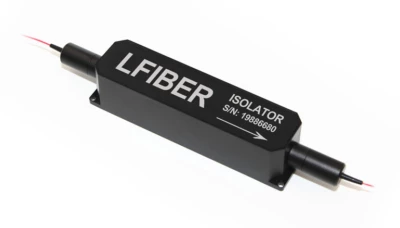
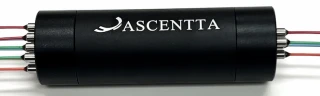
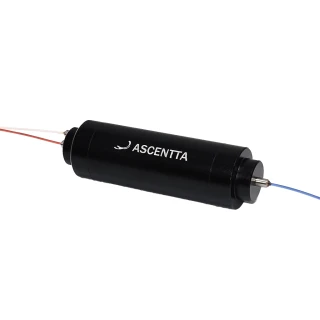
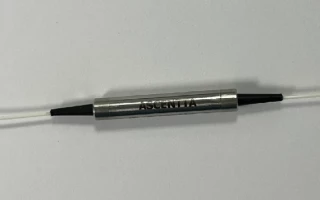
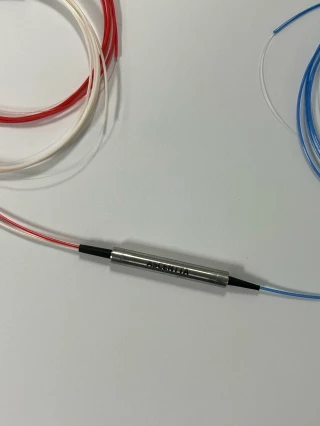
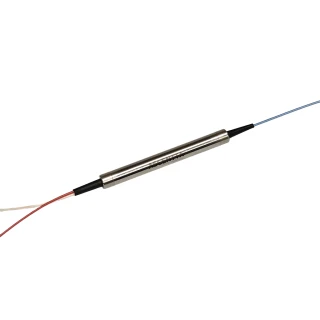
High-Power Dual-Stage Fiber Optic Isolator – Polarization-Independent, 780–1064 nm
This high-power dual-stage fiber optic isolator is engineered for demanding laser and amplifier systems operating at 1064 nm, 1030 nm, 980 nm, 915 nm, 850 nm, 808 nm, and 780 nm. Designed as a polarization-independent device, it delivers consistently high isolation and low insertion loss across a wide operating wavelength range (±5 nm), making it ideally suited for applications where the state of polarization cannot be controlled. Compared with many standard single-stage and lower power isolators on the market, this dual-stage design offers substantially enhanced suppression of back reflections and feedback, while handling significantly higher average and peak optical powers.
At room temperature (23 °C), the isolator provides a typical peak isolation of 65 dB and a minimum isolation of 55 dB, ensuring robust protection of sensitive upstream laser sources against detrimental back-propagating light. Typical insertion loss is only 0.8 dB (maximum 1.2 dB), which is highly competitive among high‑power dual‑stage isolators and helps maintain excellent system efficiency. With polarization dependent loss kept to a maximum of 0.2 dB, the device maintains stable performance even in environments where polarization varies or drifts over time. A minimum return loss of 45 dB on both input and output sides further reduces unwanted reflections, supporting stable, low‑noise operation in precision photonic systems.
This isolator is optimized for high‑power fiber laser and amplifier architectures. It supports up to 20 W of average optical power and up to 10 kW peak power for nanosecond pulses, making it suitable for industrial pulsed lasers, MOPA (Master Oscillator Power Amplifier) fiber lasers, and high‑gain fiber amplifier chains. In these systems, reflected light can seriously degrade beam quality, induce instabilities, or damage upstream components. The dual‑stage configuration provides the extra margin of isolation commonly required in advanced manufacturing, materials processing, and precision micromachining setups, where high pulse energies and tight focusing dramatically increase the risk of back‑reflection.
The device is equally well adapted for polarization maintaining fiber amplifiers, test and measurement instruments, and laboratory research platforms. In characterization benches, interferometric setups, and optical test systems, its combination of high isolation, low insertion loss, and polarization independence simplifies integration and improves the repeatability of measurements. By minimizing unwanted feedback, it helps maintain stable output power and reduces noise in sensitive detectors and photonic components downstream. Compared to typical single‑stage components often used in basic setups, this dual‑stage isolator offers superior stability and protection when scaling up power or measurement dynamic range.
Mechanical and environmental robustness is built into the design. The standard package size is 150 mm × 28 mm × 26 mm, providing a compact yet thermally manageable form factor that accommodates high-power handling. The device withstands a maximum tensile load of 5 N on the fiber, supporting reliable installation in practical fiber routing layouts. An operating temperature range of +10 °C to +50 °C and storage range of 0 °C to +60 °C align well with typical laboratory and industrial environments, while maintaining consistent optical performance over daily thermal variations.
Flexible fiber and connector options allow this high‑power dual‑stage isolator to be tailored to specific system designs. It is commonly configured with HI1060 or SMF‑28e fibers, with pigtails available as 250 µm bare fiber or 900 µm loose‑tube jacket, and fiber lengths such as 0.5 m, 0.8 m, or 1.0 m. Standard connector options include FC/UPC, FC/APC, SC/UPC, SC/APC, LC/UPC, and LC/APC, or it can be supplied without connectors when ultra‑low loss fusion splicing is preferred for continuous‑wave, high‑power interconnections. This mirrors best practices in high‑power fiber laser integration worldwide, where splicing directly to the device minimizes insertion loss and improves long‑term reliability.
For installations involving connectors, considerations are made to preserve performance and mechanical integrity: insertion loss increases by approximately 0.3 dB and return loss decreases by about 5 dB relative to bare‑fiber configurations. Additionally, the bare fiber itself is not intended to support the weight of the connector, so for pigtail assemblies with connectors, the 900 µm loose‑tube jacket is strongly recommended over 250 µm bare fiber. This construction follows common high‑reliability practices in industrial photonics, helping prevent fiber stress, micro‑bends, and long‑term degradation at connection points.
High-Power High-Isolation PI Isolator
Specifications
| Type Of The Device: | Isolator |
|---|---|
| Operating Wavelength: | 780 nm |
| Max Power: | 20 W |
| Min Isolation: | 55 dB |
| Center Wavelengths: | 1064, 1030, 980, 915, 850, 808, 780 nm |
| Operating Wavelength Range: | ±5 nm |
| Typical Peak Isolation At 23℃: | 65 dB |
| Minimum Isolation At 23℃: | 55 dB |
| Typical Insertion Loss At 23℃: | 0.8 dB |
| Maximum Insertion Loss At 23℃: | 1.2 dB |
| Maximum Polarization Dependent Loss At 23℃: | 0.2 dB |
| Minimum Return Loss (Input/Output): | 45 dB |
| Maximum Average Optical Power: | 20 W |
| Maximum Peak Power For Ns Pulse: | 10 kW |
| Maximum Tensile Load: | 5 N |
| Package Dimensions: | 150 x 28 x 26 mm |
| Operating Temperature: | +10 to +50 ℃ |
| Storage Temperature: | 0 to +60 ℃ |
| Polarization: | Polarization-independent |
| Stage Type: | Dual-stage |
| Recommended Fiber Types: | HI1060, SMF-28e, others |
| Available Pigtail Types: | 250 μm bare fiber, 900 μm loose tube |
| Standard Fiber Length Options: | 0.5 m, 0.8 m, 1.0 m |
| Connector Options: | None, FC/UPC, FC/APC, SC/UPC, SC/APC, LC/UPC, LC/APC |
| Typical Average Power Options (ordering): | 500 mW, 1 W, 2 W, 5 W, 10 W, 20 W |
| Typical Peak Power Options (ordering): | 10 kW, 20 kW |
Got questions about specs? Use the inquiry form to ask.
 Download Data Sheet

Features
- High-Power Dual-Stage Design – Dual-stage fiber isolator engineered for robust protection of high-power laser systems, providing enhanced suppression of back-reflections in demanding industrial and laboratory environments.
- Broad Wavelength Coverage – Available at 1064 nm, 1030 nm, 980 nm, 915 nm, 850 nm, 808 nm, and 780 nm with an operating range of ±5 nm, ideal for Yb-doped fiber lasers, MOPA fiber lasers, pump lasers, and test setups.
- Polarization-Independent Operation – Polarization independent design ensures stable isolation performance regardless of input polarization state, simplifying system integration and alignment.
- Ultra-High Isolation – Up to 65 dB typical peak isolation and ≥55 dB minimum isolation at 23℃, significantly reducing feedback into the laser cavity and improving output stability and lifetime of the laser source.
- Low Insertion Loss – 0.8 dB typical and ≤1.2 dB maximum insertion loss at 23℃, minimizing system power budget penalties and optimizing overall laser and amplifier efficiency.
- Low Polarization Dependent Loss (PDL) – ≤0.2 dB PDL at 23℃ ensures consistent transmission for randomly polarized or fluctuating polarization states, supporting high-precision and measurement applications.
- High Return Loss – ≥45 dB return loss at input and output ports reduces back-reflected power into upstream components, enhancing stability of sensitive laser and detection modules.
- High Power Handling Capability – Supports up to 20 W average optical power and 10 kW peak power for ns pulses, suitable for high-power CW fiber lasers, pulsed fiber lasers, and MOPA architectures.
- Optimized for Fiber Laser and Amplifier Systems – Designed for use with fiber lasers, MOPA fiber lasers, polarization-maintaining fiber amplifiers (in PI configuration), and advanced testing instruments in R&D and production lines.
- Compact, Rugged Package – Standard compact housing of 150 × 28 × 26 mm supports easy integration into OEM laser modules, optical benches, and 19" rack systems while maintaining mechanical robustness.
- Stable Over Operating Temperature – Reliable performance from +10℃ to +50℃ operating temperature and 0℃ to +60℃ storage temperature, suitable for laboratory, industrial, and field deployments.
- Mechanical Reliability – Designed with a maximum tensile load of 5 N on fiber pigtails, ensuring long-term mechanical stability in fixed installations and within laser cabinets.
- Multiple Fiber and Pigtail Options – Configurable with HI1060, SMF-28e, and other SM fibers, and available with 250 µm bare fiber or 900 µm loose-tube pigtails in standard lengths (0.5 m, 0.8 m, 1.0 m) or as specified.
- Connector and Splice Configurations – Offered with FC/UPC, FC/APC, SC/UPC, SC/APC, LC/UPC, LC/APC, or other connector types on request. For highest power and lowest loss CW applications, fusion splicing without connectors is recommended.
- Optimized for High-Power CW and Pulsed Operation – Engineered for continuous-wave and nanosecond pulsed operation, making it suitable for material processing, micromachining, LiDAR pumping, and nonlinear optics experiments.
- High Reliability and Long-Term Stability – Robust internal optical design and precision alignment ensure high reliability and stability under continuous high-power operation, reducing maintenance and downtime in OEM systems.
- Customizable Performance and Packaging – Center wavelength, fiber type, pigtail length, connector style, power handling, and packaging can be customized to meet specific OEM or research requirements; special versions available on request.
- Compatible with Advanced Laser Architectures – Well suited for integration in Yb-doped fiber laser cavities, amplifier chains, pump combiners, test racks, and front-end seed sources where high isolation and low loss are critical.
- Application-Focused Design – Ideal for industrial marking and engraving, medical laser systems, metrology, spectroscopy, sensing, and R&D applications requiring reliable protection against back-reflected light.
Applications
- High-Power Fiber Laser Systems – Prevents back reflections and feedback in high‑power CW and pulsed fiber lasers at 1064nm, 1030nm, 980nm, 915nm, 850nm, 808nm, and 780nm. Enhances laser stability, protects seed and pump diodes, and improves beam quality in industrial, medical, and research laser platforms.
- MOPA Fiber Lasers (Master Oscillator Power Amplifier) – Ideal for multi‑stage MOPA architectures where double isolation is critical between oscillator and amplifier stages. Minimizes ASE and self‑oscillation, protects sensitive low‑power seed sources, and supports high peak power nanosecond and picosecond pulse amplification.
- Polarization-Independent Fiber Amplifier Chains – Suitable for Yb‑doped and other rare‑earth‑doped fiber amplifier chains where the input polarization is not controlled. Provides robust isolation between pre‑amp, mid‑amp, and power amplifier stages in both laboratory and OEM amplifier modules.
- High-Power Pump Laser Protection – Used at 915nm, 980nm, 808nm, and 850nm to protect pump diodes and pump combiners in cladding‑pumped fiber lasers and amplifiers. Reduces risk of catastrophic optical damage from strong back‑reflections in high‑brightness pump delivery fibers.
- Precision Laser Material Processing – Ensures stable laser operation in high‑power systems for cutting, drilling, welding, marking, engraving, and micro‑machining of metals, polymers, ceramics, and semiconductors. Limits feedback from reflective workpieces and variable fixtures.
- Nonlinear Fiber Optics Experiments – Provides high isolation in setups involving supercontinuum generation, frequency conversion, Raman and Brillouin scattering, and parametric amplification. Prevents unwanted feedback that can seed parasitic nonlinear effects or destabilize the pump source.
- Ultrafast and Short-Pulse Fiber Laser Setups – Supports ns high‑peak‑power pulses up to 10 kW, making it suitable for Q‑switched, gain‑switched, and mode‑locked fiber lasers operating near 1 µm and in the 780–980 nm range. Protects oscillator cavities and amplifier stages from back‑propagating pulses.
- Fiber Laser Seeding and Master Oscillators – Used between low‑power seed lasers and high‑power amplifier modules to block back reflections into narrow‑linewidth or single‑frequency sources. Improves spectral purity and frequency stability in precision laser systems.
- Optical Test and Measurement Instruments – Integrated in optical test benches, power meters, spectrum analyzers, and diagnostic modules to protect sensitive detectors, photodiodes, and measurement heads from reverse light and overload conditions.
- Laboratory R&D and Photonics Prototyping – A versatile building block for research labs developing new high‑power fiber laser architectures, pump‑probe systems, nonlinear setups, and fiber‑based sensors requiring reliable, polarization‑independent isolation across several NIR wavelengths.
- Optical Communication and Free-Space Links (Specialty 780–980 nm Systems) – Applicable in specialized short‑wavelength fiber communication links, free‑space optical communication terminals, and test lines around 780nm–980nm, where feedback suppression is needed for stable transmitter performance.
- Medical and Biomedical Laser Delivery – Supports high‑power laser delivery at 808nm, 850nm, 915nm, 980nm, and 1064nm for applications such as dermatology, photocoagulation, endoscopy, and therapeutic systems, where feedback from tissue or disposable fiber probes must be minimized.
- Industrial OEM Laser Modules – Integrates easily into OEM laser engines, rack‑mount fiber laser systems, and compact laser heads as a standard protection element. Enhances long‑term reliability and field stability under demanding industrial environments.
- High-Power Fiber Sensor Interrogation Units – Used in high‑power interrogation units for fiber Bragg gratings (FBG), distributed temperature sensing (DTS), and distributed acoustic sensing (DAS), helping to isolate source lasers from backscattered or reflected signals.
- Optical Isolation in Multi-Wavelength Platforms – Supports multiple center wavelengths (1064nm, 1030nm, 980nm, 915nm, 850nm, 808nm, 780nm), making it suitable for versatile laser benches and tunable/source‑switched platforms where different wavelengths are used on the same line.
- Return-Loss Improvement in Fiber Networks and Modules – Deployed in fiber‑based modules and subsystems to improve return loss and minimize back‑reflections from connectors, splices, and interfaces, supporting stable operation of high‑power and high‑sensitivity optical components.
Frequently Asked Questions
What is a high‑power dual‑stage fiber optic isolator and what wavelengths does this model support?
How does a dual‑stage isolator protect fiber lasers and amplifiers compared to a single‑stage isolator?
What power levels can this high‑power dual‑stage isolator handle for CW and pulsed operation?
Is this isolator polarization‑independent and what is its polarization dependent loss (PDL)?
What fiber types, pigtail options, and connectors are available for this Lfiber dual‑stage isolator?
How should I integrate this high‑power dual‑stage isolator into my system, and are connectors recommended at high power?
What environmental conditions and mechanical limits should I consider when using this dual‑stage isolator?
Got more questions? Use the inquiry form to ask the supplier directly.
Similar Products



Your inquiry has been received.
Create an account by adding a password
Why create an account?
- Auto-complete inquiry forms
- View and manage all your past messages
- Save products to your favorites
- Close your account anytime — no hassle