
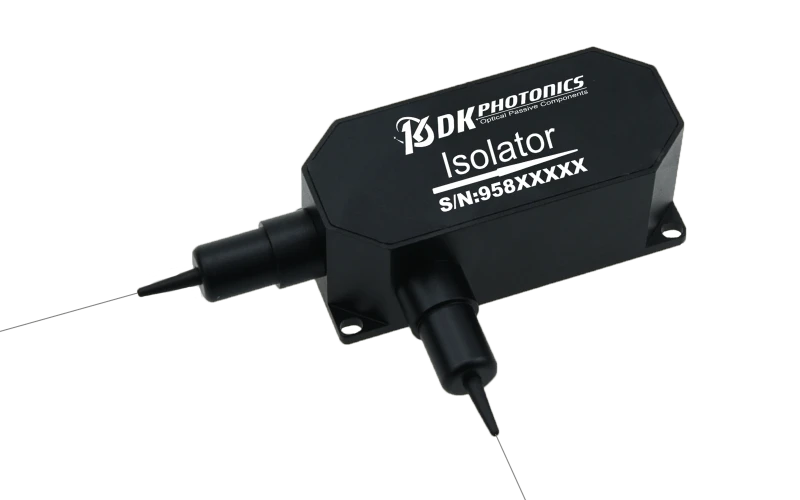
Description
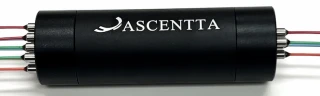
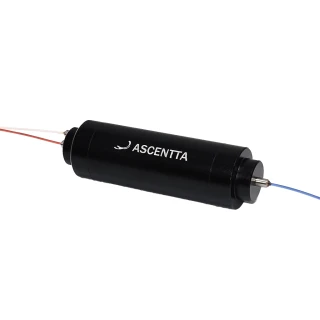
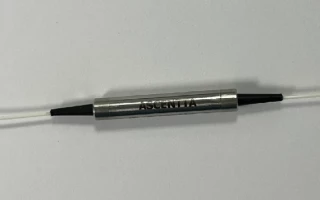
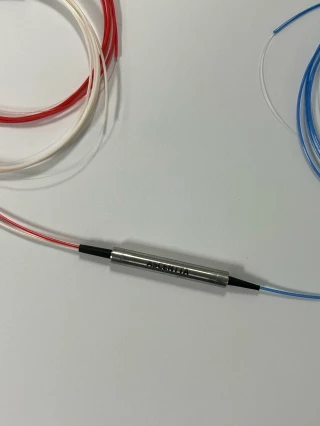
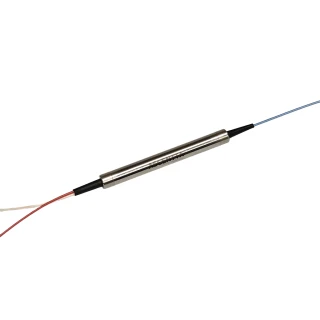
The 780–1100 nm TGG-based dual stage optical isolator from DK Photonics is engineered to provide robust protection for sensitive laser and fiber optic systems operating in the near-infrared spectrum. Designed around a terbium gallium garnet (TGG) Faraday rotator and a dual-stage configuration, this isolator delivers exceptionally high isolation while maintaining low insertion loss. It is specifically optimized for demanding applications such as fiber lasers, optical amplifiers, and precision test and measurement setups where back reflections can severely degrade performance, induce instabilities, or damage components.
By incorporating two isolation stages in series, this device significantly reduces backward-propagating light over a wide operating range from 780 nm up to 1100 nm. This broad coverage makes it suitable for common wavelengths such as 780 nm, 808 nm, 850 nm, 915 nm, 980 nm, 1030 nm, 1064 nm, and other nearby emission lines used in solid-state, diode-pumped, and fiber laser platforms. The careful optical design and high-quality TGG crystal enable strong Faraday rotation with minimal absorption, allowing the isolator to provide high isolation ratios without compromising the forward signal power.
The isolator is built for stability and reliability in both laboratory and industrial environments. Its construction emphasizes excellent environmental robustness, ensuring stable operation across temperature variations and mechanical stresses typically encountered in system integration and long-term deployment. Low insertion loss helps preserve overall system efficiency, which is especially important in high-power or power-sensitive architectures such as fiber amplifiers and laser pumping chains. High return loss further contributes to clean signal propagation by minimizing parasitic reflections at the device interfaces.
Typical implementations include protecting seed lasers in master oscillator power amplifier (MOPA) configurations, isolating output stages of fiber lasers, and safeguarding sensitive measurement instruments from stray reflections in free-space or fiber-coupled setups. In optical communication and sensing systems, the dual stage isolator enhances signal integrity and improves long-term stability by suppressing backscattered and back-reflected light originating from downstream components, connectors, or targets. It is also well-suited for laboratory optical benches where multiple optical elements and interfaces can introduce uncontrolled feedback.
The 780–1100 nm TGG-based dual stage isolator is available with a variety of fiber pigtail and connector options to facilitate seamless integration into existing fiber networks. Configurations using standard single-mode, polarization-maintaining, or specialty fibers can be selected to match specific wavelength bands and power levels. For high-power operation, the device can be supplied connector-free to support direct splicing, helping to minimize losses and avoid damage at connector interfaces. Standard pigtail lengths and protective tubing options simplify routing and packaging inside laser modules, instrumentation racks, or OEM assemblies.
In addition to standard configurations, the design platform supports a wide range of customized solutions. Users can specify center wavelength, bandwidth, fiber type, pigtail length, power handling capability, and connector style to align with the exact needs of their system architecture. This flexibility is especially valuable for OEMs and integrators working with non-standard wavelengths, novel laser sources, or unique environmental constraints. With its combination of high isolation, low insertion loss, and reliable TGG-based Faraday rotation, this dual stage optical isolator offers a robust and cost-effective choice for safeguarding near-infrared laser and fiber optic systems across research, industrial, and communication markets.
780nm - 1100nm TGG Based Dual Stage Optical Isolator
Specifications
| Type Of The Device: | Isolator |
|---|---|
| Operating Wavelength: | 780 nm |
| Max Power: | 10 W |
| Min Isolation: | 40 dB |
| Operating Wavelength Range: | ±10 nm |
| Typ. Peak Isolation: | 50-55 dB |
| Typ. Insertion Loss: | 1.0 dB |
| Max. Insertion Loss (at 25℃): | 1.5 dB |
| Min. Return Loss: | 45 dB |
| Maximum Power Handling (continuous Wave): | 10 W |
| Fiber Type: | 780-HP, or other |
| Operating Temperature: | 0 to +70 ℃ |
| Storage Temperature: | -40 to +85 °C |
Got questions about specs? Use the inquiry form to ask.
 Download Data Sheet

Features
- Broad Operating Wavelength Range (780–1100 nm) – TGG-based dual stage optical isolator optimized for key near‑IR laser lines (e.g., 780 nm, 808 nm, 850 nm, 980 nm, 1030 nm, 1064 nm), ideal for diode, solid‑state, and fiber laser systems.
- Dual Stage Design for Ultra‑High Isolation – Two‑stage Faraday rotator structure delivers significantly higher isolation than single‑stage isolators, effectively suppressing back reflection and backscattering to protect sensitive laser sources and stabilise output power.
- Low Insertion Loss – Precision optical design and high‑quality TGG crystal ensure very low insertion loss, preserving optical power and improving overall system efficiency in demanding fiber optic and free‑space laser setups.
- High Return Loss & Superior Back‑Reflection Suppression – Engineered for high return loss to minimize feedback into the laser cavity, reducing noise, mode hopping, and wavelength drift in high‑coherence laser systems.
- High Power Handling Capability – Supports continuous‑wave (CW) and pulsed laser operation with options up to multi‑watt average power and pulsed power levels (e.g., <10 kW peak, depending on configuration), making it suitable for industrial, medical, and scientific applications.
- Excellent Environmental Stability & Reliability – Robust opto‑mechanical design using high‑grade TGG and coatings ensures stable performance over temperature, vibration, and long‑term operation, ideal for 24/7 deployed systems.
- Multiple Fiber Type Options – Available with common single‑mode fibers (e.g., 780‑HP, 1060‑XP) and other specialty fibers on request, enabling seamless integration into existing fiber laser and amplifier platforms.
- Flexible Pigtail Configurations – Supplied with 250 µm bare fiber, 0.9 mm loose tube, or other jacket options and standard 1.0 m pigtail length (custom lengths available) to match different installation and routing requirements.
- Connector and Bare‑Fiber Options – Can be provided connectorized (e.g., FC/PC, FC/APC and other industry‑standard connectors) or with bare fiber for direct splicing. For high‑power applications, direct splicing (no connector) is recommended to minimize loss and heating.
- Low PDL and PMD for Precision Applications – Carefully controlled polarization‑dependent loss and low polarization mode dispersion make the device suitable for precision measurement, sensing, and high‑coherence laser applications.
- Cost‑Effective Performance – Offers a strong balance between high isolation, low insertion loss, and power handling at an attractive cost level, providing an excellent price‑to‑performance ratio for OEM and research users.
- Compact Package with Flexible Mounting – Small form factor package simplifies integration into optical modules, laser heads, and system racks. Package dimensions may be adapted upon request for space‑constrained designs.
- Customizable Wavelengths and Specifications – Non‑standard center wavelengths within 780–1100 nm, special bandwidths, different isolation targets, and power ratings can be customized to match unique system requirements.
- Tailored for Key Applications – Designed for fiber optic amplifiers, fiber lasers, diode‑pumped solid‑state lasers, test and measurement equipment, optical instrumentation, and other high‑performance photonics systems requiring reliable back‑reflection protection.
- OEM and Custom Design Support – DK Photonics provides full engineering support for OEM integration, including help with part‑number selection (e.g., DSISO‑85‑L‑C‑S78‑90‑10‑FA, DSISO‑64‑10‑P‑06X‑25‑10‑00) and rapid customization of pigtails, connectors, wavelengths, and power levels.
- Consistent Quality and Manufacturing Control – Produced under strict quality control with repeatable performance from unit to unit, supporting high‑volume deployment in commercial and industrial optical systems.
- Future‑Ready, Upgradable Platform – Modular approach to fiber type, connectorization, and packaging allows easy adaptation to next‑generation system upgrades without re‑designing the entire optical path.
Applications
Applications of 780–1100 nm TGG Based Dual Stage Optical Isolator (DK-XS-DT-006-A/2)
- Fiber Laser Systems
- Protection of 780–1100 nm ytterbium and diode-pumped fiber lasers from damaging back-reflection
- Stabilization of CW and pulsed high-power fiber laser output in industrial and scientific setups
- Isolation between seed laser and high‑power amplifier stages in MOPA architectures
- Noise reduction and prevention of parasitic lasing in narrow-linewidth and single-frequency lasers
- Fiber Amplifiers (EDFAs, YDFAs and Other Gain Blocks)
- Input/output isolation for 850 nm and 1.0 μm band fiber amplifiers to prevent gain depletion by reflections
- Protection of pump diodes and active fibers in high-gain amplifier chains
- Improved amplifier stability in laboratory and OEM amplifier modules
- Diode and Solid-State Laser Protection
- Isolation of free-space and fiber-coupled laser diodes operating in the 780–1100 nm range
- Back-reflection suppression for DPSS and solid-state lasers used for material processing, marking, and micromachining
- Prevention of wavelength drift and mode hopping caused by optical feedback
- Precision Test and Measurement
- Integration in optical test benches to protect light sources and detectors during characterization
- Use in automated production testing lines for laser modules and fiber components
- Improved measurement repeatability by eliminating feedback in interferometric or reflective setups
- Optical Instrumentation and Metrology
- Incorporation in laboratory instruments such as spectrum analyzers, power meters, and optical sampling systems
- Isolation in optical coherence and interferometric instruments at 780–1100 nm
- Back-reflection control in optical sensor interrogation units and reference channels
- Optical Communication and Data Links
- Short-reach and specialty fiber communication links operating near 850 nm and 1064 nm
- Protection of transceivers, transmitters, and receivers from reflections in high-speed links
- Improvement of signal integrity in backplane, board-level, and intra-datacenter optical interconnects
- Free-Space and Fiber-Coupled Sensing
- Use in LIDAR and range-finding systems working around 905 nm or 1064 nm to protect laser sources
- Back-reflection isolation in fiber-based sensing systems, including strain, temperature, and acoustic sensors
- Improved stability in distributed sensing systems using 1 μm band sources
- Nonlinear and Ultrafast Optics
- Protection of mode-locked and ultrafast fiber lasers at 780–1100 nm from cavity and external reflections
- Isolation in nonlinear frequency conversion setups (SHG, OPO, supercontinuum generation) to prevent feedback to pump lasers
- Use in ultrafast pump–probe and time-resolved spectroscopy experiments
- Biomedical and Biophotonics Systems
- Integration into ophthalmic and biomedical laser sources operating around 780–1064 nm
- Back-reflection suppression from biological samples, optics, and scanning heads in imaging systems
- Use in research-grade instruments for fluorescence excitation and optical trapping in the near-IR
- Laser Micromachining and Material Processing
- Beam delivery isolation for marking, engraving, cutting, and drilling systems using 1 μm band lasers
- Protection of laser heads from reflections off metals, semiconductors, and dielectrics
- Stabilization of process performance in OEM laser tools and workstations
- OEM Modules and Integrated Photonic Systems
- Embedding in OEM laser engines, amplifier modules, and system sub-assemblies
- Integration with circulators and rotators in complex optical routing and isolation functions
- Customized solutions with specific fiber types, connector options, or power handling for specialized equipment
- Research and Development Laboratories
- General-purpose isolation in experimental fiber and free-space setups between 780 and 1100 nm
- Use in prototype systems where high isolation and low insertion loss are critical
- Flexible platform for custom configurations in advanced photonics research
Frequently Asked Questions
What is a 780–1100 nm TGG-based dual stage optical isolator and how does it work?
What are the typical applications of DK Photonics’ 780–1100 nm dual stage optical isolator?
What power handling options are available and how should I choose between CW and pulsed operation?
What are the fiber and connector options for the DK Photonics dual stage optical isolator?
How do insertion loss, isolation, and return loss change when connectors are added?
How do I correctly specify and order a custom dual stage optical isolator from DK Photonics?
What environmental and reliability characteristics does this TGG-based dual stage isolator offer?
Got more questions? Use the inquiry form to ask the supplier directly.
Similar Products



Your inquiry has been received.
Create an account by adding a password
Why create an account?
- Auto-complete inquiry forms
- View and manage all your past messages
- Save products to your favorites
- Close your account anytime — no hassle