


Description
The 1310nm Faraday Mirror from DK Photonics is a high‑performance passive optical component engineered to provide precise polarization rotation and highly stable reflection in fiber optic systems. Operating at the 1310 nm telecom window, this device combines high isolation, low insertion loss, and high return loss in a compact, robust package. By integrating a Faraday rotator with a reflective element, the mirror converts an incoming polarization state into its orthogonal state upon double pass, effectively compensating for polarization changes introduced by birefringence in the fiber link.
Unlike simple reflective terminations, the Faraday Mirror actively rotates the polarization state by 45° or 90° (depending on model selection) relative to the input light. After propagating through the fiber and reflecting from the mirror, the signal retraces its path with a polarization state that is orthogonal to the outbound state. This mechanism greatly reduces polarization sensitivity in interferometric and sensing architectures, as well as in polarization‑dependent devices such as Brillouin amplifiers, EDFAs, and certain fiber laser designs. As a result, the 1310nm Faraday Mirror is ideally suited for advanced fiber networks, coherent measurement setups, and laboratory instrumentation where polarization stability is critical.
Optimized Optical Design for Low Loss and High ReturnThe device is based on a precision magneto‑optic crystal aligned with a reflective surface and pigtailed with single‑mode fiber optimized for 1310 nm operation. The optical path is epoxy‑free, which minimizes absorption and long‑term drift caused by aging or outgassing of adhesive materials. This construction helps achieve very low insertion loss, high return loss, and excellent environmental stability across the specified operating bandwidth (centered at 1310 nm with a typical tolerance of ±30 nm). In demanding applications such as fiber interferometers and high‑resolution optical sensors, these characteristics translate directly into improved signal‑to‑noise ratio and long‑term repeatability.
Compared to conventional mirrors or simple cleaved‑fiber reflectors, Faraday Mirrors drastically reduce the impact of polarization mode dispersion and random polarization fluctuations along the fiber. When integrated into Michelson or Mach‑Zehnder interferometers, they help suppress polarization‑induced fading, enabling more accurate phase and intensity measurements. In fiber optic antenna remoting and distributed sensing systems, this leads to more stable amplitude and phase responses over time, even when environmental conditions change or the fiber is subject to mechanical stress.
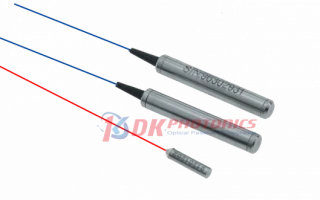
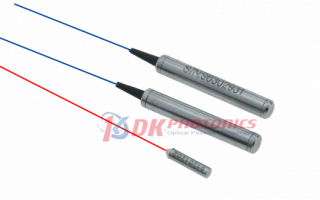
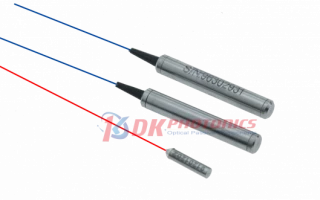
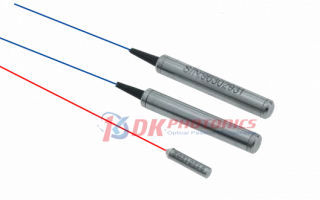
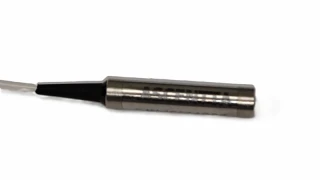
Compact, Robust Package for Easy IntegrationThe 1310nm Faraday Mirror is housed in a compact cylindrical package (typically Ø5.5 mm × 35 mm), allowing straightforward integration into existing modules, patch panels, and test setups. The small footprint enables deployment in space‑constrained enclosures, rack‑mount systems, and portable field instruments. A range of fiber pigtail configurations is available, including 250 μm bare fiber and 0.9 mm loose tube options with standard lengths such as 0.5 m, 1.0 m, and 1.5 m. This flexibility allows designers to minimize splice points and optimize cable management within their systems.
The device is designed for durability and reliability under typical telecom and laboratory environments. The epoxy‑free optical path not only enhances thermal stability but also reduces the risk of performance degradation under elevated temperatures or prolonged operation. When connectors are required, common interface types such as FC/PC, FC/APC, SC/APC, and LC/APC can be specified at the time of ordering, ensuring compatibility with standard fiber infrastructure. For the lowest possible insertion loss and highest return loss, the connectorless configuration remains preferred, with connectors added only where necessary in the system layout.
Versatile Functionality for Amplifiers, Testing, and Telecom NetworksAt 1310 nm, the Faraday Mirror is well suited for metropolitan and access network segments, passive optical networks, and legacy single‑mode links that operate in the O‑band. In fiber amplifiers and laser systems, it can be used to create self‑aligning cavities and to mitigate the effects of polarization‑dependent gain or polarization hole burning. In Brillouin and Raman‑based configurations, the Faraday Mirror helps stabilize back‑reflected signals, improving gain uniformity and reducing fading associated with polarization fluctuations.
In test and measurement environments, the 1310nm Faraday Mirror serves as a reliable reference reflector and polarization manipulator. It is widely used in automated fiber characterization benches
1310nm Faraday Mirror High Isolation Low Insertion Loss Epoxy Free
Specifications
| Center Wavelength: | 1310 nm |
|---|---|
| Operating Bandwidth: | 30 nm |
| Insertion Loss (max): | 0.6 dB |
| Faraday Rotation Angle (single Pass): | 45 deg deg |
| Operating Bandwidth: | ±30 nm |
| Faraday Rotation Angle: | 45° |
| Dimensions: | Ø5.5mm x L35mm |
| Pigtails Diameter: | 900μm Loose Fiber |
| Fiber Length: | 1.0m |
| Connector: | None |
Got questions about specs? Use the inquiry form to ask.
 Download Data Sheet

Features
- High Isolation & Polarization Control – Provides stable Faraday rotation (45° or 90°) to effectively manage and depolarize input light, minimizing polarization‑induced fluctuations in interferometers, amplifiers, and sensing systems.
- Low Insertion Loss – Optimized optical design and high‑quality materials ensure minimal signal attenuation, improving overall system optical budget and performance in long‑haul and precision measurement setups.
- High Return Loss / Excellent Back‑Reflection Suppression – Engineered for high return loss to reduce back‑reflections, improving stability and reducing noise in lasers, EDFAs, and other sensitive optical components.
- Epoxy‑Free Optical Path – Fully epoxy‑free optical path provides low outgassing, high cleanliness, and superior long‑term reliability, ideal for high‑power and demanding environmental applications.
- Compact and Robust Package – Small cylindrical package (e.g., Ø5.5 mm × 35 mm) saves space in dense optical modules, test instruments, and integrated fiber assemblies while maintaining mechanical robustness.
- 1310 nm Optimized Design – Precisely aligned and coated for 1310 nm operation with ±30 nm bandwidth, suitable for O‑band telecom links, fiber networks, and specialized 1310 nm laser systems.
- Enhanced System Stability – By reflecting light with controlled polarization rotation, the Faraday Mirror helps eliminate polarization sensitivity in fiber systems, improving measurement repeatability and link stability.
- Broad Application Versatility – Ideal for fiber optical amplifiers, fiber optic system testing, fiber optic LAN systems, telecommunications, Brillouin amplifiers, fiber lasers, interferometric sensors, and antenna remoting systems.
- Customizable Configuration – Available with 45° or 90° rotation angles, various fiber pigtail diameters (250 μm bare fiber, 0.9 mm loose tube, and others), and multiple connector options (FC/PC, FC/APC, SC/APC, LC/APC, or custom) to match different integration needs.
- Low PDL and High Reliability – Designed for low polarization‑dependent loss and long‑term environmental stability, supporting consistent performance over wide temperature ranges and extended service life.
- Integration‑Ready Pigtails – Standard pigtail lengths (0.5 m, 1.0 m, 1.5 m, or custom) simplify integration into existing fiber networks, laboratory setups, and OEM modules.
- Telecom‑Grade Manufacturing – Built to stringent quality standards for telecom and industrial markets, with stable performance over time and compatibility with common single‑mode fibers and network components.
Applications
- Optical fiber interferometers – use Faraday mirrors to eliminate polarization-induced phase fluctuations and enhance measurement stability in Mach–Zehnder, Michelson, and Sagnac interferometers.
- Fiber laser systems – integrate in linear and ring fiber lasers to stabilize polarization, reduce feedback sensitivity, suppress mode hopping, and improve output power stability and coherence.
- Brillouin and Raman fiber amplifiers – mitigate polarization-dependent gain (PDG) and improve gain flatness and signal-to-noise ratio in distributed and discrete Brillouin/Raman amplification schemes.
- EDFA and other fiber optical amplifiers – reduce polarization-dependent loss (PDL) and gain fluctuations in Erbium-Doped Fiber Amplifiers and similar amplifier chains for metro and long‑haul links.
- Polarization-insensitive transmission links – create reflection-based configurations that automatically compensate for polarization changes in single-mode links over temperature, stress, and aging.
- Telecommunications and DWDM systems – enhance stability in bidirectional and reflective architectures, optical add/drop modules, and monitoring ports in 1310 nm access and metro networks.
- Fiber-to-the-Home (FTTH) and PON networks – apply in reflective ONU/ONT modules, remote testing points, and polarization-stable monitoring loops in GPON/EPON and similar PON systems.
- Fiber optic LAN and data center interconnects – improve link reliability and reduce polarization sensitivity in 1310 nm short-reach and campus networks using reflective or loop-back architectures.
- Optical time-domain reflectometry (OTDR) and fiber test loops – use as high-stability reflective terminations to double-pass the fiber under test while cancelling polarization effects for more accurate OTDR traces.
- Laboratory measurement systems – integrate in polarization-sensitive test setups, component characterization benches, and metrology systems to achieve polarization-independent measurement results.
- Coherent and interferometric sensing – stabilize polarization in fiber-optic gyroscopes (FOG), distributed acoustic sensing (DAS), distributed temperature/strain sensing, and other coherent detection sensors.
- Fiber optic antenna remoting – enhance stability of RF-over-fiber and antenna remoting links by reducing polarization-dependent variations in amplitude and phase over environmental changes.
- Reflective modulators and transceivers – support polarization-insensitive operation of reflective electro‑absorption modulators, phase modulators, and other reflective devices at 1310 nm.
- Polarization mode dispersion (PMD) compensation schemes – use in double‑pass configurations where Faraday rotation helps average polarization effects and reduce PMD impact on high‑bit‑rate signals.
- Sensor networks with reflective FBGs – provide stable reflective terminations and polarization control in fiber Bragg grating sensor arrays, improving wavelength and intensity measurement accuracy.
- Inline monitoring and loop-back testing – implement permanent or temporary reflective points in networks for remote loop-back testing, bit‑error‑rate (BER) characterization, and system health monitoring.
- Quantum optics and low‑level signal experiments – enable polarization‑insensitive reflections in single‑photon or low‑light experiments where polarization drift would otherwise degrade measurement fidelity.
- High‑temperature and harsh‑environment fiber links – leverage epoxy‑free optical path and compact package for reliable polarization management in industrial, aerospace, and field‑deployed systems.
- General polarization management in single‑mode fibers – apply wherever residual polarization effects must be minimized, using 45° or 90° Faraday rotation to average out fiber birefringence on double pass.
Frequently Asked Questions
What is a 1310nm Faraday Mirror and how does it work?
What are typical applications of a 1310nm Faraday Mirror?
What is the difference between a 45° and a 90° Faraday Mirror, and how do I choose?
What are the key optical and mechanical specifications of the DK Photonics 1310nm Faraday Mirror?
How do I specify and order a custom 1310nm Faraday Mirror from DK Photonics?
How does the epoxy‑free optical path benefit performance and reliability?
Which fiber and connector options are recommended for the DK Photonics 1310nm Faraday Mirror?
Got more questions? Use the inquiry form to ask the supplier directly.
Similar Products
Your inquiry has been received.
Create an account by adding a password
Why create an account?
- Auto-complete inquiry forms
- View and manage all your past messages
- Save products to your favorites
- Close your account anytime — no hassle