
Description
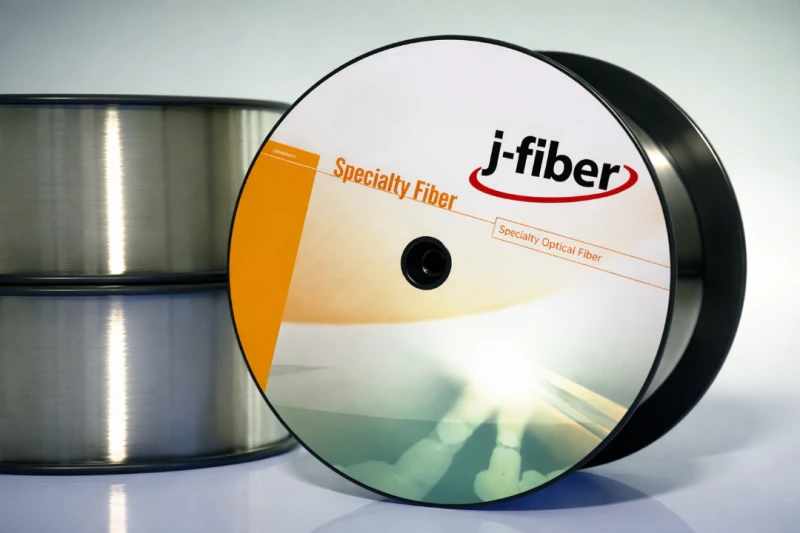
SMF 09/125/500µm MIL-Spec Radiation Hard Singlemode Fiber is a premium product from j-fiber’s series of radiation-resistant fibers, meticulously engineered to meet the rigorous demands of military and aerospace environments. Approved by the Defense Logistic Agency (DLA) under the U.S. Military MIL-PRF-49291 standard, this fiber is designed to excel in conditions where radiation exposure is a critical concern. Its robust construction ensures minimal attenuation changes, providing reliable performance even in the most challenging settings.
This singlemode fiber is specified for use in both 1310nm and 1550nm applications, making it versatile for various communication needs. Its design facilitates easy handling and splicing, ensuring seamless integration into existing systems. The fiber's fast recovery time and low attenuation changes under radiation exposure set it apart from other commercial singlemode fibers, making it an ideal choice for applications where performance cannot be compromised.
Manufactured in compliance with MIL-PRF-49291/7-02 standards, the SMF 09/125/500µm fiber boasts a core/clad concentricity error of ≤ 1.0 µm and a clad diameter of 125 ± 1 µm. Its coating diameter is 500 ± 25 µm, ensuring optimal protection and durability. With a tensile proof of ≥ 690 MPa and dynamic tensile strength that remains robust even after aging, this fiber is built to withstand the demands of long-term use in harsh environments.
j-fiber GmbH, a MIL-STD 790 certified facility, ensures that each fiber meets the highest quality standards. Located in Jena, Germany, j-fiber is committed to delivering superior products that meet the stringent requirements of military specifications. For more information or to place an order, customers are encouraged to contact j-fiber directly to discuss their specific needs and requirements.
MIL-Spec Radiation Hard Singlemode Fiber 09/125/500µm
Specifications
| Mode Field Diameter (MFD): | 8.5 um |
|---|---|
| Wavelength Range: | 1310 – 1550 nm |
| Cable Length: | 1100 m |
| Fiber Core Material: | Silica |
| Core/Clad Concentricity Error: | ≤ 1.0 µm |
| Dynamic Tensile Strength Aged: | ≥ 1.75 GPa |
| Dynamic Tensile Strength Initial: | ≥ 3.2 GPa |
| Tensile Proof: | ≥ 690 MPa |
| Fiber Mass/unit Length: | ≤ 0.25 kg/km |
| Length: | ≥ 1.1 km |
| Overall Coating Concentricity Ratio (OCCR): | ≥ 0.84 |
| Coating /Clad Concentricity Error: | ≤ 15.0 µm |
| Coating Diameter: | 500 ± 25 µm |
| Cladding Non-Circularity: | ≤ 2.0 % |
| Clad Diameter: | 125 ± 1 µm |
| Type: | II Singlemode |
| Macrobending Attenuation @ 1310nm: | ≤ 0.5 dB |
| Chromatic Dispersion @ 1310/1550nm: | ≤ 3.2/22 ps/nm/km |
| Mode Field Diameter: | 8.5…10.0 ±0.7 µm |
| Attenuation Uniformity @ 1310nm: | ≤ 0.1 dB |
| Attenuation @ 1310/1550nm: | 0.4/0.3 dB/km |
| Wavelength: | D 1310 & 1550 |
| Composition: | A Glass & Glass Silica |
| Size: | II 09/125µm |
| Class: | 5 Dispersion unshifted |
Got questions about specs? Use the inquiry form to ask.
 Download Data Sheet

Features
- Radiation Hardness: Designed to withstand radiation exposure in military and aerospace environments, ensuring reliable performance in harsh conditions.
- Low Attenuation Changes: Exhibits the lowest attenuation changes under radiation exposure, maintaining signal integrity.
- Fast Recovery Time: Offers the fastest recovery time compared to other commercial singlemode fibers, enhancing operational efficiency.
- Wavelength Compatibility: Specified for use in 1310nm and 1550nm applications, providing versatility for various communication needs.
- Easy Handling and Splicing: Designed for straightforward handling and splicing, simplifying installation and maintenance processes.
- MIL-Spec Compliance: Complies with MIL-PRF-49291/7-02 standards, ensuring high-quality and reliable performance.
Applications
- Military and Aerospace Applications: Designed to withstand radiation and harsh environments, making it ideal for military and aerospace use.
- Telecommunications: Suitable for 1310nm and 1550nm applications, ensuring reliable communication over long distances.
- Data Transmission: Low attenuation and fast recovery time make it perfect for high-speed data transmission.
- Research and Development: Used in environments where radiation resistance is crucial, such as nuclear research facilities.
- Medical Equipment: Can be used in medical imaging and diagnostic equipment that requires radiation-resistant components.
- Space Exploration: Ideal for use in satellites and other space equipment exposed to high levels of radiation.
- Industrial Applications: Suitable for harsh industrial environments where radiation exposure is a concern.
Frequently Asked Questions
What is the SMF 09/125/500µm MIL-Spec Radiation Hard Singlemode Fiber designed for?
What are the key features of this singlemode fiber?
What wavelengths is the fiber specified for use in?
What is the attenuation at 1310nm and 1550nm?
What are the mechanical characteristics of this fiber?
Who has qualified and approved this fiber?
Got more questions? Use the RFQ form to ask the supplier directly.
Similar Products
Need pricing for this product? Send a quick inquiry
Your inquiry has been received.
Create an account by adding a password
Why create an account?
- Auto-complete inquiry forms
- View and manage all your past messages
- Save products to your favorites
- Close your account anytime — no hassle