Description
Armadillo’s plastic-clad silica fibers ensure high transmission values across UV to NIR wavelengths, catering to applications ranging from remote illumination to high-power laser delivery and spectroscopy. Our ArmD® UV-SC and NIR-SC fibers, excelling in UV and MIR transmission, provide full bio-compatibility and cost-effective alternatives to traditional silica fibers.
ArmD® UV-SC/NIR-SC
Specifications
| Wavelength Range: | 300 – 2200 nm |
|---|---|
| Fiber Core Material: | Silica |
| Wavelength / Spectral Range: | 350 – 2200 nm |
| Numerical Aperture (NA): | 0,40 ± 0,02 |
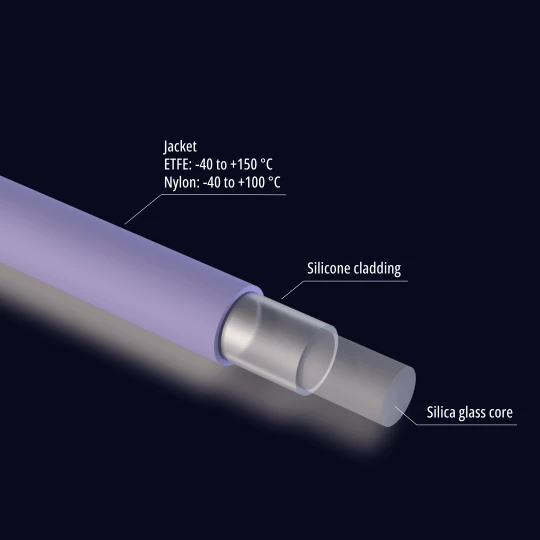
| Operating Temperature: | -40 to +150 °C |
| Core Diameter: | Available from 100 to 2000 µm |
| OH Content ArmD™ PUV: | high (> 700 ppm) |
| OH Content ArmD™ PWF: | low (< 1 ppm) |
| Standard Prooftest: | 100 kpsi |
| Minimum Bending Radius (short-term Mechanical Stress): | 50 × cladding diameter |
| Minimum Bending Radius (during Use With High Laser Power): | 150 × core diameter |
| Standard: | 0,40 ± 0,02 |
| Jacket ETFE: | -40 to +150 °C |
| Jacket Nylon: | -40 to +100 °C |
Got questions about specs? Use the inquiry form to ask.
 Download Data Sheet

Features
- High concentricity
- Step-index profile
- Biocompatible material
- Sterilisable using ETO and other methods
Applications
- First choice for applications from remote illumination to spectroscopy and many more.
- Your advantages
- Option of fully customised fiber production
- A complete solution for all your performance needs
- ISO 9001 compliant manufacturing environment
- CE mark
Frequently Asked Questions
What are ArmD® UV-SC/NIR-SC plastic-clad silica fibers?
ArmD® UV-SC/NIR-SC fibers are fibers that feature high transmission values for UV through NIR wavelengths and are ideal for applications from remote illumination and spectroscopy to high power laser delivery.
What are the advantages of ArmD® UV-SC/NIR-SC fibers?
The advantages of ArmD® UV-SC/NIR-SC fibers include being cost-effective (compared to silica/silica fibers), having high concentricity, a step-index profile, biocompatible material, and being sterilisable using ETO and other methods.
What are the advantages of using ArmD® UV-SC/NIR-SC fibers?
The advantages of using ArmD® UV-SC/NIR-SC fibers include low-attenuation transmission from UV to NIR wavelengths, being a cost-effective alternative to pure silica fibers, and suiting a wide range of applications from remote illumination to spectroscopy.
What are the applications of ArmD® UV-SC/NIR-SC fibers?
ArmD® UV-SC/NIR-SC fibers are the first choice for applications from remote illumination to spectroscopy and many more.
What is the operating temperature of ArmD® UV-SC/NIR-SC fibers?
The operating temperature of ArmD® UV-SC/NIR-SC fibers is -40 to +150 °C.
Got more questions? Use the RFQ form to ask the supplier directly.
Similar Products
Optran® PWF – Low-OH Fiber with Silicone Cladding (350-2200 nm)
Ceramoptec
Optran® PUV – High-NA Fiber with Silicone Cladding (350-2200 nm)
Ceramoptec
Optran® WFNS – Low-OH Silica Fibers for VIS-NIR (300–2400 nm)
Ceramoptec
Optran® WF – Low-OH Silica Fibers for VIS-NIR (700–2400 nm)
Ceramoptec
Optran® UVNS – Non-Solarizing UV Fiber (190–1200 nm)
Ceramoptec
Optran® UV – High-OH UV Fiber (220–1200 nm)
Ceramoptec
Optran® UVWFS – Broadband Low-OH Fiber (200-2000nm)
Ceramoptec
Optran® HWF – High Numerical Aperture VIS-NIR Optical Fiber
Ceramoptec
Optran® HUV – High-NA UV Fiber (350-2200 nm)
Ceramoptec
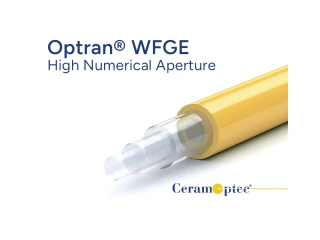
Optran® WFGe – Germanium-Doped Fiber (400–2400 nm)
Ceramoptec
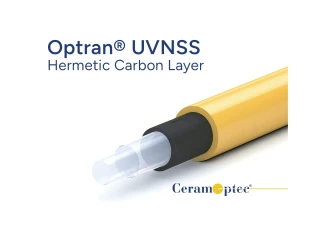
Optran® UVNSS – Solarization-Resistant High-OH Fiber (190–700 nm)
Ceramoptec
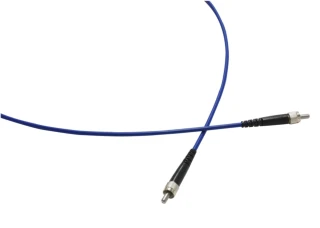
High-Performance Multimode Optical Fibers for Visible, UV, and NIR Transmission
Evolve Sensing
Need pricing for this product? Send a quick inquiry
Thank You!
Your inquiry has been received.
Create an account by adding a password
Why create an account?
- Auto-complete inquiry forms
- View and manage all your past messages
- Save products to your favorites
- Close your account anytime — no hassle