

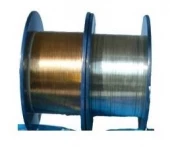
Description
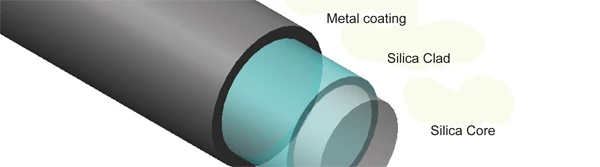
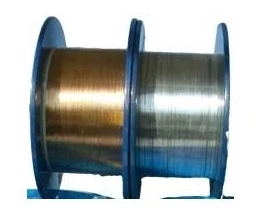
art photonics' Metal-Coated Silica Fibers are ideally suited for use in high temperature, vacuum and harsh chemical environments. This is due to the strong mechanical adhesion of the metal directly to the silica cladding during drawing process.
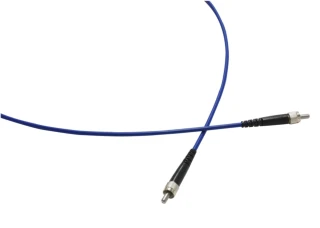
Metal Coated Fibers: FlexiRay® MCS 9 Cu-alloy
Specifications
| Core Diameter: | 9 um |
|---|---|
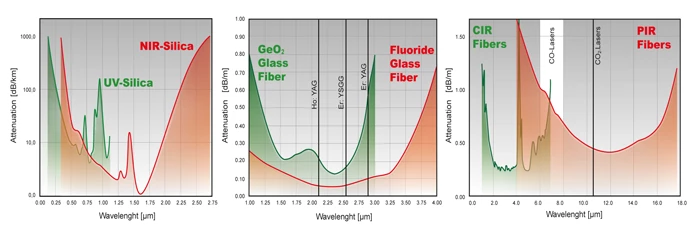
| Wavelength Range: | 180 – 2500 nm |
| Cable Length: | 50 m |
| Fiber Core Material: | Silica |
| Coating Material: | Cu-alloy |
| Standard Fiber Core Diameters: | 9, 200, 400 um |
| Coating Thickness: | 15 - 50 um |
Got questions about specs? Use the inquiry form to ask.
 Download Data Sheet

Features
- Core material: Pure silica
- High OH- ( λ= 0.18 – 1.2 μm)
- Low OH- ( λ= 0.35 – 2.5 μm)
- Cladding material: Fluoride doped fused silica
- Standard Numerical Aperture (NA): 0.22 ± 0.02 (Full Acceptance Angle 25°)
- Available Numerical Aperture (NA): 0.12 ± 0.02 (Full Acceptance Angle 14°) | 0.26 ± 0.02 (Full Acceptance Angle 30°)
- Material of metal coating: Al, Cu
- Humidity Range: Up to 100%
- Minimal bending radius (long term): 200 x fiber outer diameter
- Minimal bending radius (short term): 100 x fiber outer diameter
- Coating material: Al
- Standard Fiber core diameters: 9 μm
- Coating thickness: 15-150 μm
- Min operating temperature: -270°C
- Max operating temperature: 400°C
- Tensile strength (short gauge): 3.5–6 GPa
- Two point bending strength: >10GPa
- Static fatigue parameter: >100
Applications
- High temperature environments
- Harsh chemical environments
- Nuclear radiation
- High power laser delivery
- Medical applications
- Soldered fiber bundles
Frequently Asked Questions
What are Metal-Coated Silica Fibers used for?
Metal-Coated Silica Fibers are ideally suited for use in high temperature, vacuum and harsh chemical environments. They are commonly used in high power laser delivery, nuclear radiation, medical applications, and soldered fiber bundles.
What is the core material of Metal-Coated Silica Fibers?
The core material of Metal-Coated Silica Fibers is pure silica.
What is the numerical aperture of Metal-Coated Silica Fibers?
The standard numerical aperture (NA) is 0.22 ± 0.02 (Full Acceptance Angle 25°). Available numerical apertures include 0.12 ± 0.02 (Full Acceptance Angle 14°) and 0.26 ± 0.02 (Full Acceptance Angle 30°).
What is the minimum bending radius of Metal-Coated Silica Fibers?
The minimal bending radius (long term) is 200 x fiber outer diameter. The minimal bending radius (short term) is 100 x fiber outer diameter.
What is the maximum operating temperature of Metal-Coated Silica Fibers?
The maximum operating temperature of Metal-Coated Silica Fibers is 400°C.
Got more questions? Use the RFQ form to ask the supplier directly.
Similar Products
Optran® PWF – Low-OH Fiber with Silicone Cladding (350-2200 nm)
Ceramoptec
Optran® PUV – High-NA Fiber with Silicone Cladding (350-2200 nm)
Ceramoptec
Optran® WFNS – Low-OH Silica Fibers for VIS-NIR (300–2400 nm)
Ceramoptec
Optran® WF – Low-OH Silica Fibers for VIS-NIR (700–2400 nm)
Ceramoptec
Optran® UVNS – Non-Solarizing UV Fiber (190–1200 nm)
Ceramoptec
Optran® UV – High-OH UV Fiber (220–1200 nm)
Ceramoptec
Optran® UVWFS – Broadband Low-OH Fiber (200-2000nm)
Ceramoptec
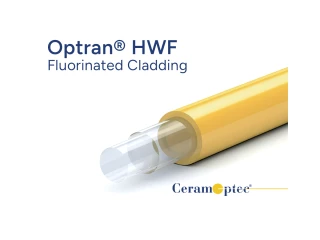
Optran® HWF – High Numerical Aperture VIS-NIR Optical Fiber
Ceramoptec
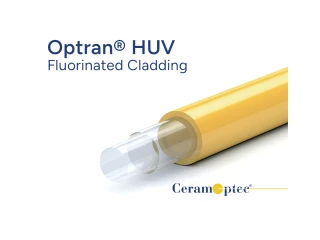
Optran® HUV – High-NA UV Fiber (350-2200 nm)
Ceramoptec
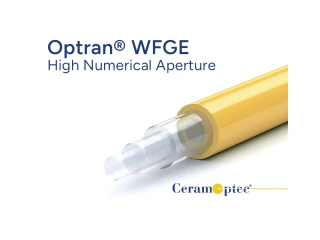
Optran® WFGe – Germanium-Doped Fiber (400–2400 nm)
Ceramoptec
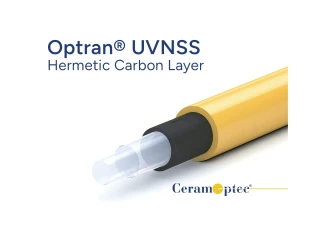
Optran® UVNSS – Solarization-Resistant High-OH Fiber (190–700 nm)
Ceramoptec
High-Performance Multimode Optical Fibers for Visible, UV, and NIR Transmission
Evolve Sensing
Need pricing for this product? Send a quick inquiry
Thank You!
Your inquiry has been received.
Create an account by adding a password
Why create an account?
- Auto-complete inquiry forms
- View and manage all your past messages
- Save products to your favorites
- Close your account anytime — no hassle