
Description
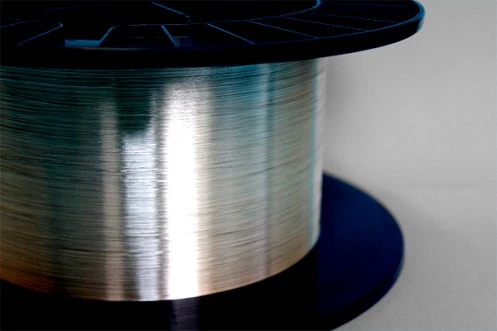
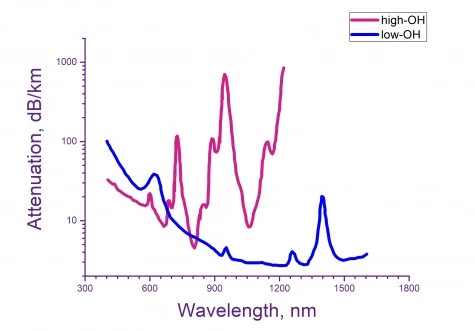
Hermetically sealed Aluminum-coated step index multimode optical fibers have all the benefits of silica-silica fibers. Additional significant improvements include increased mechanical strength and greater fatigue resistance compared to non-hermetic and polymer-clad fibers (PCS). Their transmittance covers a spectral range of 400 to 2200 nm, and also remains stable in corrosive chemicals that normally react to silica glass. The temperature range is from -196oC to +400oC. Hermetically metal-coated optical fibers are the optimum candidate when used in high vacuum and harsh environmental conditions
LOW OH MULTI-MODE STEP INDEX ALUMINUM-COATED SILICA FIBERS
Specifications
| Core Diameter: | Not Specified |
|---|---|
| Wavelength Range: | 400 – 2200 nm |
| Cable Length: | Not Specified |
| Fiber Core Material: | Silica |
| Coating Material: | Aluminium |
| Clad Material: | doped silica |
| Standard Core/Clad Diameters, µm (low OH): | 100/110, 150/165, 200/220, 300/330, 400/440, 600/636, 600/660, 800/848, 800/880, 1000/1060, 1000/1100 |
Got questions about specs? Use the inquiry form to ask.
 Download Data Sheet

Features
- Greatly enhanced resistance to high power laser radiation.
- Higher core-to-clad ratio and enlarged NA optimized for coupling to high-energy lasers.
- Better fiber cooling due to the heat-conducting metal coating.
- Excellent mechanical strength and flexibility compared to polymer coated fibers.
- Capability to feed the fibers into a high vacuum: the metal coating can be soldered and will not outgas.
Frequently Asked Questions
What are the benefits of using hermetically sealed Aluminum-coated step index multimode optical fibers?
What is the temperature range that these fibers can withstand?
What are the features of these Aluminum-coated fibers?
Can the metal coating of these fibers be soldered?
What is the numerical aperture (NA) of these fibers?
Got more questions? Use the RFQ form to ask the supplier directly.
Similar Products
Need pricing for this product? Send a quick inquiry
Your inquiry has been received.
Create an account by adding a password
Why create an account?
- Auto-complete inquiry forms
- View and manage all your past messages
- Save products to your favorites
- Close your account anytime — no hassle