
Description
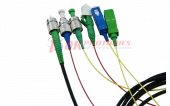
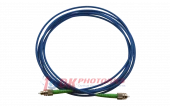
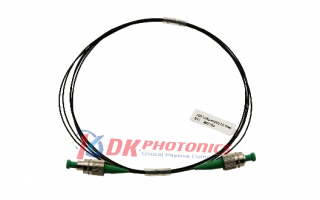
The 375nm Single Mode Patch-cord from DK Photonics is engineered for high-precision transmission in the near‑UV region, where conventional telecom fibers cannot maintain stable single-mode performance. Designed specifically around 375 nm operation, this patch cord delivers low insertion loss, high return loss, and excellent long‑term stability, making it an ideal choice for advanced laser systems, metrology setups, and UV‑sensitive instrumentation. By combining UV-optimized single mode fiber with high‑quality FC, LC, SC or other industry‑standard connectors, it provides reliable, repeatable connectivity in laboratory, industrial, and OEM environments.
Unlike standard single mode patch cords optimized for 1310 nm or 1550 nm, this 375 nm patch cord uses specialty single mode fiber with a tailored mode field diameter and numerical aperture to support robust single‑mode guidance at short wavelengths. This design minimizes modal dispersion and beam distortion, which is essential for applications such as frequency‑doubled or frequency‑tripled solid‑state lasers, UV fluorescence excitation, precision lithography, and high‑resolution spectroscopy. The result is a stable, well‑defined output mode that preserves the spatial quality of UV and violet laser sources over the full length of the cable.
The mechanical design of the 375nm Single Mode Patch-cord focuses on durability and stable performance under real‑world handling. The fiber can be supplied with 0.9 mm loose tube protection or other outer diameters on request, improving robustness while maintaining excellent flexibility for routing on optical tables or inside instruments. Tight control of connector geometry and polishing processes—available in PC and APC end‑face options—ensures consistently high return loss and minimal back‑reflection, which is particularly important for feedback‑sensitive laser systems and low‑noise detection setups.
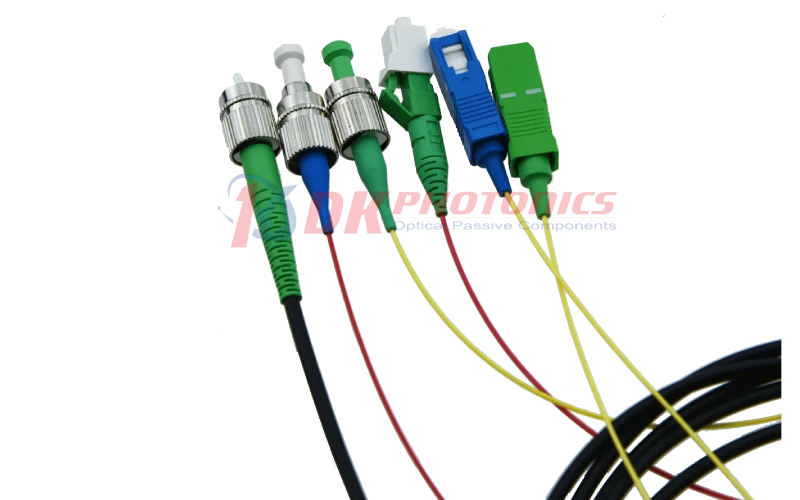
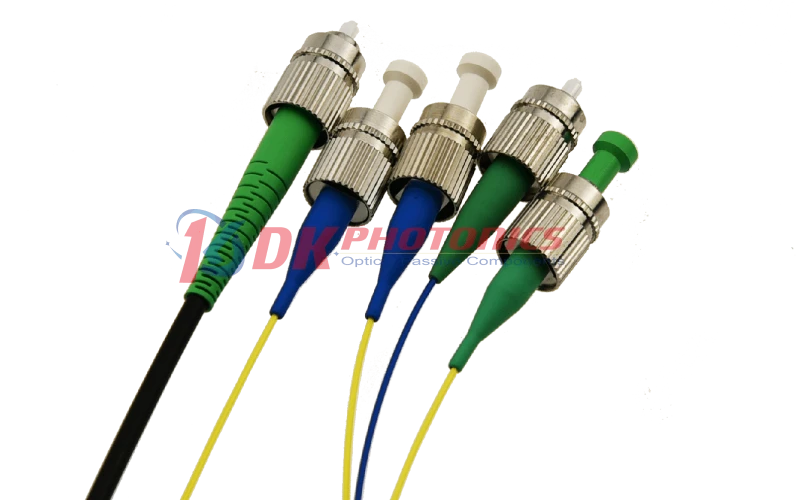
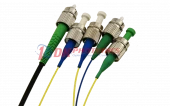
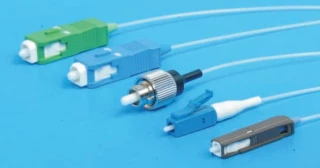
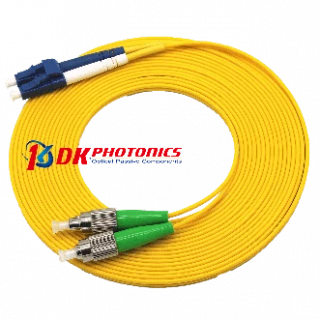
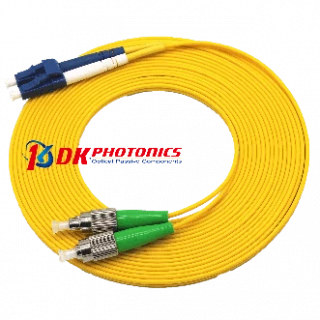
To support a wide variety of optical layouts, this patch cord is offered with multiple connector configurations and customer‑specified lengths. Users can choose FC/PC, FC/APC, SC, LC or mixed connector types to match existing ports on fiber lasers, optical transmitters, receivers, and measurement devices. The default length tolerance is tightly controlled, enabling predictable fiber routing and accurate path‑length management in interferometric or timing‑critical systems. Every assembly is manufactured and tested to ensure consistent optical performance, mechanical integrity, and environmental stability suitable for both R&D and production use.
The 375nm Single Mode Patch-cord fits seamlessly into applications such as UV and visible fiber lasers, fiber‑coupled diode modules, precision fiber I/O ports for optoelectronic instruments, and high‑performance optical transmitters and transceivers operating at shorter wavelengths. Its combination of low loss, high return loss, and proven reliability allows system designers to fully exploit the benefits of single‑mode guidance at 375 nm, whether for accurate beam delivery, stable power monitoring, or integration into complex multi‑channel fiber assemblies. For projects requiring non‑standard fiber types, jacket materials, connector configurations, or special tolerances, the product line is structured to support straightforward customization while maintaining short delivery times and repeatable quality.
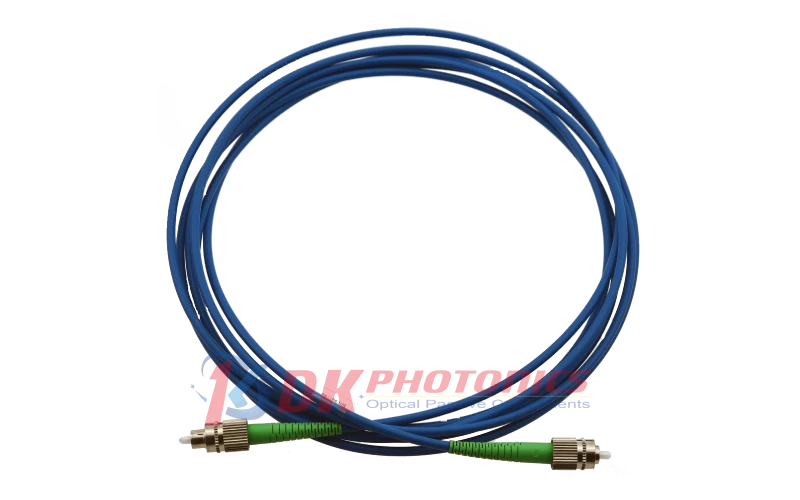
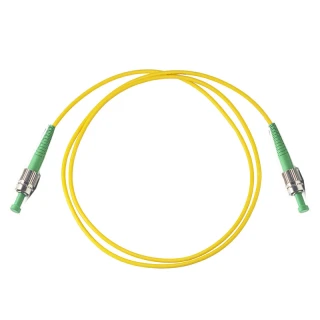
375nm Single Mode Fiber Optical Patch Cord
Specifications
| Wavelength Range: | 320 – 430 nm |
|---|---|
| Cable Length: | 1 m |
| Fiber Core Material: | Silica |
| Mode Field Diameter (MFD): | 2.0~2.4 um @ 350 nm |
| Test Wavelength: | 375 nm |
| Cutoff Wavelength: | ≤310 nm |
| Insertion Loss: | ≤3.0 dB |
| Return Loss: | ≥40 dB |
| Fiber Type: | SM300 |
| Numerical Aperture: | 0.12 |
| Repeatability: | ≤0.2 dB |
| Changeability: | ≤0.3 dB |
| Optical Power: | ≤100 mW |
| Durability: | ≥1000 times |
| Operation Temperature: | -5 to +75 ℃ |
| Storage Temperature: | -40 to +85 ℃ |
Got questions about specs? Use the inquiry form to ask.
 Download Data Sheet

Features
- Optimized for 375 nm Single-Mode Operation
Engineered specifically for 375 nm applications with true single-mode performance, ensuring precise beam quality and stable mode profile at UV wavelengths. - Low Insertion Loss
Carefully polished and aligned connectors, high‑grade UV single‑mode fiber, and tight process control deliver consistently low insertion loss for maximum power throughput and minimal signal attenuation. - High Return Loss / Low Back Reflection
Available in PC and APC polishing options to achieve high return loss, reducing back‑reflection into sensitive laser sources and improving system stability and lifetime. - Excellent Stability and Reliability
Designed for demanding lab and industrial environments, with robust materials, UV‑compatible fiber coating, and controlled manufacturing to provide long‑term optical and mechanical stability. - High-Quality UV Single-Mode Fiber
Uses specialized 300 µm‑class UV single-mode fiber (e.g., SM300) optimized for 375 nm, offering low attenuation in the near‑UV and a well‑defined mode field diameter for tight focusing. - Custom Connector Options (FC, LC, SC and More)
Supports a wide range of connector types including FC/PC, FC/APC, SC/PC, SC/APC, LC/PC, and others on request, enabling easy integration with existing equipment and test setups. - Flexible Configuration: Patch-Cord or Pigtail
Offered as standard 375 nm single-mode patch cords (connectors on both ends) or as single-mode pigtails (connector on one end, bare fiber on the other) to match different packaging and integration needs. - Precision Ferrule and Keying
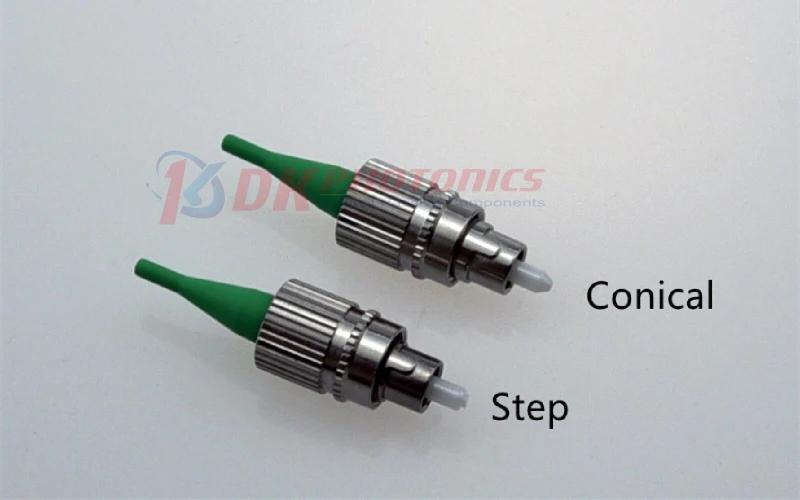
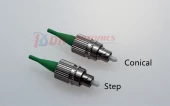
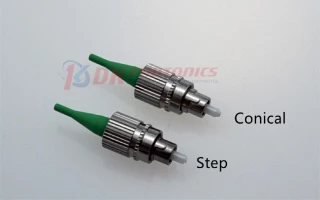
FC connectors use the narrow key (2.0 mm) standard for improved rotational alignment, ensuring consistent polarization and coupling performance in precision optical systems. - Custom Lengths with Tight Length Tolerance
Standard and custom cable lengths available, with a default length accuracy of ±5 cm; tighter tolerances can be supplied upon request for time‑critical or length‑sensitive systems. - Small-Form OD Loose Tube Protection
Uses a compact 0.9 mm OD loose tube for flexible routing in dense optical setups, while providing mechanical protection and strain relief for the fragile UV fiber. - High Power Handling for UV Fiber Lasers*
Designed for reliable use with typical 375 nm fiber‑coupled laser sources and transmitters; appropriate connector polishing and cleanliness support stable coupling at UV power levels (*observe standard UV handling and derating guidelines). - Low Polarization-Dependent Loss (PDL)
High‑precision connector geometry and fiber alignment minimize PDL, beneficial for polarization‑sensitive measurements and interferometric setups. - Wide Application Compatibility
Ideal for fiber lasers, fiber instruments, fiber I/O ports, optical transmitters and transceivers, spectroscopy systems, metrology setups, fluorescence excitation, and other near‑UV photonics applications. - Cleanroom-Grade Manufacturing and Testing
Manufactured under controlled conditions with end‑face inspection and performance testing (insertion loss/return loss) to meet stringent lab and OEM quality requirements. - Custom-Engineered Solutions Available
DK Photonics supports custom specifications on connector type, cable length, fiber type, jacket material, polishing style, and assembly details, with responsive engineering support and short lead times. - RoHS-Compliant, Industry-Standard Design
Built to widely adopted telecom and test & measurement standards for single‑mode patch cords, ensuring compatibility with global photonics platforms and compliance with environmental directives.
Applications
- UV laser delivery for 375 nm sources in industrial, medical, and scientific systems where stable single-mode beam transmission is required.
- Connection of UV DPSS and diode lasers to external optics, scanners, and beam-shaping modules for precise material processing and micro-machining.
- UV Raman spectroscopy setups, routing 375 nm excitation light between laser modules, sample stages, and spectrometers with low background and high stability.
- Fluorescence excitation in bioimaging and microscopy, delivering 375 nm light to microscopes, flow cytometers, and confocal systems for UV-excitable dyes and proteins.
- Fiber-coupled UV spectroscopy and photometry, linking light sources, sample cells, and detectors in analytical instruments operating around 375 nm.
- UV curing and photopolymerization systems, providing flexible, stable light delivery for precision curing of adhesives, coatings, and 3D printing resins.
- Fiber I/O ports for UV optical modules, serving as input/output interfaces on laser heads, optical benches, and integrated photonic subsystems.
- Optical transmitters & transceivers at 375 nm, enabling low-loss coupling between active components and fiber networks in specialty UV communication or sensing links.
- Integration and testing of fiber instruments, acting as high-quality patch leads between UV sources, attenuators, switches, filters, and power meters.
- Laboratory fiber routing on optical tables, cleanly connecting 375 nm experiments while maintaining single-mode beam quality and polarization options.
- High-precision metrology and interferometry at 375 nm, guiding coherent UV light in measurement setups that demand low insertion loss and high return loss.
- Fiber-coupled UV sensors and detectors, connecting photodiodes, PMTs, and spectrometers to remote sampling points with stable transmission.
- OEM integration into UV laser subsystems, used as internal patch cords within medical, semiconductor, and instrumentation platforms operating at 375 nm.
- Prototype and R&D development of UV fiber systems, supporting rapid configuration changes in experimental setups requiring flexible single-mode UV connections.
- Environmental and chemical monitoring systems that use 375 nm absorption or fluorescence signatures, linking probes, cells, and detection modules via fiber.
Frequently Asked Questions
What is a 375 nm single-mode patch cord and where is it typically used?
How do I specify and order a custom 375 nm single-mode patch cord from DK Photonics?
What is the difference between FC/PC and FC/APC connectors on a 375 nm single-mode patch cord?
What are the typical optical performance specifications of a 375 nm single-mode patch cord?
Can 375 nm single-mode patch cords be customized for different lengths, jackets, and connector types?
Are 375 nm single-mode patch cords compatible with standard fiber-optic equipment and connectors?
What handling and installation precautions should I follow for 375 nm single-mode patch cords?
Got more questions? Use the inquiry form to ask the supplier directly.
Similar Products

Your inquiry has been received.
Create an account by adding a password
Why create an account?
- Auto-complete inquiry forms
- View and manage all your past messages
- Save products to your favorites
- Close your account anytime — no hassle