


Description
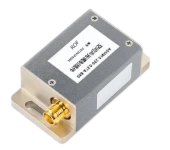
The ROF Space Acousto-Optic Modulator is an advanced spatial-type AOM designed for precise and rapid control of laser beams across an exceptionally broad wavelength range from 300 nm to 10600 nm. Engineered for demanding scientific, industrial, and photonics applications, this modulator combines fast response time with low insertion loss and a high extinction ratio, enabling efficient intensity modulation, beam switching, and frequency shifting for both continuous-wave and pulsed lasers. Its robust performance makes it suitable for everything from ultraviolet laser processing to mid-infrared spectroscopy and sensing.
At the core of this series is a carefully optimized acousto-optic crystal driven by a wide operating frequency range of 10–1500 MHz, supporting a frequency shift bandwidth of 0–100 MHz. This enables flexible, high-precision modulation schemes such as Q-switching, pulse picking, amplitude modulation, and beam blanking. The device offers high diffraction efficiency with an extinction ratio of ≥1000:1, allowing users to achieve clean on/off contrast and stable optical isolation in complex laser systems. With a configurable optical aperture from 0.1 mm to 10 mm, the ROF Space AOM accommodates both tightly focused beams and larger-diameter beams commonly used in high-power or multi-mode configurations.
Unlike many conventional acousto-optic modulators that are restricted to a narrow wavelength band or polarization state, this product series is designed to cover a broad spectral region from ultraviolet to mid-infrared and can be tailored for a wide range of laser sources. The modulator supports any input polarization state through optimized crystal orientation and packaging design, making integration easier in systems where polarization control may be limited or where multiple polarization states are used. This flexibility is especially beneficial in complex setups such as fiber laser systems, cold atom experiments, and advanced ultrafast laser laboratories where both beam quality and polarization behavior are critical.
The ROF Space Acousto-Optic Modulator is built around a compact, all-metal, hermetically sealed housing, providing excellent mechanical rigidity and environmental protection. This packaging approach enhances long-term reliability, shock resistance, and temperature stability, which are crucial in industrial production environments and field-deployed sensing platforms. Stable performance over varying thermal conditions ensures consistent diffraction efficiency and center frequency, reducing the need for frequent recalibration and simplifying long-term operation in 24/7 systems.
With its combination of fast response time, low insertion loss, and high extinction ratio, this modulator is well suited for industrial lasers used in precision materials processing, micromachining, and semiconductor manufacturing, where accurate and repeatable power control is essential. In ultrafast laser systems, it can be used for pulse picking, synchronization, and time-domain manipulation, supporting research and development in nonlinear optics, spectroscopy, and optical communications. For fiber optic sensing, the wide frequency range and high modulation depth enable advanced interrogation schemes and improved measurement resolution in distributed and point sensors.
The product is also ideal for cutting-edge cold atomic physics experiments, including laser cooling, trapping, and atomic interferometry. In these applications, the ability to rapidly switch and finely tune laser frequencies and intensities is crucial for controlling atomic states and minimizing noise. The high extinction ratio and broad wavelength compatibility allow integration with typical atomic transitions in the visible and near-infrared regions, as well as with auxiliary beams used for detection and manipulation, providing a versatile tool for quantum optics and precision measurement setups.
Overall, the ROF Space Acousto-Optic Modulator delivers a compelling balance of speed, optical performance, and reliability. Its wide spectral coverage, large operating frequency range, configurable aperture, and polarization flexibility make it a powerful solution for system integrators, researchers, and OEMs seeking robust and scalable laser modulation technology capable of meeting both current and future demands in photonics and laser-based applications.
ROF Space Acousto Optic Modulator for Industrial and Ultrafast Lasers
Specifications
| Operational Wavelength Range: | 300 – 10600 nm |
|---|---|
| Acoustic Mode: | Unspecified |
| Light Polarization: | Unspecified |
| Operating Frequency: | 10 – 1500 MHz |
| Frequency Shift Bandwidth: | 0 – 100 MHz |
| Light Aperture: | 0.1 – 10 mm |
| Extinction Ratio: | ≥ 1000:1 |
Got questions about specs? Use the inquiry form to ask.
 Download Data Sheet

Features
- Ultrafast Response Time – Spatial acousto-optic design enables rapid modulation suitable for ultrafast and high‑repetition‑rate laser systems.
- Wide Wavelength Coverage (UV to Mid‑IR) – Customizable working wavelength range from 300 nm to 10,600 nm, supporting applications from ultraviolet to mid‑infrared.
- Low Insertion Loss – Optimized acousto‑optic crystal preparation and coupling design minimize optical insertion loss, preserving laser power and beam quality.
- High Diffraction Efficiency – Engineered acoustic interaction and crystal quality deliver high diffraction efficiency for effective beam modulation and switching.
- Excellent Extinction Ratio – Provides an extinction ratio of ≥ 1000:1, enabling precise on/off control and high‑contrast pulse picking.
- Broad RF Operating Frequency Range – Supports an operating frequency range of 10–1500 MHz, allowing flexible modulation schemes and compatibility with a wide variety of RF drivers.
- Wide Frequency Shift Bandwidth – Offers a frequency shift bandwidth of 0–100 MHz, making it suitable for beam deflection, frequency shifting, and advanced modulation formats.
- Adjustable Light Aperture – Supports beam apertures from 0.1–10 mm, accommodating both tightly focused beams and larger‑diameter industrial or scientific laser beams.
- Any Polarization State Input – Designed to accept and efficiently modulate arbitrary input polarization states, simplifying system integration and reducing polarization management requirements.
- High Reliability & Robust Construction – Uses a compact, sturdy, all‑metal sealed package for enhanced mechanical stability, long‑term reliability, and protection against environmental influences.
- Excellent Temperature Stability – Package and crystal design offer high thermal stability, ensuring consistent performance in demanding industrial and laboratory environments.
- Localized Design & Manufacturing – In‑house development of acousto‑optic crystals, RF driving sources, and integrated packaging enhances quality control, consistency, and customization capability.
- Optimized for Industrial Lasers – Suitable for high‑power industrial laser modulation, power control, and pulse picking in machining, materials processing, and microfabrication.
- Ideal for Ultrafast Laser Systems – Fast response and high extinction ratio support use with femtosecond and picosecond lasers for pulse shaping, repetition rate control, and synchronization.
- Compatible with Fiber Optic Sensing – Wide spectral range and stable performance make it well‑suited for distributed sensing, interferometric measurements, and fiber laser modulation.
- Support for Cold Atomic Physics Experiments – High stability and precise frequency shifting capability are ideal for laser cooling, atom trapping, and quantum optics research.
Applications
- Q-switching and pulse picking in industrial lasers for precise control of pulse timing, repetition rate, and energy in micromachining, drilling, cutting, and marking applications.
- Ultrafast laser pulse selection including single‑pulse picking, cavity dumping, and repetition rate reduction for femtosecond and picosecond amplifiers in research and industry.
- Amplitude modulation of CW and pulsed lasers to generate high‑contrast intensity modulation with fast rise/fall times for advanced optical experiments and systems.
- High‑speed optical switching in fiber optic communication links for routing, protection switching, and dynamic channel selection in testbeds and specialized networks.
- Frequency shifting and heterodyne detection using the acousto‑optic frequency shift for interferometry, coherent detection, and optical signal processing.
- Fiber optic sensing and distributed sensing systems such as OTDR, Φ‑OTDR, and Rayleigh/Brillouin‑based sensors requiring rapid gating and modulation of probe light.
- Laser cooling and trapping of cold atoms including frequency shifting and fast on/off control of MOT beams, optical molasses, and optical dipole traps.
- Atomic clocks and precision spectroscopy to control probe beam intensity and frequency for optical lattice clocks, ion traps, and high‑resolution spectroscopy.
- Quantum optics and quantum information experiments for fast control of single‑photon and entangled‑photon beams, timing, and routing in free‑space setups.
- Optical lattice generation and beam shaping for cold atomic physics where multiple frequency‑shifted beams create configurable lattice geometries.
- Laser frequency stabilization loops using fast intensity actuation for noise suppression and mode‑hop free operation in precision laser systems.
- Optical time‑domain reflectometry (OTDR) where rapid gating and high extinction ratio improve spatial resolution and dynamic range.
- Lidar and range‑finding systems employing fast pulse shaping, gating, and modulation to improve SNR and background light rejection.
- Optical coherence tomography (OCT) and interferometric metrology for source modulation, reference arm control, and improved dynamic range.
- Beam blanking and safety shutters in laser processing systems, microscopes, and research setups requiring microsecond‑scale, high‑contrast beam interruption.
- Laser micromachining and material processing such as scribing, structuring, and surface texturing where precise temporal control of pulses enhances quality.
- Nonlinear optics and frequency conversion experiments to tailor pump pulse trains for OPO/OPA systems, harmonic generation, and supercontinuum sources.
- Time‑resolved spectroscopy and pump‑probe experiments using controlled pulse picking and gating for ultrafast dynamics studies.
- Optical signal processing including intensity modulation, packet carving, and waveform shaping in free‑space optical links and experimental photonic systems.
- Laser‑based microscopy (confocal, multiphoton, STED) for fast laser beam gating, region‑of‑interest scanning, and reduction of photodamage.
- Holography and dynamic diffractive pattern generation where rapid modulation of a beam is combined with spatial optics to create reconfigurable holograms.
- Scientific instrumentation and measurement systems requiring a reliable, compact, and thermally stable optical modulator over UV to mid‑IR wavelengths.
Frequently Asked Questions
What is the ROF Space Acousto-Optic Modulator and how does it work?
What wavelength and frequency ranges does this acousto-optic modulator support?
What are the key performance advantages of this AOM compared with similar products?
What applications is this spatial acousto-optic modulator best suited for?
What beam parameters and polarization states can this AOM handle?
How fast is the response time and what extinction ratio can I expect in a laser modulation setup?
What integration and reliability features does this acousto-optic modulator offer for OEM and industrial use?
Got more questions? Use the inquiry form to ask the supplier directly.
Similar Products


Your inquiry has been received.
Create an account by adding a password
Why create an account?
- Auto-complete inquiry forms
- View and manage all your past messages
- Save products to your favorites
- Close your account anytime — no hassle