


Description
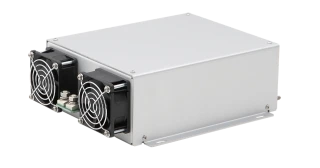
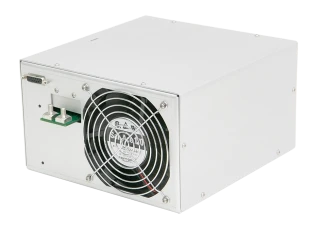
PDD-300 high-power pulsed laser diode driver series, which are fast-switching, low-noise, accurate and efficient current sources for laser diodes. It was developed, first of all, for medical and medical aesthetic treatments, namely, for hair removal applications.
PDD-300 has averaged output power up to 300 W and maximum peak output power up to 5000 W (depending on user defined Imax and Vmax), runs on common 100‑240 V AC, 50/60 Hz, so you don't need extra power supply for the drivers. More powerful series are PDD-1600 and PDD-1000 (for two handpieces).
Since the driver was specially designed for hair removal applications, it is fully compliant to the latest versions of medical standards: IEC 60601-1:2005/AMD1:2012 for electrical safety and IEC 60601-1-2:2014 for EMC, so PDD 300 can be used in medical systems without any modifications, any additional filtration or additional means of protection.
PDD-300 Certified Pulsed Diode Driver Suitable for Medicine
Specifications
| Drive Regime: | Pulsed |
|---|---|
| Output Current (max): | 200 A |
| Output Voltage (max): | 50 V |
| Output Peak Power: | 5 kW |
| Pulse Width: | 1 - 100 ms |
| Max Pulse Energy: | 200 J |
Got questions about specs? Use the inquiry form to ask.
 Download Data Sheet

Features
- Medical grade (full compliance to IEC 60601-1 ed. 3 and IEC 60601-1-2)
- 100-240 V AC input
- Average output power up to 300 W
- Output current up to 200 A
- Compliance voltage up to 50 V
- Forced-air cooling with integrated fan
- 3-year guarantee
Applications
Typical Applications of the PDD-300 Pulsed Diode Driver
The PDD-300 pulsed diode driver is designed for high‑performance, precision pulsed operation of laser diodes and other semiconductor emitters. Below is an SEO‑optimized list of common and emerging applications where a compact, reliable pulsed diode driver such as the PDD‑300 is typically used.
Medical and Biomedical Instrumentation
- Hair removal laser systems
- Pulsed laser excitation for fluorescence and lifetime measurements
- Photodynamic therapy (PDT) research setups using controlled pulsed diodes
- Optical coherence tomography (OCT) modules requiring precise pulsed light sources
- Tissue spectroscopy and optogenetics experiments with short optical pulses
Pulsed Laser Diode Driving
- General pulsed laser diode operation for R&D labs and production test stands
- High‑peak‑current laser diode excitation with narrow pulses for time‑critical experiments
- Characterization of laser diode chips and bars (L–I–V curves, threshold current studies)
- Driver for high‑power NIR and VIS laser diodes in scientific and industrial setups
LiDAR and Time‑of‑Flight (ToF) Systems
- Automotive and industrial LiDAR transmitters using pulsed laser diodes
- Time‑of‑Flight distance measurement modules for robotics and automation
- 3D scanning and mapping systems requiring fast, high‑peak optical pulses
- Obstacle detection and collision‑avoidance sensors in mobile platforms and drones
Rangefinding and Laser Radar
- Laser rangefinders for surveying, defense, and industrial metrology
- Pulsed laser radar (ladar) transmit chains needing stable, repeatable drive currents
- Compact distance sensors for UAVs, AGVs, and smart infrastructure
Spectroscopy and Analytical Instruments
- Time‑resolved spectroscopy (TRS, TCSPC) with fast pulsed diode excitation
- Absorption and fluorescence spectroscopy using modulated or gated sources
- LIDAR‑like atmospheric sensing and environmental monitoring systems
- Raman spectroscopy excitation with controlled pulsed laser diodes
Material Processing and Micro‑Machining
- Precision micro‑processing and micromachining with pulsed diode lasers
- Selective soldering, plastic welding, and marking using short, intense pulses
- Thin‑film and surface treatment processes requiring well‑defined pulse parameters
Scientific Research and Laboratory Use
- General laser physics experiments involving pulsed semiconductor sources
- Pump source for dye lasers and OPOs (where pulsed diode pumping is required)
- Quantum optics and single‑photon experiments using pulsed excitation
- Educational and university laboratories for teaching pulsed electronics and photonics
Optical Communication and Test Systems
- Pulsed transmitters for free‑space optical communication
- Optical link characterization and BER testing with pulsed sources
- Clock and data recovery experiments using pulsed optical signals
Sensing, Detection, and Metrology
- Optical sensor excitation (e.g., gas, bio, and chemical sensors) with pulsed diodes
- Photoacoustic and ultrasonic generation using high‑peak optical pulses
- Non‑contact measurement and displacement sensing systems
- Scattering and reflectometry measurements in materials research
Defense, Security, and Surveillance
- Pulsed IR illuminators and target designators based on laser diodes
- Active infrared imaging and gated viewing systems
- Laser‑based proximity and intrusion detection modules
- Test benches for EO/IR detection systems requiring controlled pulsed sources
Industrial Automation and Smart Systems
- Machine vision lighting with short, intense pulses for motion freeze
- Barcode and code reading illumination with pulse‑synchronized drivers
- Process control and inline inspection using pulsed laser diode sources
- Embedded sensing modules in Industry 4.0 and IoT applications
Frequently Asked Questions
What is the maximum peak output power of the PDD-300 pulsed diode driver?
What are the input voltage requirements for the PDD-300 pulsed diode driver?
Is the PDD-300 pulsed diode driver compliant with medical standards?
What is the average output power of the PDD-300 pulsed diode driver?
What applications is the PDD-300 pulsed diode driver suitable for?
Got more questions? Use the inquiry form to ask the supplier directly.
Similar Products



Your inquiry has been received.
Create an account by adding a password
Why create an account?
- Auto-complete inquiry forms
- View and manage all your past messages
- Save products to your favorites
- Close your account anytime — no hassle