
Description
The Connet VENUS series 1.0 µm high‑stability ASE light source is an advanced broadband source engineered for demanding test and measurement environments, precision optical fiber sensing, and cutting‑edge research applications. Designed around an optimized Yb‑doped fiber all‑fiber configuration and driven by a carrier‑grade 980 nm single‑mode pump laser, this source delivers high and stable output power across a wide emission bandwidth from 1035 nm to 1080 nm. Its broadband ASE spectrum with full width at half maximum (FWHM) > 45 nm and carefully managed spectral flatness makes it ideal for applications that require uniform illumination and reliable, repeatable measurements.
Long‑term output stability is a defining characteristic of the VENUS series. A sophisticated control system based on advanced microprocessors works in conjunction with high‑precision ATC and ACC/APC control circuits to maintain output power stability better than ±1% over 8 hours under typical conditions. This tightly controlled performance is further supported by Connet’s proprietary high‑stability control circuitry and thermal management design, which minimize drift due to environmental changes. The result is a robust light source that can operate continuously in laboratory and production environments with consistent, predictable output.
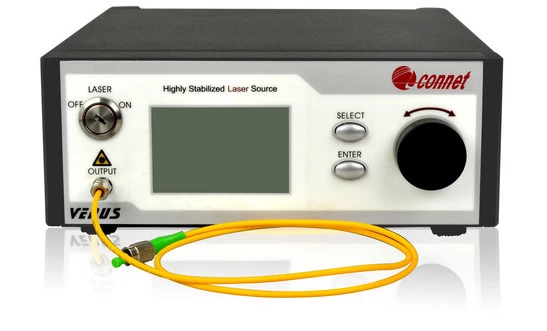
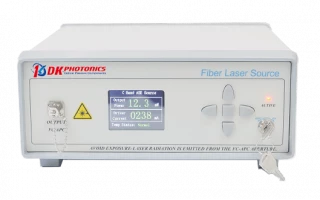
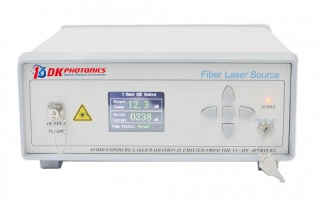
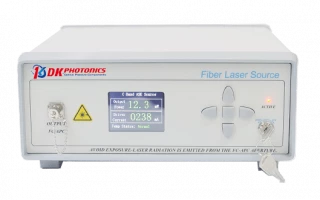
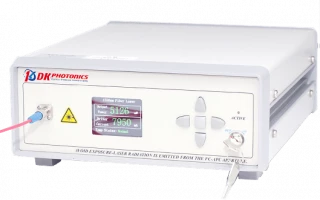
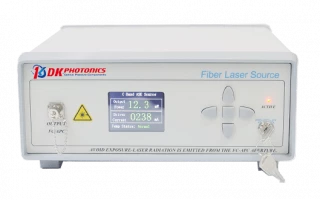
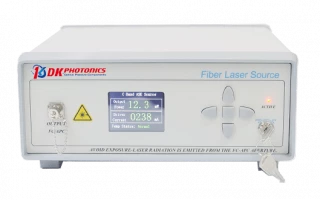
The VENUS ASE source is offered as a highly integrated benchtop instrument with a clear, high‑definition LCD display that presents key operating parameters such as output power and pump laser status. Coarse and fine output power adjustment modes provide intuitive and precise control, making it suitable both for routine characterization tasks and for more complex experimental setups. For system integrators and OEMs, a compact module package is also available, enabling seamless incorporation into larger platforms such as optical test systems, fiber sensor interrogators, and OCT instruments.
From an optical performance standpoint, the VENUS series emphasizes low noise and excellent spectral quality. Single‑mode output with an output isolation of up to 35 dB and low relative intensity noise (RIN) ensures clean, stable illumination for sensitive detection schemes. Connet’s unique optical patching design delivers very low Degree of Polarization (DOP) for the single‑mode configuration and a high polarization extinction ratio (> 20 dB) for the polarization‑maintaining (PM) versions, allowing users to choose the optimal configuration for their measurement architecture. High output spectral stability and options for standard or gain‑flattened spectral profiles (with typical flatness of 4–6 dB or 2–3 dB, respectively) help to reduce measurement uncertainty and simplify calibration procedures.
The VENUS series 1.0 µm ASE light source is well suited for a broad range of precision applications. In test and measurement, it serves as a versatile broadband source for component characterization, insertion loss testing, and spectral response analysis. In optical fiber sensing systems, its stability and broadband emission support high‑resolution interrogation of fiber Bragg gratings and distributed sensors. For optical coherence tomography and other interferometric techniques, the wide spectrum and low coherence characteristics enable improved axial resolution and image quality. It is equally valuable in spectrum analysis, photonics research, and general laboratory use where a reliable, broadband, single‑mode or PM source at 1.0 µm is required.
Practical considerations have also been carefully addressed. The unit operates from a wide AC voltage range (100–240 VAC) and is optimized for low power consumption, typically up to 20 W even under challenging ambient conditions. The operating temperature range from 0 °C to +50 °C and storage range from −40 °C to +85 °C support use in a variety of laboratory and manufacturing environments. Standard output is provided via SMF 6/125 µm fiber for single‑mode versions or Panda 980 fiber for PM configurations, with a minimum output fiber length of 1 m and FC/APC connectors as standard. The compact benchtop footprint (270 mm × 235 mm × 105 mm) allows the VENUS series to fit comfortably on crowded optical benches and within rack‑mounted or cart‑based test setups.
1.0um ASE Broadband Light Source
Specifications
| Bandwidth: | 45 nm |
|---|---|
| Center Wavelength: | 1035 nm |
| Output Power: | 10 mW |
| Polarization: | Random |
| Part Number: | VASS-Yb-B (SM), VASP-Yb-B (PM) |
| Output Power Range: | 10–100 mW |
| Typical Output Power Options: | 10 mW, 20 mW, 50 mW, 100 mW |
| Operating Wavelength Range: | 1035–1080 nm |
| Spectral Width (FWHM): | 45 nm |
| Spectral Flatness (standard): | 4–6 dB |
| Spectral Flatness (Gain Flattened): | 2–3 dB |
| Output Isolation (min): | 30 dB |
| Output Isolation (typ.): | 35 dB |
| Stability Of Output Power (8 H, Typ.): | ±1.0 % |
| Stability Of Output Power (8 H, Max): | ±2.0 % |
| Output Power Adjustment Mode: | Coarse/Fine |
| Output Fiber Type (SM): | SMF 6/125 μm, NA = 0.13 |
| Output Fiber Type (PM): | Panda 980, NA = 0.13 |
| Polarization Extinction Ratio (PER): | > 20 dB (PM output fiber) |
| Length Of Output Fiber: | > 1 m |
| Output Fiber Connector: | FC/APC (other options available) |
| Operating Voltage: | 100–240 VAC |
| Maximum Power Consumption: | 20 W |
| Operating Temperature Range: | 0 to +50 ℃ |
| Storage Temperature Range: | -40 to +85 ℃ |
| Dimensions: | 270(L) × 235(W) × 105(H) mm |
| Fiber Output Type Codes: | VASS: SM fiber output; VASP: PM fiber output |
| Package Codes: | B: benchtop, M: module |
| Spectral Flatness Code (FL): | 0: Standard, 1: Gain Flattened |
Got questions about specs? Use the inquiry form to ask.
 Download Data Sheet

Features
- Ultra-High Output Stability (<±1% over 8 hours) – Advanced microprocessor control with high-precision ATC and ACC (APC) circuits, plus optimized thermal management, deliver long-term power stability better than 1%, ideal for demanding test and measurement setups.
- Broad 1.0 µm ASE Spectrum (1035–1080 nm) – Yb-doped all-fiber architecture provides a wide emission band in the 1.0 µm region, covering 1035–1080 nm for versatile use in fiber sensing, OCT, and general photonics research.
- Wide Spectral Width & High Flatness – Typical spectral width >45 nm (FWHM) with excellent spectral flatness: standard version ≤6 dB and gain-flattened version ≤3 dB, supporting accurate spectral measurements and uniform illumination across the band.
- High Output Power Options up to 100 mW – Configurable output power levels (10 mW, 20 mW, 50 mW, 100 mW) to match a broad range of test benches, interferometric systems, and OEM platforms without external amplification.
- Single-Mode or Polarization-Maintaining Output – Available as SM (VASS-Yb-B) with SMF 6/125 µm fiber or PM (VASP-Yb-B) with Panda 980 fiber, enabling optimized coupling efficiency and polarization control for interferometry and coherent detection.
- Low Degree of Polarization (DOP) & Low RIN – Proprietary optical patching and all-fiber ASE design produce low DOP and low Relative Intensity Noise, improving measurement repeatability and SNR in precision metrology and sensing applications.
- High Output Isolation for System Protection – Integrated optical isolator with ≥30 dB (typ. 35 dB) isolation safeguards the internal laser and maintains stable operation even in reflection-prone setups such as fiber sensors and integrated test racks.
- Intuitive Benchtop Platform with LCD Interface – Highly integrated benchtop housing features a high-definition LCD that clearly displays output power, pump laser status, and key operating parameters, simplifying lab operation and troubleshooting.
- Precise Coarse/Fine Power Adjustment – Dual‑mode power control (coarse and fine) allows fast setup plus high‑resolution tuning of the output power, ideal for calibrations, component characterization, and repeatable measurement routines.
- All-Fiber Yb-Doped Design for Reliability – Optimized Yb-doped fiber in a fully spliced, all‑fiber configuration eliminates free‑space optics, enhancing robustness, long-term reliability, and performance consistency under continuous operation.
- Excellent Spectrum Stability – Stable spectral profile with minimal drift over time and temperature, improving data consistency in spectrum analysis, broadband characterization, and OCT imaging systems.
- Compact & Lab-Friendly Footprint – Space-saving benchtop enclosure (approx. 270 × 235 × 105 mm) with low power consumption (<20 W max) fits easily into crowded optical tables, 19" racks, and industrial testing stations.
- Wide Operating Temperature Range – Reliable performance from 0 °C to +50 °C with storage from −40 °C to +85 °C, supporting both controlled laboratory environments and industrial/field-deployed test systems.
- Standard FC/APC Output with Flexible Fiber Options – Delivered with >1 m output fiber and FC/APC connector (other connector types available on request), enabling simple integration into existing fiber networks and experimental setups.
- Available as Benchtop or OEM Module – Offered in benchtop (B) for immediate lab use or compact module (M) package for easy OEM and system-level integration into instruments and production test platforms.
- Ideal for Test, Measurement & Sensing – Optimized for optical fiber sensor interrogation, optical coherence tomography, spectrum analysis, and general-purpose R&D, matching or surpassing the performance of typical 1.0 µm ASE broadband light sources available on the market.
Applications
- Fiber Optic Test and Measurement
Used as a broadband illumination source for characterizing passive optical components such as fiber Bragg gratings (FBGs), couplers, WDMs, splitters, isolators, circulators, and filters in the 1.0 µm band. Enables insertion loss, return loss, and spectral response measurements with high stability and low RIN. - Optical Fiber Sensor Systems
Ideal for interrogating distributed and point fiber sensors (FBG arrays, interferometric and intensity-based sensors) used in structural health monitoring, oil and gas pipelines, aerospace structures, wind turbine blades, civil engineering, and power grid infrastructure where stable, low‑DOP, broadband light is essential. - Optical Coherence Tomography (OCT) at 1.0 µm
Serves as a broadband, low‑coherence source for time‑domain and spectral‑domain OCT systems. The 1035–1080 nm wavelength range is well suited for imaging scattering biological tissues (e.g., ophthalmology, dermatology, small animal imaging, dental and endoscopic OCT) with improved penetration depth and axial resolution. - Spectral Analysis and Spectroscopy
Provides a flat, wide ASE spectrum as a reference or excitation source for spectrometers and optical spectrum analyzers. Applicable to absorption, transmission, and reflection spectroscopy in research and industrial labs, including material characterization, thin‑film measurement, and optical coating evaluation. - Characterization of Yb‑Doped Fibers and Amplifiers
Used as a seed and probe source for Ytterbium‑doped fiber components, pre‑amplifiers and power amplifiers, fiber lasers at ~1.03–1.08 µm, and gain media characterization (gain spectra, saturation behavior, ASE suppression), particularly in high‑power fiber laser development. - Polarization‑Independent Component Testing
Thanks to low Degree of Polarization (DOP), the source is suitable for testing polarization‑insensitive devices (connectors, couplers, filters, FBGs) without the need for active polarization scrambling, ensuring accurate and repeatable spectral measurements. - Calibration and Reference Source for Optical Instruments
Acts as a stable broadband reference for calibrating optical spectrum analyzers, spectrometers, wavelength meters, and interrogators in the 1.0 µm band. The long‑term power stability (<1% over 8 h, typ.) supports reliable instrument verification and quality control. - Laboratory R&D in Photonics and Fiber Optics
A general‑purpose light source for university and industrial research labs working on fiber communications, non‑linear optics, integrated photonics, and optical signal processing. Well suited to experiments requiring a stable, single‑mode or PM broadband source in the Yb band. - Interferometry and Low‑Coherence Metrology
Used in low‑coherence interferometers (white‑light interferometry) for precision distance and thickness measurement, surface profiling, and optical path length control, where short coherence length and stable spectral output are needed. - Biomedical and Biophotonics Research
Provides safe and efficient illumination for tissue optics studies, diffuse optical measurements, and experimental imaging modalities around 1.0 µm. Suitable for lab‑scale biophotonics setups where a compact, low‑noise, broadband source is preferred over discrete lasers. - Optical Network Component and Module Development
Supports R&D and production testing of 1.0 µm band optical modules, specialty fibers, fiber pigtails, and fused components. The coarse/fine power control and high output isolation make it practical for repeatable end‑of‑line and incoming inspection tests. - Educational and Training Laboratories
Suitable for teaching laboratories in photonics and optical engineering programs, allowing students to perform experiments on fiber sensors, interferometry, spectral analysis, and component characterization using a robust, user‑friendly benchtop source. - System Integration in Compact OEM Platforms
With its available module package, the source can be embedded into OEM systems such as fiber sensor interrogators, OCT consoles, portable test sets, and custom measurement instruments that require a compact, reliable 1.0 µm ASE source. - Reliability and Environmental Stress Testing
Used as a stable illumination source in burn‑in and environmental tests (thermal cycling, vibration, humidity) of optical components and assemblies, enabling evaluation of long‑term performance and robustness under varying operating conditions.
Frequently Asked Questions
What is the Connet VENUS 1.0 µm high-stability ASE broadband light source and what are its key features?
What are the typical output power and wavelength specifications of this 1.0 µm ASE source?
How stable is the output power and spectrum compared with other ASE broadband sources?
What are the differences between the VASS and VASP models, and how do I choose SM vs PM fiber output?
What package types are available (benchtop vs module) and what are the electrical and environmental requirements?
How do I interpret and configure the ordering code for a customized VENUS 1.0 µm ASE light source?
What are the main applications of a 1.0 µm Yb‑doped ASE broadband source and why choose this over a DFB or narrow‑linewidth laser?
Got more questions? Use the inquiry form to ask the supplier directly.
Similar Products
Your inquiry has been received.
Create an account by adding a password
Why create an account?
- Auto-complete inquiry forms
- View and manage all your past messages
- Save products to your favorites
- Close your account anytime — no hassle