Description

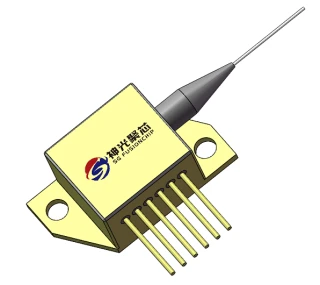
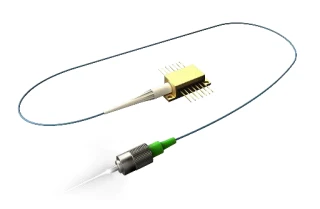
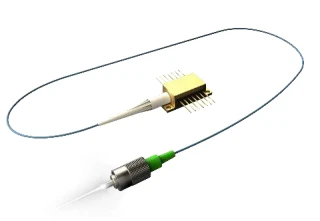
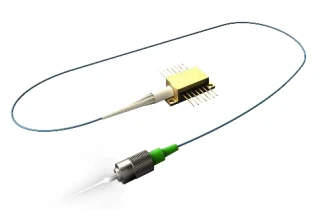
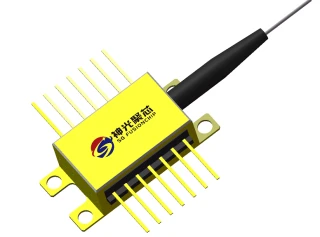
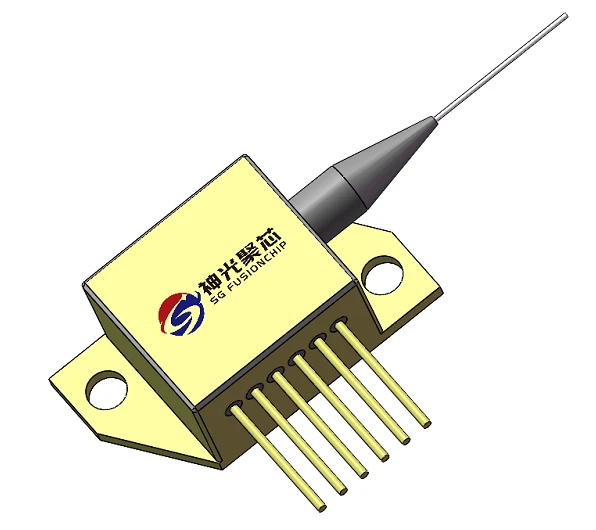
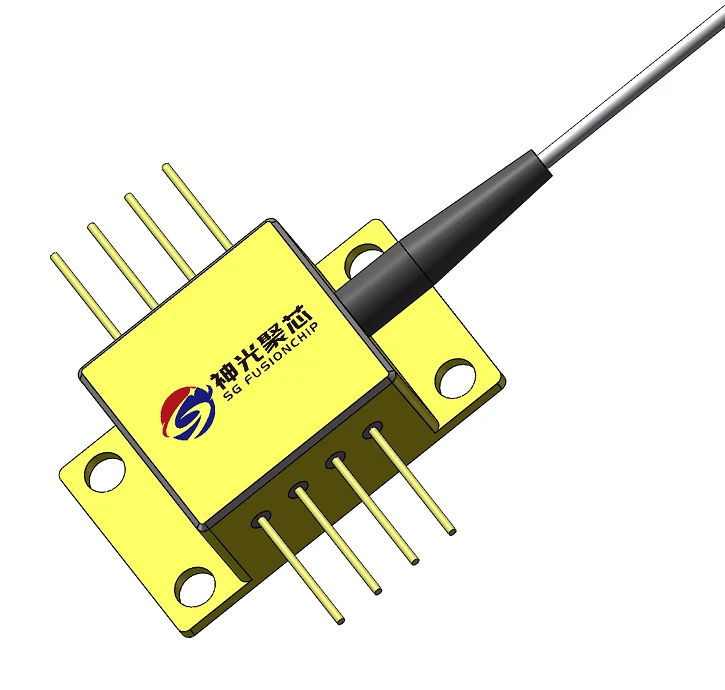
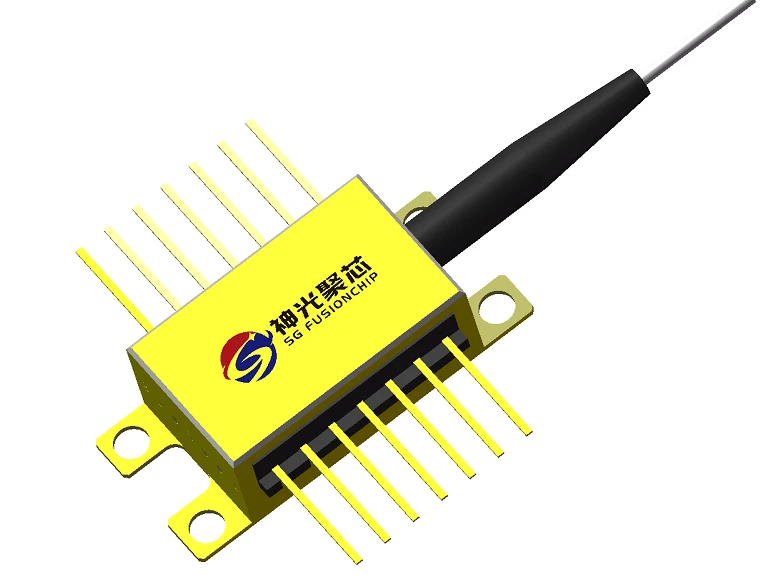
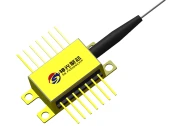
The SG FusionChip SGSLD-850 is an 850 nm superluminescent diode (SLED) in a hermetic butterfly package with a built-in TEC and 10 kΩ thermistor. It delivers up to 20 mW of broadband, low-coherence light with a center wavelength of 830–870 nm and a FWHM bandwidth of at least 15 nm (at least 40 nm with the high-polarization chip). Spectral ripple is ≤ 0.2 dB.

The output is pigtailed to single-mode or polarization-maintaining fiber, and the module comes in 14-, 8- or 6-pin butterfly packages, operating from −40 to +70 °C case temperature. Typical uses include fiber-optic gyroscopes, fiber-optic sensors, optical test and instrumentation.

SGSLD-850 850 nm Superluminescent Diode (SLED) – up to 20 mW TEC-Cooled Butterfly

Specifications

SLED Type: Fiber Coupled
Operating Power (typical): 20 mW
Center Wavelength (typical): 850 nm
Bandwidth (FWHM): 15 nm
Model: SGSLD-850-XX-XX-XX-X
Optical Output Power: 0.4–20 mW
Forward Voltage: 2 V
Center Wavelength: 830–870 nm
Bandwidth FWHM: ≥ 15 nm (≥ 40 nm with high-polarization chip)
Spectral Ripple: ≤0.2 dB
Polarization Extinction Ratio: ≤1 dB
Thermistor Resistance: 9.5–10.5 kΩ @ 25 °C
Thermistor B-Value: 3950 K (25 °C / 50 °C)
Operating Case Temperature: -40 to +70 °C
Storage Temperature: -55 to +85 °C
Reverse Voltage: 2.5 V
Forward Current: ≤350 mA
Thermoelectric Cooler Voltage: ≤3.0 V
Thermoelectric Cooler Current: ≤1.5 A
Lead Solder Temperature: 260 °C
Lead Soldering Time: 10 s
Package Type: Butterfly, 14-pin / 8-pin / 6-pin
Package Dimensions Length: 17.8 mm
Package Dimensions Overall Length: 22 mm
Package Height: 8 mm
Fiber Type: Polarization-maintaining or single-mode
Integrated TEC: Yes

Got questions about specs? Use the inquiry form to ask.

Document icon Download Data Sheet Download icon

Features

  • High Power Output
  • Miniaturized Hermetic Package
  • TEC Inside
  • Polarization-maintaining or single-mode Optical Fiber
  • 14pin/8pin/6pin Butterfly Package

Applications

  • Fiber-Optic Gyroscope
  • Optic Test
  • Optical Fiber Transmission System
  • Fiber-Optic Sensor
  • Instrumentation and Meters

Frequently Asked Questions

What is the SGSLD-850 SLED butterfly device and what are its typical applications?
The SGSLD-850-XX-XX-XX-X is a superluminescent diode (SLED) module in a hermetic butterfly package with integrated TEC (thermoelectric cooler). It provides broadband, high‑power emission in the 830–870 nm range and can be supplied with either polarization‑maintaining (PM) or single‑mode (SM) fiber. Typical applications include fiber‑optic gyroscopes (FOG), fiber‑optic sensors, optical test and measurement equipment, optical fiber transmission systems, interferometric measurement, and general instrumentation that requires a low‑coherence, high‑stability broadband light source. Comparable products on the market are often described as 850 nm SLED butterfly modules for FOG and sensing applications.
What are the key optical and electrical specifications of the SGSLD-850 SLED?
At 25 °C case temperature, the SGSLD‑850 SLED offers an optical output power from 0.4 mW up to 20 mW (depending on the specific product code and drive current) with a center wavelength between 830 and 870 nm. The full‑width at half maximum (FWHM) spectral bandwidth is typically 15 nm and can reach up to 40 nm for the high‑polarization chip options. The forward voltage at operating current is around 2 V. The module includes a 10 kΩ (typ.) thermistor with a B‑value of about 3950 K (25 °C / 50 °C) for temperature monitoring. These values are in line with other 850 nm SLED butterfly modules used in FOG and sensing systems from leading suppliers.
What are the absolute maximum ratings and recommended operating conditions for safe use?
The absolute maximum ratings are: - Operating case temperature (Tc): –40 °C to +70 °C - Storage temperature (Tstg): –55 °C to +85 °C - Maximum forward current (Iop): 350 mA - Maximum reverse voltage: 2.5 V - TEC voltage (VTEC): up to 3.0 V - TEC current (ITEC): up to 1.5 A - Lead solder temperature: up to 260 °C for a maximum of 10 s For long‑term reliability, operate the SLED well within these limits, maintain good thermal contact between the case and a heatsink, and control the chip temperature via the integrated TEC and thermistor. These safety margins are consistent with similar 14‑pin butterfly SLED modules from other manufacturers.
Which package and fiber options are available for the SGSLD-850 series?
The SGSLD‑850 series is offered in miniaturized hermetic butterfly packages with 14‑pin, 8‑pin, or 6‑pin layouts. All versions integrate a thermoelectric cooler and thermistor; the 14‑pin and 8‑pin types also separate TEC, thermistor, diode, and ground pins for flexible driver connections. The optical output is provided via either polarization‑maintaining (PM) or single‑mode (SM) fiber, depending on configuration. This is comparable to standard telecom‑style butterfly packages used for SLEDs and DFB lasers, making the module mechanically compatible with common mounts and sockets in test instruments and fiber‑optic systems.
How should the TEC and thermistor be used to control the SLED temperature?
The module contains an internal TEC (thermoelectric cooler) and a 10 kΩ NTC thermistor to stabilize the chip temperature. The typical pinout is: - TEC(+)/Cooler(+) - TEC(–)/Cooler(–) - Two thermistor pins forming a resistive sensor Connect the TEC to a bipolar TEC controller capable of up to 3 V and 1.5 A. The thermistor should be wired into the temperature‑control feedback loop so that the controller can read case/near‑chip temperature and regulate it to a setpoint (often 20–30 °C). This approach, used across the industry for butterfly SLED and laser modules, minimizes wavelength drift and power fluctuations and extends device lifetime.
What ESD and handling precautions are required for the SGSLD-850 SLED butterfly module?
The SGSLD‑850 is an ESD‑sensitive optoelectronic device and is classified in the laser safety Class 3R category. To avoid permanent damage and ensure safety: - Always use ESD protection: grounded wrist strap, ESD‑safe gloves or finger cots, and an antistatic mat or box. - Keep the drive current within the specified operating range and never exceed the maximum forward current or reverse voltage. - Ensure the device base has good thermal contact with a heatsink during testing and operation. - Never pull or bend the module by its fiber; handle the fiber gently and protect the connector face from contamination. - Switch off power before plugging, unplugging, mounting, or reconfiguring the device. These are standard practices recommended by SLED and laser diode manufacturers globally.
How do I connect the pins of the SGSLD-850 butterfly package in a typical setup?
The exact pin configuration depends on whether you have the 14‑pin, 8‑pin, or 6‑pin version, but they follow industry‑standard butterfly conventions: - SLED anode (SLED+/SLD+): connect to the current driver output (positive terminal). - SLED cathode (SLED–/SLD–): connect to the current driver return (often referenced to GND in the driver). - TEC(+)/Cooler(+): connect to the positive TEC controller terminal. - TEC(–)/Cooler(–): connect to the negative TEC controller terminal. - Thermistor pins: connect to the temperature controller/monitor circuit. - N/C pins: leave unconnected. - GND (if present on 14‑pin version): connect to system ground. Use a low‑noise precision current source in constant‑current mode for the SLED and a matched TEC controller for temperature stabilization, as done with similar butterfly SLED and laser modules sold on FindLight and other photonics marketplaces.

Got more questions? Use the inquiry form to ask the supplier directly.

Similar Products
Request Quote