
Description
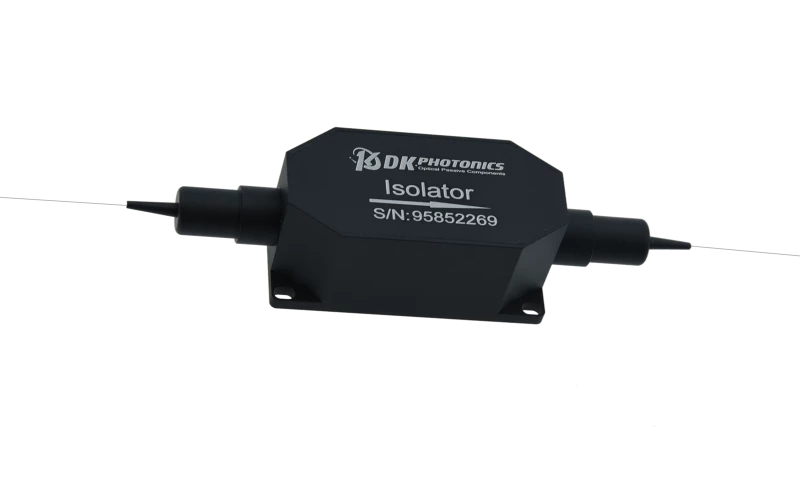
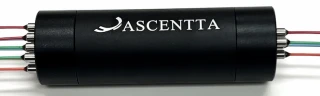
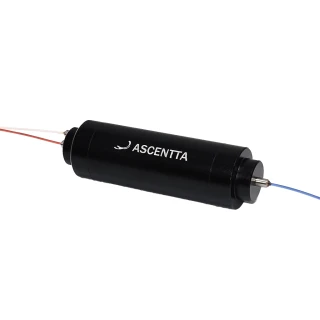
The 780 nm TGG Based Optical Isolator from DK Photonics is a compact, high‑reliability Faraday isolator specifically engineered for precision laser systems operating around 780 nm. Built on a terbium gallium garnet (TGG) crystal platform, it delivers a robust combination of low insertion loss, high isolation, and outstanding return loss performance. This makes it ideal for protecting sensitive laser sources and optical components from destabilizing back‑reflections that can degrade beam quality, induce noise, or even damage the laser cavity.
Designed for demanding scientific, industrial, and telecom‑adjacent applications, this fiber‑pigtailed isolator integrates seamlessly into 780 nm fiber optic setups. It is available in both polarization insensitive and polarization maintaining configurations, allowing users to match the isolator to their system architecture whether they are working with free‑running diode lasers, narrow‑linewidth external‑cavity lasers, or stabilized laser systems. With typical isolation of 30 dB and insertion loss as low as 1.0 dB at room temperature, the device offers an excellent balance between protection and optical throughput.
The device uses a high‑quality TGG Faraday rotator crystal, selected for its high Verdet constant and low absorption at 780 nm. In combination with precision‑aligned polarizing elements and carefully controlled optical coatings, this design ensures stable isolation across the specified ±10 nm operating bandwidth. The isolator’s internal construction focuses on long‑term reliability, with careful control of stress, thermal behavior, and alignment to maintain performance over a wide range of operating conditions commonly encountered in laboratory benches and OEM equipment.
For fiber integration, DK Photonics offers a wide choice of fiber types and connector options to streamline system assembly. Typical configurations include 780‑HP and other single‑mode fibers, with optional 0.9 mm loose tube protection and standard FC/PC or FC/APC connectors. The isolator is optimized for continuous‑wave operation and is rated for power handling in the typical sub‑watt to multi‑watt regime at 780 nm, with special attention paid to managing thermal effects and avoiding back‑reflection into the fiber. Connectorized versions are specified with adjusted insertion loss and return loss ratings to reflect realistic in‑system performance.
In practical use, the 780 nm TGG Based Optical Isolator finds application in fiber‑optic amplifiers, diode and solid‑state laser systems, optical sensing setups, and high‑precision measurement or metrology instruments. It is frequently deployed in atomic physics and spectroscopy experiments, laser cooling and trapping setups near the rubidium and related atomic transitions, as well as in interferometric and fiber‑based instrumentation where stable, unidirectional light propagation is critical. By effectively suppressing back‑scattering and unwanted feedback, it improves laser stability, reduces intensity noise, and enhances measurement repeatability.
DK Photonics supports a wide range of customizations to align the isolator with specific design goals. Users can specify non‑standard fiber pigtails, special connector combinations, modified pigtail lengths, and tailored packaging formats to meet space‑constrained or integration‑critical installations. In addition, variant designs are available across a broader wavelength range from about 500 nm to 2100 nm and for power handling levels reaching from hundreds of milliwatts up to tens of watts and beyond, enabling a unified isolator strategy across multiple laser lines in a single platform.
The mechanical housing is designed for easy integration into optical modules, laser heads, and fiber‑based subsystems. Attention to mechanical tolerances and environmental sealing yields excellent stability against vibration, temperature variations, and humidity. This results in consistent isolation and insertion loss over the device lifetime and reduces the need for frequent recalibration or alignment in both research and production environments.
For OEM developers and system integrators looking to safeguard 780 nm laser sources, the DK Photonics 780 nm TGG Based Optical Isolator offers a mature, field‑proven solution that combines high isolation, low loss, and flexible configuration options. Whether the need is for a single laboratory unit or for volume production with tightly controlled specifications, this isolator provides the performance and reliability required for modern photonics systems centered around the 780 nm wavelength band.
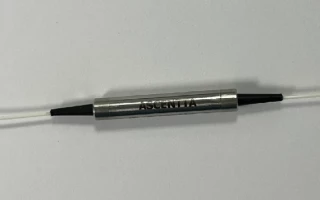
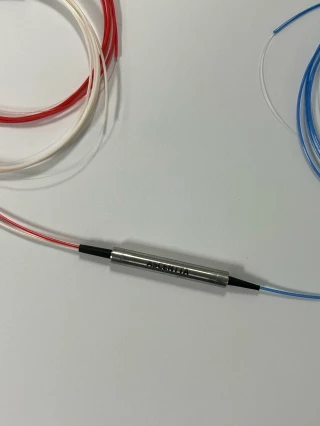
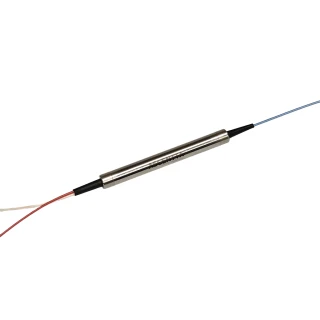
780nm TGG Based Optical Isolator
Specifications
| Type Of The Device: | Isolator |
|---|---|
| Operating Wavelength: | 780 nm |
| Max Power: | 5 W |
| Min Isolation: | 25 dB |
| Product Type: | 780nm TGG Based Optical Isolator |
| Central Wavelength: | 780 nm |
| Operating Wavelength Range: | 780 nm ±10 nm |
| Typical Peak Isolation: | 30 dB |
| Minimum Isolation In Band (at 23°C): | 25 dB |
| Typical Insertion Loss: | 1.0 dB |
| Maximum Insertion Loss (at 23°C): | 1.5 dB |
| Maximum PDL (for SM Fiber): | 0.15 dB |
| Minimum Return Loss: | 45 dB |
| Pass Optical Power With Connector: | 2 W |
| Available Power Handling Range: | 300 mW to 150 W |
| Available Wavelength Range: | 500 nm to 2100 nm |
| Example Part Number: | ISO-78-L-C-S78-90-10-FA |
| Example Power Handling: | 0.5 W continuous wave |
| Example Fiber Type: | 780-HP fiber |
| Example Fiber Protection: | 0.9 mm OD loose tube |
| Example Fiber Pigtail Length: | 1.0 m |
| Example Connector Type: | FC/APC at all ports |
Got questions about specs? Use the inquiry form to ask.
 Download Data Sheet

Features
- High-Performance 780 nm TGG Optical Isolator – Precisely engineered around the 780 nm central wavelength (±10 nm operating range), ideal for diode lasers, ytterbium-based systems, and precision optical instruments.
- Low Insertion Loss for Maximum Signal Throughput – Typical insertion loss of ~1.0 dB (max. 1.5 dB at 23 °C) helps preserve optical power and improve overall system efficiency in demanding photonics setups.
- High Isolation to Suppress Back-Reflections – Typical peak isolation of ~30 dB and ≥25 dB minimum in-band isolation at 23 °C effectively blocks backward-propagating light, protecting lasers and stabilizing sensitive optical systems.
- Excellent Return Loss – Minimum return loss of ≥45 dB reduces unwanted back-reflection at the fiber interface, supporting stable operation in precision test and measurement, sensing, and laser delivery applications.
- TGG Crystal Faraday Rotator Technology – Based on terbium gallium garnet (TGG) for strong Faraday rotation, high Verdet constant, and low absorption at 780 nm, enabling reliable, high-isolation performance in compact packages.
- Polarization-Insensitive and PM Options – Available as polarization-insensitive or polarization-maintaining fiber-in/fiber-out isolators to suit free-space converted, fiber laser, and polarization-critical applications.
- Wide Power Handling Range – Supports power levels from a few hundred milliwatts up to high-power configurations (300 mW to >100 W available in the DK Photonics isolator family), with standard continuous-wave power versions and higher-power custom options on request.
- Fiber Pigtail Flexibility – Compatible with standard single-mode, 780-HP, polarization-maintaining, and other specialty fibers, with 0.9 mm loose tube or other protective jackets and customizable pigtail lengths (e.g., 1.0 m standard).
- Connector Options – Available with FC/PC, FC/APC, or other common connectors on all ports; devices without connectors provide best performance, while connectorized versions are optimized to minimize additional loss (IL ~0.5 dB higher and RL ~5 dB lower per connector).
- Robust Environmental Stability and Reliability – Rugged design and qualified materials ensure stable optical performance over a wide operating temperature range, suited for long-term deployment in industrial, telecom, and lab environments.
- Compact, Integrable Package – Small-form-factor housing integrates easily into laser modules, optical amplifier stages, fiber sensor heads, and benchtop instrumentation. Package size is continuously optimized; contact DK Photonics for latest dimensions.
- Cost-Effective for OEM and Volume Use – Designed for high performance at competitive pricing, ideal for OEM laser manufacturers and system integrators requiring reliable, scalable isolator solutions at 780 nm.
- Compatible with a Wide Range of Applications – Suited for fiber optic amplifiers, 780 nm diode lasers, optical communication links, quantum optics experiments, LIDAR seed lasers, spectroscopy systems, and precision test and measurement platforms.
- Custom Wavelengths and Configurations Available – DK Photonics can provide isolators across 500–2100 nm, with custom center wavelengths, bandwidths, power ratings, fiber types, connector styles, and packaging tailored to your specific project requirements.
- Supported by DK Photonics Engineering Team – Application-specific design support, rapid quotation for custom parts, and technical guidance for integration into circulator, isolator, and rotator solutions to optimize performance in your photonic system.
Applications
- 780 nm diode and solid-state laser isolation – Protection of 780 nm external-cavity diode lasers (ECDL), Ti:Sapphire pump lasers, frequency-doubled and frequency-stabilized sources from back-reflection–induced noise, mode hopping, and damage.
- Laser-based atomic physics and quantum optics experiments – Isolation for cooling and trapping lasers at 780 nm (e.g., rubidium D2 line), magneto-optical traps (MOTs), optical pumping setups, coherent population trapping, and precision spectroscopy to maintain stable laser operation.
- Fiber-coupled laser modules and OEM laser engines – Integration into OEM 780 nm laser heads and fiber-coupled diode packages for increased stability and lifetime in scientific, industrial, and medical laser systems.
- Fiber optic amplifiers and pre-amplifiers at 780 nm – Back-reflection suppression in specialty fiber amplifier chains (including pre-amplifiers) used for sensing, LiDAR, and scientific sources around 780 nm.
- Optical communication links in the 700–800 nm band – Isolation of transmitters, transceivers, and booster stages in short-reach free-space or specialty-fiber links operating near 780 nm to improve signal integrity and reduce bit-error rate.
- Test and measurement instruments – Integration into optical spectrum analyzers, tunable laser sources, optical power meters, and wavelength meters used around 780 nm to prevent detector and source feedback, improving measurement repeatability.
- Optical coherence tomography (OCT) and biomedical imaging near 780 nm – Protection of broadband and narrowband sources in retinal imaging, tissue spectroscopy, and other near-infrared biomedical instruments requiring stable 780 nm emission.
- Fiber optic sensors and interferometric systems – Use in fiber interferometers, gyroscopes, and high-sensitivity 780 nm sensing schemes to suppress unwanted reflections that degrade fringe contrast and phase stability.
- Laser metrology and precision positioning systems – Back-reflection control in interferometric distance measurement, surface profiling, and alignment systems using 780 nm reference lasers.
- Free-space to fiber coupling modules – Isolation between free-space optical benches and 780 nm fiber delivery lines in laboratories and OEM instruments, improving coupling stability and safeguarding delicate laser cavities.
- Quantum communication and quantum information experiments at 780 nm – Isolation in entanglement generation, quantum memory coupling, and single-photon source setups based around rubidium transitions.
- Spectroscopy and fluorescence excitation – Protection of tunable 780 nm excitation lasers used for atomic/molecular spectroscopy, fluorescence excitation, and pump–probe experiments from backscattered light from samples and optics.
- Laser-based manufacturing and micro-processing at 780 nm – Use in precision micromachining, lithography, and materials processing stages where 780 nm diode or solid-state lasers are employed and reflection from workpieces must be controlled.
- Fiber laser seeding and master oscillator protection – Isolation of master oscillators and seed lasers at 780 nm feeding higher-power amplifier stages to prevent feedback that can destabilize the seed source.
- Educational and research optical benches – General isolation in university and R&D labs using 780 nm lasers for optics experiments, reducing alignment sensitivity and simplifying system design.
Frequently Asked Questions
What is a 780 nm TGG based optical isolator and what does it do?
What are the typical performance specifications of the DK Photonics 780 nm TGG optical isolator?
How do fiber connectors affect insertion loss, return loss, and power handling of this 780 nm isolator?
What applications are best suited for a 780 nm TGG based optical isolator?
Can the 780 nm TGG optical isolator be customized (fiber type, power, connectors, pigtail length)?
What is the part number format for ordering the DK Photonics 780 nm TGG isolator?
How does this 780 nm TGG isolator compare to other 780 nm isolators on the market?
Got more questions? Use the inquiry form to ask the supplier directly.
Similar Products



Your inquiry has been received.
Create an account by adding a password
Why create an account?
- Auto-complete inquiry forms
- View and manage all your past messages
- Save products to your favorites
- Close your account anytime — no hassle