
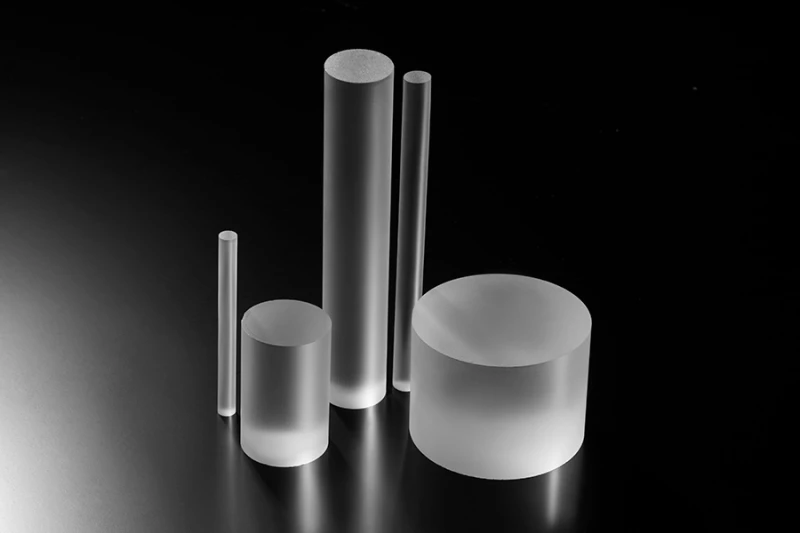
Description
Calcium fluoride (CaF2) crystals with high hardness, strong resistance to mechanical shock and thermal shock is good transmittance in UV, visible and infrared fields. Calcium fluoride (CaF2) crystals are widely used in scientific and technological fields such as lasers, infrared optics, UV optics and high-energy detectors. Especially they have good optical properties in the UV band and they are the known optical crystals in the UV cut-off band.
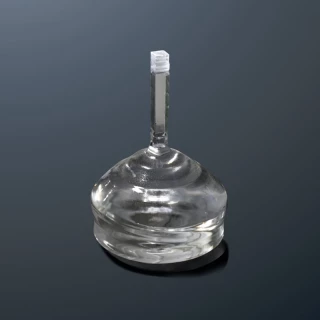
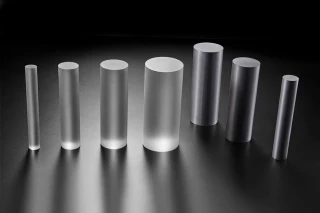
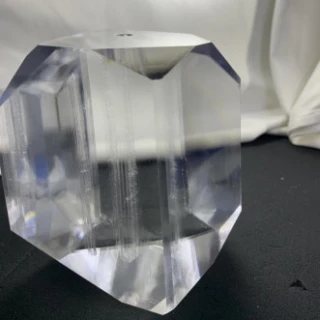
Optical Crystal Calcium Fluoride Crystal CaF2 Blanks
Specifications
| Type Of Crystal: | Calcium Fluoride (CaF2) |
|---|---|
| Crystal Diameter Range: | 3 – 520 mm |
| Crystal Length Range: | 3 – 520 mm |
| Wavelength Range: | 130 – 10000 nm |
| Type Of Crystal: | calcium fluoride(CaF2) |
| Crystal Diameter: | 520mm |
| Material Grade: | UM-DUV, UM-UV, UM-IR |
| Wavelength Range: | 0.13-10μm |
| Crystal Structure: | Monocrystalline/Polycrystalline |
| Orientation: | <111>,<110>,<100> |
Got questions about specs? Use the inquiry form to ask.
 Download Data Sheet

Features
- Ultra-High Purity & Homogeneity: In-house growth enables strict control over raw material quality, achieving ≥99.99999% purity with minimal impurities . This ensures uniform optical properties across the entire crystal, avoiding beam distortion in high-precision applications
- Broad Spectral Transmittance: Excellent transparency from deep UV to mid-IR , with zero intrinsic birefringence—ideal for multi-spectral optical systems requiring consistent light transmission
- Superior Thermal Stability: Low thermal expansion coefficient (1.89×10⁻⁶/°C) and high melting point (1418°C), resisting thermal shock and deformation even in extreme temperature fluctuations (-50°C to 300°C)
- High Laser Damage Threshold (LIDT): Minimal optical absorption, especially in UV and visible ranges, providing LIDT ≥15 J/cm² (1064 nm, 10 ns pulses) for unprocessed crystals. Suitable for high-power excimer lasers (193 nm/248 nm) and DUV lithography systems
- Chemical Inertness & Durability: Non-hygroscopic (no moisture absorption) and resistant to most acids (except strong alkalis), ensuring long-term stability in harsh laboratory, industrial, and space environments.\
Applications
- Optical Component Fabrication: Core raw material for manufacturing CaF₂ windows, lens, prisms, and beamsplitters used in UV-IR optical systems
- Semiconductor Lithography: Critical for DUV lithography tools (193 nm excimer lasers) to produce advanced microchips, leveraging high transmittance and low birefringence
- Scientific Research: Applied in synchrotron radiation experiments, vacuum UV spectroscopy, high-energy physics detectors, and laser fusion research requiring ultra-pure optical materials
- Aerospace & Defense: Used in space-based IR telescopes, missile guidance systems, and satellite optical sensors—withstanding extreme vacuum, temperature, and radiation conditions
- Medical & Industrial Lasers: Raw material for optical components in UV laser surgery tools, laser micromachining equipment, and FTIR spectrometers
Frequently Asked Questions
Why is calcium fluoride monocrystalline material more expensive than polycrystalline? What is the main difference?
What is the main difference between infrared calcium fluoride and ultraviolet calcium fluoride crystals?
Will polycrystalline calcium fluoride have a lower transmittance than monocrystalline?
What advantages does your in-house grown CaF₂ crystal have compared to externally sourced ones?
Got more questions? Use the RFQ form to ask the supplier directly.
Similar Products
Need pricing for this product? Send a quick inquiry
Your inquiry has been received.
Create an account by adding a password
Why create an account?
- Auto-complete inquiry forms
- View and manage all your past messages
- Save products to your favorites
- Close your account anytime — no hassle