
Description
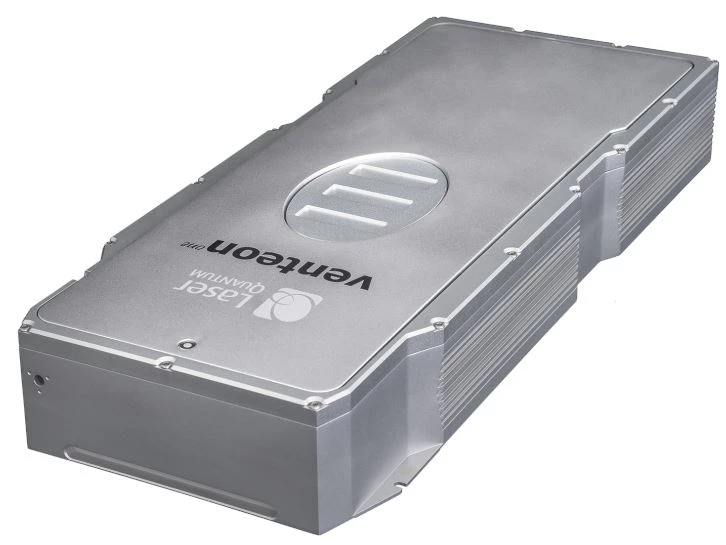
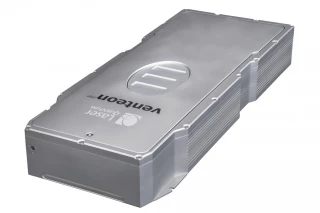
The Venteon family of ultrafast femtosecond laser oscillators from Novanta is engineered for applications that demand the shortest possible pulses, exceptional beam quality, and long-term operational stability. Designed for cutting-edge research and advanced industrial use, these systems are ideal for ultrafast spectroscopy, attosecond science, non-linear microscopy, frequency-comb generation, and precision micromachining. By combining sub-10 fs pulse durations with high average power and a compact footprint, Venteon oscillators deliver a versatile platform for laboratories and OEM integrators looking to push the limits of temporal and spatial resolution.
At the core of the Venteon design is a monolithic cavity architecture that integrates the pump laser and is optimized for low pump thresholds and robust day-to-day operation. This compact and mechanically rigid layout minimizes sensitivity to environmental fluctuations, resulting in excellent power, pointing, and spectral stability over extended periods. Compared to conventional Ti:sapphire oscillators and other few-cycle sources in the market, the Venteon systems stand out for combining ultra-short pulse durations with reliable turnkey operation and low maintenance requirements, making them especially attractive for continuous use in demanding laboratory and industrial environments.
A distinguishing feature of the Venteon oscillators is their use of dispersion-compensating mirrors (DCMs) fabricated via ion beam sputtering. This coating technology provides exceptional control over group delay dispersion and higher-order phase, enabling pulses that closely approach the theoretical transform limit. The careful dispersion management throughout the cavity supports the generation of broadband spectra with well-defined phase characteristics. This is particularly important for few-cycle pulse formation, coherent control experiments, and applications where field-resolved measurements or attosecond pulse generation are required, as it ensures a clean, stable temporal waveform at the output.
Novanta places strong emphasis on transparent and accurate pulse characterization. Pulse durations for the Venteon series are reported either as theoretical Fourier-transform limits derived from the measured spectra or as directly measured values using advanced techniques such as SPIDER (Spectral Phase Interferometry for Direct Electric-field Reconstruction). This approach enables users to understand exactly how the performance metrics relate to real-world conditions in the lab, and aligns the Venteon product line with the most rigorous standards used in contemporary ultrafast photonics research.
Within the Venteon family, the Venteon Power oscillator is optimized for high average power while maintaining measured pulse durations below 8 fs. This configuration is well suited to experiments requiring strong peak fields and efficient nonlinear conversion, such as high-harmonic generation, broadband continuum generation, and multi-photon excitation. The system can be provided with carrier–envelope phase (CEP) stabilization from the outset, or in a state-ready configuration that allows CEP control to be added later as experimental needs evolve. For users requiring tight synchronization to external timing infrastructure, the oscillator can also be equipped with a piezo transducer or linear actuator, providing resonance-free repetition-rate locking to a radio frequency reference with locking bandwidths up to tens of kilohertz.
The Venteon Ultra oscillator is designed to provide some of the shortest commercially available pulses, with output powers above 240 mW and pulse durations specified below 5.5 fs at the –10 dBc level. Its octave-spanning spectrum, typically extending from approximately 600 nm to 1200 nm, supports the generation of sub-6 fs pulses directly from the oscillator without the need for external spectral broadening stages. This broad bandwidth enables straightforward implementation of f–2f interferometry and direct CEP stabilization, a significant advantage for laboratories working in attosecond science, precision frequency metrology, and advanced time-resolved spectroscopy. Like the Power model, the Ultra can be supplied as fully CEP-stabilized or prepared for a future CEP upgrade, providing flexibility for both current and anticipated experimental requirements.
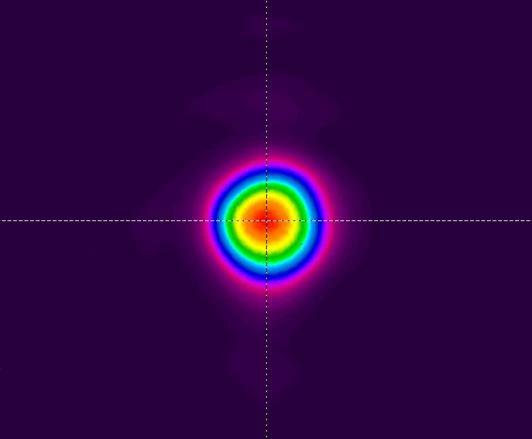
In addition to their raw performance metrics, Venteon oscillators are engineered with long operational lifetimes and robust thermal and mechanical design. The combination of carefully managed heat dissipation, stable cavity alignment, and high-quality optical components yields excellent beam profiles and consistent output characteristics.
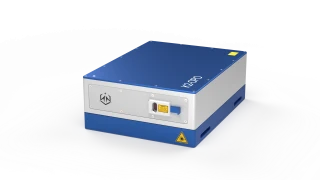
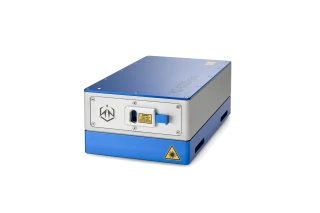
Venteon Power: Ultrafast Femtosecond Laser
Specifications
| Center Wavelength (option 1): | 750 – 810 nm |
|---|---|
| Center Wavelength (option 2): | Not Specified |
| Center Wavelength (option 3): | Not Specified |
| Bandwidth (FWHM): | 200 nm |
| Pulse Duration: | 8 fs |
| Optional Pulse Duration: | Not Specified |
| Repetition Rate: | 80 – 80 MHz |
| Mode Locked Power (avg.): | 560 mW |
| Pulse Energy: | 7 nJ |
| Pump Laser: | Integrated |
| CEP Stabilization: | Available or upgradeable |
Got questions about specs? Use the inquiry form to ask.
 Download Data Sheet

Features
- Ultrashort femtosecond pulses <5 fs
Industry‑leading few‑cycle pulse durations (<5 fs FTL, <5.5 fs measured @ –10 dBc) for extreme temporal resolution in ultrafast spectroscopy, pump–probe experiments, and attosecond science. - Octave-spanning spectral bandwidth (600–1200 nm)
Exceptionally broad spectrum (>380 nm, up to a full octave from 600 nm to 1200 nm) enabling dispersion‑limited few‑cycle compression, direct f–2f interferometry, and versatile multi‑wavelength experimental configurations. - High average output power >900 mW
High‑power femtosecond oscillator platform (venteon power) delivering >900 mW average power for demanding nonlinear optics, frequency conversion, and high‑photon‑flux experiments while maintaining sub‑8 fs pulse durations. - Integrated pump laser and compact monolithic design
Fully integrated pump source and mechanically stable monolithic cavity minimize alignment complexity, reduce footprint, and ensure turnkey operation with low pump thresholds and long‑term reliability. - Exceptional stability and beam quality
Optimized thermal and mechanical design provides outstanding power and pointing stability, while a near‑Gaussian spatial mode (TEM00) and excellent beam profile support tight focusing, efficient coupling into nonlinear crystals, and high‑quality beam delivery. - Ion-beam-sputtered DCM mirrors for superior phase control
Cavity based exclusively on ion beam sputtered chirped mirrors (DCMs) for ultra‑low loss, low dispersion ripple and unsurpassed phase control, enabling pulses that closely approach theoretical Fourier limits and improving compression fidelity. - Verified pulse duration with SPIDER diagnostics
Pulse widths characterized using SPIDER (Spectral Phase Interferometry for Direct Electric‑field Reconstruction), with transparent reporting of both theoretical (Fourier‑transform‑limited) and measured values for accurate, application‑relevant performance data. - CEP-ready and CEP-stabilized options
Available as CEP-stabilized out of the box or CEP-ready for future upgrade, leveraging the octave‑spanning spectrum for direct carrier‑envelope phase stabilization without external spectral broadening—ideal for high‑field physics and attosecond pulse generation. - Resonance-free repetition rate locking (up to 30 kHz bandwidth)
Optional piezo transducer / linear actuator enables low‑noise synchronization of the repetition rate to an RF reference with locking bandwidths up to 30 kHz, supporting frequency comb applications, pump–probe synchronization, and low‑jitter experiments. - Robust, long-lifetime ultrafast platform
Engineered for 24/7 operation with long service intervals, low drift, and high environmental robustness, reducing downtime and maintenance overhead in both research and industrial environments. - Ideal for advanced ultrafast applications
Optimized for high‑end applications including high‑harmonic generation (HHG), time‑resolved spectroscopy, coherent control, nonlinear microscopy, optical frequency comb generation, and precision micromachining of fine structures. - Engineered by Laser Quantum, backed by Novanta
Combines Laser Quantum’s ultrafast laser expertise with Novanta’s global photonics engineering, manufacturing, and support infrastructure for reliable integration into complex OEM systems and high‑performance research setups.
Applications
- High-Harmonic Generation (HHG) and Attosecond Pulse Production
Ideal few-cycle femtosecond source for driving high-harmonic generation in gases and solids, enabling attosecond XUV and soft X-ray pulses for time-resolved studies in atomic and molecular physics. - Carrier-Envelope Phase (CEP) Sensitive Experiments
CEP-ready and CEP-stabilized options support strong-field physics, light–matter interaction at extreme intensities, and precision control of electron wavepackets in solids, gases, and nanostructures. - Ultrafast Spectroscopy and Pump–Probe Measurements
Sub-8 fs pulse durations and octave-spanning spectra from 600–1200 nm make the system ideal for femtosecond pump–probe spectroscopy, transient absorption, time-resolved reflectivity, and ultrafast fluorescence measurements in chemistry, biology, and materials science. - Time-Resolved Photoemission and ARPES
Few-cycle pulses enable time- and angle-resolved photoemission spectroscopy (tr-ARPES), supporting band structure mapping, carrier dynamics, and surface state investigations in quantum materials and 2D systems. - Nonlinear Optics and Supercontinuum Generation
High peak power and broad bandwidth support nonlinear optical research, including supercontinuum generation in photonic crystal fibers, frequency conversion (SHG, THG, OPA, OPCPA seeding), and characterization of nonlinear refractive indices. - Seeding of Optical Parametric Amplifiers (OPA/OPCPA)
Stable, octave-spanning output is well-suited as a seed for optical parametric amplifiers and optical parametric chirped pulse amplifiers to reach higher pulse energies and tunable wavelengths from the visible to the mid-IR. - Frequency Comb Generation and Precision Metrology
Broadband, phase-controlled output supports optical frequency comb development, enabling optical clock research, ultra-precise frequency referencing, metrology of optical transitions, and long-term timing stabilization. - Coherent Control of Chemical Reactions
Few-cycle pulses with controllable phase are ideal for coherent control experiments in gas-phase and condensed-phase chemistry, manipulating reaction pathways, isomerization, and charge-transfer processes at the femtosecond timescale. - Ultrafast Magnetism and Spin Dynamics
High repetition rate femtosecond pulses allow pump–probe studies of ultrafast demagnetization, spin transport, and spin–orbit coupling phenomena in magnetic thin films and spintronic materials. - Condensed Matter and Correlated Electron Systems
Enables time-resolved studies of superconductors, topological insulators, Mott insulators, and low-dimensional materials, probing phase transitions, quasiparticle relaxation, and charge density wave dynamics. - Nano-Optics and Plasmonics
Supports ultrafast excitation of plasmonic nanostructures, nanoantennas, and metamaterials for studying hot-carrier dynamics, field enhancement effects, and nonlinear responses at the nanoscale. - Ultrafast Microscopy and Imaging
Serves as a source for time-resolved multiphoton microscopy and pump–probe imaging, enabling visualization of carrier dynamics, thermal transport, and structural changes in semiconductor devices and nanostructures. - Few-Cycle Pulse Compression and Pulse Shaping Research
The inherently broad spectrum is ideal for pulse compression to near-single-cycle durations, adaptive pulse shaping, and development of new dispersion management and compression techniques. - Biomedical and Biophotonic Research
Supports label-free ultrafast spectroscopy of biomolecules, multiphoton excitation of intrinsic fluorophores, and time-resolved studies of protein dynamics and photoreceptors in advanced biophotonics labs. - Terahertz (THz) Generation and Spectroscopy
Few-cycle optical pulses are suited for intense THz generation via optical rectification and photoconductive antennas, enabling time-domain THz spectroscopy of semiconductors, dielectrics, and complex materials. - Ultrafast Laser Material Processing (Research-Grade)
High peak power and ultrashort pulse durations support research into precision micromachining, surface functionalization, and ablation dynamics of metals, dielectrics, and polymers, with minimal heat-affected zone. - Quantum Optics and Quantum Information Experiments
Stable, broadband femtosecond pulses are used for generating entangled photons, squeezed states (via nonlinear crystals), and for coherent excitation of quantum emitters, quantum dots, and color centers.
Frequently Asked Questions
What is the Novanta (Laser Quantum) venteon ultrafast femtosecond laser, and what makes it different from other femtosecond oscillators?
What are the key technical specifications of the venteon ultra and venteon power femtosecond oscillators?
What applications are the venteon ultra and venteon power femtosecond lasers best suited for?
How does carrier‑envelope phase (CEP) stabilization work in venteon femtosecond lasers, and what CEP options are available?
How stable and reliable are venteon femtosecond oscillators in day‑to‑day operation?
Does the venteon power support repetition‑rate locking, and how is synchronization achieved?
What dispersion and pulse characterization technologies are used in venteon lasers, and how are pulse durations specified?
Got more questions? Use the inquiry form to ask the supplier directly.
Similar Products
Your inquiry has been received.
Create an account by adding a password
Why create an account?
- Auto-complete inquiry forms
- View and manage all your past messages
- Save products to your favorites
- Close your account anytime — no hassle