


Description
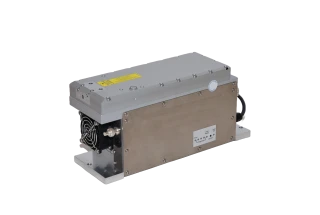
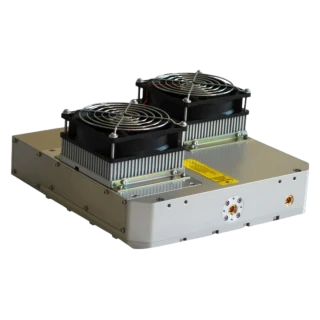
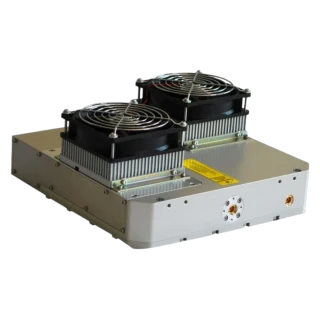
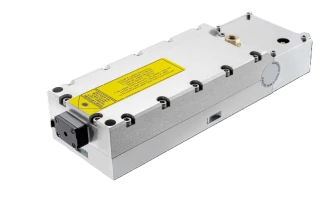
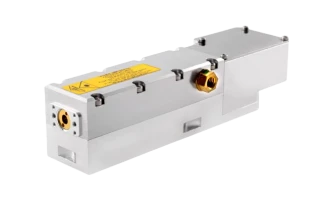
The Quantas-Q1-213 series stands at the forefront of nanosecond, Diode-Pumped Solid State (DPSS) laser technology, specifically engineered to deliver high-energy pulses at the ultraviolet wavelength of 213 nm. This series is characterized by its ability to produce pulse energies ranging from 0.5 mJ to 2 mJ, with pulse durations maintained below 8 ns at repetition rates of up to 10 Hz, catering to applications requiring precise and high-energy ultraviolet radiation.
Optimized Performance for Specialized Applications: Designed for peak performance, the Quantas-Q1-213 series DPSS laser provides high peak power pulses, essential for efficient photoablation, spectroscopy, and materials processing tasks. The integration of high-speed triggering and minimal jitter (<0.5 ns RMS) further enhances its applicability in time-sensitive and high-precision tasks such as semiconductor inspection and laser-induced breakdown spectroscopy (LIBS).
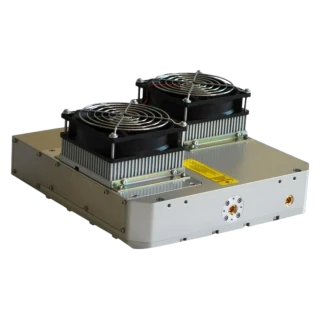
Innovative Design for Enhanced Usability: The air-cooled, compact design of the Quantas-Q1-213 DUV laser series emphasizes its efficiency and user-friendly nature, allowing for straightforward integration into existing setups without extensive cooling infrastructure. Despite its high-energy output, the series maintains a turnkey performance facilitated by a user-friendly web interface that simplifies operation and monitoring.
Reliability and Maintenance: Emphasizing reliability, the series features a pump diode with a lifetime exceeding 2 Giga-shots, ensuring consistent performance with minimal maintenance. The air-cooled design not only enhances the laser's efficiency but also its operational longevity by reducing thermal stress on critical components.
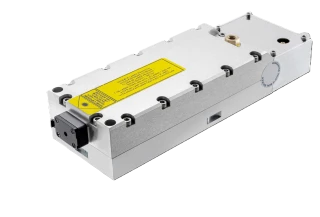
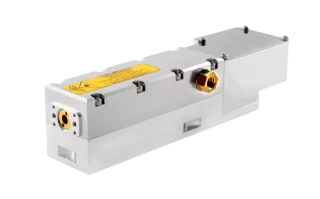
Quantas-Q1-213: High Energy Compact Nanosecond DUV DPSS Laser
Specifications
| Avg. Power: | 0.005 W |
|---|---|
| Wavelength: | 213 nm |
| Repetition Rate: | 0.001 – 0.05 kHz |
| Pulse Duration: | 8 ns |
| Pulse-to-Pulse Stability (RMS): | 5 % |
| Cooling: | Air |
| Pulse Energy: | 0.1 to 2.5 mJ |
| Power Drift: | <3 % |
| Beam Divergence: | 1.5 mrad |
| Polarization: | Linear, horizontal |
| Typical Beam Diameter: | 1.7 mm |
| Transmission Range: | 0.5 – 95 % |
| Laser Head ( W×L×H): | 110 × 231× 112 mm³ |
| Controller Unit (W×L×H): | 108 × 191 × 59 mm³ |
| Power Adapter (W×L×H): | 50 × 125 × 31 mm³ |
| Harmonic Generator (W×L×H): | 110 × 242 × 112 mm³ |
| Ambient Temperatur: | 15 – 30 ℃ |
| Mains Voltage: | 90 – 230 VAC, single phase, 47 – 63 Hz |
| Average Power Consumption: | 15 – 30 W |
| Relative Humidity (non-condensing): | 10 – 80 % |
Got questions about specs? Use the inquiry form to ask.
 Download Data Sheet

Features
- High Pulse Energy & Power – Delivers up to 40 mJ per pulse and up to 0.5 W average output power, enabling demanding applications such as LIBS, laser ablation, and nonlinear spectroscopy.
- Adjustable Repetition Rate – Supports up to 50 Hz variable pulse repetition rate (e.g., 40 mJ @ 10 Hz, 10 mJ @ 50 Hz), with factory-set maximum and flexible external triggering for user-optimized duty cycles.
- Short Nanosecond Pulses – Provides 7–10 ns pulse duration (FWHM), delivering high peak powers for efficient material interaction and precise time‑resolved measurements.
- Diode-Pumped, Air-Cooled Design – Water‑free, air‑cooled architecture eliminates chillers, circulating water, and bulky external power racks, minimizing maintenance and system complexity.
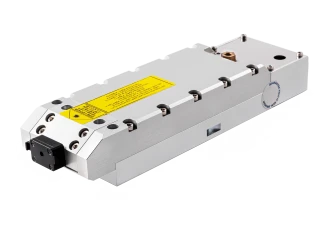
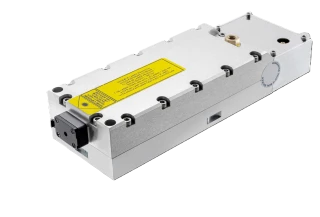
- Compact & Lightweight Turnkey System – All laser electronics are integrated into the Q1 housing; only a lightweight controller and 12 VDC mains adapter are external. Total weight < 5 kg, ideal for benchtop setups, OEM integration, and portable systems.
- Choice of Gain Medium & Wavelength – Configurable to emit 1053 nm (Nd:YLF) or 1064 nm (Nd:YAG), allowing users to select the optimal fundamental wavelength for their process or detection scheme.
- Excellent Beam Quality & Stability – Low divergence fundamental beam supports efficient focusing and delivery, and enables high conversion efficiency in optional harmonic generation modules.
- Athermal Nd:YLF Operation – At 1053 nm, the athermal properties of Nd:YLF allow operation from single shot up to maximum repetition rate with minimal changes in beam divergence or profile, ensuring repeatable, stable performance.
- Long-Lifetime Pump Diode – Robust diode pumping architecture with > 2 Gshot lifetime supports long service intervals and reduced system downtime compared to lamp‑pumped alternatives.
- Integrated Synchronization Outputs – Built‑in sync pulse generator for precise triggering of user equipment such as detectors, cameras, and timing electronics in pump–probe and time‑of‑flight experiments.
- Remote Monitoring & Control – Standard Ethernet interface enables remote diagnostics, status monitoring, and control from a PC or over a network, simplifying integration into automated setups and OEM systems.
- Optional Motorized Attenuator – PC‑controlled, attachable motorized attenuator allows automated, high‑precision adjustment of output pulse energy without disturbing beam alignment.
- Optional Pulse Energy Monitoring – Attachable pulse energy monitor provides real‑time feedback of output energy for process control, calibration, and long‑term stability tracking.
- Fiber-Coupled Output Available – Optional fiber coupling module allows flexible beam delivery to remote locations, microscopes, and instruments while maintaining beam quality and alignment stability.
- Modular Harmonic Generation – Optional stand‑alone 2nd, 3rd, 4th, or 5th harmonic generator modules (H1 series) convert the fundamental to common visible and UV wavelengths for spectroscopy, micromachining, and photochemistry.
- Shared Baseplate Mounting – Optional baseplate enables rigid, pre‑aligned mounting of the Q1 laser with H1 harmonic generator or fiber coupler, enhancing mechanical stability and simplifying system integration.
- UV Optics Protection – Optional stand‑alone air‑purging unit extends the lifetime of UV optics by minimizing contamination and absorption losses in deep‑UV operation.
- Low Operating Overhead – Runs from a simple 12 VDC power supply with high electrical‑to‑optical efficiency relative to lamp‑pumped systems, reducing operating cost and thermal load in laboratories and OEM platforms.
- Maintenance-Friendly Turnkey Operation – User‑friendly design with no consumable flashlamps, no water system, and integrated control electronics results in minimal maintenance, rapid installation, and straightforward daily use.
- Optimized for Demanding Applications – Performance and reliability tailored for LIBS, laser ablation, TOF spectroscopy, LIF, nonlinear spectroscopy, flash photolysis, photoacoustics, metrology, and other high‑peak‑power nanosecond applications.
Applications
- Laser-Induced Breakdown Spectroscopy (LIBS) – Elemental analysis of metals, alloys, geological samples, soils, slurries, and industrial process streams; ideal for portable and lab-based LIBS systems using 1064 nm or 1053 nm high peak power pulses.
- Laser Ablation and Micromachining – Precision removal of thin films, coatings, and bulk material on metals, ceramics, polymers, semiconductors, and glass; suitable for mask repair, patterning, surface texturing, and micro-drilling when combined with 2nd–5th harmonics.
- Time-of-Flight (TOF) Mass Spectrometry – Pulsed desorption/ionization source for TOF and TOF‑SIMS systems; excellent temporal and spatial beam quality improves mass resolution and sensitivity.
- Laser-Induced Fluorescence (LIF) Spectroscopy – Excitation source for LIF and PL (photoluminescence) measurements in gases, liquids, and solids; suitable for combustion diagnostics, flow visualization, plasma studies, and chemical sensing.
- Nonlinear Optics and Frequency Conversion – Pump source for OPO/OPA, harmonic generation (2ω, 3ω, 4ω, 5ω), and other nonlinear experiments; low beam divergence and ns pulse width ensure efficient SHG/THG/FHG for UV and deep-UV generation.
- Flash Photolysis and Pump–Probe Experiments – Excitation of transient species in photochemical and photobiological systems; ns pulses and variable repetition rate enable time-resolved kinetic studies over a wide temporal range.
- Photoacoustic Spectroscopy and Imaging – Generation of acoustic waves for gas-phase trace detection, solid sample characterization, and biomedical photoacoustic imaging; compatible with NIR and frequency-converted VIS/UV wavelengths.
- Metrology and Optical Testing – Precision timing, calibration, and characterization of photonic devices, detectors, and optical components; suitable for MTF measurements, reflectivity testing, and scattering studies.
- Remote Sensing and LIDAR – Compact, air-cooled source for range finding, atmospheric sensing, and aerosol or pollutant detection using fundamental and harmonic wavelengths.
- Raman Spectroscopy (Spontaneous and Resonant) – Excitation source for bulk and surface-enhanced Raman (SERS) spectroscopy; UV and visible harmonics are suitable for resonant Raman and pigment, polymer, or semiconductor analysis.
- Plasma Generation and Diagnostics – Creation and probing of laser plasmas in laboratory and industrial environments; used for plasma parameter measurements, spectroscopy, and plasma-assisted material processing.
- Optogenetics and Photostimulation (via Harmonics) – Frequency‑converted visible output for pulsed stimulation of neurons and biological tissues in neuroscience and cellular biology research.
- Surface Structuring and Texturing – Formation of micro‑ and nano‑structured surfaces for wettability control, tribology optimization, and functional surface engineering using fundamental or UV harmonics.
- Thin Film and Coating Characterization – Ablation-based depth profiling, defect detection, and adhesion testing of optical, electronic, and protective coatings.
- Semiconductor and Microelectronics Processing – Marking, trimming, selective material removal, via drilling, and wafer-level characterization with tightly controlled ns pulses.
- Scientific Research and Laboratory Development – General-purpose nanosecond laser source for university and R&D labs working in photonics, spectroscopy, quantum optics (e.g., pumping OPOs), and advanced materials studies.
- Biomedical and Life Science Research – Time-resolved fluorescence, phosphorescence, and photoacoustic studies of biological samples; suitable as an excitation source for contrast agent development and tissue optics research.
- Forensic and Cultural Heritage Analysis – LIBS, LIF, and Raman-based non‑destructive testing of artworks, historical artifacts, inks, paints, and residues; portable, air‑cooled design simplifies field deployment.
- Industrial Process Monitoring and Quality Control – In‑line LIBS and ablation-based sensors for real-time composition analysis of melts, slags, powders, and production samples; robust design supports OEM integration.
Frequently Asked Questions
What is the maximum pulse energy of the Quantas-Q1-213 DUV series?
What are the pulse width and repetition rate of the Quantas-Q1-213 DUV laser?
How does the Quantas-Q1-213 DUV DPSS laser manage cooling?
Can the Quantas-Q1-213 series DPSS laser be synchronized with external equipment?
What applications can benefit from the Quantas-Q1-213 series DUV laser?
What is the expected lifetime of the pump diode in the Quantas-Q1-213 series?
How user-friendly is the Quantas-Q1-213 series?
What makes the Quantas-Q1-213 series DUV DPSS suitable for ultraviolet applications?
Got more questions? Use the inquiry form to ask the supplier directly.
Similar Products
Your inquiry has been received.
Create an account by adding a password
Why create an account?
- Auto-complete inquiry forms
- View and manage all your past messages
- Save products to your favorites
- Close your account anytime — no hassle