
Description
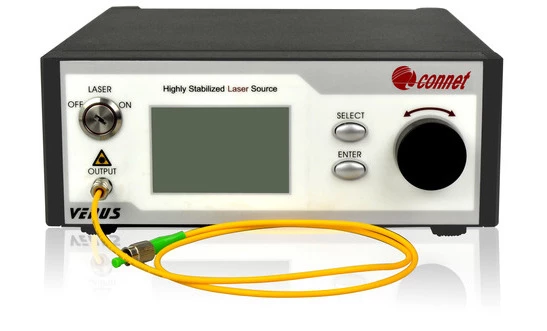
The VENUS series SLD (SLED) broadband light sources are precision-engineered superluminescent diode solutions designed for demanding test and measurement tasks in the 800–1650 nm range. Covering key telecom and sensing windows at typical center wavelengths of 840 nm, 980 nm, 1060 nm, 1310 nm and 1550 nm, these instruments deliver high output power with broad spectral width, making them ideal for applications that require low coherence, low speckle, and high stability. Compared with conventional LEDs or laser diodes, SLD-based sources provide a unique combination of laser-like power and LED-like broadband emission, which is particularly advantageous for interferometry, optical fiber sensing and spectrum analysis.
Internally, the VENUS series integrates a high‑performance SLD module with carefully optimized driving electronics and thermal management. The design incorporates specialized protection measures in both the circuit and the optical path to guard against back-reflections, as well as against current and voltage surges that can damage sensitive SLD chips. This robust protection architecture ensures long-term stable operation, even in environments where reflection levels or electrical noise would pose a risk for more conventional light sources. These characteristics make the VENUS series suitable for both research laboratories and continuous-duty industrial production lines.
In the 840 nm range, VENUS SLD broadband sources offer multiple output-power and bandwidth combinations, spanning from about 1 mW to 30 mW with typical full width at half maximum (FWHM) spectral widths from around 14 nm up to 50 nm. This flexibility allows users to choose configurations optimized either for higher optical power or for broader spectrum, depending on the needs of high-resolution optical coherence tomography (OCT), biomedical imaging, or free-space metrology setups. At 980 nm, configurations in the few-milliwatt range with tens of nanometers of bandwidth are well suited for pump-probe experiments, fiber component characterization, and precision alignment tasks where a compact, low-coherence source is required.
The 1060 nm models in the VENUS family are particularly attractive for next-generation OCT and interferometric sensing. They combine output powers from approximately 1.5 mW up to 20 mW with very broad spectra, up to around 70 nm FWHM, enabling high axial resolution and improved imaging depth compared to narrower-band sources. Users can select between variants that prioritize maximum bandwidth for resolution or narrower bandwidth for applications that demand higher spectral density at a given wavelength. Similar design principles extend into the 1310 nm and 1550 nm versions, which address telecommunications windows and are widely used in fiber-optic gyroscopes, fiber Bragg grating interrogation systems, and distributed fiber sensing platforms.
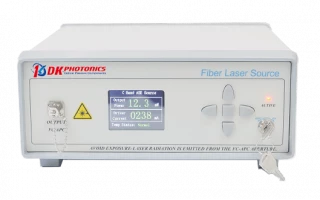
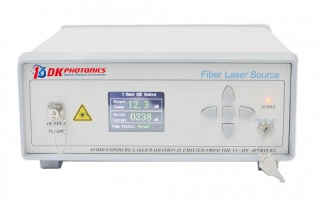
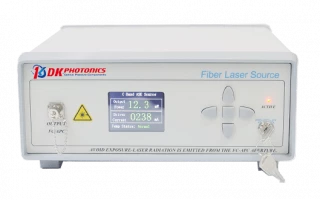
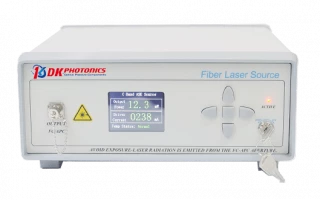
From an optical interface perspective, these SLD broadband light sources are typically delivered with single-mode fiber output (polarization-maintaining options available for applications such as coherent detection or polarization-sensitive measurements), a standard fiber length of at least 1 meter, and FC/APC connectors to minimize back-reflections. The internal optical isolator options further improve protection against reflected light; users should be aware that integrating an isolator introduces the usual trade-off of a modest power reduction (typically in the 5–20% range) in exchange for significantly enhanced reliability of the SLD chip. The compact benchtop enclosure, with dimensions around 340 mm × 240 mm × 100 mm, is well suited for integration into optical racks and laboratory workstations.
The VENUS series is engineered for long-term stability, featuring output power stability on the order of 1% over 15 minutes and about 3% over 8 hours when measured at 25 °C after a suitable warm-up period. This performance is supported by precise automatic temperature control (ATC) and automatic current control (ACC), which maintain the SLD diode in its optimal operating region, reducing wavelength drift and power fluctuations. Coarse and fine output power adjustment modes provide users with granular control of optical power, which is especially important during calibration, device characterization, or when illuminating sensitive detectors and components. Together, these capabilities meet the expectations set by comparable SLD broadband sources used in high-end metrology, telecom component testing, and advanced sensing systems worldwide.
The VENUS SLD broadband light sources are powered from a universal 100–240 VAC input with low overall power consumption, and they are designed to operate reliably from 0 °C to +50 °C, with storage capability down to –40 °C and up to +85 °C. An intuitive front-panel interface with LCD sta
SLD Broadband Light Source
Specifications
| Bandwidth: | 20 nm |
|---|---|
| Center Wavelength: | 1550 nm |
| Output Power: | 1.5 mW |
| Polarization: | Random |
| Part Number: | VSLS-XXXX-B |
| Center Wavelength Options: | 840 nm, 980 nm, 1060 nm, 1310 nm, 1550 nm |
| Output Power (spec Table): | >1.5 mW |
| Spectral Width (FWHM): | >20 nm |
| Spectral Modulation: | <0.45 dB |
| Output Isolation: | 30 dB |
| Output Power Stability (15 Min): | <1 % |
| Output Power Stability (8 H): | <3 % |
| Output Power Tunable Mode: | Coarse/Fine |
| Output Fiber Type: | Single-mode fiber (PM optional) |
| Output Fiber Length: | >1 m |
| Optical Connector: | FC/APC (other options available) |
| Operating Voltage: | 100–240 VAC |
| Power Consumption: | ≤ 5 W |
| Operating Temperature: | 0 to +50 ℃ |
| Storage Temperature: | -40 to +85 ℃ |
| Dimensions: | 340(L) × 240(W) × 100(H) mm |
| Ordering Code Format: | VSLS-XXXX-P-<PW> |
| Package Options: | B = Benchtop, M = Module |
| Output Power Code (PW): | e.g., 20 = 20 mW, 100 = 100 mW |
| 840 Nm Model VSLS-840-B-1: | Output power 1 mW, FWHM 50 nm |
| 840 Nm Model VSLS-840-B-3: | Output power 3 mW, FWHM 20 nm |
| 840 Nm Model VSLS-840-B-7.5: | Output power 7.5 mW, FWHM 50 nm |
| 840 Nm Model VSLS-840-B-10: | Output power 10 mW, FWHM 18 nm |
| 840 Nm Model VSLS-840-B-15: | Output power 15 mW, FWHM 50 nm |
| 840 Nm Model VSLS-840-B-20: | Output power 20 mW, FWHM 18 nm |
| 840 Nm Model VSLS-840-B-25: | Output power 25 mW, FWHM 50 nm |
| 840 Nm Model VSLS-840-B-30: | Output power 30 mW, FWHM 14 nm |
| 980 Nm Model VSLS-980-B-2: | Output power 2 mW, FWHM 35 nm |
| 980 Nm Model VSLS-980-B-3: | Output power 3 mW, FWHM 20 nm |
| 1060 Nm Model VSLS-1060-B-1.5: | Output power 1.5 mW, FWHM 70 nm |
| 1060 Nm Model VSLS-1060-B-5 (35 Nm): | Output power 5 mW, FWHM 35 nm |
| 1060 Nm Model VSLS-1060-B-5 (70 Nm): | Output power 5 mW, FWHM 70 nm |
| 1060 Nm Model VSLS-1060-B-10: | Output power 10 mW, FWHM 70 nm |
| 1060 Nm Model VSLS-1060-B-20 (35 Nm): | Output power 20 mW, FWHM 35 nm |
| 1060 Nm Model VSLS-1060-B-20 (70 Nm): | Output power 20 mW, FWHM 70 nm |
Got questions about specs? Use the inquiry form to ask.
 Download Data Sheet

Features
- Broadband SLD light source covering 800–1650 nm – Available at key center wavelengths including 840 nm, 980 nm, 1060 nm, 1310 nm, and 1550 nm, ideal for telecom, sensing, and test & measurement applications.
- High output power with flexible power levels – Typical output powers from 1.5 mW up to 30 mW (and higher variants depending on wavelength), supporting demanding laboratory and industrial setups.
- Wide spectral bandwidth (FWHM > 20 nm) – Broadband emission with typical spectral widths up to 70 nm (wavelength dependent), enabling high-resolution optical coherence tomography (OCT), spectroscopy, and fiber sensor interrogation.
- Low spectral modulation (< 0.45 dB) – Smooth, low-ripple spectrum improves measurement accuracy and reduces interference fringes in interferometric and sensing systems.
- High output isolation (~30 dB) – Integrated optical isolation (wavelength dependent) protects the SLD chip from back-reflections, increasing stability and lifetime in fiber-optic setups.
- Excellent output power stability – Power stability < 1% over 15 minutes and < 3% over 8 hours (after warm-up at 25 °C) for reliable long-duration measurements and production line operation.
- Low polarization ratio option – Optional low-polarization or PM (polarization-maintaining) fiber output versions available to match requirements of fiber gyroscopes, interferometers, and polarization-sensitive systems.
- High-precision ATC and ACC control – Integrated Automatic Temperature Control (ATC) and Automatic Current Control (ACC) circuits maintain constant operating conditions, ensuring spectral and power stability over time and temperature.
- Multiple safety protections for SLD module – Specialized circuit and optical-path design protects against surges in current/voltage and harmful reflected light, greatly reducing the risk of device damage.
- Benchtop and module configurations – Available as a complete benchtop instrument (B) or OEM module (M), simplifying integration into laboratory setups, rack systems, or custom equipment.
- User-friendly front-panel interface with LCD – Clear LCD display for monitoring wavelength, output power, operation mode, and status; easy access to settings for laboratory and production users.
- Coarse and fine power tuning modes – Dual-range adjustment allows quick power setting and precise fine-tuning to the desired output level for calibration and characterization tasks.
- Single-mode fiber output (PM optional) – Standard SM fiber output ensures good beam quality and coupling efficiency; optional PM fiber enhances performance in polarization-sensitive applications.
- Standard fiber-optic interface – FC/APC connector as standard (other connector types available on request) for low-reflection coupling into fiber networks and test systems.
- Wide AC input range – Operates from 100–240 VAC, suitable for global deployment in laboratories, factories, and field environments.
- Compact and robust benchtop housing – Space-saving 340 (L) × 240 (W) × 100 (H) mm footprint designed for 24/7 industrial use and intensive research operation.
- Wide operating temperature range – 0 to +50 °C operating and –40 to +85 °C storage for stable performance in typical lab and light industrial environments.
- Multiple wavelength variants for specific applications – Dedicated models for 840 nm, 980 nm, 1060 nm, 1310 nm, and 1550 nm broadband SLD sources to match OCT, telecom, FBG sensing, fiber gyroscopes, and component testing needs.
- Customizable spectral width and power – Output power and bandwidth configurable per wavelength; options for high-power narrowband or lower-power ultra-broadband variants to optimize performance for your system.
- Optimized for test & measurement and optical fiber sensing – Ideal for fiber Bragg grating (FBG) interrogation, fiber-optic gyroscopes, distributed sensing, spectrum analysis, and general optical component characterization.
- Long-term reliability and stability – Industrial-grade design with protective measures, stable driving electronics, and quality SLD modules ensures long lifetime and minimal maintenance.
Applications
- High‑resolution optical coherence tomography (OCT) – Broadband SLD emission from 840 nm to 1550 nm enables axial resolutions down to a few micrometers for ophthalmic OCT, dermatology imaging, intravascular OCT, and industrial OCT for materials and semiconductor inspection.
- Fiber optic gyroscopes (FOG) – Low-coherence, low-polarization SLD sources at 1310 nm and 1550 nm provide the required depolarized, broadband light for high‑accuracy interferometric fiber optic gyroscopes used in navigation, aerospace, robotics, and marine guidance.
- Fiber Bragg grating (FBG) sensing and interrogation – Wide spectral bandwidth and high output power are ideal for static and dynamic FBG sensor systems used in structural health monitoring of bridges, tunnels, wind turbines, pipelines, civil engineering, and aerospace structures.
- Distributed fiber sensing (DTS/DAS/OFDR) – As a broadband, low‑coherence light source, this SLD is used in optical frequency domain reflectometry (OFDR) and other distributed sensing techniques for temperature, strain, and acoustic monitoring over long fiber lengths.
- Optical time‑domain and frequency‑domain reflectometry (OTDR/OFDR) reference sources – Provides a stable, broadband reference light for characterization of optical components, connectors, and fiber links with high spatial resolution and low coherent artifacts.
- Optical component and passive device characterization – Ideal for insertion loss and spectral characterization of filters, couplers, WDM/DWDM components, circulators, isolators, and splitters across 840 nm, 980 nm, 1060 nm, 1310 nm, and 1550 nm telecom and datacom bands.
- Interferometry and low‑coherence interferometric measurements – Used in white‑light interferometers and Michelson/Mach‑Zehnder configurations for precise thickness, refractive index, surface profile, and dispersion measurements with reduced speckle.
- Spectrum analysis and calibration – Serves as a broadband reference source for optical spectrum analyzers (OSAs) and spectrometers, enabling calibration, sensitivity assessment, and wavelength verification across the NIR telecom windows.
- Telecommunications and datacom testing – Suitable for testing optical transceivers, amplifiers, WDM systems, and fiber links at 1310 nm and 1550 nm, including gain flatness and spectral response testing of EDFAs and other optical amplifiers.
- Biomedical spectroscopy and tissue optics – The 840 nm, 980 nm, and 1060 nm bands support diffuse optical spectroscopy, functional NIR imaging, and tissue optical property measurements, leveraging broadband emission in the biological optical window.
- Optical coherence-domain reflectometry in biomedical devices – Enables catheter‑based imaging, dental imaging, and endoscopic probes that require compact, stable, and broadband NIR sources.
- Optical metrology and surface inspection – Used for non‑contact surface profiling, roughness measurement, and film thickness metrology on wafers, lenses, coatings, and precision optical components.
- Laser and photonic device R&D – Provides a stable broadband input for characterizing new waveguides, integrated photonic circuits, resonators, photodetectors, modulators, and other devices in research labs and pilot production lines.
- Polarization‑sensitive and polarization‑maintaining systems – With optional low‑polarization or PM fiber output, the source supports polarization‑sensitive OCT, polarization mode dispersion studies, and polarization‑dependent loss (PDL) measurements.
- Educational and research laboratories – A versatile bench‑top broadband SLD source for university and institutional labs working on optics, photonics, fiber communications, sensing, and laser physics experiments.
- Industrial process monitoring and inline inspection – Integrated in production environments for real‑time monitoring of fiber cables, connectors, optical assemblies, and precision mechanical parts where broadband, stable illumination is required.
- Environmental and geophysical sensing – Drives interferometric fiber sensors for seismic monitoring, vibration sensing, and environmental strain/temperature sensing in oil & gas, energy, and geotechnical applications.
- Secure and low‑coherence optical links – Used where reduced coherence and low speckle are desired to minimize interference, crosstalk, and coherent noise in specialized sensing and communication links.
- General test and measurement in photonics – A workhorse broadband light source for routine characterization, alignment, and verification tasks
Frequently Asked Questions
What is the Connet VENUS series SLD (SLED) broadband light source and what wavelengths are available?
What are the main applications of the VENUS series SLD broadband light source?
What are the key performance specifications of the VENUS SLD broadband light source?
How do I choose the right VENUS SLD model (wavelength, power and spectrum) for my application?
What fiber, connector and package options are available for the VENUS SLD source?
How stable and safe is the VENUS SLD broadband light source in long‑term operation?
How do I interpret the VENUS SLD ordering code (VSLS-XXXX-P-) and what are some example models?
Got more questions? Use the inquiry form to ask the supplier directly.
Similar Products
Your inquiry has been received.
Create an account by adding a password
Why create an account?
- Auto-complete inquiry forms
- View and manage all your past messages
- Save products to your favorites
- Close your account anytime — no hassle