
Description
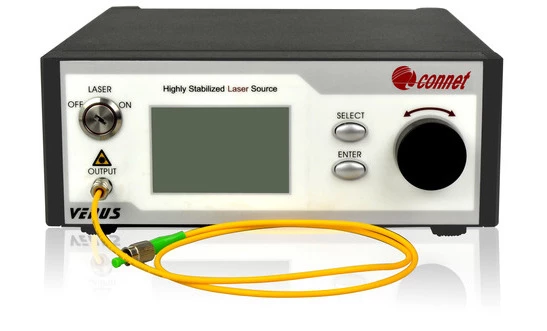
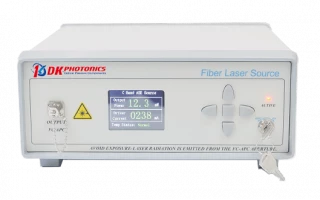
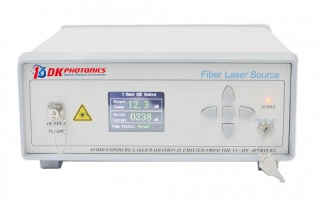
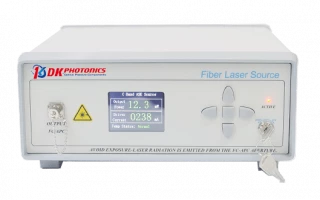
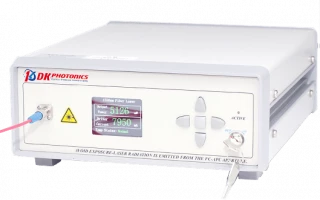
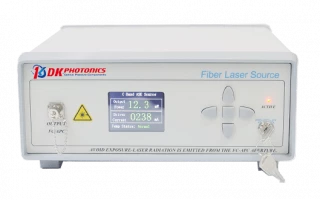
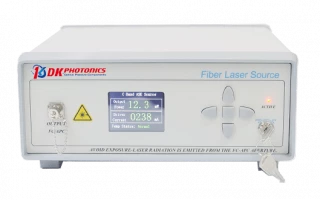
The VENUS series C+L band ASE broadband light sources from Connet are highly integrated, precision-engineered benchtop instruments designed for demanding optical test and measurement environments. Built around an optimized erbium-doped fiber laser architecture, these sources deliver a wide, continuous C+L band emission from 1528 nm to 1602 nm with high output power and excellent power stability over the full operating temperature range. The compact benchtop platform incorporates a high-definition LCD display that simultaneously shows operating current, voltage, and output power, giving users clear and immediate insight into operating conditions during experiments and production testing.
In contrast to simple C-band or L-band sources, the C+L band coverage of the VENUS series provides a significantly broader emission profile, making it ideal for applications that require uniform spectral illumination across a wide range of telecom wavelengths. Typical full-width at half-maximum (FWHM) spectral width is around 74 nm, making it suitable for dense WDM component characterization, broadband loss measurements, and spectral response analysis. Compared with many conventional ASE sources, Connet’s design emphasizes both spectral width and power, with available output levels from 10 mW up to 200 mW, allowing users to select the right configuration for both laboratory research and integrated system deployment.
A key advantage of this series is its excellent spectral flatness across the C+L band, which is critical for accurate, wavelength-independent characterization of components and systems. The standard configuration offers spectral flatness within about 6–7 dB, while the flattened versions achieve significantly improved flatness of approximately 2.5–3.5 dB. This performance is competitive with other high-end C+L band ASE sources found in optical communication and photonics test markets, and it helps minimize measurement bias caused by nonuniform spectral power density. In addition, the sources feature low ripple characteristics, enabling cleaner baselines in spectral analysis and more reliable results in interferometric or sensing applications.
Power stability and controllability are also central to the design of the VENUS series. Short-term output stability is typically within ±0.5% over 15 minutes, and long-term stability is within about ±2% over 8 hours after a proper warm-up, which is comparable to or better than many similar ASE platforms used in precision test setups. Users can adjust the output power from 0 to 100% of the rated level, using both coarse and fine adjustment modes for fast setup and precise optimization. This level of control is valuable in applications such as component testing, where different devices under test may require different illumination levels, or in fiber sensing systems, where signal-to-noise ratio and dynamic range must be carefully managed.
The VENUS C+L band ASE sources are offered with either single-mode (SM) or polarization-maintaining (PM) fiber outputs to align with a broad range of experimental and industrial scenarios. The SM configuration (SMF 9/125 μm, NA=0.13) is well suited for general optical testing, spectral measurements, and broadband communications component evaluation. The PM configuration (PM1550, NA=0.13) provides a high polarization extinction ratio (typically >17 dB), which is important for polarization-sensitive systems such as fiber gyroscopes, coherent detection setups, and many high-precision fiber sensing architectures. Both versions are supplied with at least 1 meter of output fiber and an FC/APC connector as standard, supporting low-reflection, low-backscatter operation in precision measurement environments.
From a practical standpoint, these sources are built for both laboratory benches and integration into larger systems. The benchtop units operate from a universal 100–240 VAC input and typically consume less than 20 W, which is relatively low for broadband, high-power ASE sources covering the full C+L band. The mechanical design, with a footprint of approximately 340 mm × 240 mm and a height of 100 mm, is optimized for stable, long-term operation in research labs or production test racks. For OEM and system integration needs, Connet also offers a compact module package with similar optical performance characteristics, allowing engineers to embed a reliable C+L band ASE source directly into larger instruments, monitoring platforms, or automated test systems.
With their combination of wide C+L band coverage, optional flattened spectrum, high output power, and robust stability, the VENUS series C+L band ASE broadband light sources are well suited for component testing, optical fiber sensing systems, spectrum analysis, optical fiber gyroscope development, and fiber communication research. They provide the performance level typically required in advanced photonics laboratories and telecom test environments,
C+L-Band ASE Broadband Light Source
Specifications
| Bandwidth: | 74 nm |
|---|---|
| Center Wavelength: | 1528 nm |
| Output Power: | 10 mW |
| Polarization: | Random |
| Part Number: | VASS-CL-B: SM; VASP-CL-B: PM |
| Output Power Range: | 10–200 mW |
| Typical Output Power Options: | 10 mW, 20 mW, 50 mW, 100 mW, 200 mW |
| Operating Wavelength Range: | 1528–1602 nm |
| Spectral Width (FWHM): | 74 nm (typical) |
| Spectral Flatness (standard): | 6–7 dB |
| Spectral Flatness (flattened): | 2.5–3.5 dB |
| Output Isolation (min): | 30 dB |
| Output Isolation (typ): | 35 dB |
| Stability Of Output Power (15 Min, Typ): | ±0.5 % |
| Stability Of Output Power (15 Min, Max): | ±1.0 % |
| Stability Of Output Power (8 H, Typ): | ±2.0 % |
| Stability Of Output Power (8 H, Max): | ±5.0 % |
| Output Power Adjustment Range: | 0–100 % |
| Output Power Adjustment Mode: | Coarse/Fine |
| Output Fiber Type (singlemode): | SMF 9/125 μm, NA = 0.13 |
| Output Fiber Type (PM): | PM1550, NA = 0.13 |
| Polarization Extinction Ratio (PER): | >17 dB (PM output fiber) |
| Output Fiber Length: | >1 m |
| Output Fiber Connector: | FC/APC (other options available) |
| Operating Voltage: | 100–240 VAC |
| Maximum Power Consumption: | 20 W |
| Operating Temperature Range: | 0 to +50 ℃ |
| Storage Temperature Range: | -40 to +85 ℃ |
| Dimension: | 340(L) × 240(W) × 100(H) mm |
| Bandwidth: | C+L band |
| High Output Power: | up to 200 mW |
| Spectral Flatness (extremely High): | <3.5 dB over C+L band |
| Package Options: | B - benchtop, M - module |
Got questions about specs? Use the inquiry form to ask.
 Download Data Sheet

Features
- Wide C+L Band Coverage (1528–1602 nm) – Broad ASE emission spanning both C-band and L‑band enables simultaneous testing and characterization across key telecom windows in a single source.
- High Output Power up to 200 mW – Adjustable output power from 10 mW to 200 mW supports a wide range of applications from low‑power component characterization to high‑power system testing.
- Excellent Spectral Flatness – Standard versions offer ≤7 dB flatness, while flattened models achieve <3.5 dB (typ. 2.5 dB), providing a uniform spectral profile ideal for DWDM component testing and accurate spectrum analysis.
- Low Ripple, Low Coherence ASE Source – Optimized Er‑doped fiber laser design delivers low spectral ripple and low coherence noise, minimizing interference effects in fiber sensors and gyroscope systems.
- High Output Stability and Reliability – Output power stability of ±0.5% (15 min) and ±2.0% (8 h, typ.) over the full operating temperature range ensures repeatable, long‑term measurements in lab and production environments.
- Continuously Tunable Output Power (0–100%) – Built‑in power control with coarse and fine adjustment modes allows precise setting and easy optimization of output power for different test setups.
- Single Mode and Polarization-Maintaining Options – Available in SM (VASS-CL-B) and PM (VASP-CL-B) fiber outputs. PM versions feature PER >17 dB, supporting polarization‑sensitive measurements and coherent sensing systems.
- High Output Isolation (≥30 dB) – Integrated optical isolator protects the internal laser source from back‑reflections, enhancing measurement stability and extending device lifetime.
- High-Definition LCD Interface – Benchtop platform with clear LCD display shows current, voltage, and output power simultaneously, simplifying monitoring, configuration, and day‑to‑day operation.
- Low Power Consumption & Wide AC Input – Operates from 100–240 VAC with typical power consumption ≤20 W, suitable for continuous operation in laboratories and production lines.
- Robust Environmental Performance – Stable operation from 0 to +50 °C and storage from –40 to +85 °C, supporting deployment in demanding test and integration environments.
- Flexible Packaging: Benchtop or Module – Available as a compact benchtop instrument (B) for stand‑alone use or as a module (M) for OEM and system integration, giving design flexibility for research and industrial setups.
- Standard Telecom Fiber Interfaces – Uses SMF 9/125 µm or PM1550 fiber with >1 m pigtail and FC/APC connector (other connector options available) for easy connection to existing fiber‑optic test benches and systems.
- Ideal for Advanced Photonics Testing – Optimized for component testing, fiber‑optic sensing, spectrum analysis, optical fiber gyroscopes, and DWDM/fiber communication system development.
- Configurable Output Power & Flatness – Multiple power levels (10, 20, 50, 100, 200 mW) and selectable spectral flatness (standard or flattened) let users match the source precisely to their test requirements.
Applications
Applications of C+L Band ASE Broadband Light Source (VENUS Series, Connet)
The VENUS series C+L band ASE (Amplified Spontaneous Emission) broadband light sources from Connet are high‑stability, high‑power, wideband sources for advanced optical testing and system integration. With output power up to 200 mW, C+L band coverage (1528–1602 nm), and excellent spectral flatness (down to <3.5 dB), they are widely used in both R&D laboratories and industrial environments.
- Optical Component Testing and Characterization
Ideal as a broadband illumination source for testing passive and active components such as optical filters, WDM/DWDM components, AWGs, VOAs, couplers, splitters, isolators, circulators, Bragg gratings, and on‑chip photonic devices. The flat C+L band spectrum enables accurate insertion loss, return loss, and spectral response measurements. - Fiber Optic Sensing Systems (DTS, DAS, OFDR, FBG Sensing)
Used as a stable broadband source in fiber Bragg grating (FBG) interrogators, optical frequency domain reflectometry (OFDR) systems, distributed temperature sensing (DTS), distributed acoustic sensing (DAS), and strain/pressure/temperature monitoring systems. High output power and low ripple improve measurement resolution and dynamic range. - Spectrum Analysis and Optical Spectrum Measurement
Provides a reference broadband signal for calibration, resolution testing, and performance evaluation of optical spectrum analyzers (OSAs), spectrometers, and tunable filter modules. The wide C+L band and excellent spectral flatness are well suited for spectral shaping and filter characterization. - Optical Fiber Gyroscopes (FOG) and Inertial Navigation
Serves as a low‑coherence broadband source in interferometric fiber optic gyroscopes, reducing coherent back‑reflection and non‑reciprocal errors. The high stability and high reliability of the source support long‑term, high‑accuracy inertial navigation applications. - DWDM, CWDM, and Wavelength‑Selective Device Testing
Used for qualification of DWDM/CWDM multiplexers, demultiplexers, ROADMs, wavelength‑selective switches (WSS), and wavelength blockers. The flat C+L coverage allows simultaneous multi‑channel characterization across the full telecom band. - Optical Communication System Development and Lab Test Beds
Employed as a broadband noise or loading source in coherent and direct‑detection communication test beds. Can be used to emulate ASE noise, perform OSNR margin testing, channel loading, and evaluate system performance in C+L band transmission links. - Optical Coherence Tomography (OCT) and Low‑Coherence Interferometry (NIR)
Applicable in near‑infrared OCT and low‑coherence interferometric setups where C/L band wavelengths are used, for materials inspection, fiber/component metrology, and certain biomedical or tissue‑mimicking phantom studies that operate around 1.5 µm. - Photonic Integrated Circuit (PIC) and Silicon Photonics Testing
Provides broadband illumination for testing and wafer‑level probing of silicon photonics and InP photonic integrated circuits. The high power and spectral width allow characterization of waveguides, resonators, modulators, and integrated filters across C+L band. - Optical Time‑Domain and Frequency‑Domain Reflectometry
Used in OTDR and OFDR‑style systems that benefit from broadband ASE sources for high‑resolution reflectometry, index profiling, and backscatter analysis in specialty fibers, components, and complex optical networks. - Research in Nonlinear Fiber Optics and Supercontinuum Generation
Acts as a high‑power seed or pump‑like broadband source in experimental setups investigating nonlinear effects (Raman scattering, four‑wave mixing, parametric processes) in specialty fibers, as well as for supercontinuum generation in the C+L bands. - Calibration and Reference Light Source in Metrology Labs
Functions as a stable, repeatable broadband reference for calibrating measurement instruments such as OSAs, power meters, and spectrally selective receivers. Long‑term output stability and low ripple support precision optical metrology. - Polarization‑Maintaining (PM) Systems and Polarization‑Sensitive Measurements
With PM fiber output options and high polarization extinction ratio, the source is suitable for polarization‑sensitive experiments, PM component testing, and systems requiring stable polarization states in the C+L band.
Frequently Asked Questions
What is the VENUS series C+L Band ASE Broadband Light Source and what are its key features?
What are the typical applications of this C+L band ASE light source?
What output power, wavelength range, and spectral characteristics does the VENUS C+L ASE source provide?
How stable is the output power and what environmental conditions are supported?
What output fiber types, connectors, and polarization options are available?
How do I select and order the correct VENUS C+L band ASE light source model?
What are the electrical, mechanical, and user interface characteristics of the benchtop and module versions?
Got more questions? Use the inquiry form to ask the supplier directly.
Similar Products
Your inquiry has been received.
Create an account by adding a password
Why create an account?
- Auto-complete inquiry forms
- View and manage all your past messages
- Save products to your favorites
- Close your account anytime — no hassle