

Description
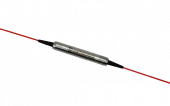
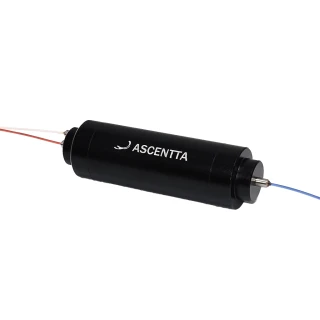
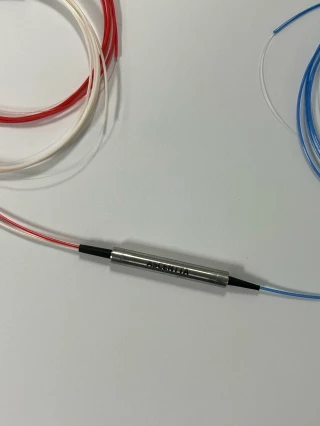
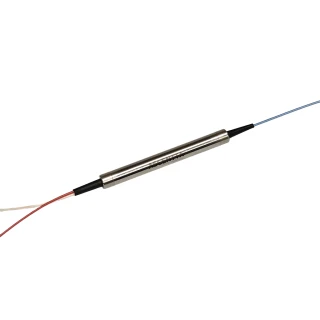
The DK-XS-DT-006-A/2 1310nm Polarization Insensitive Isolator from DK Photonics is a high-performance optical component designed to ensure unidirectional light transmission in fiber optic systems. Leveraging the Faraday Effect in magneto-optical crystals, this isolator effectively eliminates back reflection and back scattering, regardless of the polarization state of the incoming light. This makes it an essential device for maintaining signal integrity and protecting sensitive optical equipment in advanced photonic networks.
Engineered with a unique epoxy-free optical path, the isolator offers enhanced high-power handling capabilities and long-term reliability. Its robust construction results in low insertion loss and high isolation, ensuring minimal signal degradation and superior performance in demanding environments. The device also exhibits low polarization dependent loss (PDL) and polarization mode dispersion (PMD), which are critical parameters for high-speed and high-fidelity optical communication systems.
The 1310nm Polarization Insensitive Isolator is widely utilized in a variety of applications, including Erbium-Doped Fiber Amplifiers (EDFAs), Raman amplifiers, Dense Wavelength Division Multiplexing (DWDM) systems, fiber lasers, and optical transmitters. Its excellent temperature stability and high return loss further contribute to its suitability for both laboratory and field deployments. The isolator’s design supports customization, allowing for tailored fiber pigtails, connector types, and power handling specifications to meet specific project requirements.
With its combination of advanced optical performance, mechanical durability, and flexible configuration options, the DK-XS-DT-006-A/2 1310nm Polarization Insensitive Isolator stands out as a reliable solution for modern fiber optic communication infrastructures. Whether used in research, telecommunications, or industrial laser systems, it ensures optimal signal quality and system protection.
Polarization Insensitive Single/Dual Stage 2X2 Optical Isolator
Specifications
| Type Of The Device: | Isolator |
|---|---|
| Operating Wavelength: | 1310 nm |
| Max Power: | 0.3 W |
| Min Isolation: | 31 dB |
| Bandwidth: | +/-15 nm |
| Typical Peak Isolation At 23°C: | 42, 40, 52, 50 (model dependent) dB |
| Min. Isolation At 23°C: | 32, 30, 46, 45 (model dependent) dB |
| Typical Insertion Loss At 23°C: | 0.3, 0.4, 0.4, 0.5 (model dependent) dB |
| Max. Insertion Loss At 23°C: | 0.5, 0.7, 0.6, 0.8 (model dependent) dB |
| Return Loss (In/Out): | >60/55, >55/50, >60/55, >55/50 (model dependent) dB |
| Maximum Power Handling (CW): | 0.3, 1, 3, 5, 10 (model dependent) W |
| Max. Tensile Load: | 5 N |
| Fiber Type: | SMF-28e fiber, or other |
| Operating Temperature: | -20 to +70 °C |
| Storage Temperature: | -40 to +85 °C |
Got questions about specs? Use the inquiry form to ask.
 Download Data Sheet

Features
- Wavelength: Optimized for 1310nm operation, ideal for a wide range of fiber optic applications.
- Polarization Insensitive: Maintains performance regardless of input polarization state, ensuring stable operation in diverse systems.
- Low Insertion Loss: Minimizes signal attenuation for maximum transmission efficiency.
- High Isolation: Effectively blocks unwanted back reflections and backscattering, protecting sensitive components.
- Low Polarization Dependent Loss (PDL) & Polarization Mode Dispersion (PMD): Ensures signal integrity and high-quality transmission.
- Optical Path Epoxy-Free Design: Enhances high-power handling capability and long-term reliability.
- Excellent Temperature Stability: Maintains consistent performance across a wide temperature range.
- High Reliability: Robust construction and stringent quality control for dependable operation in demanding environments.
- Compact Package: Space-saving design suitable for integration into various optical modules and systems.
- Customizable Options: Available with a variety of fiber types, connector options, and power handling capabilities to meet specific requirements.
- RoHS Compliant: Environmentally friendly and suitable for global deployment.
Applications
- Erbium-Doped Fiber Amplifiers (EDFAs): Suppresses back reflections and backscattering to ensure stable amplifier operation and improved signal quality.
- Raman Amplifiers: Prevents unwanted feedback and enhances the performance of Raman amplification systems in optical networks.
- Dense Wavelength Division Multiplexing (DWDM) Systems: Maintains signal integrity by isolating channels and minimizing crosstalk in high-capacity optical communication networks.
- Fiber Lasers: Protects laser sources from destabilizing back reflections, improving output stability and laser lifetime.
- Optical Transmitters and Receivers: Shields sensitive transmitter and receiver components from reflected signals, ensuring accurate data transmission and reception.
- Wavelength Division Multiplexing (WDM) Systems: Enhances system reliability by isolating individual channels and reducing interference in multiplexed fiber optic systems.
- Optical Test and Measurement Equipment: Ensures precise measurements by eliminating the effects of unwanted back reflections during testing and calibration.
- Optical Sensing Systems: Improves sensor accuracy and reliability by preventing feedback that can distort measurement signals.
- Quantum Communication: Maintains the integrity of quantum signals by isolating quantum channels from noise and backscattering.
- Research and Development in Photonics: Provides essential isolation in experimental setups involving high-power lasers, nonlinear optics, and advanced fiber optic technologies.
- Optical Network Protection: Safeguards critical network components from damage due to reflected power and enhances overall system robustness.
- High-Speed Optical Communication Links: Ensures stable and high-quality data transmission in long-haul and metro fiber optic networks.
Frequently Asked Questions
What is a 1310nm Polarization Insensitive Isolator?
What are the key features of the DK Photonics 1310nm Polarization Insensitive Isolator?
What applications are suitable for this isolator?
How does a polarization insensitive isolator work?
Can I request custom specifications for the isolator?
How does the presence of connectors affect the isolator's performance?
What should I consider when ordering a 1310nm isolator from DK Photonics?
Got more questions? Use the inquiry form to ask the supplier directly.
Similar Products



Your inquiry has been received.
Create an account by adding a password
Why create an account?
- Auto-complete inquiry forms
- View and manage all your past messages
- Save products to your favorites
- Close your account anytime — no hassle