
Description
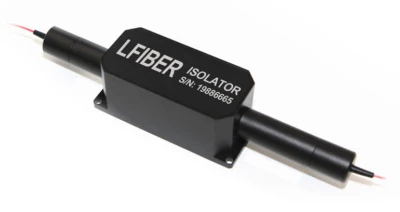
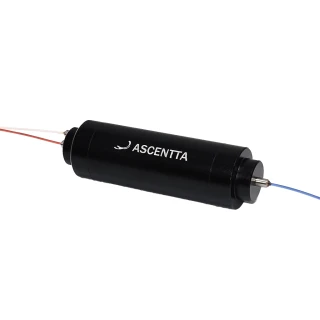
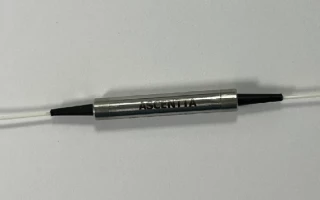
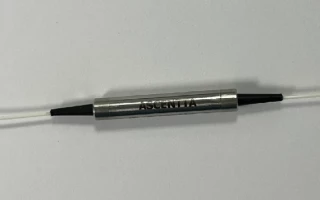
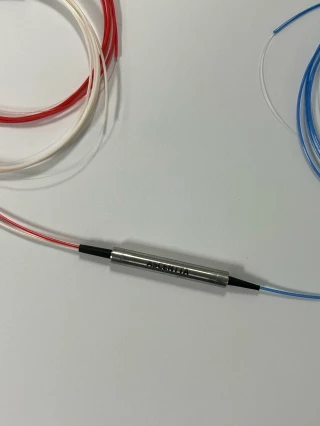
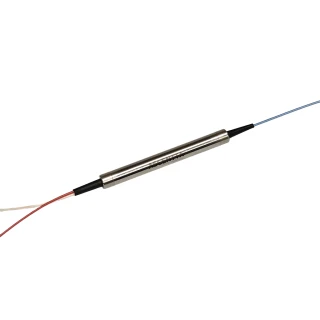
High power polarization-maintaining isolator allows light to propagate in one direction but block transmission in the opposite direction. At the same time, by using PM panda fibers it maintains a well-defined state of polarization (SOP) of the light. This fiber-coupled 1064/1053/1030/980 nm PM optical isolator has power handling up to 50W. It’s a good choice in many laser applications, since back-reflected light often have deleterious effects on the operating conditions of optical devices.
Notes:
- The high power polarization-maintaining isolator is customizable, and the above specifications are subject to change without notice.
- For device with connectors, IL is 0.3dB higher, RL is 5.0dB lower, ER is 2.0dB lower.
- Unless otherwise specified, the slow axis of the fiber is aligned with the key of the PM fiber connector.
- Slow axis working and fast axis blocked as standard, while operating on both the slow and fast axis available on request.
- Bare fiber should not support the weight of the connector. So that if any connectors needed, for the pigtail type it’s better to choose the 900μm loose tube jacket instead of the 250μm bare fiber.
- For CW high-power optical interconnection, we recommend fusion splice without connectors.
- For product customization or special requirements, please contact Lfiber’s sales department for availability.
High Power Polarization-Maintaining Isolator (50W)
Specifications
| Type Of The Device: | Isolator |
|---|---|
| Operating Wavelength: | 980 nm |
| Max Power: | 50 W |
| Min Isolation: | 25 dB |
| Extinction Ratio At 23℃ (dB): | ≥20 |
| Connector: | None, FC/UPC, FC/APC, SC/UPC, SC/APC, LC/UPC, LC/APC, Others on request |
| Optical Power (CW) Handling (W): | 30, 50 |
| Fiber Type: | Panda PM fiber, others on request |
Got questions about specs? Use the inquiry form to ask.
 Download Data Sheet

Features
- High‑power polarization‑maintaining design (up to 50 W CW)
Engineered to handle up to 50 W continuous‑wave optical power and up to 20 kW peak power for nanosecond pulses, making it ideal for industrial, medical, and scientific high‑power fiber laser systems. - Multiple center wavelengths: 980 nm, 1030 nm, 1053 nm, 1064 nm
Available at standard Yb‑doped fiber laser wavelengths (1030 nm, 1053 nm, 1064 nm) as well as 980 nm pump wavelength, each with a ±5 nm operating bandwidth for flexible laser integration. - Excellent isolation performance for backward‑reflection protection
Typical peak isolation of 30 dB and minimum isolation ≥25 dB at 23 °C effectively suppress backward‑propagating light, protecting upstream laser sources and amplifiers from damage and instability. - Low insertion loss for maximum system efficiency
Typical insertion loss of 0.8 dB (maximum 1.0 dB at 23 °C) minimizes power loss, enabling higher output power and improved overall optical system efficiency. - Polarization maintaining with high extinction ratio
Extinction ratio ≥20 dB ensures stable polarization state in PM fiber laser and amplifier chains, delivering low‑noise operation and consistent beam quality for precision applications. - High return loss for superior signal integrity
Return loss ≥45 dB reduces back‑reflections into the source, enhancing laser stability and minimizing interference effects in sensitive measurement or processing setups. - Configurable axis alignment options
Supports “slow axis working and fast axis blocked”, “fast axis working and slow axis blocked”, and “both axis working” configurations, allowing optimization for fiber lasers, MOPA systems, PM amplifiers, and test instruments. - Compatible with PANDA PM fibers and standard PM connectors
Uses PANDA polarization‑maintaining fiber with alignment of the slow axis to the connector key (unless otherwise specified) and supports FC/UPC, FC/APC, SC/UPC, SC/APC, LC/UPC, LC/APC and custom connector options. - Rugged package for demanding environments
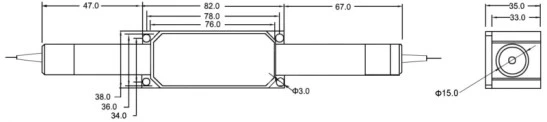
Compact 82 × 38 × 35 mm package with maximum tensile load of 5 N on the fiber pigtails provides robust mechanical stability for integration in laboratory setups and OEM systems. - Optimized for fiber lasers, MOPA systems, and PM amplifiers
Designed for high‑power Yb‑doped fiber lasers, MOPA fiber lasers, PM fiber amplifiers, and high‑precision optical testing instruments requiring stable polarization and high isolation. - Broad operating and storage temperature range
Reliable performance over an operating temperature range of +10 °C to +50 °C and storage from 0 °C to +60 °C, suitable for both controlled lab environments and many industrial conditions. - Customizable pigtails, fiber length, and packaging
Choice of 250 μm bare fiber or 900 μm loose‑tube pigtails, with standard lengths (0.5 m, 0.8 m, 1.0 m, 1.5 m) and custom lengths available to simplify routing and integration. - Flexible power‑handling configurations
Standard configurations up to 30 W and 50 W CW at different wavelengths, with device construction optimized for high‑power beam handling and long‑term reliability. - Connector and splicing options for high‑power use
Supports connectorized versions for convenience, with specified performance impact (≈0.3 dB higher IL, 5 dB lower RL, 2 dB lower ER), while fusion splicing is recommended for demanding CW high‑power interconnects. - High reliability and long‑term stability
Built using proven high‑power PM isolator technology for stable isolation, low drift, and extended service life in continuous operation environments. - Ideal for reflection‑sensitive precision applications
Suited for micromachining, nonlinear optics, interferometry, and other applications where back‑reflection, polarization fluctuation, and power loss must be strictly controlled. - Custom engineering support
Wavelengths, axis configuration, fiber type, connector style, fiber jacket, and package options can be tailored on request to match specific system architectures or OEM requirements.
Applications
- High‑Power Fiber Laser Systems – Boost laser stability and efficiency in industrial CW and pulsed fiber lasers operating at 980 nm, 1030 nm, 1053 nm, and 1064 nm by blocking harmful back‑reflections up to 50 W CW and 20 kW peak power.
- PM Fiber Amplifiers (Ytterbium‑Doped) – Protect seed lasers and amplifier stages in polarization maintaining fiber amplifiers, ensuring high extinction ratio and stable polarization at 1030 nm–1064 nm.
- MOPA Fiber Laser Architectures – Isolate master oscillators from power amplifier back‑scatter in MOPA configurations, maintaining pulse fidelity and preventing damage in ns‑pulse and CW operation.
- Ultrafast and Picosecond/Nanosecond Laser Sources – Improve performance of mode‑locked and pulsed Yb fiber lasers at 1030 nm/1053 nm/1064 nm by suppressing back‑propagating ASE and reflections.
- 980 nm Pump Laser Isolation – Provide high‑reliability isolation for 980 nm pump diodes used in Er‑doped and Yb‑doped fiber amplifier pumping chains, extending diode lifetime.
- High‑Power PM Fiber Laser Modules – Integrate into OEM high‑power laser heads and rack‑mounted laser modules to protect internal optics and maintain beam quality under high optical loads.
- Precision Test and Measurement Instruments – Use in optical test benches, metrology systems, and lab setups to shield sensitive sources and detectors from back‑reflections during characterization at 1.0–1.1 µm.
- Nonlinear Fiber Optics Experiments – Stabilize experimental setups involving supercontinuum generation, SRS, SPM, and other nonlinear processes in PM fibers near 1030–1064 nm by preventing backward‑propagating light.
- Interferometry and Coherent Detection – Enhance signal fidelity in interferometers, coherent detection schemes, and coherent beam combining systems that use PM fibers around 1 µm.
- Laser Micromachining and Materials Processing – Integrate into high‑power Yb fiber laser lines for cutting, drilling, welding, marking, and surface texturing where stable, reflection‑immune delivery at 1030–1064 nm is required.
- Laser Additive Manufacturing (SLM/3D Printing) – Protect fiber sources in metal 3D printing and selective laser melting systems operating at 1 µm wavelengths from back‑reflections generated at the workpiece.
- Medical and Biomedical Laser Systems – Apply in medical Yb fiber laser platforms (e.g., surgical tools, dermatology, photocoagulation at ~1 µm) that require low insertion loss and robust isolation for patient‑safe operation.
- LIDAR and Range‑Finding at 1 µm – Use in polarization‑maintaining transmitter chains of 1030–1064 nm LIDAR and range‑finding systems to protect seed lasers and maintain polarization for accurate distance and velocity measurements.
- Sensing and Instrumentation (Fiber‑Based) – Incorporate into distributed sensing, FOG‑like systems, and fiber‑based strain or temperature sensors around the 1 µm band where polarization control and back‑reflection suppression are critical.
- Optical Isolation in R&D Laboratories – General‑purpose high‑power PM isolator for research setups requiring configurable axis alignment (slow‑axis working, fast‑axis working, or both axes) at 980 nm, 1030 nm, 1053 nm, and 1064 nm.
- High‑Power PM Fiber Delivery Lines – Place at the interface of PM delivery fibers and external optics (collimators, scanners, focusing lenses) to prevent reflections from propagating back into the laser cavity.
- OEM Integration in Laser Modules and Subsystems – Ideal for system integrators building compact, ruggedized laser engines, amplifier racks, or optical heads that demand high isolation, high return loss, and long‑term reliability.
- Free‑Space to Fiber Coupling Protection – Protect high‑precision free‑space to PM fiber couplers operating near 1 µm by eliminating destabilizing feedback from downstream optics or samples.
- Beam Conditioning and Polarization‑Sensitive Systems – Use in systems where consistent polarization extinction ratio and minimal insertion loss are required to feed polarizers, waveplates, AOMs, EOMs, and other polarization‑critical components.
Frequently Asked Questions
What is a high power PM fiber isolator and where is this 980/1030/1053/1064 nm model typically used?
How do I choose the correct wavelength and axis alignment option for my high power PM isolator?
What are the key optical performance specifications of this high power PM isolator (insertion loss, isolation, extinction ratio, return loss)?
How much optical power can this high power PM isolator handle and is it suitable for pulsed fiber lasers?
Should I use connectors or fusion splicing with this high power PM isolator, and what fiber pigtail options are available?
How is the polarization axis aligned in this PM isolator and how does that affect my system design?
What are the mechanical dimensions, environmental conditions, and customization options for this high power PM isolator?
Got more questions? Use the inquiry form to ask the supplier directly.
Similar Products



Your inquiry has been received.
Create an account by adding a password
Why create an account?
- Auto-complete inquiry forms
- View and manage all your past messages
- Save products to your favorites
- Close your account anytime — no hassle