
Description
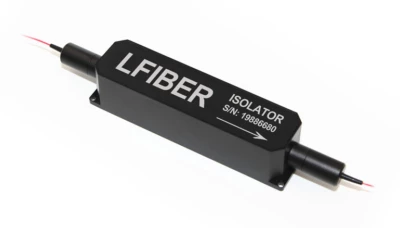
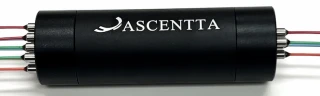
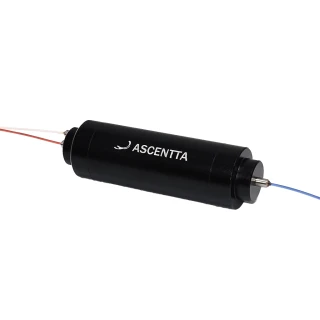
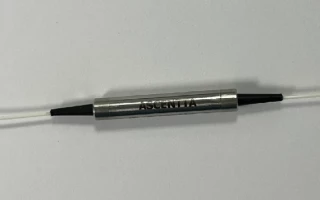
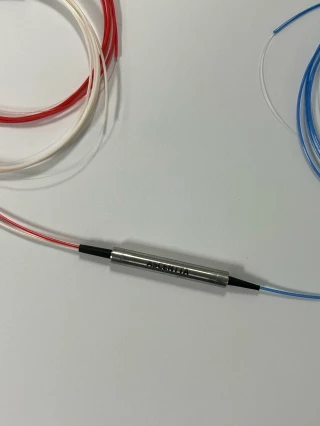
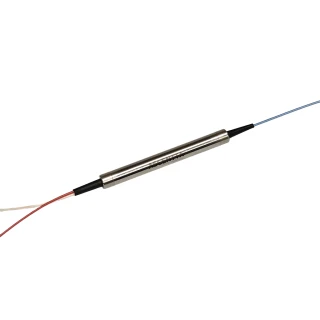
The high-power high-isolation isolator (1064nm, 1030nm, 980nm, 915nm, 850nm, 808nm, 780nm) is a polarization-independent fiber component that allows all polarized light (not just the light polarized in a specific direction) to propagate in one direction but blocks it in the opposite direction. In many applications, we are unable to control the polarization of input light. In cases like this a polarization-independent optical fiber isolator (1064/1030/980/915nm/850/808/780 nm) is needed. It is a key component to protect lasers, amplifiers and ASE sources from spurious back-reflected light that produces instabilities.
Notes:
- The high-power high-isolation isolator (1064nm, 1030nm, 980nm, 915nm, 850nm, 808nm, 780nm; polarization-independent) is customizable, and the above specifications are subject to change without notice.
- For CW high-power optical interconnection, we recommend fusion splice without connectors.
- For device with connectors, IL is 0.3dB higher, RL is 5.0dB lower.
- Bare fiber should not support the weight of the connector. So that if any connectors needed, for the pigtail type it’s better to choose the 900μm loose tube jacket instead of the 250μm bare fiber.
- For product customization or special requirements, please contact Lfiber’s sales department for availability.
High-Power High-Isolation Isolator
Specifications
| Type Of The Device: | Isolator |
|---|---|
| Operating Wavelength: | 780 nm |
| Max Power: | 10 W |
| Min Isolation: | 55 dB |
| Product Type: | High-Power Dual-Stage Isolator |
| Polarization: | Polarization-independent |
| Center Wavelengths: | 1064 nm, 1030 nm, 980 nm, 915 nm, 850 nm, 808 nm, 780 nm |
| Operating Wavelength Range: | ±5 nm |
| Typical Peak Isolation At 23℃: | 65 dB |
| Minimum Isolation At 23℃: | 55 dB |
| Typical Insertion Loss At 23℃: | 0.8 dB |
| Maximum Insertion Loss At 23℃: | 1.2 dB |
| Maximum Polarization Dependent Loss At 23℃: | 0.2 dB |
| Minimum Return Loss (Input/Output): | 45 dB |
| Maximum Average Optical Power (generic Spec): | 20 W |
| Maximum Peak Power For Ns Pulse: | 10 kW |
| Maximum Tensile Load: | 5 N |
| Package Dimension: | 150 x 28 x 26 mm |
| Operating Temperature: | +10 to +50 ℃ |
| Storage Temperature: | 0 to +60 ℃ |
| Fiber Types (examples): | HI1060, SMF-28e |
| Pigtail Types: | 250 μm bare fiber, 900 μm loose tube |
| Typical Fiber Length Options: | 0.5 m, 0.8 m, 1.0 m |
| Connector Types: | None, FC/UPC, FC/APC, SC/UPC, SC/APC, LC/UPC, LC/APC |
| Average Power (ordering Example, None Connector): | 500 mW |
| Average Power (ordering Example, FC/UPC): | 1 W |
| Average Power (ordering Example, FC/APC): | 2 W |
| Average Power (ordering Example, SC/APC): | 5 W |
| Average Power (ordering Example, LC/UPC): | 10 W |
| Average Power (ordering Example, LC/APC): | 20 W |
| Peak Power (ordering Examples): | 10 kW, 20 kW |
Got questions about specs? Use the inquiry form to ask.
 Download Data Sheet

Features
- High-Power Dual-Stage Design – Dual-stage optical isolator structure delivers typical 65 dB isolation (≥55 dB min at 23°C), effectively blocking back-reflected light and protecting high‑power fiber laser systems and amplifiers.
- Wide Wavelength Coverage – Optimized for multiple popular wavelengths in industrial, medical, and research lasers: 1064 nm, 1030 nm, 980 nm, 915 nm, 850 nm, 808 nm, and 780 nm, all in a single product family.
- Polarization-Independent Operation – Polarization independent design with low PDL (≤0.2 dB typical at 23°C) ensures stable performance with randomly polarized or uncontrolled polarization states in fiber lasers and test setups.
- Low Insertion Loss – Engineered for high system efficiency with typical insertion loss of 0.8 dB and ≤1.2 dB maximum at 23°C; ideal for power-sensitive fiber laser and amplifier applications.
- High Power Handling Capability – Supports up to 20 W average optical power and up to 10 kW peak power for nanosecond pulses, suitable for modern high‑brightness CW and pulsed fiber lasers.
- Excellent Return Loss – High return loss ≥45 dB (input/output) minimizes back‑reflections into the source, enhancing stability, beam quality, and protecting upstream components.
- High Reliability & Stability – Robust construction and carefully selected materials provide high reliability under demanding operating conditions, with stable isolation and loss over temperature and power.
- Optimized for Fiber Lasers and Amplifiers – Specifically designed for use in fiber lasers, MOPA fiber lasers, polarization maintaining fiber amplifiers, and precision testing instruments, where back‑reflection control is critical.
- Compact Package – Space‑saving package with typical dimensions of 150 × 28 × 26 mm enables easy integration into OEM laser heads, optical modules, and lab systems.
- Flexible Fiber and Pigtail Options – Available with common fiber types such as HI1060 and SMF‑28e, in multiple pigtail configurations (250 μm bare fiber or 900 μm loose tube) with standard lengths (0.5 m, 0.8 m, 1.0 m or specified).
- Multiple Connector Configurations – Supports a full set of connector options for easy system integration, including FC/UPC, FC/APC, SC/UPC, SC/APC, LC/UPC, LC/APC, or connector‑less fusion‑splice ready ends to minimize insertion loss and maximize power handling.
- CW and Pulsed Operation – Suitable for both continuous‑wave (CW) and nanosecond pulsed applications, providing stable isolation for high‑peak‑power laser machining, marking, and materials processing systems.
- Broad Operating Temperature Range – Reliable performance over an operating temperature range of +10°C to +50°C and storage temperature range of 0°C to +60°C, matching typical laboratory and industrial environments.
- Enhanced Performance with Fusion Splicing – Recommended fusion splicing for CW high‑power interconnects to minimize reflection and thermal effects; note that connectors add ~0.3 dB insertion loss and reduce return loss by ~5 dB.
- Mechanical Robustness – Designed for maximum tensile load of 5 N on fiber pigtails, with guidelines to avoid loading on bare fiber and to use 900 μm loose tube when connectors are required.
- Customizable Configurations – Highly customizable to match OEM and system‑level requirements: wavelength, fiber type, connector type, pigtail length, package style, and power rating can be specified on request.
- Ideal for Industrial and Scientific Systems – Well suited for industrial fiber laser machining, medical laser sources, lab research setups, metrology, and precision test and measurement where high isolation and low loss are essential.
- Consistent Performance Across Bands – Designed to provide uniform isolation, low insertion loss, and low PDL across the supported wavelengths, simplifying system design for product families covering multiple bands.
- OEM and Volume Production Ready – Manufactured with tight process control to support consistent performance from unit to unit, making it suitable for volume deployment in commercial laser platforms.
Applications
Applications of High-Power Dual-Stage Fiber Optic Isolator
1064nm, 1030nm, 980nm, 915nm, 850nm, 808nm, 780nm; Polarization-Independent
The high-power dual-stage isolator from Lfiber is designed for demanding optical systems that require high isolation, low insertion loss, and excellent power handling across key industrial and scientific wavelengths. Typical applications, based on common use cases of similar products in the fiber optics industry and listings on platforms such as FindLight, include:
- High-Power Fiber Laser Systems (CW and Pulsed)
Used as a critical protection component in:- Industrial fiber lasers for cutting, welding, drilling, marking, and micromachining
- 1030 nm and 1064 nm Yb-doped fiber lasers for precision material processing
- 980 nm and 915 nm pump laser chains for high-power fiber amplifiers
- 808 nm and 850 nm diode-pumped solid-state (DPSS) laser front-ends
- Pre-Amplifier and Power Amplifier Protection (MOPA)
Integrated in:- MOPA fiber laser architectures to isolate seed lasers from power amplifier back-reflections
- Ytterbium-doped power amplifiers around 1030 nm and 1064 nm
- High-gain pre-amplifier stages that are sensitive to feedback and ASE buildup
- Polarization-Independent Fiber Amplifiers
Suitable for:- Polarization-independent EDFA and YDFA stages in free-space and fiber-coupled systems
- High-power amplification systems where input polarization is not well controlled
- Optical amplifier modules used in research laboratories and OEM integration
- Optical Test and Measurement Instruments
Installed in:- High-power optical test benches in R&D and production environments
- Spectrum analyzers, optical power meters, and diagnostic setups requiring back-reflection control
- Burn-in and life-test stations for laser diodes and fiber laser modules
- Nonlinear Optics and Ultrafast Photonics
Widely used in:- Nonlinear fiber optics experiments (supercontinuum generation, SRS, FWM)
- Pulsed and nanosecond laser systems up to 10 kW peak power for 1064 nm, 1030 nm, and nearby bands
- Mode-locked laser cavities where stable unidirectional operation and feedback suppression are required
- Medical and Biomedical Laser Systems
Applicable for:- Medical laser platforms based on 808 nm, 850 nm, 915 nm, 980 nm, or 1064 nm
- Therapeutic and diagnostic systems requiring stable, feedback-free fiber delivery
- Ophthalmic, dermatologic, and surgical fiber-coupled laser instruments
- Optical Sensing and LIDAR Subsystems
Utilized in:- Fiber-based LIDAR transmit paths around 780 nm, 808 nm, 850 nm, 915 nm, and 1064 nm
- Distributed fiber sensing (DTS, DAS, BOTDA/BOTDR) where backscattering and reflections can disturb the source laser
- Long-reach fiber sensing systems where source protection and signal integrity are critical
- Telecom, Datacom, and Short-Reach Links (Special Wavelengths)
Deployed in:- Specialty links and short-reach interconnects at 850 nm and 980 nm (VCSEL and MMF/SMF systems)
- Lab setups for next-generation optical communication research using non-standard bands
- Prototype modules where robust isolation is required despite varying polarization and reflections
- OEM Laser Modules and Integrated Photonic Subsystems
Ideal for:- Integration inside OEM fiber laser heads, amplifier modules, and pump combiners
- Custom optical engine designs where compact, high-reliability isolation is required
- Ruggedized systems for industrial, field-deployed, or defense-related photonics
Frequently Asked Questions
What is a high-power dual-stage fiber optic isolator and what does polarization-independent mean?
For which wavelengths and applications is this dual-stage isolator typically used?
What are the key performance specifications of this high-power dual-stage isolator?
How much power can this dual-stage isolator handle in CW and pulsed operation?
What fiber types, pigtail options, and connectors are available for this isolator?
How do connectors affect insertion loss and return loss on this dual-stage isolator?
Is this dual-stage isolator customizable and how should it be integrated into a high-power fiber laser system?
Got more questions? Use the inquiry form to ask the supplier directly.
Similar Products



Your inquiry has been received.
Create an account by adding a password
Why create an account?
- Auto-complete inquiry forms
- View and manage all your past messages
- Save products to your favorites
- Close your account anytime — no hassle