
Description
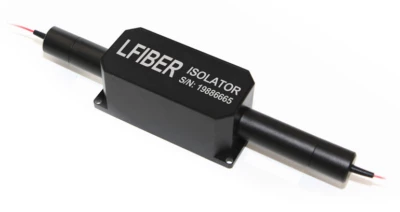
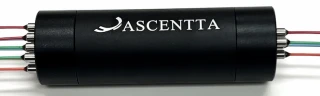
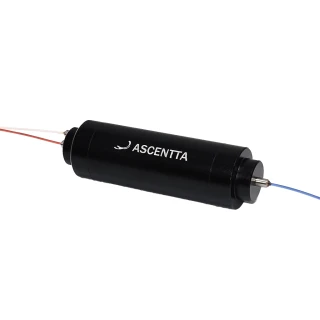
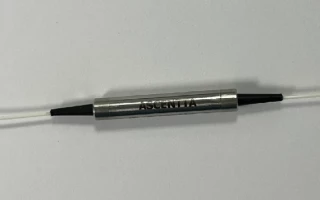
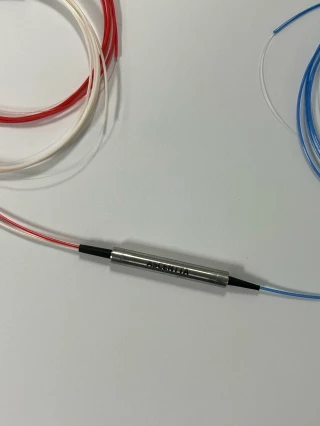
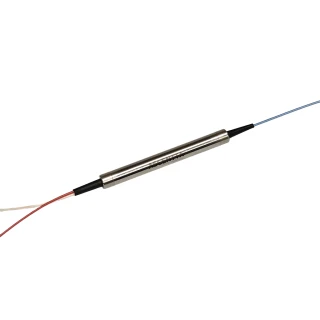
The High Power Fiber Optical Isolator (polarization-independent fiber optic isolators, 1064/1053/1030/980 nm) is a fiber-coupled component that allows all polarized light signal (not just the light polarized in a specific direction) to propagate along a fiber in one direction but not in the opposite direction. Functionally, it is quite like an optic-electrical diode. The 1064/1053/1030/980 nm high power optical isolators are necessary in fiber optic systems in many roles the most common of which is the prevention of back-reflected light coming back down a fiber from re-entering and disrupting the operations of a laser.
Notes:
- The High Power Fiber Optical Isolator (polarization-independent fiber optic isolators, 1064/1053/1030/980 nm) is customizable, and the above specifications are subject to change without notice.
- For device with connectors, IL is 0.3dB higher, RL is 5.0dB lower.
- Bare fiber should not support the weight of the connector. So that if any connectors needed, for the pigtail type it’s better to choose the 900μm loose tube jacket instead of the 250μm bare fiber.
- For CW high-power optical interconnection, we recommend fusion splice without connectors.
- For product customization or special requirements, please contact Lfiber’s sales department for availability.
High Power Fiber Optical Isolator (50W)
Specifications
| Type Of The Device: | Isolator |
|---|---|
| Operating Wavelength: | 980 nm |
| Max Power: | 50 W |
| Min Isolation: | 25 dB |
| Center Wavelength (nm): | 980, 1030, 1053, or 1064 |
| Connector: | None, FC/UPC, FC/APC, SC/UPC, SC/APC, LC/UPC, LC/APC, Others |
| Optical Power (CW) Handling (W): | 30 or 50 |
| Fiber Type: | HI060, Others specified |
Got questions about specs? Use the inquiry form to ask.
 Download Data Sheet

Features
- High-Power Handling up to 50 W CW – Engineered for demanding industrial and scientific applications, this high power optical isolator supports 30 W or 50 W continuous-wave power and up to 20 kW peak power for nanosecond pulses, making it ideal for modern high-brightness fiber laser systems.
- Optimized for Key High-Power Laser Wavelengths – Available center wavelengths at 980 nm, 1030 nm, 1053 nm, and 1064 nm with a typical operating bandwidth of ±5 nm, ensuring excellent performance with Yb-doped fiber lasers, MOPA fiber lasers, and high-power pump/signal lines.
- Low Insertion Loss for Maximum System Efficiency – Typical insertion loss of only 0.8 dB and maximum 1.0 dB at 23℃ minimizes power loss and heat load, maintaining high overall optical efficiency in fiber lasers and amplification stages.
- High Isolation for Reliable Back-Reflection Protection – Delivers typical peak isolation of 30 dB and a minimum of 25 dB at 23℃ to effectively suppress back-reflected light, protecting laser sources and stabilizing output performance.
- Excellent Return Loss for Stable Operation – With a return loss of ≥45 dB, the isolator significantly reduces back reflections into upstream components, improving laser stability, spectral purity, and system reliability.
- Low Polarization Dependent Loss (PDL) – Polarization dependent loss of ≤0.2 dB ensures stable transmission performance even in systems with polarization variations, suitable for high-precision test setups and polarization-sensitive applications.
- Robust, Compact Package for High-Power Integration – Housed in a compact 82 × 38 × 35 mm package, this isolator is designed for integration in space-constrained optical modules, fiber laser heads, and amplifier chassis, while safely managing high power density.
- Wide Operating and Storage Temperature Range – Supports an operating temperature from +10°C to +50°C and storage temperature from 0°C to +60°C, enabling deployment in typical laboratory, OEM, and light industrial environments.
- Flexible Fiber and Pigtail Options – Offered with HI 1060 / HI060 or specified fiber types, with pigtail options including 250 μm bare fiber or 900 μm loose tube jacket, and standard fiber lengths of 0.5 m, 0.8 m, 1.0 m, and 1.5 m, as well as customized lengths on request.
- Multiple Connector Configurations Available – Connector options include FC/UPC, FC/APC, SC/UPC, SC/APC, LC/UPC, LC/APC, or no connector. For the lowest loss and highest power handling, fusion splicing without connectors is recommended for CW high-power interconnections.
- Optimized for Fiber Lasers, MOPA Systems, and Amplifiers – Specifically designed for fiber lasers, MOPA fiber lasers, fiber amplifiers, and optical testing instruments, where high isolation and low insertion loss are critical for protecting gain media and maintaining beam quality.
- High Reliability and Long-Term Stability – Built for continuous operation in professional environments, with careful thermal and mechanical design to ensure high reliability, long lifetime, and stable optical performance under high power loading.
- Customizable Performance and Configuration – Wavelength, power handling, fiber type, fiber length, connectors, and package options can be custom-tailored to specific OEM or research requirements, enabling seamless integration into existing laser and amplifier platforms.
- Designed for Safe High-Power Fiber Management – Application notes and design guidelines emphasize avoiding mechanical stress on bare fiber; for configurations requiring connectors, 900 μm loose tube pigtails are recommended instead of 250 μm bare fiber to improve robustness.
- Industry-Competitive Performance for High-Power Isolators – Matches or exceeds the key metrics commonly found in high-power isolators from leading global manufacturers (power handling, isolation, IL, and RL), providing a cost-effective solution without compromising on optical performance.
Applications
- High‑Power CW and Pulsed Fiber Lasers – Used as a key protection component in industrial fiber laser systems operating at 980 nm, 1030 nm, 1053 nm, and 1064 nm, preventing back‑reflections from damaging seed lasers, pump diodes, or amplifier stages.
- MOPA (Master Oscillator Power Amplifier) Fiber Lasers – Integrated between the master oscillator and power amplifier stages to ensure high isolation and stable operation in nanosecond and picosecond MOPA configurations for marking, micromachining, and precision processing.
- High‑Power Fiber Amplifiers (Yb‑Doped) – Deployed at the output of Ytterbium‑doped fiber amplifiers around 1030–1064 nm to suppress backscattered light and ASE, improving noise performance and amplifier lifetime.
- 980 nm Pump Laser Isolation – Provides isolation for 980 nm pump lasers used in EDFAs, YDFA pump modules, Raman amplifiers, and other high‑power pumping schemes, reducing feedback into the pump diodes.
- Ultrafast and Short‑Pulse Laser Systems – Applied in femtosecond and picosecond Yb‑fiber lasers near 1030–1064 nm to protect mode‑locked oscillators from reflections originating in compressor stages, nonlinear fibers, or experimental setups.
- Laser Material Processing and Micromachining – Integrated into cutting, drilling, engraving, and surface structuring systems to isolate the laser source from highly reflective metal and semiconductor workpieces, especially at 1064 nm.
- LIDAR and Range‑Finding Modules – Used in high‑power pulsed fiber‑based LIDAR transmitters to minimize feedback from optics or targets, improving stability and measurement repeatability.
- Optical Test and Measurement Instruments – Built into high‑power optical test benches, power meters, spectrum analyzers, and interferometers to block unwanted reflections when characterizing fiber lasers, amplifiers, or nonlinear components.
- Nonlinear Optics and Frequency Conversion Experiments – Protects seed sources in setups for second‑harmonic generation (SHG), supercontinuum generation, and other nonlinear experiments at 1 µm by isolating them from reflected or back‑propagating light.
- Scientific and Research Laser Setups – Widely used in university and laboratory environments for stable alignment‑sensitive experiments, isolating ring cavities, interferometers, and high‑power optical paths at 1 µm.
- Optical Trapping and Manipulation – Deployed in high‑power optical tweezers and trapping systems based on 1064 nm lasers to protect the laser head from reflections at microscope objectives and sample interfaces.
- Remote Sensing and Environmental Monitoring – Used in high‑power fiber‑laser‑based sensing platforms (DIAL, Raman LIDAR, atmospheric monitoring) to maintain stable output in the presence of varying backscatter levels.
- Medical and Aesthetic Laser Platforms – Incorporated in 1 µm fiber‑laser modules for surgery, dermatology, and aesthetic treatments to reduce feedback from optical delivery systems and patient interfaces, enhancing system reliability.
- Defense and Aerospace Laser Systems – Used in targeting, designation, and directed‑energy subsystems at 1 µm wavelengths to protect sensitive laser oscillators and amplifiers from back‑reflections in harsh environments.
- Optical Communication and Pump Modules – Integrated in high‑power pump and amplifier modules for long‑haul and submarine systems where 980 nm pump diodes and 1 µm sources require robust isolation and high reliability.
- OEM Laser Modules and Turnkey Systems – Designed into compact OEM laser engines and rack‑mount sources, benefiting from the small 82 × 38 × 35 mm package, low insertion loss, and high isolation for demanding industrial and scientific customers.
Frequently Asked Questions
What is a high power optical isolator at 980nm/1030nm/1053nm/1064nm and why is it used in fiber laser systems?
What are the key optical specifications and performance characteristics of this high power optical isolator?
How do I choose the correct configuration (wavelength, power rating, fiber type, and connectors) for my application?
Can this high power optical isolator be used with connectors, and what is the recommended way to integrate it into high‑power fiber links?
What environmental and mechanical limits should I consider (temperature, tensile load, and package size)?
Is this high power optical isolator polarization dependent, and can it be used in both PM and non‑PM fiber systems?
Can the high power optical isolator be customized (wavelength, fiber length, connectors, or special requirements)?
Got more questions? Use the inquiry form to ask the supplier directly.
Similar Products



Your inquiry has been received.
Create an account by adding a password
Why create an account?
- Auto-complete inquiry forms
- View and manage all your past messages
- Save products to your favorites
- Close your account anytime — no hassle