
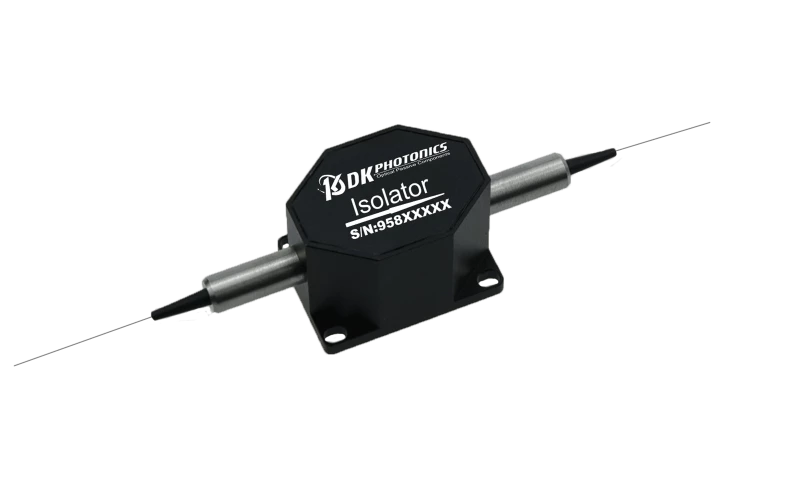
Description
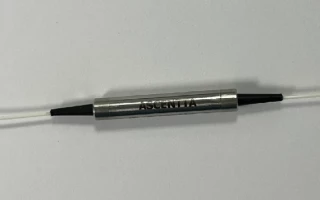
The 680 nm TGG Based Optical Isolator from DK Photonics is engineered to deliver reliable unidirectional light transmission for demanding visible‑wavelength applications. Built around a Terbium Gallium Garnet (TGG) Faraday rotator, this free‑space device provides high isolation and low insertion loss, enabling stable operation of sensitive sources such as diode‑pumped solid‑state (DPSS) lasers, frequency‑doubled systems, and precision metrology equipment operating near 680 nm. By effectively blocking back‑reflections and back‑scattered light, the isolator protects laser cavities and optical amplifiers from destabilizing feedback, helping maintain output power stability, beam quality, and wavelength accuracy over long operating periods.
At the 680 nm wavelength, optical components are frequently integrated into biomedical imaging setups, spectroscopy instruments, and research‑grade optical benches where even small amounts of back‑reflection can introduce noise, mode hopping, or damage to delicate emitters. This TGG based isolator addresses these challenges with a carefully optimized magneto‑optic design, providing high isolation across a specified operating bandwidth and excellent return loss. The result is a robust solution suitable for both laboratory and industrial environments, where consistent performance and repeatability are critical. Its optical performance is comparable to specialized visible‑range isolators used in tunable lasers, Raman systems, and advanced test and measurement platforms found across the photonics industry.
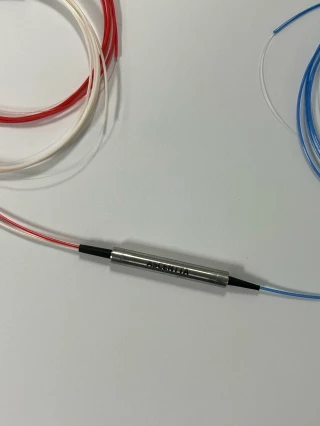
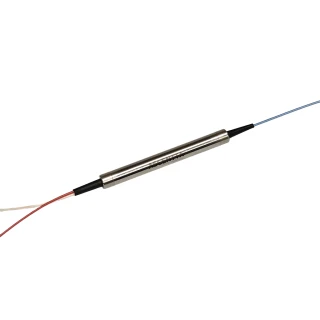
DK Photonics offers this 680 nm isolator in a fiber‑in/fiber‑out configuration, with options for polarization‑insensitive or polarization‑maintaining designs tailored to the needs of the target system. The device is designed for low insertion loss to preserve system power budgets and signal‑to‑noise ratios, a key consideration in applications such as fiber‑coupled spectroscopy, fiber‑based interferometry, and high‑resolution imaging. High return loss further minimizes parasitic reflections into the source, supporting stable operation of single‑frequency or narrow‑linewidth lasers that are particularly sensitive to optical feedback. Compared with generic broadband isolators, a dedicated 680 nm design offers superior performance and stability at the target wavelength, making it a preferred choice for specialized visible‑wavelength deployments.
Mechanical construction and material selection are optimized for environmental stability and long‑term reliability. The TGG crystal and associated optics are assembled to withstand typical laboratory and light industrial conditions, including moderate temperature variations and mechanical handling. This makes the isolator suitable for integration into OEM modules, benchtop instruments, and production‑line test stations. The compact package can be easily built into existing optical layouts, while the option for different fiber pigtail types and connector configurations simplifies system‑level integration without the need for custom fixturing or extensive re‑alignment.
A wide choice of fiber and connector options allows the 680 nm TGG Based Optical Isolator to be precisely matched to the user’s setup. Configurations can include standard single‑mode fibers optimized for visible wavelengths, polarization‑maintaining fibers for systems requiring preserved state of polarization, and various protective jacketing styles for laboratory or field use. Connector choices such as FC/PC, FC/APC, and others commonly used in visible photonics help ensure low back‑reflection and convenient plug‑and‑play integration. This flexibility makes the isolator an effective drop‑in solution for upgrading the stability and robustness of existing 680 nm laser or measurement platforms.
DK Photonics also supports customized specifications for users whose requirements fall outside typical catalog offerings. This includes adjustments to power‑handling capability, optimization around specific operating ranges within the 680 nm region, specialized fiber pigtails, and tailored package formats to meet OEM mechanical constraints. By combining high isolation, low insertion loss, and a design targeted for visible‑wavelength performance, the 680 nm TGG Based Optical Isolator delivers a cost‑effective and technically robust option for enhancing the stability, safety, and overall performance of modern 680 nm laser and fiber‑optic systems.
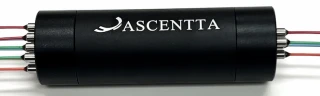
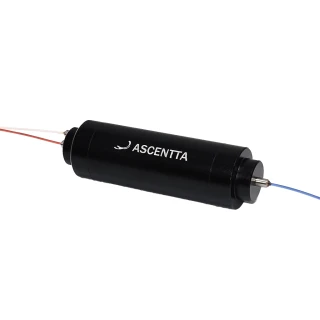
680nm TGG Based Optical Isolator
Specifications
| Type Of The Device: | Isolator |
|---|---|
| Operating Wavelength: | 680 nm |
| Max Power: | 0.1 W |
| Min Isolation: | 25 dB |
| Operating Wavelength Range: | ±5 nm |
| Typ. Insertion Loss: | 1.6 dB |
| Max. Insertion Loss (at 23℃): | 2.0 dB |
| Min. Return Loss: | 45 dB |
| Fiber Type: | 630-HP or other |
| Operating Temperature: | 0 to +70 °C |
| Storage Temperature: | -40 to +85 ℃ |
| Dimensions: | 37x24x24 mm |
Got questions about specs? Use the inquiry form to ask.
 Download Data Sheet

Features
- Optimized for 680 nm Wavelength – Precisely engineered TGG‑based Faraday rotator design delivers maximum isolation and minimal insertion loss around 680 nm for red/visible laser applications.
- High Isolation for Superior Back‑Reflection Suppression – Provides excellent isolation (typically >30 dB, customized higher on request) to effectively block backward‑propagating light and protect sensitive laser sources and optical amplifiers.
- Low Insertion Loss – Carefully optimized optical path and high‑quality coatings keep insertion loss very low, preserving optical power and improving overall system efficiency.
- Excellent Return Loss – High return loss minimizes unwanted back‑reflections at the fiber interfaces, ensuring stable laser operation and cleaner signal integrity.
- TGG (Terbium Gallium Garnet) Faraday Material – Utilizes high‑Verdet‑constant TGG crystal for strong magneto‑optic rotation, enabling compact design with robust performance at 680 nm compared to conventional materials.
- Polarization Insensitive or PM Configurations – Available in both polarization‑insensitive and polarization‑maintaining versions to match single‑mode, PM, or specialty fiber systems.
- Wide Power Handling Range – Standard designs support powers from around 300 mW up to high‑power configurations (up to 150 W available on request), suitable for both low‑power and high‑power laser applications.
- High Reliability & Environmental Stability – Rugged design with stable TGG material and optimized magnetic circuit ensures consistent performance over temperature, humidity, and mechanical stress conditions.
- Low Polarization Dependent Loss (PDL) – For PI versions, low PDL ensures minimal signal variation with input state of polarization, ideal for fiber‑optic communication and test systems.
- Compact Fiber‑in/Fiber‑out Package – Small form‑factor housing simplifies integration into laser heads, optical modules, and fiber‑optic systems where space is limited.
- Multiple Fiber and Pigtail Options – Supports various fiber types (e.g., SM, PM, 630‑HP or other specialty fibers) with bare fiber, 0.9 mm loose tube, or other protective jackets to match installation requirements.
- Connector Flexibility – Can be supplied connectorized (e.g., FC/PC, FC/APC, SC, SC/APC, or others) or unterminated, allowing easy plug‑and‑play integration or direct splicing into existing networks.
- Customizable Wavelengths and Bandwidth – While optimized at 680 nm, DK Photonics offers isolators over a broad wavelength range (approx. 500–2100 nm), enabling matched solutions across different laser lines and bands.
- Continuous Wave (CW) and Pulsed Operation – Suitable for CW lasers as well as many pulsed laser architectures, supporting laboratory, OEM, and industrial setups.
- Ideal for Laser Protection – Protects diode, DPSS, and fiber lasers from back‑reflected light, increasing lifetime, stability, and output power consistency.
- Designed for Fiber Amplifier Systems – Reduces feedback in pre‑amplifiers and power amplifiers, improving noise performance and preventing self‑oscillation.
- Well‑suited for Test & Measurement – Stable, low‑loss isolation makes this device an excellent choice for optical test benches, R&D labs, and precision metrology systems at 680 nm.
- Instrumentation & Sensing Applications – Enhances performance of scientific instruments, biomedical/fluorescence systems, and sensing platforms that operate in the visible 680 nm region.
- OEM‑Friendly and Scalable – Consistent, repeatable performance and flexible mechanical form factors support easy integration into OEM modules and high‑volume manufacturing.
- Custom Engineering Support – DK Photonics can quickly tailor fiber type, pigtail length, connector style, power rating, package dimensions, and working wavelength to meet specific project or system requirements.
Applications
Applications of 680nm TGG Based Optical Isolator
- Diode-pumped solid-state (DPSS) lasers at 680 nm
Used to block back-reflected light in compact DPSS and frequency-doubled systems, improving output power stability and laser lifetime. - Fiber-coupled diode lasers and laser diode modules
Protects 680 nm laser diodes from destabilizing optical feedback in medical, industrial, and scientific laser modules. - Fiber optic amplifiers and preamplifiers
Ensures unidirectional signal flow, suppressing back reflections and spontaneous emission in 600–700 nm fiber amplifier chains. - Raman and fluorescence spectroscopy systems
Stabilizes excitation lasers around 680 nm and minimizes feedback from samples and optics, enhancing spectral signal-to-noise ratio. - Optical test and measurement setups
Integrated into benchtop and rack-mounted instruments (optical spectrum analyzers, power meters, characterization benches) to isolate sources from DUT reflections. - Optical communication and data links in the visible band
Provides isolation in specialty short-reach or free-space visible-wavelength communication links that use 680 nm lasers. - Free-space laser delivery and beam conditioning
Positioned after collimators, beam expanders, or focusing optics to protect upstream components from back-scattered or reflected light. - Biomedical and life-science instruments
Used in confocal microscopes, flow cytometers, OCT variants working near 680 nm, and other bio-imaging systems to stabilize laser illumination and prevent detector/laser overload due to reflections from samples or optics. - Laser scanning and imaging systems
Improves performance and reliability in 2D/3D scanning, machine vision, and inspection systems that rely on 680 nm sources. - Metrology and interferometry
Protects coherent 680 nm sources used in precision distance measurement, alignment, and interferometric setups from parasitic feedback. - Optical sensing and instrumentation
Applied in fiber-based and free-space sensors (displacement, vibration, temperature, biosensors) to ensure stable illumination and accurate readings by suppressing stray back reflections. - Research and development laboratories
A standard component in experimental optics benches using 500–2100 nm lasers, where flexible, low-loss isolation is required for prototypes and custom setups. - Laser safety and protection of upstream components
Minimizes risk of damage or performance degradation of seed lasers, master oscillators, and sensitive optics in high-gain or high-power systems. - Polarization-insensitive and polarization-maintaining systems
Suitable for both PI and PM architectures used in precision measurement, quantum optics experiments, and polarization-sensitive imaging around 680 nm. - OEM integration in commercial optical modules
Integrated into compact OEM laser engines, fiber delivery modules, and optical heads where reliable, cost-effective isolation is required in the red/visible band.
Frequently Asked Questions
What is a 680 nm TGG‑based optical isolator and what does it do?
What are typical applications of the DK Photonics 680 nm optical isolator?
What are the key performance features of this 680 nm isolator (insertion loss, isolation, and power handling)?
How do I correctly specify and order a custom DK Photonics 680 nm optical isolator?
What is the impact of fiber connectors on the performance of the 680 nm isolator?
Is the DK Photonics 680 nm TGG isolator polarization‑dependent, and can I get a polarization‑maintaining version?
Can the DK Photonics 680 nm isolator be customized for different wavelengths or higher power levels?
Got more questions? Use the inquiry form to ask the supplier directly.
Similar Products



Your inquiry has been received.
Create an account by adding a password
Why create an account?
- Auto-complete inquiry forms
- View and manage all your past messages
- Save products to your favorites
- Close your account anytime — no hassle