
Description
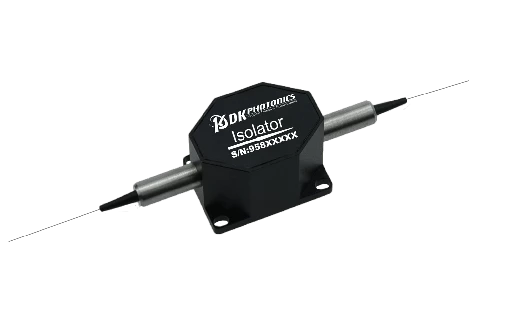
The 532 nm TGG Based Optical Isolator from DK Photonics is a high‑performance free‑space and fiber‑coupled component engineered to protect laser sources and sensitive optical subsystems from damaging back‑reflections. Designed specifically for the popular green 532 nm wavelength, this isolator employs a terbium gallium garnet (TGG) Faraday rotator crystal to deliver high isolation with very low insertion loss, making it ideal for precision laser and photonics applications where beam quality and power stability are critical. Compared with many generic visible‑wavelength isolators found in industrial and research setups, this device offers a carefully optimized balance of optical performance, reliability, and cost effectiveness.
By strongly attenuating backward‑propagating light while transmitting forward light with minimal loss, the 532 nm TGG isolator enhances the stability and lifetime of single‑frequency, DPSS, and solid‑state green lasers. Limiting optical feedback helps reduce intensity noise, mode hopping, and potential damage to cavity optics or pump diodes. This makes the isolator particularly well suited for use in fiber and free‑space laser cavities, frequency‑doubled laser systems, and high‑precision measurement chains. In real‑world applications, users will see improved beam pointing stability and higher repeatability in sensitive experiments and processes.
The device is characterized by high isolation, low insertion loss, and high return loss across its specified operating range. Its robust TGG‑based Faraday rotator design, coupled with precision optical coatings, ensures excellent environmental stability and long‑term reliability, even under demanding laboratory, industrial, or OEM conditions. Tight control over temperature‑dependent birefringence and absorption in the TGG crystal helps maintain consistent isolation performance over time, reducing the need for recalibration and maintenance. This performance level is fully aligned with what is typically expected from premium green‑wavelength optical isolators used in commercial and scientific platforms.
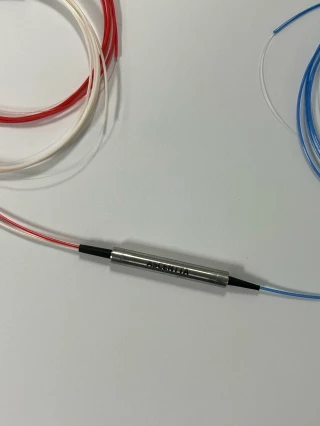
DK Photonics offers the 532 nm TGG Based Optical Isolator in a variety of configurations, including polarization‑insensitive and polarization‑maintaining fiber‑in to fiber‑out versions. These options allow integration into both polarization‑critical and polarization‑relaxed systems. Depending on the configuration, the isolator can be specified with fiber types such as single‑mode, polarization‑maintaining, or specialty fibers to match existing system architectures. Users can select different fiber jacket diameters and pigtail lengths to simplify routing within compact instruments or rack‑mounted platforms.
Power‑handling capability is another key strength of this product family. DK Photonics designs its TGG‑based isolators to cover a broad power range, from low‑power applications in the hundreds of milliwatts up to high‑power continuous‑wave regimes on the order of tens or even hundreds of watts, depending on the exact build specification. This makes the 532 nm isolator suitable for both low‑noise laboratory lasers and high‑power industrial systems used in materials processing, micro‑machining, and pumping of nonlinear or fiber‑based stages.
Typical application areas include fiber optic amplifiers and oscillators operating at or frequency‑doubled to 532 nm, DPSS green laser sources, and test and measurement setups where clean, unidirectional propagation is mandatory. The isolator is commonly integrated into laser‑based instrumentation such as spectrometers, interferometers, optical sensing modules, and precision metrology systems, where uncontrolled reflections from optics, samples, or connectors can otherwise degrade accuracy and signal‑to‑noise ratio. In OEM instruments, the device serves as a compact, drop‑in component that improves robustness and measurement repeatability without adding complex control overhead.
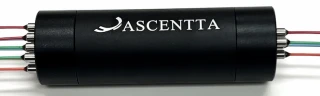
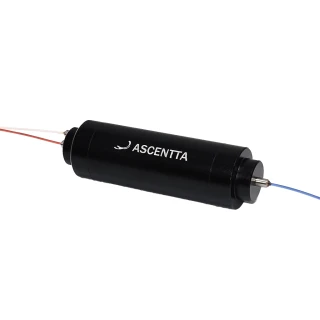
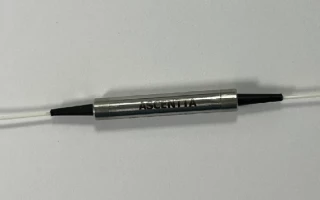
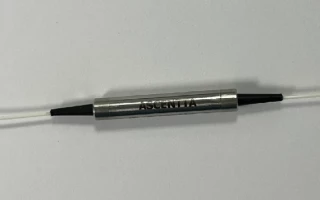
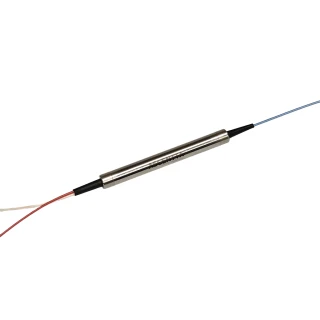
Physically, the 532 nm TGG Based Optical Isolator is housed in a compact, rugged package suitable for integration into benchtop systems or embedded assemblies. The mechanical design supports stable alignment of the internal Faraday rotator and polarizing elements, ensuring that the specified isolation is maintained over the device’s operating temperature range. While standard package dimensions are offered, they are subject to continuous refinement as DK Photonics improves its designs. This focus on mechanical and optical stability aligns the product with the expectations for modern isolators used in demanding industrial and research environments worldwide.
To support a wide range of installation scenarios, the isolator can be delivered with or without fiber connectors, and with connector types commonly used in precision optics, such as angled‑polish variants that minimize back‑reflection at the connector interface. When connec
532nm TGG Based Optical Isolator
Specifications
| Type Of The Device: | Isolator |
|---|---|
| Operating Wavelength: | 532 nm |
| Max Power: | 0.05 W |
| Min Isolation: | 25 dB |
Got questions about specs? Use the inquiry form to ask.
 Download Data Sheet

Features
- High-Performance 532 nm TGG Optical Isolator – Precisely engineered for single-wavelength operation at 532 nm using high–Verdet-constant Terbium Gallium Garnet (TGG) crystals, delivering stable and repeatable isolation performance for visible green laser systems.
- High Isolation to Protect Laser Sources – Provides very high isolation (commonly ≥30 dB, higher options available on request) to effectively suppress back‑reflection and back‑scattering, significantly improving laser stability, lifetime, and measurement accuracy.
- Low Insertion Loss for Maximum Power Throughput – Optimized optical design and precision AR coatings ensure low insertion loss, allowing more of your laser power to reach the target while minimizing thermal load and system loss.
- Excellent Return Loss and Back-Reflection Control – High return loss performance helps prevent destabilizing optical feedback into sensitive laser cavities and amplifiers, ideal for precision instrumentation and high-coherence sources.
- TGG-Based Faraday Rotation Design – Utilizes a TGG Faraday rotator crystal for non‑reciprocal polarization rotation, ensuring robust isolation under high optical power and providing superior optical and thermal properties compared to traditional glass-based solutions.
- Wide Power Handling Range – DK Photonics isolator technology supports power handling from 300 mW up to 150 W (CW), with the ability to custom-engineer devices for specific continuous-wave or pulsed laser requirements at 532 nm.
- Polarization-Insensitive (PI) or Polarization-Maintaining (PM) Versions – Available as polarization insensitive for general-purpose use or polarization maintaining for applications requiring strict polarization control, with various PM fiber types (e.g., PANDA, 460‑HP) available.
- Fiber-In / Fiber-Out Configuration – Compact fiber-coupled package with input and output fiber pigtails for easy integration into fiber laser systems, amplifiers, and measurement setups, reducing alignment time and system footprint.
- Flexible Fiber and Pigtail Options – Supports single-mode, PM, and specialty fibers with choices of:
- 250 μm bare fiber
- 0.9 mm loose tube
- Custom jacket diameters and lengths (standard 1.0 m, others on request)
- Connector Options for Easy System Integration – Configurable with industry-standard connectors, including:
- FC/PC, FC/APC
- SC/PC, SC/APC
- Other connector types available on request
- Excellent Environmental Stability and Reliability – Rugged design with carefully selected optical materials and coatings ensures stable performance over a wide operating temperature range and under demanding field or lab conditions.
- Compact Package with Flexible Mounting – Small-form-factor package enables straightforward integration into benchtop instruments, OEM modules, microscopy setups, and compact laser systems. Package dimensions may be tailored for specific OEM requirements.
- Cost-Effective High-Quality Solution – Offers a strong balance of high isolation, low loss, and robust construction at competitive pricing for 532 nm applications, reducing overall system cost without compromising performance.
- Ideal for 532 nm Laser & Amplifier Systems – Optimized for:
- DPSS 532 nm lasers
- Frequency-doubled solid-state and fiber lasers
- Green fiber amplifiers and post‑amplifier stages
- Laser pumping and nonlinear optics setups
- Optimized for Test, Measurement & Instrumentation – Suitable for precision optical metrology, spectroscopy, microscopy (including confocal and fluorescence systems), and general photonics R&D where stable, reflection‑free laser operation is critical.
- Custom Wavelength and Power Options Available – While this model is centered at 532 nm, DK Photonics designs TGG-based optical isolators covering approximately 500–2100 nm, with customized power handling, bandwidth, and isolation levels available.
- Custom Engineering & OEM Support – Tailor-made solutions for:
- Non-standard central wavelengths around 532 nm
- Specific isolation and insertion loss targets
- Unique fiber types, pigtail lengths, and jackets
- Special connector configurations or connectorless designs
- Special environmental or mechanical requirements for OEM integration
Applications
- Single-Frequency and DPSS Green Lasers (532 nm)
Ideal for protecting intracavity and extracavity optics in CW and pulsed 532 nm lasers, including DPSS (Nd:YAG, Nd:YVO4) green laser systems, frequency-doubled solid-state lasers, and single-frequency or narrow-linewidth sources used in demanding industrial and scientific applications. - Fiber Lasers and Fiber Amplifiers at 532 nm
Used at the input/output of fiber-based 532 nm laser and amplifier chains to suppress back reflections and backscattering, improving stability, reducing noise, and preventing parasitic lasing or damage to pump diodes and gain media. - Optical Test and Measurement Systems
Integrated into metrology benches, optical test stands, power measurement setups, and characterization systems for 532 nm components (filters, gratings, fibers, crystals) to ensure unidirectional light propagation and accurate, repeatable test results. - Spectroscopy and Raman Systems
Enhances performance of Raman spectroscopy, fluorescence spectroscopy, and absorption/reflectance measurement systems that employ 532 nm excitation by isolating sensitive detectors and laser sources from destabilizing back-reflected light. - Precision Interferometry and Holography
Protects interferometers, reference arms, holographic setups, and phase-sensitive measurement instruments using 532 nm light from coherence degradation and noise caused by stray or reflected beams returning to the laser cavity. - Microscopy and Bio-Photonics
Applied in confocal, fluorescence, and multiphoton microscopes that use 532 nm excitation to prevent back-reflected light from destabilizing the laser source, ensuring image stability and long-term reliability in biological and medical imaging applications. - LIDAR and Remote Sensing at 532 nm
Deployed in airborne, spaceborne, and ground-based 532 nm LIDAR systems to protect the transmitter laser and front-end optics from strong atmospheric backscatter, reflections from targets, and optical feedback within the transceiver module. - Laser Material Processing and Micromachining
Used in precision micromachining, thin-film processing, photolithography alignment, and surface structuring systems employing 532 nm lasers to block workpiece and optics reflections from re-entering the laser cavity, improving process consistency. - Optical Communication and Free-Space Links (Green Wavelength)
Suitable for specialty optical communication links and free-space optical (FSO) systems operating near 532 nm, where high isolation is required to maintain link stability and to prevent echo signals or backscatter from corrupting transmitted data. - Instrumentation and Laboratory Optical Setups
Serves as a general-purpose 532 nm isolator in R&D labs and OEM instruments, placed after lasers, AOMs, EO modulators, isolating experimental optics, measurement heads, and sensitive components from destabilizing optical feedback. - Quantum Optics and Nonlinear Optics Experiments
Protects pump lasers used in SHG, OPO/OPA, frequency mixing, and other nonlinear processes at or near 532 nm, helping maintain long-term frequency and power stability in quantum optics, squeezed light generation, and entanglement experiments. - OEM Integration in Laser Modules and Subsystems
Designed for integration into compact OEM laser modules, medical devices, analytical instruments, and industrial systems where high isolation, low insertion loss, and excellent environmental stability at 532 nm are critical to system reliability. - Protection of Detectors and Sensitive Optical Components
Used to carefully manage propagation direction and prevent unwanted back-propagating light in systems with sensitive photodetectors, APDs, PMTs, or CCD/CMOS sensors operating at 532 nm, improving signal integrity and lifetime. - Polarization-Independent and Polarization-Maintaining Fiber Systems
Suitable for both polarization insensitive and polarization maintaining fiber networks at 532 nm, ensuring stable signal propagation in specialty sensing, instrumentation, and coherent detection setups that require robust isolation.
Frequently Asked Questions
What is a 532nm TGG based optical isolator and how does it work?
What are the main applications of the DK Photonics 532nm TGG optical isolator?
What are the key performance advantages of this 532nm TGG isolator compared with standard optical isolators?
What power handling and wavelength options are available for DK Photonics TGG based optical isolators?
What fiber types, pigtail options, and connectors can be specified for the 532nm optical isolator?
How do I correctly specify and order a DK Photonics 532nm TGG based isolator?
What environmental stability and reliability can I expect, and are custom packages available?
Got more questions? Use the inquiry form to ask the supplier directly.
Similar Products



Your inquiry has been received.
Create an account by adding a password
Why create an account?
- Auto-complete inquiry forms
- View and manage all your past messages
- Save products to your favorites
- Close your account anytime — no hassle