
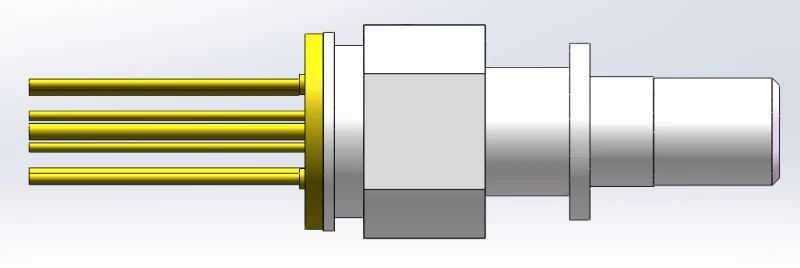
Description
The 100G 1310nm PIN-TIA ROSA is a cutting-edge optical receiver designed for high-speed 100Gbps optical fiber communication. This product is housed in an LC ROSA package, ensuring a compact and efficient design that is compliant with ROHS standards and Telcordia GR-468 specifications. The integration of a PIN-TIA receiver makes it a reliable choice for advanced optical communication systems, providing exceptional performance and durability.
Designed to operate within a wide temperature range of -40℃ to 85℃, this optical receiver is built to withstand extreme conditions, making it suitable for various environments. The product's robust construction ensures consistent performance, even under challenging circumstances. The 100G 1310nm PIN-TIA ROSA is engineered to deliver high sensitivity and low dark current, optimizing its functionality for precise and efficient data transmission.
Attention to detail in the mechanical design ensures ease of integration into existing systems. The product's dimensions are meticulously crafted, with a tolerance of ±0.05mm, ensuring compatibility and seamless installation. The design also emphasizes the importance of electro-static discharge (ESD) protection, with recommendations for antistatic handling and grounding to prevent potential damage during transportation and installation.
Incorporating this optical receiver into your communication systems promises enhanced performance and reliability. The 100G 1310nm PIN-TIA ROSA is a testament to advanced engineering, offering a blend of innovation and practicality for modern optical communication needs.
100Gbps 1310nm PIN-TIA LC ROSA Optical Receiver
Specifications
| Responsivity: | 0.6 A/W |
|---|---|
| Sensitivity: | -6.1 dBm |
| Peak Sensitivity Wavelength: | 1310 nm |
| Input Optical Wavelength: | 1260 - 1360 nm |
| Supply Voltage: | 2.9 - 3.5 V |
| Supply Current: | 57 - 70 mA |
| Dark Current: | 120 nA |
Got questions about specs? Use the inquiry form to ask.
 Download Data Sheet

Features
- Data Rate: Up to 100 Gbps
- Package Type: LC ROSA package
- Compliance: ROHS Compliant
- Standards: Compliant with Telcordia GR-468
- Optical Receiver: Uses PIN-TIA receiver for 100 Gbps optical fiber communication
- Operating Temperature Range: -40℃ to 85℃
- Input Optical Wavelength: 1260 nm to 1360 nm
- Supply Voltage: 2.9 V to 3.5 V
- Supply Current: 57 mA to 70 mA
- Dark Current: 120 nA
- Responsibility: 0.6 A/W at 1310 nm
- Sensitivity: -6.1 dBm OMA outer, TECQ < 1.4 dB
Applications
- High-Speed Data Transmission: Supports data rates up to 100 Gbps, making it ideal for high-speed optical fiber communication.
- Compact LC ROSA Package: Features a compact LC Receptacle Optical ROSA design, suitable for space-constrained applications.
- Environmental Compliance: ROHS compliant, ensuring environmentally friendly manufacturing and disposal.
- Reliability Standards: Compliant with Telcordia GR-468, ensuring high reliability and performance standards.
- Wide Operating Temperature Range: Operates efficiently in temperatures ranging from -40°C to 85°C, suitable for various environmental conditions.
- Electro-Static Discharge (ESD) Protection: Designed with precautions against electro-static damage, ensuring product longevity and reliability.
- Power Supply Flexibility: Operates with a supply voltage range of 2.9V to 3.5V, providing flexibility in power supply design.
- Low Power Consumption: Features a low supply current of up to 70 mA, optimizing power efficiency.
- High Sensitivity: Offers a sensitivity of -6.1 dBm, ensuring effective signal reception even at low power levels.
- Static Electricity Precautions: Recommendations for handling include using antistatic bands, clothing, and maintaining humidity levels above 40% RH to prevent ESD damage.
Frequently Asked Questions
What is the data rate of the 100G 1310nm PIN-TIA ROSA?
What is the operating temperature range for the 100G 1310nm PIN-TIA ROSA?
What is the input optical wavelength range for this product?
What precautions should be taken to prevent electro-static damage?
What is the supply voltage range for the 100G 1310nm PIN-TIA ROSA?
Is the 100G 1310nm PIN-TIA ROSA ROHS compliant?
What is the sensitivity of the receiver?
Got more questions? Use the RFQ form to ask the supplier directly.
Similar Products
Need pricing for this product? Send a quick inquiry
Your inquiry has been received.
Create an account by adding a password
Why create an account?
- Auto-complete inquiry forms
- View and manage all your past messages
- Save products to your favorites
- Close your account anytime — no hassle