

Description
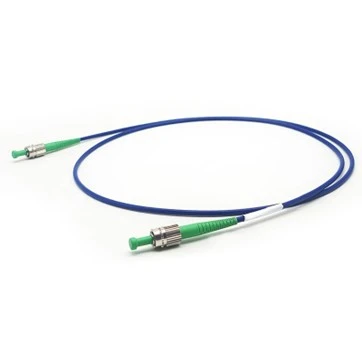
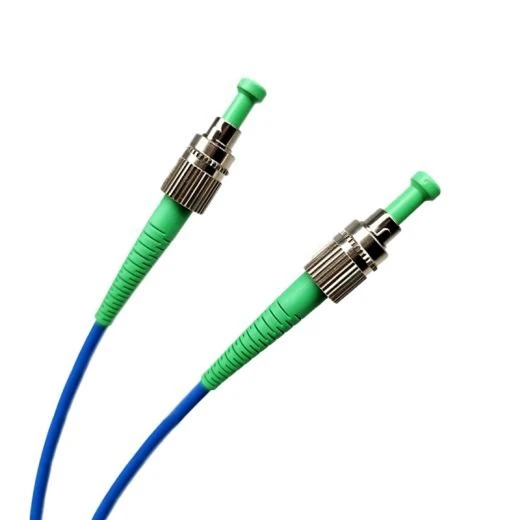
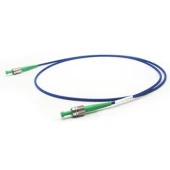
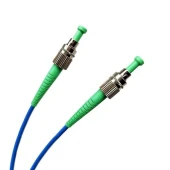
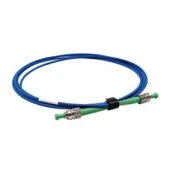
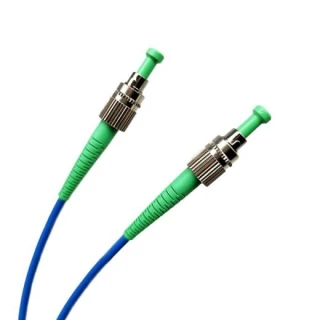
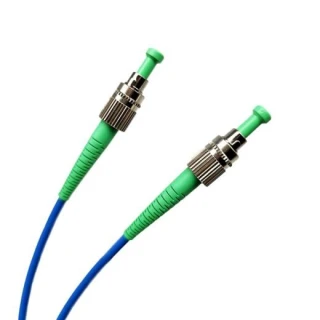
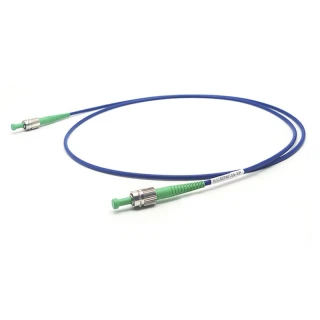
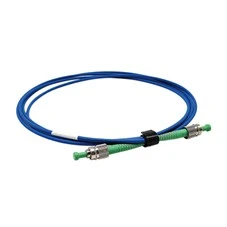
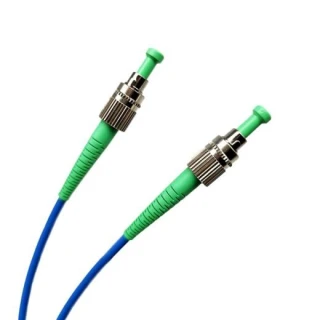
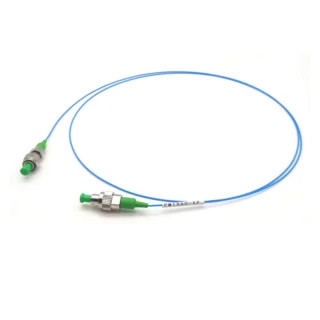
The Polarization Maintaining Fiber Optic Patch Cord PM1550-XP FC/APC-FC/APC with a PM1550-XP (1440-1625nm) fiber type and 3m long patch cord is a high-quality fiber optic solution designed for precision and reliability.
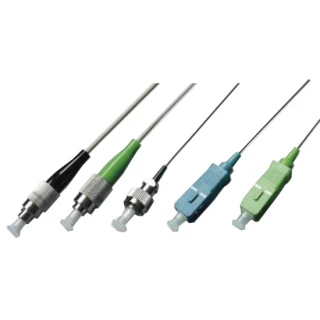
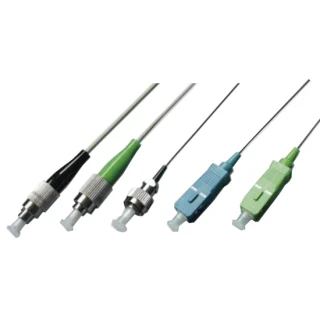
Manufactured with polarization maintaining panda fiber, this patch cord is expertly terminated with a range of fiber connectors including FC, SC, LC, ST, MU, MPO, and MTP. The connectors are available with either PC or APC polishing, ensuring optimal performance for various applications. For FC connectors, options for wide key (2.14mm) or narrow key (2.02mm) widths are available, providing flexibility to meet specific installation requirements.
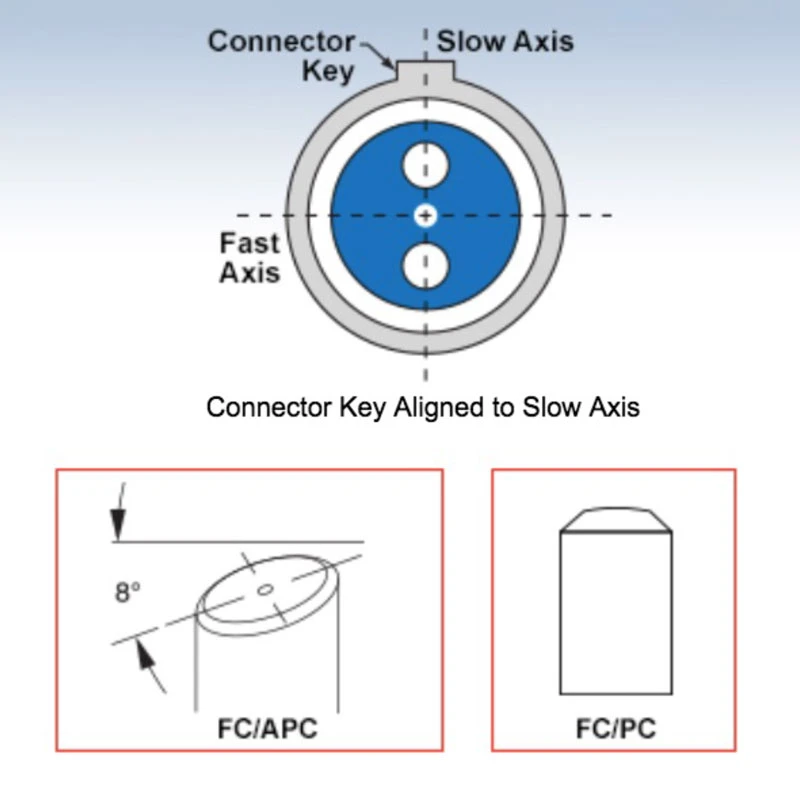
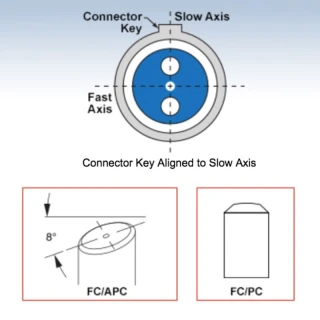
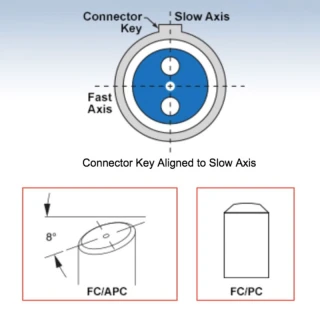
Engineered for versatility, the patch cord can be supplied with different types of fiber including 250um bare fiber, 900um buffered fiber, 2.0mm or 3.0mm cable, and even armored cable for enhanced durability. The TARLUZ PM patch cord is distinguished by its low insertion loss, high extinction ratio, and superior return loss, making it an ideal choice for demanding environments. Additionally, the slow axis or fast axis of the fiber can be aligned to the connector key upon request, ensuring precise alignment and performance.
With a focus on quality and performance, the Polarization Maintaining Patch Cord is designed to operate efficiently within a temperature range of 0 to +70°C, and can be stored safely in temperatures ranging from -40 to +85°C. The use of PM panda fiber from reputable manufacturers such as Nufern, Corning, Fujikura, and YOFC guarantees consistency and reliability. Whether used in high-speed transmission devices, coherent optical communications, or interferometric sensors, this patch cord delivers exceptional performance and reliability.
Polarization Maintaining Fiber Optic Patch Cord PM1550-XP FC/APC-FC/APC 3m Long
Specifications
| Insertion Loss: | 0.3 dB |
|---|---|
| Return Loss: | 60 dB |
| Polarization Extinction Ratio (PER): | 25 dB |
| Wavelength Range: | 1440 – 1625 nm |
| Numerical Aperture (NA): | 0.12 |
| Max Optical Power: | 300 mW |
| Connector Type: | FC, SC, LC |
| Alignment Wavelengths (nm): | 1550 |
| Cutoff Wavelength (nm): | 1380 ± 60 |
| Mode Field Diameters (um): | 10.1±0.4 @1550nm |
| Insertion Loss (dB) Max.: | 0.5 |
| Return Loss (dB) UPC: | 50 |
| Return Loss (dB) APC: | 60 |
| Extinction Ratio (dB) Min.: | 23 |
| Extinction Ratio (dB) Typ.: | 25 |
| Connector Key For FC Type: | Narrow key (1.97~2.02mm) or Wide key (2.09~2.14mm) |
| Fiber Type: | PM1550-XP (1440-1625nm), PM panda fiber (Nufern, Corning, Fujikura, YOFC or specified) |
| Operation Temperature (°C): | 0 to +70 |
| Storage Temperature (°C): | -40 to +85 |
| Cord Length (m): | 3 |
| Manufacturer Part Number (MPN): | TL-PMPC-FCASFCAS-1530LBE/09HBE0030M |
| FindLight SKU: | FL-24348 |
Got questions about specs? Use the inquiry form to ask.
 Download Data Sheet

Features
- High Extinction Ratio: Ensures superior performance in maintaining polarization, crucial for high-precision applications.
- Low Insertion Loss: Guarantees minimal signal loss, enhancing the efficiency of optical networks.
- High Return Loss: Provides excellent signal reflection characteristics, improving overall system performance.
- Versatile Connector Options: Available with FC, SC, LC, ST, MU, MPO, MTP, and other connector types, with PC or APC polishing.
- Customizable Fiber Alignment: Slow or fast axis alignment to the connector key available upon request.
- Durable Construction: Offered with 250μm bare fiber, 900μm buffered fiber, 2.0mm or 3.0mm cable, and armored cable options.
- Wide Operating Temperature Range: Operates efficiently between 0°C to +70°C, with storage temperatures from -40°C to +85°C.
- High Optical Power Handling: Supports up to 300mW of optical power, suitable for high-power applications.
- Precision Key Options for FC Connectors: Available in narrow key (1.97~2.02mm) or wide key (2.09~2.14mm) configuration.
- Quality Fiber Types: PM-S405-XP. Utilizes PM panda fiber from leading manufacturers like Nufern, Corning, Fujikura, and YOFC.
Applications
- Coherent Optical Communications: Ideal for coherent transmission systems where stable polarization is required for high-speed, long-distance fiber optic communication.
- High-Speed Optical Transmission Devices: Used in advanced telecom and datacom equipment requiring low insertion loss, high return loss, and stable polarization performance.
- EDFA Systems: Suitable for erbium-doped fiber amplifiers and related optical amplification modules where polarization control improves system stability.
- Fiber Optic Switching Systems: Applied in optical switches, PM switch modules, and polarization-sensitive routing systems.
- External Optical Modulators: Commonly used with LiNbO₃ modulators, phase modulators, intensity modulators, and other polarization-dependent modulation devices.
- Interferometric Fiber Optic Sensors: Suitable for interferometers, fiber gyroscopes, acoustic sensors, strain sensors, and precision measurement systems requiring stable polarization states.
- Integrated Optics and Photonic Circuits: Used for coupling light into and out of integrated optical chips, silicon photonics devices, planar lightwave circuits, and photonic integrated circuits.
- Fiber Laser Systems: Applicable in PM fiber lasers, seed lasers, ultrafast lasers, pulsed lasers, and laser delivery systems that require polarization-maintaining fiber connections.
- Laser Diode Pigtailing and Coupling: Used to connect laser diodes, pump lasers, and polarization-sensitive optical sources to fiber optic systems.
- Quantum Optics and Quantum Communication: Suitable for quantum key distribution, single-photon experiments, entangled photon systems, and polarization-sensitive quantum photonics setups.
- Test and Measurement Equipment: Used in optical benches, polarization measurement systems, component characterization, optical spectrum analysis, and laboratory test setups.
- Polarization Control and Management: Supports systems requiring precise slow-axis or fast-axis alignment to the connector key for consistent polarization orientation.
- Optical Sensing and Metrology: Applied in precision metrology, biomedical sensing, environmental monitoring, distributed sensing, and high-accuracy optical instrumentation.
- Microwave Photonics: Suitable for RF-over-fiber systems, photonic signal processing, optical delay lines, and high-frequency modulation applications.
- DWDM and Advanced Telecom Networks: Used in polarization-sensitive DWDM modules, optical networking equipment, and high-performance communication subsystems.
- Research and Development Laboratories: Ideal for universities, photonics research labs, fiber optic experiments, and prototype development involving PM panda fiber.
- Medical and Biomedical Optical Systems: Applied in OCT systems, spectroscopy platforms, laser diagnostics, and other biomedical devices requiring stable optical polarization.
- Aerospace and Defense Photonics: Used in navigation systems, fiber optic gyroscopes, sensing platforms, secure communications, and ruggedized polarization-maintaining optical links.
- Industrial Laser and Instrumentation Systems: Suitable for precision industrial laser equipment, optical alignment systems, inspection tools, and polarization-sensitive measurement devices.
- Visible, NIR, and Telecom Wavelength Applications: Supports a wide range of operating wavelengths including 375 nm, 405 nm, 460 nm, 630 nm, 780 nm, 980 nm, 1064 nm, 1300 nm, 1550 nm, and 2000 nm applications.
Export & Trade Information
| ECCN: | EAR99 |
|---|---|
| HTS Code: | 8544.70.0000 |
| Estimated US Tariff: | 25% |
Frequently Asked Questions
What is a polarization maintaining patch cord used for?
What wavelengths are supported by this PM fiber optic patch cord?
What connector types are available for the polarization maintaining patch cord?
What is the insertion loss and extinction ratio of this PM patch cable?
Can the slow axis or fast axis be aligned to the connector key?
What is the difference between UPC and APC polishing for this PM patch cord?
What cable and fiber options are available for this polarization maintaining fiber patch cord?
Got more questions? Use the inquiry form to ask the supplier directly.
Similar Products
Your inquiry has been received.
Create an account by adding a password
Why create an account?
- Auto-complete inquiry forms
- View and manage all your past messages
- Save products to your favorites
- Close your account anytime — no hassle