
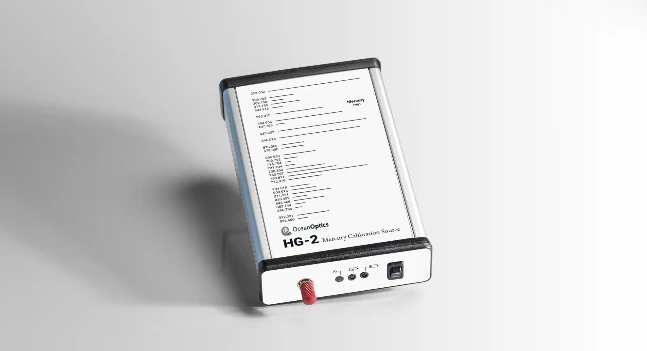

Description
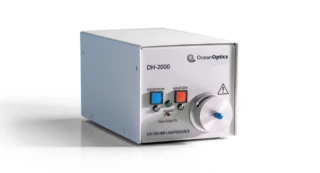
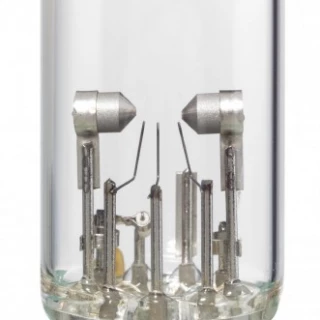
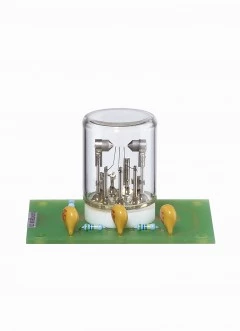
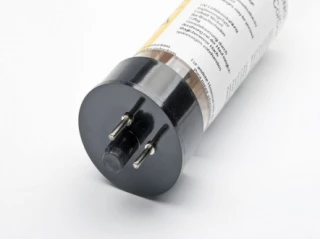
Spectrometer wavelength calibration sources are precision optical reference lamps designed to calibrate wavelength accuracy in UV, visible, and near-infrared spectroscopy systems. These calibration light sources generate stable atomic emission lines at well-defined wavelengths, enabling spectrometers to maintain accurate spectral registration across analytical, industrial, biomedical, and research applications.
The calibration sources support wavelength verification and correction for a broad range of optical instruments including UV-Vis spectrometers, Raman spectrometers, fluorescence systems, hyperspectral imaging platforms, optical emission analyzers, and fiber-optic spectroscopy instruments. Stable multi-line emission spectra allow spectrometer software to identify known spectral peaks and compensate for wavelength drift caused by temperature variation, detector aging, optical alignment changes, or long-term instrument use. (oceanoptics.com)
These UV-NIR calibration lamps utilize carefully selected gas-discharge sources such as mercury-argon (HgAr), neon (Ne), krypton (Kr), and mixed-gas spectral emitters to generate discrete calibration lines spanning ultraviolet through near-infrared wavelength ranges. The resulting sharp emission peaks provide highly repeatable spectral references for spectrometer wavelength calibration, detector alignment, and optical system validation.
Designed for laboratory and OEM integration, the calibration systems support compact fiber-coupled operation and compatibility with miniature spectrometers, optical benches, and custom spectroscopy architectures. Stable output characteristics and long operational lifetimes make these sources suitable for routine instrument maintenance, production-line verification, field recalibration, and advanced analytical spectroscopy workflows.
Spectrometer Wavelength Calibration Sources UV-NIR
Specifications
| Type Of Lamp: | Argon, Mercury Argon, Neon, Xenon, Krypton |
|---|---|
| Wavelength Ranges: | 253nm - 1.7μm, 696nm - 1.704μm, 427nm - 893nm, 540nm - 754nm, 916nm - 1.984μm |
| Source: | Mercury Argon, Krypton, Neon, Argon, Xenon |
| Fiber Connector: | SMA 905 |
| Power Requirements: | 5 VDC power supply |
Got questions about specs? Use the inquiry form to ask.
 Download Data Sheet

Features
- Stable Atomic Emission Lines
Generates sharp spectral emission peaks for accurate spectrometer wavelength calibration and verification. (findlight.net) - UV-Vis-NIR Spectral Coverage
Supports wavelength calibration across ultraviolet, visible, and near-infrared wavelength regions for broad spectroscopy compatibility. - Multiple Calibration Gas Options
Available with HgAr, neon, krypton, and mixed-gas spectral emitters optimized for different wavelength ranges and spectrometer architectures. (oceanoptics.com) - Fiber-Optic Compatibility
Designed for integration with fiber-optic spectrometers and optical instrumentation using standard optical connectors. - High Spectral Repeatability
Stable spectral line positioning supports repeatable instrument calibration over long operating periods. - Compact Laboratory and OEM Integration
Suitable for analytical instruments, portable spectroscopy systems, OEM devices, and embedded optical platforms. - Supports Automated Calibration Workflows
Can be integrated into software-assisted wavelength correction and spectrometer validation routines. - Long Operational Lifetime
Engineered for routine laboratory calibration and long-term spectroscopy system maintenance.
Applications
- Spectrometer Wavelength Calibration: Our spectrometer wavelength calibration sources are designed for convenient and reliable calibration across UV-NIR wavelengths.
- Gas-Discharge Emission Sources: Choose from mercury-argon (253-923 nm), krypton (427-893 nm), neon (540-754 nm), argon (696-1704 nm), and xenon (916-1984 nm) sources.
- Multiple Wavelength Options: With a variety of emission lines, users can select a source or combination of sources to match analytical wavelengths of interest.
- Complement Your Setup: Adding an Ocean Optics wavelength calibration source is an excellent investment for enhancing your spectrometer setup.
- Product Overview:
- Gas-Discharge Sources: Produce atomic emission lines for reliable spectrometer wavelength calibration.
- UV-NIR Coverage: Choose from multiple sources across a broad range of wavelengths.
- Item Options:
- HG-2: Wavelength Range: 253nm - 1.7μm, Source: Mercury Argon, Fiber Connector: SMA 905, Power Requirements: 5 VDC power supply
- AR-2: Wavelength Range: 696nm - 1.704μm, Source: Argon, Fiber Connector: SMA 905, Power Requirements: 5 VDC power supply
- KR-2: Wavelength Range: 427nm - 893nm, Source: Krypton, Fiber Connector: SMA 905, Power Requirements: 5 VDC power supply
- NE-2: Wavelength Range: 540nm - 754nm, Source: Neon, Fiber Connector: SMA 905, Power Requirements: 5 VDC power supply
- XE-2: Wavelength Range: 916nm - 1.984μm, Source: Xenon, Fiber Connector: SMA 905, Power Requirements: 5 VDC power supply
- Full Range of Emission Sources: We offer gas-discharge emission sources for spectrometer wavelength calibration that cover wavelengths ranging from ~250-2000 nm.
- Emission Line Selection: With five different options – Mercury-Argon (HG-2), Krypton (KR-2), Neon (NE-2), Argon (AR-2), and Xenon (XE-2) – you can select a source with an optimum number of emission lines in your spectral region of interest.
- Baseline Drift Correction: More emission lines allow for easier and more reliable correction of baseline drift and related phenomena inherent to all spect
Frequently Asked Questions
What is the purpose of the spectrometer wavelength calibration sources?
What types of gas-discharge emission sources are available?
What is the wavelength range covered by these calibration sources?
What are the power requirements for these calibration sources?
What type of fiber connector is used with these calibration sources?
How do the calibration sources help in spectrometer calibration?
Where can I find more information or purchase these calibration sources?
Why is wavelength calibration important in spectroscopy?
What is the difference between wavelength calibration and intensity calibration?
How do atomic emission lines help calibrate spectrometers?
How often should a spectrometer be calibrated?
Are these calibration sources compatible with miniature spectrometers?
Got more questions? Use the RFQ form to ask the supplier directly.
Similar Products
Need pricing for this product? Send a quick inquiry
Your inquiry has been received.
Create an account by adding a password
Why create an account?
- Auto-complete inquiry forms
- View and manage all your past messages
- Save products to your favorites
- Close your account anytime — no hassle