
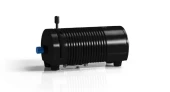


Description
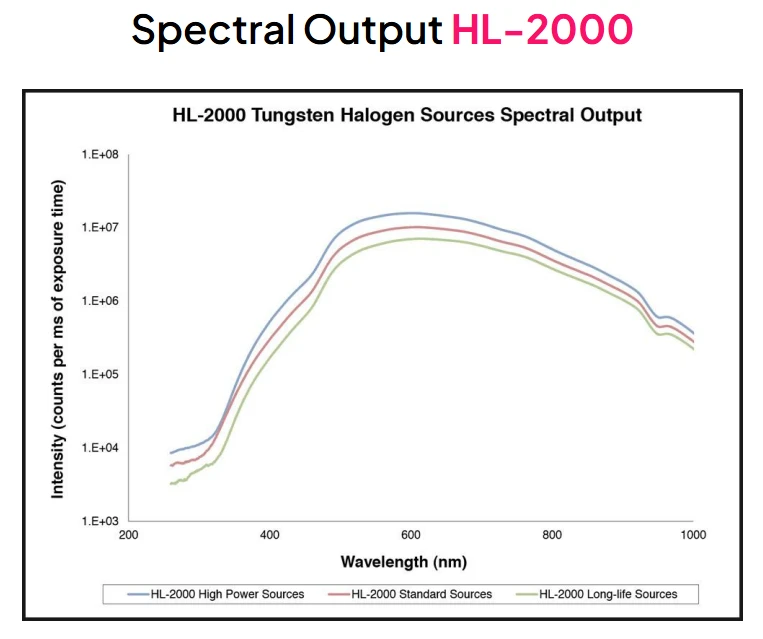
The HL-2000 Tungsten Halogen Light Source Series is a family of fiber-coupled VIS-NIR illumination systems designed for spectroscopy, optical sensing, analytical instrumentation, and laboratory measurement applications requiring stable broadband output across the visible and near-infrared spectral regions. Covering wavelengths from approximately 360 nm to 2400 nm, these tungsten halogen light sources provide continuous spectral output suitable for absorbance spectroscopy, transmission measurements, reflectance analysis, optical characterization, and fiber-optic spectroscopy workflows.
The HL-2000 series includes multiple configurations optimized for either long lamp lifetime or enhanced optical power. Long-life models support operating lifetimes up to 10,000 hours for routine laboratory use and OEM integration, while high-power configurations provide increased optical throughput for applications using large-core optical fibers, probe bundles, integrating spheres, and low-signal spectroscopy systems.
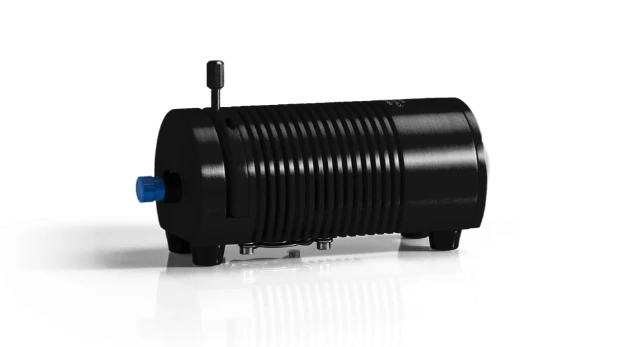
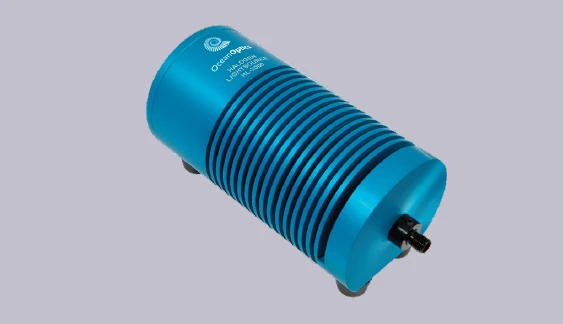
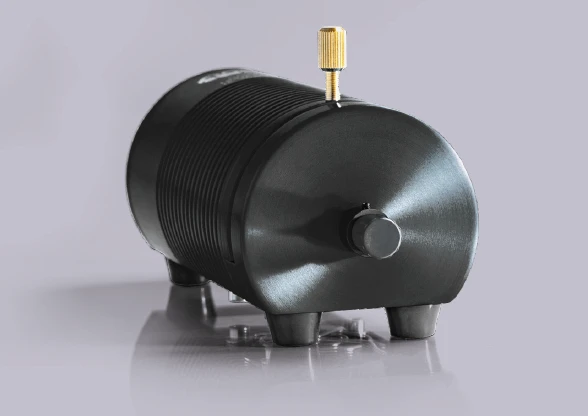
These tungsten halogen light sources incorporate integrated cooling fans, fiber-coupled SMA 905 optical interfaces, and optional shutter and attenuator functionality to support stable and repeatable spectroscopic measurements. Select models also support TTL and RS-232 control for automated spectroscopy platforms and computer-controlled optical instrumentation.
Unlike narrowband laser illumination systems, tungsten halogen lamps produce smooth broadband spectral emission throughout the VIS-NIR wavelength range, making them particularly useful for UV-Vis absorbance spectroscopy, transmission spectroscopy, color measurements, reflectance testing, biomedical optics, and general-purpose optical characterization. Their continuous spectral output enables flexible integration with miniature spectrometers, monochromators, optical benches, and fiber-optic spectroscopy systems.
The HL-2000 family also supports optical filtering and beam conditioning through integrated filter holders capable of accommodating round and square optical filters. Combined with adjustable fiber coupling and stable broadband illumination, these systems are well suited for laboratory spectroscopy, industrial optical sensing, environmental analysis, educational spectroscopy platforms, and OEM analytical instrumentation integration.
HL-2000 Tungsten Halogen Light Source Series for UV-Vis-NIR Spectroscopy
Specifications
| Type Of Lamp: | Tungsten Halogen Lamp |
|---|---|
| Wavelength Range: | 360nm - 2400nm |
| Typical Output Power (model Dependent): | 4.5 mW, 4.7mW, 8.8mW, 8.4mW |
| Shutter: | Yes / No (model dependent) |
| Fiber Connector: | SMA 905 |
| Power Requirements (model Dependent): | 12 VDC, 24 VDC |
| Bulb Power: | 20 W |
| Bulb Lifetime: | 10,000 hours |
Got questions about specs? Use the inquiry form to ask.
 Download Data Sheet

Features
- Wide Wavelength Range: This Tungsten halogen light sources cover visible to near-infrared (VIS-NIR) wavelengths from 360 nm to 2400 nm, making them suitable for a variety of applications.
- Fiber Optic Compatibility: Equipped with an SMA 905 connector for adjustable focus and alignment, maximizing light throughput.
- Integrated Cooling System: All models include an integrated fan to maintain a stable and cool light source.
- Filter Accommodation: Built-in holder supports filters up to 25.4 mm round or 50.8 mm square for light conditioning.
- Long Lifetime Options: Available with a 10,000-hour long-life bulb for extended use.
- High-Power Models: High-power versions available, featuring a 20-watt bulb for applications requiring strong VIS-NIR output.
- Integrated Shutter: Select models include an integrated shutter for dark measurements and light intensity control.
- Easy Setup: Universal power supply ensures quick and easy setup.
- Smart Features: Includes TTL and manual attenuator functions, with RS-232 interface option for accessing shutter and attenuator controls.
- Replacement Bulbs Available: Replacement bulbs and accessories are available to ensure continued performance.
Applications
- UV-Vis Absorbance Spectroscopy
Broadband VIS-NIR illumination for liquid sample analysis and concentration measurements. - Transmission Spectroscopy
Suitable for optical transmission measurements of glasses, coatings, polymers, and thin films. - Reflectance Spectroscopy
Used in diffuse and specular reflectance characterization workflows. - Fiber-Optic Spectroscopy
Compatible with miniature spectrometers and fiber-optic optical sensing architectures. - Biomedical Optics
Supports optical tissue analysis and spectroscopy-based biomedical instrumentation. - Optical Component Characterization
Useful for testing filters, lenses, coatings, and optical materials across VIS-NIR wavelengths. - OEM Spectroscopy Integration
Compact fiber-coupled design supports analytical instruments and embedded optical systems.
Frequently Asked Questions
What is the wavelength range of the HL-2000 Tungsten halogen light sources?
What are the power requirements for the HL-2000 halogen light sources?
Do the HL-2000 halogen light sources have an integrated shutter?
What type of connector is used for the HL-2000 light sources?
Are there high-power versions of the HL-2000 light sources available?
What is the typical output power of the HL-2000 Tungsten halogen light sources?
Can the intensity of the HL-2000 halogen light sources be controlled?
Got more questions? Use the RFQ form to ask the supplier directly.
Similar Products
Need pricing for this product? Send a quick inquiry
Your inquiry has been received.
Create an account by adding a password
Why create an account?
- Auto-complete inquiry forms
- View and manage all your past messages
- Save products to your favorites
- Close your account anytime — no hassle