

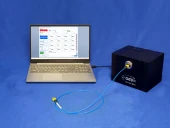
Description
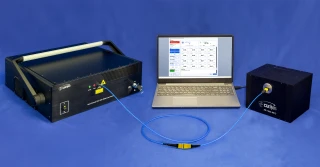
The ER-2000-MC-MPO-1290/1650-1-ER=35 Polarization Extinction Ratio (PER) Meter from OZ Optics is a turnkey, semi-automated test platform specifically engineered for the characterization of polarization maintaining (PM) MPO/MTP® patchcords, V-groove arrays, and custom multi-channel fiber arrays. Designed for production lines, engineering labs, and advanced R&D facilities, this compact benchtop system delivers fast, repeatable PER measurements across multiple channels with minimal operator intervention. In applications where polarization integrity is critical—such as coherent communication links, photonic integrated circuits (PICs), and high-density fiber interconnects—this meter provides the accuracy and stability required for reliable qualification and process control.
Covering a broad wavelength range from 1290 nm to 1650 nm, the meter supports characterization over O-, E-, S-, C-, and L-band telecom windows, making it ideal for modern data center, metro, and long‑haul optical systems. It offers a typical extinction ratio measurement range up to 35 dB with a dynamic range of 40 dB, enabling precise evaluation of PM components from moderate to very high polarization performance. With an extinction ratio accuracy of ±1 dB and a fine resolution of 0.02 dB, the system is well suited for both production QA screening and detailed performance analysis of advanced polarization-maintaining assemblies.
A key advantage of this PER meter is its integrated motion control hardware combined with a built-in optical power detection algorithm for semi-automated fiber alignment. Motorized stages with a standard 12 mm travel and 0.1 μm resolution enable precise, repeatable positioning of each fiber channel, significantly reducing the manual alignment time typical of multi-fiber MPO/MTP® and V-groove devices. Selectable pitch steps, such as 125 μm and 250 μm, allow the system to accommodate a wide variety of fiber spacings, including common single-mode and specialty PM array configurations. This makes the instrument highly adaptable for testing standard multi-fiber connectors as well as custom photonic assemblies.
The Windows-based application software provides an intuitive graphical user interface designed to streamline PER testing in both engineering and manufacturing environments. Users can configure measurement parameters, visualize real-time extinction ratio and relative power data, and perform multi-channel analysis from a single control screen. The system achieves an extinction ratio update rate of approximately 2.7 Hz and a relative power update rate of around 650 Hz, supporting efficient optimization routines and fast pass/fail decisions for high-throughput testing. Measurement results can be easily captured for documentation, traceability, and integration into existing quality management workflows.
In line with other polarization extinction ratio meters used across the fiber optics industry, this instrument is built to support the stringent requirements of fiber component manufacturing and coherent system deployment. It is particularly well suited for verifying PER on high-density MPO/MTP® trunk cables and fanout assemblies used in data centers and HPC interconnects, as well as for qualifying PM arrays that interface with silicon photonics and other PIC platforms. Engineers working on fiber sensing systems, polarization-based instrumentation, and advanced photonic subsystems can employ this meter to validate extinction ratio, optimize alignment procedures, and troubleshoot polarization-related performance issues.
The system is designed for practical deployment on the production floor or in test labs. It operates from a universal AC input via a compact external adapter and communicates over a standard USB interface, eliminating the need for dedicated motion controllers or proprietary interface cards. With a compact footprint of approximately 20 × 15.2 × 15.2 cm and a weight of about 2.5 kg, it fits easily into crowded test stations or portable test setups. The meter handles input optical powers from 200 µW to 1.0 mW, covering common telecom and lab-grade source levels while protecting the detector from excessive exposure.
Designed for long-term stability and dependable operation, the PER meter supports an operating temperature range from 10°C to 40°C and can be stored between -40°C and +80°C with non-condensing humidity below 90%. This robustness makes it suitable for continuous use in production environments and for deployment in diverse laboratory conditions.
OZ Optics Polarization Extinction Ratio Meter for MPO MTP PM Fiber Testing
Specifications
| Wavelength Range: | 1290 – 1650 nm |
|---|---|
| Extinction Ratio Range: | 35 – 35 dB |
| Dynamic Range: | 40 dB |
| Extinction Ratio Resolution: | 0.02 dB |
| Communication Interface: | USB |
| Selectable Pitch Steps: | 125 μm, 250 μm etc. |
| Maximum Measured Extinction Ratio: | 35 dB |
| Storage Humidity: | <90% RH non condensing |
| Storage Temperature: | -40° to +80°C |
| Operating Temperature: | 10° to 40°C |
| Weight: | 2.5 kg |
| Dimensions: | 20 x 15.2 x 15.2 cm |
| Input Supply Voltage: | Universal 50/60 Hz 110/220 V AC/DC adapter |
| Part Number: | ER-2000-MC-MPO-1290/1650-1-ER=35 |
| Input Optical Power: | 200 µW to 1.0 mW |
| Travel Resolution: | 0.1 μm |
| Standard Travel Range: | 12 mm |
| Update Rate (Relative Power): | 650 Hz |
| Update Rate (Extinction Ratio): | 2.7 Hz |
| Angular Resolution: | 0.3 degrees |
| Angular Accuracy: | ±0.5 degrees |
| Extinction Ratio Accuracy: | ±1 dB |
Got questions about specs? Use the inquiry form to ask.
 Download Data Sheet

Features
- Turnkey semi‑automated PER test solution – Integrated polarization extinction ratio (PER) meter for fast, repeatable characterization of PM MPO/MTP® patchcords, V‑groove arrays, and custom fiber arrays.
- Wide wavelength operating range: 1290–1650 nm – Supports O‑, E‑, S‑, C‑ and L‑band testing with a single platform, ideal for current and emerging telecom and datacom wavelengths.
- High extinction ratio measurement capability up to 35 dB – Characterizes demanding polarization maintaining (PM) components with a dynamic range of 40 dB for accurate measurements on low‑loss assemblies.
- High measurement precision and repeatability – Extinction ratio accuracy ±1 dB and resolution 0.02 dB enable reliable pass/fail criteria for manufacturing QA and R&D.
- Accurate angular alignment for MPO/MTP® connectors – Angular accuracy ±0.5° and 0.3° resolution ensure precise determination of polarization axis orientation across multi‑fiber connectors.
- Motorized multi‑axis fiber alignment – Built‑in motorized stages combined with an optical power detection algorithm provide automatic, repeatable fiber alignment, reducing operator influence and setup time.
- Multi‑channel PER measurement capability – Optimized for parallel testing of multi‑fiber PM assemblies, supporting MPO/MTP® patchcords and fiber arrays to significantly increase throughput versus single‑channel meters.
- Configurable fiber pitch steps – Supports selectable pitch separations (e.g., 125 μm, 250 μm, etc.) to accommodate standard and custom V‑groove arrays and fiber‑on‑board photonic packaging.
- High‑resolution travel for fine positioning – Standard 12 mm travel range with 0.1 μm travel resolution delivers precise core‑to‑core alignment and optimized coupling efficiency.
- Fast measurement update rates – Extinction ratio update rate: 2.7 Hz; relative power update rate: 650 Hz for real‑time optimization during alignment and rapid test cycles.
- Optimized for typical PM power levels – Handles input optical power from 200 μW to 1.0 mW, suitable for common PM sources and minimizing risk of detector saturation or damage.
- Intuitive Windows‑based GUI – User‑friendly application running on a standard PC enables quick setup, automated test execution, live PER display, data logging, and report generation.
- USB connectivity with no extra drivers – Simple plug‑and‑play USB interface; no dedicated controller or special driver installation required, simplifying integration into existing lab or production environments.
- Compact, bench‑top footprint – Space‑saving design with dimensions of 20 × 15.2 × 15.2 cm and weight of 2.5 kg, ideal for crowded production lines, QA stations, and research labs.
- Global power compatibility – Supplied with a universal 50/60 Hz 110/220 V AC/DC adapter; North American power cord standard, with European and UK cords available for international deployments.
- Robust environmental performance – Operating temperature: 10 °C to 40 °C, storage: –40 °C to +80 °C, and <90% RH non‑condensing for stable long‑term performance in lab and light‑industrial environments.
- Application‑driven design for modern photonics – Tailored for fiber optic component manufacturing, data centers, coherent communications, PIC testing, fiber sensing, troubleshooting, and R&D, matching and exceeding capabilities of typical PER meters in its class.
- Configurable front‑end with customer‑specified adaptors – Supports custom fiber port adaptors and array configurations, providing flexibility to match a wide variety of PM assemblies and connector formats.
- Seamless upgrade path to fully automated systems – Compatible in concept and workflow with OZ Optics’ automated polarization extinction ratio test sets for V‑groove assemblies and MPO/MTP® patchcords, enabling straightforward scaling from engineering to full‑scale production.
Applications
- Mass production testing of PM MPO/MTP® patchcords in fiber optic cable assembly houses, enabling rapid, repeatable Polarization Extinction Ratio (PER) verification across all channels before shipment.
- Qualification and binning of V-groove and custom PM fiber arrays for use in photonic packaging, optical engines, and high-density transceiver modules.
- Incoming inspection and quality control for polarization‑maintaining fanouts, multi‑fiber jumpers, and array pigtails in optical component manufacturing lines.
- Process development and optimization of fiber alignment, splicing, and connectorization steps where polarization performance and axis alignment must be tightly controlled.
- Verification of polarization performance in coherent communication systems, including coherent transceivers, DSP‑based coherent receivers, and polarization‑multiplexed modulation schemes.
- Testing of high‑speed data center interconnects using PM MPO/MTP® links in parallel optics, QSFP/QSFP‑DD/OSFP breakout cables, and high‑density structured cabling.
- Characterization of PM fibers and PM components such as couplers, splitters, modulators, and isolators that terminate in MPO/MTP® or array‑style interfaces.
- Polarization alignment for Photonic Integrated Circuits (PICs), including coupling of PM fiber arrays to silicon photonics, InP, or thin‑film lithium niobate chips via V‑groove assemblies.
- R&D laboratories performing polarization‑sensitive experiments requiring accurate measurement of extinction ratio over 1290–1650 nm (O, E, S, C, L bands).
- Development and test of fiber‑based sensors (e.g., interferometric, gyroscope, or polarization‑sensitive sensing schemes) that rely on stable PER in PM fiber leads and arrays.
- Production and qualification of LiDAR and 3D sensing subsystems employing PM fiber arrays or MPO/MTP® harnesses for polarization‑controlled beam steering or coherent detection.
- Assembly and validation of quantum optics and quantum communication setups, where polarization‑encoded qubits or entangled photon sources require accurately aligned PM fibers.
- Integration of polarization‑maintaining links in test and measurement racks for system‑level verification in telecom, datacom, aerospace, and defense applications.
- Troubleshooting polarization‑related issues such as excess insertion loss, signal fading, or instability in polarization‑sensitive systems by quickly locating channels or connectors with poor PER.
- Environmental and reliability testing (thermal cycling, vibration, humidity) of PM MPO/MTP® patchcords and fiber arrays, monitoring PER drift as a function of stress.
- Verification of polarization axis orientation after fiber splicing, re‑termination, or rework of MPO/MTP® and array assemblies in repair and refurbishment operations.
- Calibration and correlation of other polarization test equipment (polarimeters, polarization controllers, and PER meters) using a stable, high‑accuracy reference system.
- University and institutional research in fiber optics, photonics, and optical communications, supporting student labs and advanced research projects involving PM fibers and PIC coupling.
- OEM integration into semi‑automated or fully automated test stations for high‑throughput PER testing of multi‑channel PM products on production floors.
- Design validation of next‑generation high‑density connectors and arrays where new fiber pitches (125 μm, 250 μm, etc.) or custom geometries require precise multi‑channel PER characterization.
Frequently Asked Questions
What is the OZ Optics Polarization Extinction Ratio Meter for MPO/MTP® patchcords and V‑groove assemblies used for?
What wavelength range and extinction ratio performance does this polarization extinction ratio meter support?
How does the automatic polarization extinction ratio measurement and alignment work on this MPO/MTP® PER meter?
What types of fiber assemblies and pitches can this PER meter test?
What are the key technical specifications such as input power range, update rate, and environmental limits?
How do I connect and control the OZ Optics PER meter from a computer?
Is this PER meter suitable for high‑volume production testing and can it be customized?
Got more questions? Use the inquiry form to ask the supplier directly.
Similar Products


Your inquiry has been received.
Create an account by adding a password
Why create an account?
- Auto-complete inquiry forms
- View and manage all your past messages
- Save products to your favorites
- Close your account anytime — no hassle