


Description
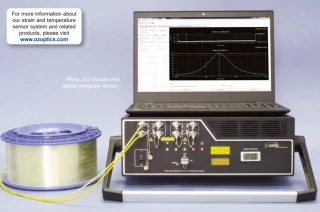
ForeSight™ Fiber Optic Distributed Strain and Temperature Sensor (DSTS) – BOTDA + BOTDR Combo Module
The ForeSight™ Fiber Optic Distributed Strain and Temperature Sensor (DSTS) with integrated BOTDA and BOTDR capabilities is a high‑performance Brillouin-based monitoring platform designed for long-range, high‑resolution structural and asset integrity measurements. By leveraging standard low‑cost telecom single mode fiber as the sensing element, this system transforms fiber optic cables into continuous sensors capable of measuring strain and temperature profiles over tens to hundreds of kilometers. The combined BOTDA (Brillouin Optical Time Domain Analyzer) and BOTDR (Brillouin Optical Time Domain Reflectometer) architecture provides both loop and single-ended measurement flexibility, allowing continuous monitoring even in the presence of a fiber break or inaccessible cable end.
Compared with conventional point sensors, the distributed Brillouin sensing approach employed by ForeSight™ delivers true continuous monitoring along the entire fiber length, enabling detection and localization of anomalies with high spatial resolution. Typical configurations support spatial resolutions down to approximately 0.1 m in BOTDA mode and around 1 m in BOTDR mode, enabling precise pinpointing of hot spots, strain concentrations, or early signs of structural deformation. At the same time, the system is engineered for long-distance coverage, reaching fiber lengths up to about 160 km in BOTDA configurations and approximately 70 km in BOTDR mode, depending on fiber quality, installation conditions, and application requirements. This unique combination of high resolution and long range makes the platform well-suited for critical infrastructure monitoring where early detection and localization of small changes can prevent major failures.
The integrated BOTDA + BOTDR combo module offers a robust solution widely adopted in applications where conventional electronic or discrete optical sensors are impractical or too costly to deploy at scale. Oil and gas operators can implement ForeSight™ systems for pipeline leak detection, flow assurance, downhole well integrity surveillance, and refinery process optimization by continuously tracking distributed temperature and strain profiles along pipelines, risers, and well casings. The system can detect abnormal cooling or heating patterns associated with leaks, blockages, or insulation failures, while its immunity to hydrogen-induced degradation and high tolerance to harsh environments helps maintain measurement stability over time. Similar Brillouin-based technologies have been successfully deployed globally across onshore and offshore fields, making this sensing platform a proven choice for long-distance pipeline corridors and complex processing facilities.
In civil engineering and geotechnical applications, the ForeSight™ DSTS is used to monitor dams, tunnels, bridges, embankments, and foundations for deformation, cracking, seepage, and settlement. The distributed strain and temperature data allow engineers to map the internal behavior of concrete structures, detect sediment buildup, and identify zones of instability before visible damage occurs. The long sensing range—often up to 100 km per channel in typical deployments—enables cost-effective coverage of large dams, levees, and extensive civil works using a minimal number of interrogator units. When compared with traditional instrumentation such as vibrating wire gauges or thermocouples, distributed fiber sensing significantly reduces the number of hardware components installed in the field and simplifies cabling, while delivering a much denser data set for advanced structural health analysis.
For power transmission and transport infrastructure, Brillouin distributed sensing offers powerful capabilities in overhead power line monitoring, highway safety, and geohazard surveillance. Installed along power lines, the sensing fiber enables detection of icing, conductor sag, localized heating, and mechanical damage caused by wind, lightning, or fallen trees. Because the system uses the sensing fiber itself as the sensor, it does not require additional active components distributed along the line, simplifying deployment over long spans. Along highways, railways, and embankments, the ForeSight™ system can track ground movement, subsidence, and slope instability, creating continuous profiles that help authorities identify early-warning signs of landslides or pavement failure. These capabilities are especially valuable in mountainous regions, coastal areas, and zones prone to earthquakes or flooding.
Fiber Optic Distributed Strain and Temperature Sensors (DSTS): BOTDA+BOTDR Combo Module
Specifications
| Spatial Resolution: | 0.1 m |
|---|---|
| Max Sensing Range: | 100 km |
| Dynamic Range: | 15 dB |
| Temperature Range: | -100 – 500 deg C |
| Temperature Resolution: | 0.005 deg C |
| Strain Range: | -0.2 – 1 % |
| Spatial Resolution (BOTDR): | 1 m |
| Maximum Fiber Length (BOTDA): | 160 km |
| Maximum Fiber Length (BOTDR): | 70 km |
| Sensing Range Per Channel: | Up to 100 km |
| Fiber Type: | Telecom single mode fiber |
| Measurement Modes: | BOTDA and BOTDR |
Got questions about specs? Use the inquiry form to ask.
 Download Data Sheet

Features
- Combined BOTDA + BOTDR in a Single Module
Seamlessly integrates Brillouin Optical Time Domain Analyzer (BOTDA) and Brillouin Optical Time Domain Reflectometer (BOTDR) functions in one compact unit, reducing system footprint, simplifying deployment, and lowering overall system cost. - Continuous Operation Even After Fiber Breaks
Switches from BOTDA to BOTDR mode when a fiber break occurs, allowing measurements to continue from one end of the fiber and enabling rapid localization of faults and breaks along the link. - High Spatial Resolution Distributed Sensing
Offers up to 0.1 m spatial resolution in BOTDA mode and 1 m in BOTDR mode, enabling highly localized detection of temperature and strain variations for precise hotspot, crack, and deformation monitoring. - Ultra‑Long Sensing Range
Supports maximum fiber lengths of up to 160 km in BOTDA mode and 70 km in BOTDR mode, minimizing the number of interrogation units required for long assets such as pipelines, power lines, tunnels, and subsea cables. - Loop or Single‑End Measurement Configurations
Operates with both loop (double‑end) and single‑end measurement setups, giving flexibility in network architecture and enabling optimized performance for both accessible and hard‑to‑reach installations. - Multiple Channel Monitoring
Provides multi‑channel capability to monitor several fibers or routes from a single chassis, which is ideal for large infrastructures, redundancy schemes, and multi‑asset monitoring in complex field deployments. - Uses Standard Low‑Cost Telecom Single‑Mode Fiber
Compatible with standard SMF (ITU‑T G.652 and similar), eliminating the need for specialized sensing fibers and dramatically reducing material and installation costs while enabling use of existing cable infrastructure. - Simultaneous Distributed Strain and Temperature Measurement
Measures Brillouin frequency shift along the fiber to derive both distributed temperature and strain profiles, supporting true structural health and condition monitoring over the entire fiber length. - High Sensitivity and Stability Based on Brillouin Scattering
Leverages coherent Brillouin scattering for stable, repeatable readings with low drift, suitable for long‑term continuous monitoring in demanding industrial and civil environments. - Fast Acquisition and Short Response Time
Rapid data acquisition enables near real‑time visualization of temperature and strain changes, supporting early event detection (leaks, ground movements, structural overloads) and timely intervention. - Not Sensitive to Hydrogen Darkening
Designed for environments where hydrogen may be present (e.g., oil and gas wells, refineries, subsea cables), mitigating measurement errors caused by hydrogen‑induced attenuation in the fiber. - Long‑Distance Asset and Infrastructure Monitoring
Ideal for oil and gas pipelines and wells, refineries, dams, tunnels, bridges, railways, and power transmission lines, delivering continuous, fully distributed feedback along tens to hundreds of kilometers. - Oil & Gas Pipeline and Well Monitoring
Enables detection of leaks, temperature anomalies, strain concentration, and pressure‑related changes when coupled with suitable sensing cables; supports up to 100 km sensing range per channel for mid‑ and long‑distance pipeline sections. - Refinery Efficiency and Safety Sensing
Provides full distributed temperature profiles to optimize process control, improve thermal efficiency, and reduce unplanned downtime, while maintaining high safety standards in hazardous areas. - Dam and Reservoir Monitoring
Monitors internal dam temperature, crack initiation, seepage, sediment shifts, and deformation over large structures, helping to identify early‑stage structural issues and water ingress patterns. - Civil & Structural Health Monitoring (SHM)
Detects distributed strain, cracks, and settlement in foundations, buildings, bridges, tunnels, rail beds, and retaining walls, enabling predictive maintenance and lifecycle extension of critical infrastructure. - Geohazard and Ground Movement Detection
Tracks landslides, subsidence, levee stability, and ground deformations along highways, embankments, pipelines, and slopes; continuous monitoring helps identify trends and precursors to failure events.
Applications
- Oil and Gas Pipeline Leakage Monitoring – Continuous distributed temperature and strain monitoring along buried or above-ground pipelines to detect small leaks, theft (hot tapping), corrosion-related deformation, and third‑party interference over distances up to 100 km per channel.
- Oil and Gas Well Integrity Monitoring – Downhole distributed temperature and strain profiling in production and injection wells to detect casing deformation, sand production, water breakthrough, gas or steam breakthrough, and zonal isolation failures using appropriate sensing cables.
- Steam-Assisted Gravity Drainage (SAGD) and Thermal EOR Monitoring – Real‑time tracking of steam chamber growth, steam conformance, and reservoir heating profiles for optimizing steam injection strategies and improving recovery factors.
- Refinery and Petrochemical Process Monitoring – Distributed temperature sensing along reactors, distillation columns, furnaces, and pipelines to identify hot spots, fouling, maldistribution, and insulation failures for improved process efficiency and safety.
- Liquid and Gas Storage Tank Monitoring – Tank wall and foundation strain and temperature monitoring to detect settlement, leakage, structural deformation, and abnormal temperature gradients in large storage tanks and LNG/LPG facilities.
- Dam Structural Health and Safety Monitoring – Internal dam temperature profiles, crack initiation and propagation, seepage paths, and deformation tracking in concrete and embankment dams using long‑range fiber runs.
- Levee, Dike, and Embankment Monitoring – Continuous strain and temperature measurements to identify internal erosion (piping), instability, and settlement in flood protection structures over tens of kilometers.
- Bridge Structural Health Monitoring – Monitoring of strain, deflection, crack growth, and temperature distribution along bridge decks, cables, girders, and pylons for early detection of fatigue, overload, and aging damage.
- Tunnel and Underground Structure Monitoring – Strain and convergence monitoring in tunnels, metro systems, and underground caverns to detect ground movements, lining cracks, and thermal behavior during construction and operation.
- Highway and Railway Infrastructure Monitoring – Long‑range monitoring of pavement subsidence, embankment stability, bridge approaches, and track bed deformation for early warning of settlement or washouts along transportation corridors.
- Rail Track and Ballast Condition Monitoring – Distributed strain sensing along rails and sleepers to identify excessive loads, track buckling, ballast degradation, and settlement, improving operational safety and maintenance planning.
- Geohazard and Landslide Monitoring – Continuous monitoring of slope movements, ground subsidence, and deformation of levees, embankments, and cuttings to detect early signs of landslides or ground failure over large areas.
- Ground Subsidence and Sinkhole Detection – Long‑distance strain measurements to monitor subsidence in mining areas, karst regions, and urban developments, enabling early detection of sinkhole formation and ground collapse.
- Submarine Cable and Offshore Infrastructure Monitoring – Structural and thermal condition monitoring of submarine communication and power cables, export and inter‑array cables in offshore wind farms, and subsea pipelines for fault localization and integrity management.
- Offshore Platform and Riser Monitoring – Strain and temperature monitoring along risers, tendons, and platform structures to detect fatigue damage, vortex‑induced vibration effects, and abnormal load conditions in harsh marine environments.
- Overhead Power Transmission Line Monitoring – Distributed temperature and strain monitoring on conductors and ground wires to detect icing, conductor sag, lightning strike effects, broken strands, and thermal overload without installing active components along the line.
- Dynamic Line Rating (DLR) and Thermal Rating of Power Lines – Real‑time conductor temperature profiles to enable dynamic thermal rating, increasing power transfer capacity while respecting safety margins and preventing overheating.
- Underground Power Cable Monitoring – Temperature and strain profiling along buried high‑voltage and medium‑voltage cables to detect overheating, local defects, joint failures, and backfill or duct issues.
Frequently Asked Questions
What is the ForeSight™ BOTDA+BOTDR Fiber Optic Distributed Strain and Temperature Sensor, and how does it work?
What are the key performance specifications of the ForeSight™ BOTDA+BOTDR combo DSTS system?
What is the difference between BOTDA and BOTDR in this distributed sensing system, and when should I use each mode?
What types of applications can benefit from this Brillouin distributed strain and temperature sensing system?
What type of fiber and sensing cable are required, and is the system compatible with existing telecom fiber?
How does this distributed Brillouin sensing solution improve safety and maintenance for pipelines, power lines and civil infrastructure?
What are the installation and channel configuration options for the ForeSight™ BOTDA+BOTDR monitoring platform?
Got more questions? Use the inquiry form to ask the supplier directly.
Similar Products


Your inquiry has been received.
Create an account by adding a password
Why create an account?
- Auto-complete inquiry forms
- View and manage all your past messages
- Save products to your favorites
- Close your account anytime — no hassle