



Description
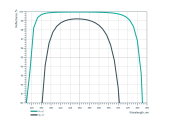
The OPTOMAN PP-UVFS-12.7-3.0-DM438-AR804 is a precision-engineered UV fused silica dichroic mirror developed for advanced laser wavelength separation applications. Designed for operation at a 45° angle of incidence, this optical component provides high reflectance in the 343 nm ultraviolet wavelength range while allowing efficient transmission of 515 nm and 1030 nm laser wavelengths.
Manufactured with a premium UV fused silica substrate and advanced dielectric coating technology, this dichroic mirror delivers exceptional spectral accuracy, durability, and optical stability. Its optimized coating performance makes it suitable for ultrafast laser systems, harmonic generation setups, and high-precision photonics applications where reliable wavelength management is required.
With excellent surface quality, low wavefront distortion, and high laser damage resistance, the OPTOMAN PP-UVFS-12.7-3.0-DM438-AR804 provides consistent performance in demanding scientific and industrial environments.
PP-UVFS-12.7-3.0-DM438-AR804 UV Fused Silica Dichroic Mirror for 343nm Laser Applications
Specifications
| Substrate Material: | UV-grade Fused Silica (UVFS) |
|---|---|
| Shape: | Circular |
| Diameter: | 12.7 mm |
| Thickness: | 3 mm |
| Clear Aperture (CA): | 80 % |
| Optimized AOI: | 45 – 45 deg |
| High Reflection Wavelength: | 342 – 347 nm |
| High Transmission Wavelength: | 512 – 1045 nm |
| Reflectance, S1 (@ HR Wavelength, @ AOI): | 99.9 – 99.9 % |
| Surface Quality, S1 (scratch-dig): | 10-5 |
| Surface Quality, S2 (scratch-dig): | 10-5 |
| Surface Flatness Over CA, S1 (@633nm Or Per Manufacturer): | <= Lambda/10 |
| Surface Flatness Over CA, S2 (@633nm Or Per Manufacturer): | <= Lambda/10 |
| Manufacturer Part Number (MPN): | PP-UVFS-12.7-3.0-DM438-AR804 |
| FindLight SKU: | FL-24659 |
Got questions about specs? Use the inquiry form to ask.
 Download Data Sheet

Features
- High-performance dichroic coating with HR >99.9% reflection at 342–347 nm and HT >95% transmission at 512–522 nm and 1025–1045 nm
- Precision 12.7 mm diameter, 3.0 mm thick UV fused silica (Corning 7980 0F) substrate for excellent UV transmission and optical stability
- Ion Beam Sputtering (IBS) coating technology for superior durability, low optical losses, and long-term spectral stability
- Designed for 45° angle of incidence for efficient harmonic beam separation
- High optical quality with surface flatness <λ/10 @ 633 nm, transmitted wavefront distortion <λ/10, and 10-5 scratch-dig surface quality
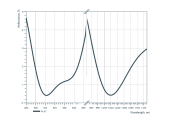
- Low Group Delay Dispersion (GDD <30 fs²) to preserve ultrafast laser pulse characteristics
- High laser damage resistance for demanding ultrafast and high-power laser applications
- Optimized for separating 343 nm third harmonic from 515 nm and 1030 nm laser wavelengths
Applications
- Third harmonic generation (THG) laser systems
- Yb:YAG and Yb:fiber ultrafast laser platforms
- UV laser beam separation and harmonic extraction
- Nonlinear frequency conversion systems
- Precision laser micromachining and materials processing
- Scientific spectroscopy and photonics research
- Biomedical laser instrumentation
- OEM laser system integration and optical assemblies
Export & Trade Information
| ECCN: | EAR99 |
|---|---|
| HTS Code: | 9001.90.6000 |
| Estimated US Tariff: | 10% |
Frequently Asked Questions
What is the primary purpose of the OPTOMAN PP-UVFS-12.7-3.0-DM438-AR804?
Why is UV fused silica used for this optic?
Can this mirror be integrated into ultrafast laser systems?
What industries commonly use this dichroic mirror?
What advantages does a dielectric dichroic mirror provide over metallic mirrors?
Got more questions? Use the inquiry form to ask the supplier directly.
Similar Products












Your inquiry has been received.
Create an account by adding a password
Why create an account?
- Auto-complete inquiry forms
- View and manage all your past messages
- Save products to your favorites
- Close your account anytime — no hassle