
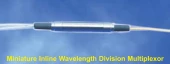
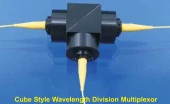

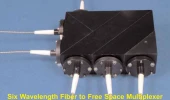
Description
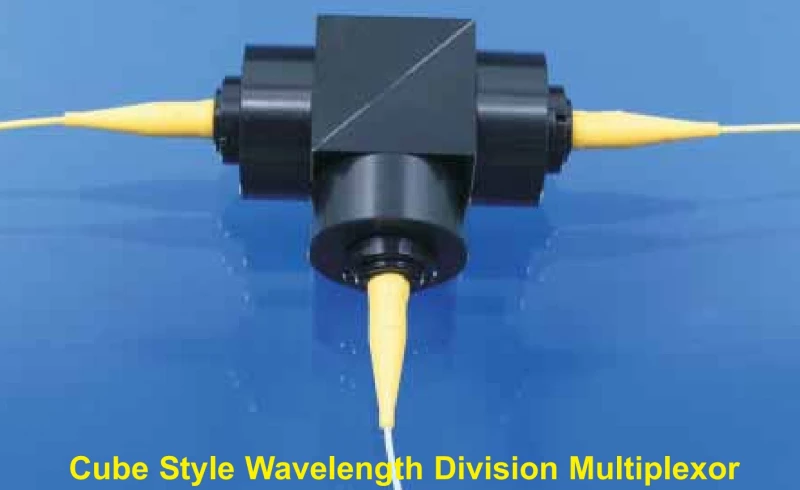
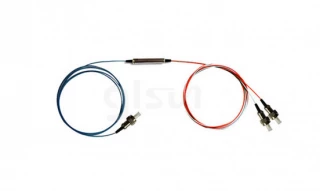
Wavelength Division Multiplexers (WDMs) are essential components in modern optical systems, enabling the efficient combination or separation of multiple light wavelengths within a single optical fiber. By utilizing advanced dichroic filter technology, WDMs can transmit longer wavelengths through one port while reflecting shorter wavelengths through another, seamlessly merging or splitting optical signals with minimal loss. This capability is critical for maximizing bandwidth and optimizing the performance of both telecom and non-telecom fiber optic networks.
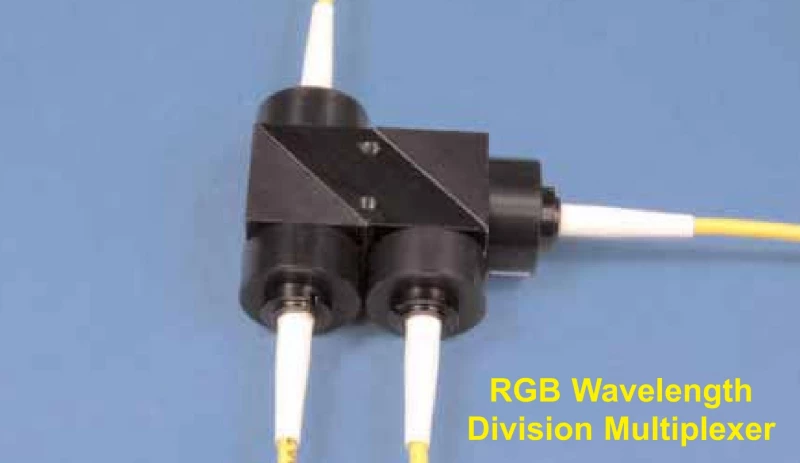
The versatility of these multiplexers extends across a broad wavelength range, from ultraviolet (375 nm) to near-infrared (2000 nm), making them suitable for a wide array of applications. Notably, specialized visible wavelength (RGB) versions are available, allowing the combination of red, green, and blue light into singlemode or polarization maintaining fibers. Such configurations are highly valued in scientific and industrial fields, including confocal microscopy, full-color holography, white light imaging, and advanced biomedical imaging, where precise wavelength management is crucial.
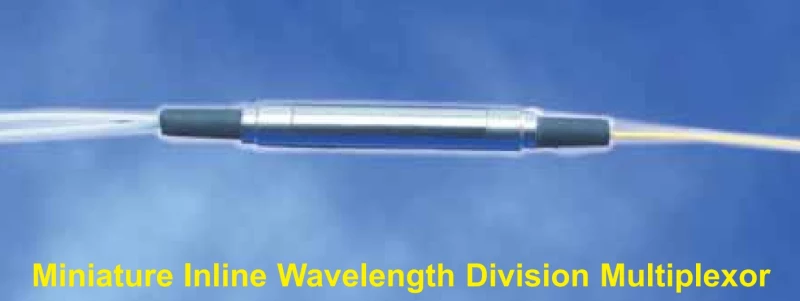
WDMs are also engineered to accommodate various fiber types at their input and output ports, which is particularly advantageous in fiber amplifier systems where differing core diameters and numerical apertures are common. This flexibility ensures optimal coupling efficiency and minimal insertion loss, even in complex setups such as erbium-doped fiber amplifiers (EDFAs) that require the combination of pump and signal wavelengths. For telecom infrastructure, miniature inline WDMs serve as reliable drop/add filters in both coarse (CWDM) and dense (DWDM) wavelength division multiplexing schemes, supporting high data throughput and network scalability.
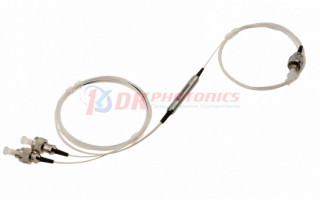
The robust design of these multiplexers supports high optical power handling and low return loss, ensuring stable, long-term operation in demanding environments. Options include both pigtail and receptacle styles, catering to different installation preferences and stability requirements. Polarization maintaining versions are available for applications where signal integrity and polarization extinction are paramount, such as in high-precision measurement and quantum optics.
With their combination of wide wavelength compatibility, high performance, and adaptability to custom requirements, Wavelength Division Multiplexers are a cornerstone technology for advancing optical communication, scientific research, and industrial photonics applications.
Wavelength Division Multiplexers
Specifications
| Operating Wavelength: | 1650 nm |
|---|---|
| Max Power Handling: | 0.5 W |
| Polarization Maintaining: | Yes |
| Wavelength Range: | 375–2000 nm |
| Insertion Loss: | 1 dB typical |
| Polarization Extinction Ratio: | better than 20 dB (for 1300 and 1550 nm applications) |
| Fiber Types: | Singlemode, Polarization Maintaining, Multimode |
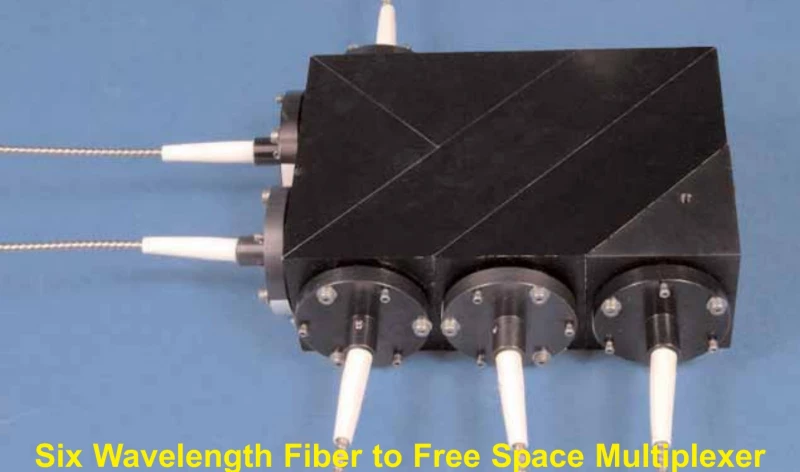
| Wavelengths Combined: | up to 6 visible wavelengths (RGB and others) |
Got questions about specs? Use the inquiry form to ask.
 Download Data Sheet

Features
- Wide Wavelength Range: Supports wavelengths from 375 nm to 2000 nm, ideal for both visible and near-infrared applications.
- Polarization Maintaining (PM) Fiber Versions: Available with PM fiber for applications requiring high polarization extinction ratios (better than 20 dB at 1300 and 1550 nm).
- Visible Wavelength (RGB) Multiplexing: Specialized versions for combining red, green, and blue wavelengths into singlemode or PM fiber—perfect for confocal microscopy, white light imaging, and full-color holography.
- High Power Handling: Engineered for robust performance in high-power laser and amplifier systems.
- Low Insertion Loss: Typical insertion losses as low as 1 dB, ensuring maximum signal throughput and system efficiency.
- Low Return Loss: Minimizes back reflection, enhancing performance in sensitive optical systems.
- Coarse and Dense WDM Options: Available in both CWDM and DWDM configurations for flexible telecommunication and data transmission solutions.
- Miniature Inline Versions: Compact, rugged designs suitable for space-constrained and field-deployable applications.
- Custom Fiber Compatibility: Supports different fiber types on input and output, accommodating various core diameters and numerical apertures—ideal for fiber amplifier integration.
- Source-to-Fiber Integration: Direct mounting of light sources onto the device for improved system efficiency and reduced costs.
- Versatile Packaging: Available in both pigtail and receptacle styles to suit singlemode, multimode, or PM fiber requirements.
- Low Cost: Competitively priced for both standard and custom solutions.
- Custom Designs Available: Tailored solutions to meet unique application requirements—contact for details.
Applications
- Fluorescence Microscopy – Enables simultaneous excitation and detection of multiple fluorophores by combining or separating different excitation and emission wavelengths.
- Confocal Microscopy – Facilitates multi-wavelength imaging for advanced biological and material science research.
- White Light Imaging – Combines red, green, and blue laser sources to generate high-quality white light for imaging and illumination systems.
- Full Color Holography – Integrates multiple visible wavelengths for the creation of vivid, full-color holographic images.
- Telecommunications (CWDM/DWDM) – Used as drop/add filters and channel multiplexers/demultiplexers in coarse and dense wavelength division multiplexing networks, increasing fiber bandwidth and data capacity.
- Erbium Doped Fiber Amplifiers (EDFA) – Combines pump and signal wavelengths (e.g., 980/1550 nm) for efficient amplification in optical communication systems.
- Fiber Laser Systems – Combines multiple laser diode outputs into a single fiber for higher output power and wavelength flexibility.
- Laser Diode Power Combining – Merges outputs from several laser diodes to achieve higher power levels in fiber-coupled systems.
- Optical Sensing and Spectroscopy – Enables multi-wavelength excitation and detection for advanced sensing and analytical applications.
- Biomedical Instrumentation – Supports multi-wavelength light delivery and detection in diagnostic and therapeutic devices.
- Quantum Optics and Photonics Research – Allows precise control and combination of wavelengths for quantum communication and photonic experiments.
- Laser Display and Projection Systems – Combines RGB laser sources for high-brightness, full-color projection and display technologies.
- Optical Coherence Tomography (OCT) – Facilitates multi-wavelength light sources for enhanced imaging depth and resolution.
- Industrial and Scientific Instrumentation – Integrates multiple laser or LED sources for material processing, measurement, and testing applications.
- Custom Fiber Optic Systems – Enables tailored wavelength combining and splitting for unique research, industrial, or commercial requirements.
Frequently Asked Questions
What is a wavelength division multiplexer (WDM) and how does it work?
What are the main applications of OZ Optics WDMs?
What wavelength ranges and fiber types are supported by OZ Optics WDMs?
What are the advantages of using OZ Optics WDMs compared to other brands?
What is the difference between pigtail and receptacle style WDMs?
Can OZ Optics WDMs be customized for specific requirements?
Got more questions? Use the inquiry form to ask the supplier directly.
Similar Products
Your inquiry has been received.
Create an account by adding a password
Why create an account?
- Auto-complete inquiry forms
- View and manage all your past messages
- Save products to your favorites
- Close your account anytime — no hassle