
Description
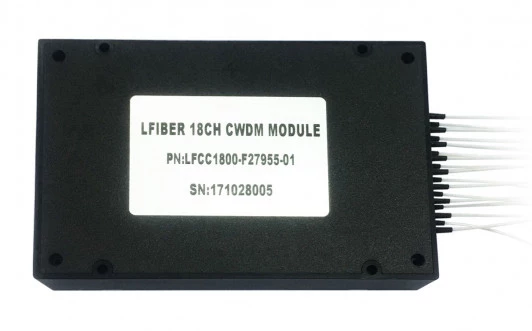
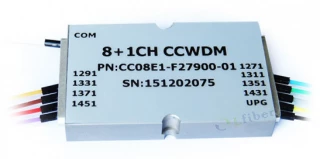
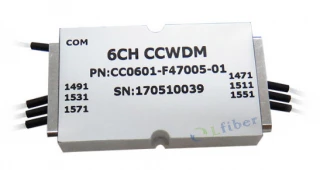
These CWDM Mux/Demux/OADM modules are designed for building high‑capacity, flexible, and cost‑efficient optical links across metro, access, and enterprise networks. Based on the ITU CWDM grid from 1271 nm to 1611 nm (or 1270 nm to 1610 nm), they enable up to 18 independent wavelength channels to be transported over a single fiber pair. By multiplexing and demultiplexing multiple data streams, the modules significantly increase fiber utilization while maintaining low insertion loss and excellent signal integrity.
In modern CWDM transport systems, low optical loss and stable performance over temperature are critical. These modules feature insertion loss as low as 1.5 dB for 4‑channel configurations and up to 3.5 dB for higher‑density 16‑ and 18‑channel configurations, which is comparable to or better than typical CWDM devices used in telecom and data center environments. Tight channel uniformity and low passband ripple help ensure that each wavelength experiences similar performance, simplifying link budgeting and network planning.
Modular CWDM Mux/Demux/OADM ArchitectureThe product line includes CWDM multiplexers, demultiplexers, and optical add/drop multiplexers (OADMs), all built with a modularized design philosophy. Mux and Demux units are used at the endpoints of a link to combine or separate multiple ITU‑grid wavelengths with 20 nm channel spacing, while OADM modules provide the capability to add or drop selected wavelengths at intermediate nodes without disturbing the other channels. This modular approach allows network engineers to deploy only the functionality required at each site and to scale capacity incrementally as demand grows.
Each module is engineered for robust field deployment. High isolation between adjacent and non‑adjacent channels (typically ≥30 dB and ≥40 dB respectively on the demultiplexer side) helps minimize crosstalk in dense wavelength environments. Excellent return loss and directivity further contribute to clean, reflection‑free links. With polarization dependent loss and polarization mode dispersion both maintained at very low levels, the modules support high‑bit‑rate transmission and are suitable for applications ranging from legacy SDH/SONET and Ethernet to modern high‑speed protocols transported over CWDM wavelengths.
Optimized Optical Performance and Environmental StabilityA key strength of these CWDM modules is their ability to maintain stable optical characteristics across a wide operating temperature range. Available options include standard commercial (‑5 °C to +70 °C) and extended industrial (‑40 °C to +85 °C) temperature grades, making them suitable for controlled equipment rooms as well as harsher outdoor or street‑cabinet installations. Wavelength thermal stability is typically ≤0.002 nm/°C, and insertion loss thermal stability is ≤0.005 dB/°C, helping keep the channels accurately aligned with the ITU CWDM grid and ensuring consistent link performance over time.
The channel passband of ±6.5 nm or ±7.5 nm around each central wavelength gives sufficient tolerance for transceiver variations while maintaining strict separation between neighboring channels. Low passband ripple (≤0.4 dB) ensures that signal power remains flat across the usable portion of each channel, which is important for systems operating near their power budget limits. With power handling up to 300 mW or 500 mW, the modules can accommodate higher‑power transmitters and amplification schemes common in long‑reach or high‑density deployments.
Flexible Packaging for Diverse Deployment ScenariosTo integrate smoothly into existing infrastructures, the CWDM Mux/Demux/OADM range is offered in multiple mechanical formats. Compact box‑type modules (such as 100 × 80 × 10 mm, 120 × 80 × 18 mm, and 140 × 115 × 18 mm) are well‑suited for inside‑chassis mounting, custom enclosures, or space‑constrained applications. LGX‑style plug‑in modules (1U and 2U variants) provide easy front‑access installation in distribution frames and patch panels, which is a common practice in telecom central offices and enterprise equipment rooms. For higher‑density or network‑edge environments, 19‑inch 1U rackmount units offer a neat, standardized footprint that fits seamlessly into typical data racks.
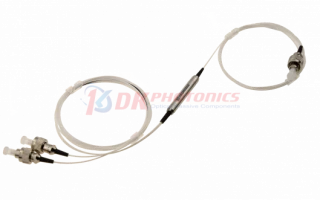
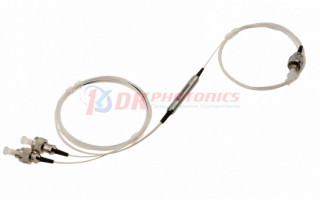
The modules utilize SMF‑28e compatible single‑mode fiber pigtails and support a variety of jacket types, including 900 µm loose tube, 2 mm, and 3 mm cables. Standard fiber lengths like 0.5 m and 1.0 m are available, and custom lengths can be specified to match panel layouts or cable management requirements. A broad selection of connector options—such as LC/PC, LC/APC, SC/PC, SC/APC, FC/PC, FC/APC, and ST—allows straightforward interfacing with existing optical distribution frames and patch cords.
CWDM Mux Demux OADM Module ITU Grid Low Loss Fiber Optic
Specifications
| Operating Wavelength: | 1271 nm |
|---|---|
| Operating Bandwidth: | 13 nm |
| Isolation (min): | 40 dB |
| Max Power Handling: | 300 W |
| Polarization Maintaining: | No |
| Package: | ABS Box, LGX, 19” Rackmount |
| Channel Number: | 4 Channel, 8 Channel, 16 Channe, 18 Channel |
| Central Wavelength (nm): | ITU CWDM Grid: 1271 to 1611; (OR) 1270 to 1610 |
| Channel Spacing (nm): | 20 |
| Fiber Type: | SMF-28e compatible fiber |
Got questions about specs? Use the inquiry form to ask.
 Download Data Sheet

Features
- High-Performance CWDM Mux/Demux/OADM Solution – Supports multiplexing, demultiplexing, and optical add/drop multiplexing for coarse wavelength-division multiplexing (CWDM) systems, ideal for high‑capacity fiber links and network expansion without laying new fiber.
- ITU CWDM Grid Compliance (1271–1611 nm / 1270–1610 nm) – Fully compliant with standard ITU-T G.694.2 CWDM grid, covering the full CWDM spectrum from 1271 nm to 1611 nm (or 1270–1610 nm), ensuring seamless interoperability with other CWDM equipment and transceivers.
- Flexible Channel Options: 4 / 8 / 16 / 18 Channels – Available configurations from 4‑channel to 18‑channel modules allow scalable capacity upgrades, optimized fiber utilization, and easy adaptation to current and future bandwidth requirements.
- Low Insertion Loss for Longer Reach – Ultra‑low insertion loss performance (as low as ≤1.5 dB for 4‑channel, ≤2.5 dB for 8‑channel, ≤3.5 dB for 16/18‑channel) minimizes optical power penalties and extends link distance in metro, access, and enterprise networks.
- Excellent Channel Uniformity & Flat Passband – Tight channel uniformity (down to ≤0.6 dB) and low passband ripple (≤0.4 dB) deliver stable, consistent performance across all wavelengths, improving system margin and simplifying link budgeting.
- High Isolation for Low Crosstalk – Superior adjacent channel isolation (≥30 dB for Demux) and non‑adjacent isolation (≥40 dB for Demux) significantly reduce crosstalk and interference between CWDM channels, ensuring clean signal transmission even in densely populated wavelength systems.
- Low PDL and PMD for High Signal Integrity – Very low Polarization Dependent Loss (≤0.1 dB) and Polarization Mode Dispersion (≤0.1 ps) guarantee excellent signal integrity, making the modules suitable for high‑speed data rates and advanced modulation formats used in modern telecom networks.
- Outstanding Thermal Stability – Wavelength thermal stability of ≤0.002 nm/°C and insertion loss thermal stability of ≤0.005 dB/°C ensure reliable operation over wide temperature ranges, maintaining performance in uncontrolled or harsh environments.
- Wide Operating Temperature Options – Available in standard (‑5 to +70 °C) and extended (‑40 to +85 °C) operating temperature ranges, suitable for both indoor central office equipment and outdoor or cabinet‑based deployments.
- High Optical Power Handling – Power handling up to 300 mW or 500 mW provides safe operation with high‑power optical transmitters and amplifiers, supporting demanding DWDM-over-CWDM and amplification scenarios.
- SMF‑28e Compatible Fiber – Utilizes SMF‑28e compatible single‑mode fiber, aligning with industry‑standard outside plant and backbone fiber types to simplify splicing, patching, and integration into existing networks.
- Multiple Package Styles: Box, LGX, and 19" Rackmount – Offered in compact box modules, LGX plug‑in modules (1U/2U), and 1U 19" rackmount chassis, enabling flexible installation in data centers, POPs, COs, and enterprise wiring closets.
- Highly Reliable, Field‑Proven Design – Modularized construction with high‑quality thin‑film filters or AWG technology (as used in leading CWDM products worldwide) delivers long‑term stability, low failure rates, and minimal maintenance requirements.
- Connector and Pigtail Customization – Supports a full range of connector options (LC/PC, LC/APC, SC/PC, SC/APC, FC/PC, FC/APC, ST, or custom) with 900 µm loose tube, 2 mm, or 3 mm pigtails and configurable fiber lengths to match specific installation practices.
- Low-Impact Connector Loss – Base specifications are measured without connectors; typical additional loss of ≤0.3 dB per connector pair allows precise power budgeting and helps keep total link loss within stringent design targets.
- Plug-and-Play CWDM Network Expansion – Enables easy addition of new services and wavelengths over existing fiber, supporting applications such as 1G/10G/25G Ethernet, Fibre Channel, SONET/SDH, and video transport without disrupting live traffic.
- Optimized for Metro, Access, and Telecom Networks – Specifically designed for metro aggregation, access backhaul, mobile fronthaul/backhaul, enterprise interconnects, and campus networks where cost‑effective bandwidth scaling and high reliability are critical.
- Cost-Effective Bandwidth Scaling – Compared to deploying new fiber, CWDM Mux/Demux/OADM modules significantly reduce CAPEX and OPEX by allowing multiple independent services on a single fiber pair, matching the approach used by major network operators and equipment vendors globally.
Applications
- Optical Add/Drop Multiplexing (OADM) in CWDM Transport Systems
Ideal for selectively adding or dropping wavelengths at intermediate sites in coarse wavelength division multiplexing (CWDM) backbone networks, enabling flexible, scalable layer‑1 transport without re‑engineering the entire fiber path. - Telecom Long‑Haul and Metro CWDM Links
Used by telecom carriers to aggregate multiple services (voice, data, video, mobile backhaul) over a single pair of SMF‑28e compatible fibers, reducing fiber leasing costs and maximizing existing plant utilization. - Metro Access and Aggregation Networks
Deployed in metro rings and access networks to combine traffic from cabinets, hubs, and central offices, supporting 4, 8, 16, or 18 channels across the ITU CWDM grid from 1271/1270 nm to 1611/1610 nm. - 5G / 4G Mobile Fronthaul and Backhaul
Suitable for transporting CPRI/eCPRI and packet‑based fronthaul/backhaul traffic over CWDM wavelengths, allowing multiple baseband units, RRUs, and small cells to share the same fiber infrastructure. - Enterprise Campus and Data Center Interconnect (DCI)
Enables enterprises and data centers to multiplex SAN, LAN, and storage traffic (Ethernet, Fibre Channel, InfiniBand) over limited fiber counts between buildings or sites, while keeping latency low and availability high. - Fiber Exhaust and Fiber Relief Applications
Allows network operators facing fiber scarcity to increase capacity by up to 18 wavelengths on a single fiber pair, avoiding or delaying the cost of laying new fiber cables. - Triple‑Play and FTTx / FTTH Distribution
Used in fiber‑to‑the‑home and fiber‑to‑the‑building networks for transporting IPTV, internet, and voice over separate CWDM wavelengths, simplifying service separation and upgrades at OLT/ONU sides. - CATV and HFC Optical Transport
Combines broadcast analog/digital CATV signals, DOCSIS traffic, and return path channels on CWDM wavelengths to feed optical nodes in hybrid fiber‑coax (HFC) networks and video overlay systems. - ISP, MSO, and Regional Carrier Backbones
Deployed in regional backbones and aggregation hubs to consolidate multiple 1G/10G/25G/40G/100G links into a single fiber route, improving operational efficiency for ISPs and multiple‑system operators. - Campus, University, and Hospital Fiber Networks
Enables multi‑service transport (research networks, admin IT, security, medical imaging, voice) across large campuses over existing dark fiber, with dedicated wavelengths per department or application. - Industrial and Utility Communication Networks
Applied in power utilities, oil & gas, railways, and transportation systems to deliver SCADA, tele‑protection, video surveillance, and operational IT services over robust CWDM optical paths. - Government, Defense, and Secure Networks
Used to segment mission‑critical, classified, and public services on separate CWDM channels across the same physical fiber pair, supporting strict security and resilience requirements with high isolation. - Video Surveillance and Security Systems
Aggregates HD/4K IP camera feeds, access control, and building management networks into a CWDM transport layer, simplifying long‑distance connectivity between remote sites and central monitoring centers. - Broadcast, Media, and Live Event Contribution Links
Carries uncompressed or lightly compressed video, audio, intercom, and data between studios, stadiums, and production facilities on dedicated CWDM wavelengths, ensuring low loss and low jitter. - Research, Testbed, and Dark Fiber Projects
Provides flexible wavelength assignment for universities and R&D labs running parallel experiments, testbeds, or pilot networks over shared dark fiber using ITU‑aligned CWDM channels. - Utility Substation and Smart Grid Communications
Supports IEC 61850, synchrophasor, tele‑protection, and automation traffic on distinct wavelengths, improving reliability and separation of critical smart grid services over wide areas. - Metro Ring and Point‑to‑Multipoint Architectures
Integrates easily into ring, linear, and point‑to‑multipoint topologies, with OADM modules adding/dropping only required channels while passing through others to downstream nodes. - High‑Availability Redundant Fiber Paths
Utilized in protection schemes where working and protection wavelengths are multiplexed, enabling fast switchover and high service availability in carrier‑grade and enterprise networks.
Frequently Asked Questions
What is an LFiber CWDM Mux/Demux/OADM module and how is it used in fiber optic networks?
What channel configurations and wavelength ranges are available for these CWDM modules?
What is the typical insertion loss and isolation performance of LFiber CWDM Mux/Demux/OADM modules?
What fiber types, connector options, and pigtail configurations are supported?
What packaging and form factors are available for the CWDM Mux/Demux/OADM devices?
What are the operating temperature options and reliability characteristics of these CWDM modules?
How do I select and order the correct LFiber CWDM Mux/Demux/OADM configuration for my application?
Got more questions? Use the inquiry form to ask the supplier directly.
Similar Products
Your inquiry has been received.
Create an account by adding a password
Why create an account?
- Auto-complete inquiry forms
- View and manage all your past messages
- Save products to your favorites
- Close your account anytime — no hassle