Description

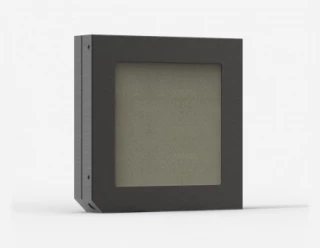
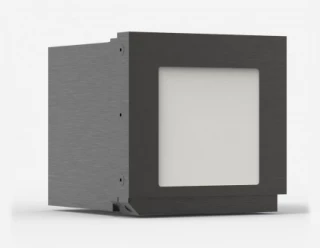
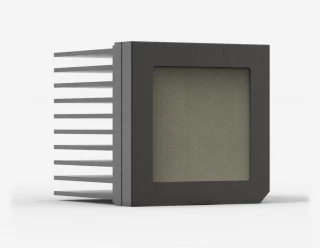
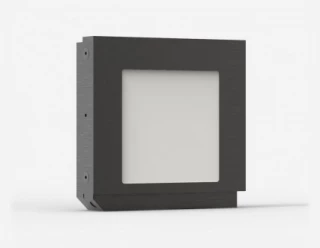
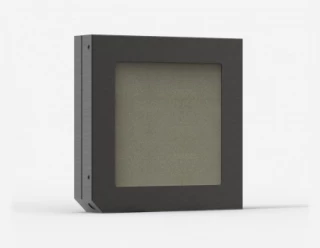
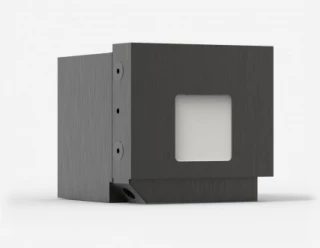
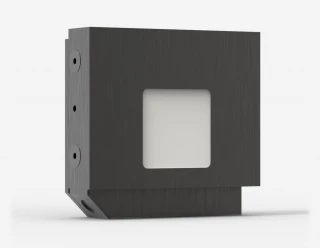
The PE5B-GE-D0 is a precision photodiode detector designed for laser energy measurement applications, capable of measuring laser energies of up to 2.4 nJ. This compact and high-performance energy detector operates in the spectral range of 800 to 1650 nm and offers exceptional sensitivity and accuracy.

With fast response times and high damage thresholds, this photodetector is an ideal choice for various laser energy measurement needs.

Germanium fills the crucial gap between visible light and short-wave infrared. It offers a broad spectral response range, typically covering wavelengths from 800 nm to 1650 nm (and up to 1750 nm on some larger models). This range directly covers the vital telecom bands (including the standard 1310 nm and 1550 nm wavelengths), making it heavily utilized in fiber optic testing and network verification.

PE5B-GE-D0 - Photodiode Detector for Laser Energy Measurement

Specifications

Max Measurable Energy: 2.4E-6 mJ
Max Repetition Rate: 1000 Hz
Effective Aperture: 5 mm
Spectral Range: 0.8 – 1.65 um
Typical Energy Sensitivity: 1 GV/J
Noise Equivalent Energy: 1 pJ
Maximum Pulse Width: 10 μs
Energy Calibration Uncertainty: ±5.0 % (800 - 1049 nm) ±3.5 % (1050 - 1559 nm) ±7.0 % (1560 - 1629 nm) ±10 % (1630 - 1650 nm)
Maximum Average Power Density: 320 MW/cm²
Maximum Energy Density: 5 µJ/cm² µJ/cm²
Maximum Power: 7.1 μW
Absorber: Ge
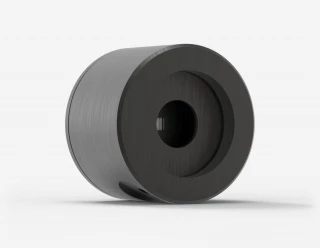
Dimensions: 38.1Ø x 27.4D mm 
Weight: 0.09 kg
Distance To Sensor Face: 10.5 mm

Got questions about specs? Use the inquiry form to ask.

Document icon Download Data Sheet Download icon

Features

  • Wide Spectral Range: Covers the spectral range of 800 - 1650 nm
  • Fast Response Time: Offers a typical rise time of 25 µs
  • High Sensitivity: Typical energy sensitivity of 1 GV/J
  • Damage Thresholds: Withstands high power densities up to 320 MW/cm²
  • Compact Design: Features a 5 mm aperture diameter and lightweight construction

Applications

  • Laser energy measurement in research and development
  • Laser energy monitoring in industrial laser processing
  • Quality control and testing of laser systems
  • Laser energy measurement for educational and scientific purposes

Frequently Asked Questions

What is the Gentec-EO PE5B-GE-D0 photodiode detector and what is it used for?
The Gentec-EO PE5B-GE-D0 is a high‑sensitivity germanium photodiode detector designed for low‑energy pulsed laser measurement up to 2.4 nJ per pulse. It covers the near‑infrared spectral range from 800 to 1650 nm and is typically used for characterizing telecom and fiber lasers (around 1310 nm and 1550 nm), femto/picosecond NIR sources, and other low‑energy R&D applications where conventional thermal or pyroelectric sensors are not sensitive enough.
What lasers and wavelengths are compatible with the PE5B-GE-D0?
The PE5B-GE-D0 operates over a spectral range of 800–1650 nm, using a 5 mm diameter germanium (Ge) sensor. It is ideal for: • Telecom and fiber lasers at 1310 nm and 1550 nm • NIR diode lasers and diode‑pumped solid‑state lasers between 800 and 1650 nm • Short‑pulse sources with pulse widths up to 10 μs and repetition rates up to 1 kHz. For UV–VIS (0.21–1.08 μm) or extended 0.9–1.7 μm operation, Gentec‑EO offers the PE‑B‑Si (silicon) and PE3B‑IN (InGaAs) variants instead.
What is the minimum and maximum laser energy the PE5B-GE-D0 can measure?
At its calibration wavelength of 1310 nm, the PE5B‑GE‑D0 can measure pulse energies up to 2.4 nJ (maximum measurable energy). The typical noise equivalent energy is 1 pJ, which defines the lower limit of detectable pulse energy under normal electromagnetic interference and environmental conditions. In practice, measurable energies span from about 1 pJ up to 2.4 nJ per pulse, depending on wavelength and setup. For other wavelengths within 800–1650 nm, the maximum measurable energy and power can be slightly different, following the manufacturer’s curves.
What are the damage thresholds and maximum power limits for the PE5B-GE-D0?
To avoid damaging the PE5B‑GE‑D0 detector, the following limits must be respected: • Maximum average power: 7.1 μW • Maximum average power density: 320 MW/cm² • Maximum energy density: 5 μJ/cm² • Maximum pulse width: 10 μs • Maximum repetition frequency: 1000 Hz. These values are based on the 5 mm aperture germanium absorber and assume proper beam centering and uniform illumination. For high‑peak‑power or tightly focused beams, you should calculate the power and energy densities at the detector plane and ensure they remain below these thresholds.
How accurate is the PE5B-GE-D0 and is it NIST traceable?
The PE5B‑GE‑D0 is NIST‑traceable at 1310 nm. Its energy calibration uncertainty depends on wavelength: • ±5.0% from 800–1049 nm • ±3.5% from 1050–1559 nm • ±7.0% from 1560–1629 nm • ±10% from 1630–1650 nm. Calibration data and correction factors are stored in the detector’s smart interface memory so that when it is connected to compatible Gentec‑EO monitors (M‑LINK, MAESTRO, S‑LINK), the system automatically applies the appropriate calibration without manual entry.
Which monitors and accessories are compatible with the PE5B-GE-D0?
The PE5B‑GE‑D0 is equipped with a smart interface that stores calibration data and is designed to plug‑and‑play with Gentec‑EO monitors such as M‑LINK, MAESTRO, and S‑LINK. These instruments automatically read the detector’s calibration and display the laser energy in physical units. For mechanical mounting, the recommended compatible stand is the STAND‑D‑233, which provides stable positioning and alignment in lab setups.
What are the main specifications and physical dimensions of the PE5B-GE-D0?
Key specifications for the PE5B‑GE‑D0 include: • Spectral range: 800–1650 nm • Sensor material: Germanium (Ge) • Aperture diameter: 5 mm • Typical rise time: 25 μs • Maximum repetition frequency: 1000 Hz • Typical energy sensitivity: 1 GV/J • Maximum measurable energy: 2.4 nJ (at 1310 nm) • Noise equivalent energy: 1 pJ • Maximum pulse width: 10 μs. Physical characteristics: • Housing diameter × depth: 38.1 mm × 27.4 mm • Distance to sensor face: 10.5 mm • Weight: 0.09 kg. These dimensions make it compact and easy to integrate into optical benches and fiber‑laser test setups.

Got more questions? Use the inquiry form to ask the supplier directly.

Similar Products
Request Quote