

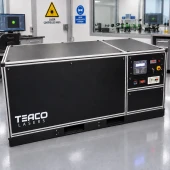
Description
UT TEA CO2 Laser Series
The UT Series is an advanced family of transversely excited atmospheric (TEA) lasers engineered for high-speed industrial and research applications. Unlike conventional CO2 lasers that typically operate at modest pulse rates, the UT Series pushes the envelope with repetition rates up to 1000 Hz, delivering a powerful combination of high pulse energy, short pulse duration, and exceptional throughput.
These lasers offering pulse energies from 350mJ to 300mJ at 200 Hz and 1000hZ, respectively. The laser beam is typically square spatial profile with a beam size of approximately 15 mm × 15 mm.
TEA CO2 Laser UT SERIES
Specifications
| Gas Medium: | CO2 |
|---|---|
| Wavelength: | 10.6 um |
| Output Power: | 300 W |
| Mode Quality (M^2): | >5 |
| Beam Diameter: | 12 mm |
| Polarization: | Random |
| Cooling: | Not Specified |
| Model: | UT Series 200/70 |
| Model: | UT Series 600/210 |
| Model: | UT Series 1000/300 |
| Wavelength Options: | 9.2–10.8 µm |
| Repetition Rate (UT 200/70): | 200 Hz |
| Repetition Rate (UT 600/210): | 600 Hz |
| Repetition Rate (UT 1000/300): | 1000 Hz |
| Pulse Energy (UT 200/70): | 350 mJ |
| Pulse Energy (UT 600/210): | 350 mJ |
| Pulse Energy (UT 1000/300): | 300 mJ |
| Average Output Power (UT 200/70): | 70 W |
| Average Output Power (UT 600/210): | 210 W |
| Average Output Power (UT 1000/300): | 300 W |
| Beam Size (UT 200/70): | 15 x 15 mm |
| Beam Size (UT 600/210): | 15 x 15 mm |
| Beam Size (UT 1000/300): | 12 x 12 mm |
| Pulse Width - FWHM: | 50–100 ns |
| Output Stability (1 Sigma): | < 4% |
| Pulse Timing Jitter (1 Sigma): | < 10 ns |
| Dimensions (UT 200/70): | 1.3 x 0.9 x 0.7 m |
| Dimensions (UT 600/210): | 1.8 x 1.1 x 0.7 m |
| Dimensions (UT 1000/300): | 2.1 x 1.1 x 0.8 m |
| Weight (UT 200/70): | 500 kg |
| Weight (UT 600/210): | 1300 kg |
| Weight (UT 1000/300): | 1800 kg |
| Gas Load Lifetimes: | > 100,000,000 pulses |
| Electrical Voltage: | 208 V, 380 V (50/60 Hz) |
| Pulse Circuit: | Solid state switch |
| Pre-ionization: | Corona |
| Cooling Water Temperature: | 18 °C |
| Cooling Heat Removal Capacity (UT 200/70): | 5 kW |
| Cooling Heat Removal Capacity (UT 600/210): | 15 kW |
| Cooling Heat Removal Capacity (UT 1000/300): | 15 kW |
| Gas Regeneration: | External heated catalyst system (side arm gas regeneration required) |
Got questions about specs? Use the inquiry form to ask.
 Download Data Sheet

Features
- Latest Solid-state switching technology provides reliable, repeatable operation while reducing the maintenance associated with conventional switching systems.
- User-friendly human–machine interface simplifies setup, operation, monitoring, and adjustment of the laser.
- Improved operational lifetime to support extended service life and dependable performance in demanding industrial environments.
- Enhanced output stability with the kinematic mounts to deliver consistent laser output for reliable and repeatable processing results.
- Gas regeneration system reduces operating costs helping reduce total cost of ownership.
- Increased mean time between failures (MTBF)Durable components and reliable switching technology contribute to longer intervals between service events.
Applications
- Ultrasound Non-Destructive Testing of CFRP structures
- Materials Research & Characterization – Short-pulse excitation for studying elastic properties, internal stresses, micro‑cracks, and fatigue behavior in advanced composites, metals, ceramics, polymers, and layered structures.
- Micro-Crack and Delamination Detection – Short‑pulse, low‑heat excitation to pinpoint fine cracks, interfacial debonds, and small delaminations in multilayer composites and coatings.
- Coating and Layer Thickness Measurement – Non-contact ultrasonic and thermoelastic methods for measuring thickness of paints, protective layers, barrier coatings, and functional films on metals and composites.
- Laser-Induced Breakdown Spectroscopy (LIBS) – Powerful CO2 pulses for plasma generation on difficult materials, supporting elemental analysis and online process control.
- Photoacoustic and Thermoelastic Wave Excitation – Generation of thermoelastic and photoacoustic signals in solids and layered structures for advanced imaging and diagnostic techniques.
Frequently Asked Questions
What is the UT TEA CO2 laser series and what makes it different from standard CO2 lasers?
The UT TEA CO2 laser series is a family of pulsed CO2 lasers designed to operate at very high repetition rates, up to 1000 Hz. Unlike conventional sealed CW CO2 lasers used mainly for continuous cutting and engraving, TEA CO2 lasers deliver short, high‑peak‑power pulses. The UT Series combines high pulse energy (e.g., 350 mJ at 200 Hz for the UT 3520) with high repetition rate and a square beam profile (15 mm × 15 mm), making it well suited for high‑speed scanning, non‑destructive testing, and other industrial and research applications requiring precise, short pulses rather than continuous output.
Which applications are best suited for the UT Series high‑repetition‑rate TEA CO2 lasers?
UT Series TEA CO2 lasers are optimized for applications that benefit from short, high‑energy pulses at high repetition rates. Typical uses include:
- Ultrasound generation in composite materials (e.g., for non‑destructive testing of aerospace components)
How does the short pulse duration of the UT TEA CO2 laser improve ultrasound generation and non‑destructive testing?
Short optical pulses from the UT TEA CO2 laser create rapid, localized heating at the material surface, which efficiently generates broadband ultrasonic waves. Because the pulses are very brief, heat diffusion into the surrounding material is minimized, reducing thermal damage and allowing more accurate ultrasound measurements. This leads to:
- High‑resolution detection of internal defects and delaminations in composites
- Better signal‑to‑noise ratio in laser ultrasonics
- Repeatable, stable ultrasonic generation suitable for automated inspection lines
These attributes make TEA CO2 lasers a preferred source for laser‑based ultrasound and NDT, especially in aerospace and advanced materials industries.
What advantages does a high repetition rate (up to 1000 Hz) provide in industrial and research environments?
A high repetition rate directly impacts throughput and measurement speed. Operating up to 1000 Hz allows the UT Series to:
- Acquire data much faster in scanning and inspection systems, shortening test cycles
- Support high‑speed material processing where many pulses per second are required for uniform treatment
- Improve averaging and statistical reliability in measurement applications by providing more pulses in a given time
- Enable real‑time or near‑real‑time monitoring in production lines
In comparison, lower‑rep‑rate pulsed lasers require longer scan times or offer less data density, which can limit productivity in industrial settings.
How reliable are UT Series TEA CO2 lasers and what type of maintenance is typically required?
The UT Series is engineered for continuous operation in demanding industrial environments. These lasers feature robust mechanical construction and methodical engineering to support long service life and high uptime. In practice, TEA CO2 lasers like the UT Series generally offer:
- Stable performance over many billions of pulses
- Reduced unscheduled downtime due to rugged design
- Predictable maintenance intervals for optics cleaning, gas handling (if applicable), and routine checks
The manufacturer emphasizes simplicity and low maintenance costs; however, recommended maintenance schedules, consumables (such as windows), and service intervals depend on operating conditions and should be confirmed in the product manual or with the supplier.
Can the UT TEA CO2 laser be customized for specific OEM or research applications?
Yes. The manufacturer explicitly offers custom CO2 laser solutions based on the UT TEA platform. Customization options can include pulse energy and repetition‑rate optimization(
Got more questions? Use the inquiry form to ask the supplier directly.
Similar Products
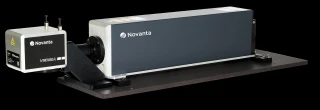
Configurable CO2 Laser Processing Sub-System for OEM Integration
Novanta Photonics
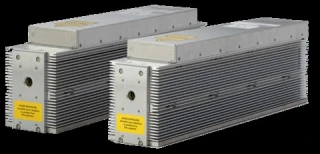
vi SERIES CO2 Lasers for High-Speed Industrial Engraving and Marking
Novanta Photonics
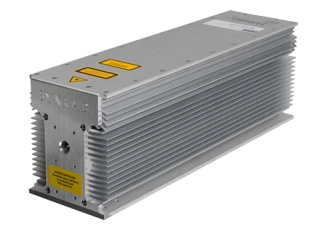
v30 CO2 Laser - 30W High-Performance Marking and Engraving Solution
Novanta Photonics
i401 400W CO2 Laser for High-Speed Cutting and Drilling
Novanta Photonics
f201 CO2 Laser for High-Speed Drilling and Cutting
Novanta Photonics
Infinity Series CO₂ Laser (50 W - 150 W)
Luxinar Ltd
ti Series
Novanta Photonics
p Series
Novanta Photonics
48 Series
Novanta Photonics
LightWAVE KT650 - 650W CO2 Laser
Kern Technologies, LLC
LightWAVE KT500 - 500W CO2 Laser
Kern Technologies, LLC
LightWAVE KT300 - 300W CO2 Laser
Kern Technologies, LLC
Thank You!
Your inquiry has been received.
Create an account by adding a password
Why create an account?
- Auto-complete inquiry forms
- View and manage all your past messages
- Save products to your favorites
- Close your account anytime — no hassle