
Description
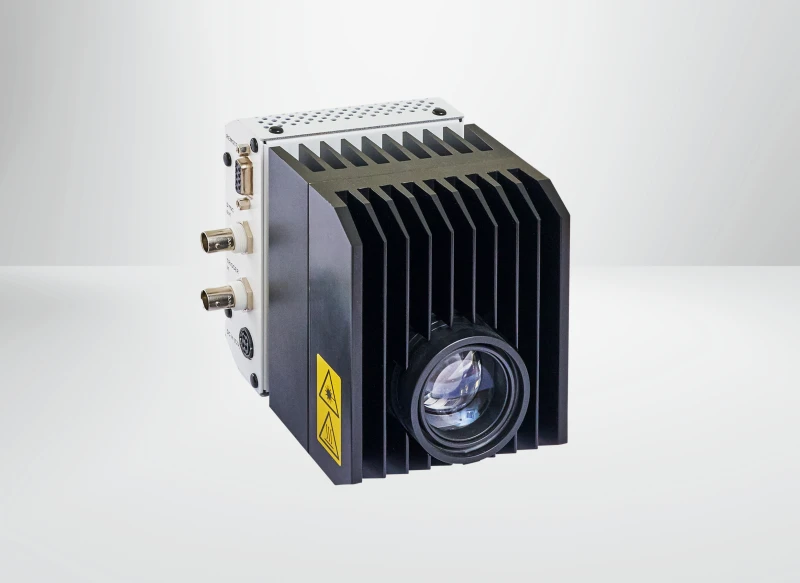
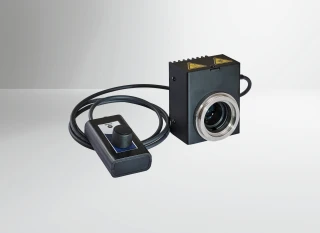
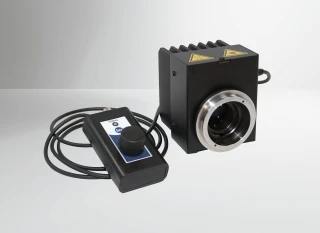
The LH-LED 100 is a powerful single-channel visible (VIS) LED light source engineered to replace traditional halogen illuminators in demanding microscopy and machine vision environments. Delivering up to 1,000 lumens continuous-wave luminous flux and a neutral white output of approximately 6500 K, it provides bright, consistent illumination that is ideal for precision imaging. Compared with halogen systems and many legacy fiber‑optic illuminators, the LH-LED 100 offers significantly higher efficiency, reduced heat generation at the sample, and dramatically longer service life, resulting in lower total cost of ownership and more stable measurement conditions.
Designed for both routine and advanced microscopy, this light source ensures highly homogeneous illumination across the field of view, which is essential for quantitative imaging, documentation, and digital image analysis. The optimized optical design and integrated collimator options make it suitable for bright field and dark field techniques, as well as reflectance and transillumination setups. In many laboratory and industrial installations, the LH-LED 100 can be used as a direct drop‑in upgrade for standard halogen lamphouses, providing immediate improvements in contrast, color stability, and reproducibility without major changes to the existing microscope or inspection system.
A key strength of the LH-LED 100 is its flexibility and control. The unit supports electronic dimming in 200 finely graded steps from 0.2% to 100%, combining PWM modulation in the low range with analog control at higher intensities. This wide dimming range enables precise adjustment of illumination for sensitive fluorescence samples or high‑contrast bright field imaging without compromising image quality. The source can be triggered at frequencies up to 25 kHz, making it well suited for time‑resolved imaging, synchronized machine vision tasks, and high‑speed camera applications where accurate timing and repeatable exposure conditions are critical.
The LH-LED 100 integrates smoothly into modern digital workflows and automated setups. Interfaces for remote control, USB connectivity, and analogue control voltage allow it to be incorporated into computer-controlled microscopy platforms, automated inspection lines, and OEM instruments. This enables centralized management of illumination parameters and synchronized operation with cameras, stages, shutters, and other peripheral devices. For users requiring specific optical coupling solutions, customized adapters are available so that the light source can be matched to proprietary or specialized systems commonly found in advanced research and industrial laboratories.
Compatibility with major microscope brands further enhances its utility. With collimator and adapter options for Zeiss, Leica, Nikon, Olympus, and Motic systems, the LH-LED 100 can be easily integrated into most existing upright and inverted microscopes, stereo microscopes, and macroscopes. This makes it an attractive upgrade path for institutions transitioning from halogen to LED illumination across multiple microscope fleets, ensuring a consistent lighting standard while retaining their current optical platforms.
Beyond classical microscopy, the LH-LED 100 is tailored for a broad spectrum of imaging and inspection applications. In fluorescence microscopy, the stable white spectrum can be combined with appropriate filter sets or external optics to excite a range of fluorophores in routine and screening applications. In bright field and dark field microscopy, the high luminous flux and uniform field illumination enhance contrast and clarity for histology, cytology, materials analysis, and metallography. The system is also well suited for image processing and optical inspection tasks in electronics and precision engineering, where repeatable illumination is crucial for accurate defect detection and dimensional measurements.
Industrial users in semiconductor manufacturing and quality control benefit from the LH-LED 100’s reliability and low-maintenance design. LED technology eliminates the frequent bulb changes associated with halogen sources and minimizes system downtime. The unit’s overheating protection and robust construction support continuous operation in production environments, while its silent, vibration‑free performance is particularly valuable in setups where mechanical stability and low acoustic noise are important, such as metrology stations and high‑magnification inspection microscopes.
For forensics, document examination, and other investigative imaging fields, the LH-LED 100 provides stable and reproducible lighting conditions that are vital for evidence documentation and comparison work.
LH LED 100 High Power White LED Light Source for Microscopy
Specifications
| Light Source Technology: | LED |
|---|---|
| Spectral Output: | White / broadband |
| Wavelength Range: | 400 – 800 nm |
| Number Of Channels: | 1 |
| Microscope Coupling: | Collimated free-space |
| Compatible Microscopes: | Zeiss, Leica, Nikon, Olympus/Evident, Motic |
| Application: | Fluorescence, Brightfield, Darkfield, Forensics, Inspection / machine vision, Metrology |
| External Control: | TTL |
| External Power Supply Input: | 100 to 240 VAC, 50 to 60 Hz |
| Operation: | Silent & vibration-free |
| Illumination: | Homogeneous |
| Triggerability: | Up to 25 kHz |
| LED Color Temperature: | 6500 K |
| Luminous Flux (CW, Max.): | 1,000 lm |
| Weight: | 2.0 kg |
| Dimensions (W X H X D): | 120 mm x 125 mm x 140 mm |
| Power Consumption (max.): | 50 VA |
| Trigger Frequency (max.): | 25 kHz |
| Mains Voltage: | 12 VDC ± 5% |
| Collimator + Adapter Compatibility: | Zeiss, Leica, Nikon, Olympus, Motic |
| Interfaces: | Remote controller, USB interface, analogue control voltage |
| Safety: | Overheating protection |
| Dimming Method (30–100%): | Analogue |
| Dimming Method (0.2–30%): | PWM |
| Dimming Range: | 0.2 ... 100 % |
| Dimming Steps: | 200 steps |
Got questions about specs? Use the inquiry form to ask.
 Download Data Sheet

Features
- High-Intensity VIS LED Illumination (up to 1,000 lm)
Powerful continuous luminous flux up to 1,000 lm (CW) delivers bright, uniform illumination ideal for demanding microscopy, imaging, and inspection tasks. - Daylight-Equivalent White Light (6500 K)
Integrated white LED with approx. 6500 K color temperature provides a daylight-like spectrum for natural color rendering and precise visual evaluation. - Homogeneous, Flicker-Free Illumination
Engineered optics ensure highly uniform light distribution across the field of view, minimizing hotspots and shading for both bright field and dark field microscopy. - High-Speed Triggering up to 25 kHz
Fast, stable triggering up to 25 kHz enables time-critical applications such as high-speed imaging, fluorescence microscopy, and synchronized machine vision. - Fine 200-Step Electronic Dimming (0.2–100%)
200-step dimming from 0.2% to 100% output provides precise control of illumination intensity, with PWM control from 0.2–30% and analogue control from 30–100% for optimal exposure settings. - Low-Noise, Vibration-Free Operation
Solid-state LED technology ensures silent and vibration-free performance, improving measurement stability and operator comfort compared to fan-cooled or mechanical light sources. - Cold Light Source – Protects Samples and Optics
LED-based “cold” illumination significantly reduces heat at the sample plane versus halogen lamps, protecting sensitive biological samples and temperature-critical setups. - Ideal Upgrade for Halogen Illumination Systems
Designed as a direct alternative to conventional halogen cold light sources, offering longer lifetime, lower power consumption, better stability, and reduced maintenance. - Broad Microscopy Compatibility (Major Brands)
Available collimators and adapters for Zeiss, Leica, Nikon, Olympus, and Motic microscopes allow easy integration into existing systems without complex modifications. - Customizable Adapters & OEM Integration
Customer-specific adapters and mechanical interfaces can be supplied, making the LH-LED 100 ideal for OEM integration into custom microscopes and optical instruments. - Versatile Control Options: Local & Remote
Operable via an external control panel, remote controller, USB interface, and analogue control voltage, allowing flexible integration into manual setups or automated systems. - Stable LED Performance & Long Service Life
Robust LED light engine delivers long operating life and excellent intensity stability over time, reducing lamp replacement downtime compared with halogen sources. - Integrated Overheating Protection
Built-in thermal protection safeguards the light source and ensures reliable, long-term operation even in continuous or high-output applications. - Compact, Space-Saving Design
With dimensions of approx. 120 × 125 × 140 mm and a weight of around 2.0 kg, the unit fits easily on crowded lab benches and into confined integration spaces. - Wide-Range Power Input (100–240 VAC via 12 VDC Supply)
External universal power supply (100–240 VAC, 50–60 Hz) with 12 VDC ± 5% input allows global use in laboratories and production environments. - Optimized for Fluorescence & Bright/Dark Field Microscopy
Spectral output and intensity control make the LH-LED 100 suitable for fluorescence microscopy, bright field, dark field, and reflected or transmitted light applications. - Ideal for Machine Vision & Optical Inspection
High luminous flux, fast triggering, and stable output make this light source a strong choice for image processing, AOI systems, semiconductor inspection, and quality control lines. - Suitable for Forensic and Security Applications
High-intensity, homogenous white light supports trace evidence visualization, document inspection, and other forensic imaging tasks. - Optional VIS and UV LED Configurations*
Other VIS and UV LED versions are available on request to match specific excitation wavelengths or application requirements (*subject to configuration and availability). - Complete System Delivery
Supplied ready-to-use with LH-LED 100 light source, power supply unit, and operating instructions, with an optional control panel available as an accessory.
Applications
- Fluorescence Microscopy Light Source – Provides stable, high-intensity white illumination (6500 K) for routine and advanced fluorescence microscopy, serving as a direct replacement for traditional mercury and halogen lamps in research and clinical laboratories.
- Brightfield & Darkfield Microscopy – Ensures homogeneous, flicker‑free illumination for brightfield and darkfield observations, improving contrast and image clarity for histology, cytology, pathology and general laboratory imaging.
- Digital Imaging & Machine Vision – Ideal for camera‑based inspection, automated imaging and machine vision systems where consistent white light and precise intensity control are required for reproducible image acquisition.
- Semiconductor Inspection & Metrology – Supports wafer, die and PCB inspection with stable, high-lumen output, enabling detection of micro-defects, pattern alignment and surface irregularities under brightfield, reflected and transmitted light configurations.
- Quality Control in Electronics Manufacturing – Used in AOI (Automated Optical Inspection) and manual inspection stations to verify solder joints, component placement and fine structures on printed circuit boards and assemblies.
- Forensic Analysis & Evidence Documentation – Provides intense, uniform illumination for fingerprint analysis, trace evidence inspection, document examination and high‑resolution forensic photography in crime labs and mobile investigation units.
- Cold Light Source for Heat‑Sensitive Samples – Serves as a cold light replacement for halogen illuminators, protecting live cells, biological tissues, polymers and delicate materials from heat‑induced damage during prolonged microscopy or imaging.
- Routine Clinical Microscopy in Hospitals & Diagnostics Labs – Delivers long‑life, maintenance‑free illumination for clinical microscopes in hematology, microbiology, cytology and pathology, reducing downtime associated with lamp changes.
- OEM Integration into Microscopes & Imaging Instruments – Designed as an OEM LED light engine that can be integrated into branded microscopes, diagnostic platforms and analytical devices, with flexible control interfaces for system builders.
- Life Science & Cell Biology Research – Provides stable illumination for live‑cell imaging, phase contrast and differential interference contrast (DIC) microscopy, where high temporal stability and low vibration are essential.
- Materials Science & Metallography – Enables detailed inspection of metals, composites, ceramics and coatings under reflected‑light microscopes, improving edge definition and surface contrast for structural and failure analysis.
- Industrial End‑of‑Line Inspection Stations – Used as a reliable white light source in production lines for dimensional checks, surface inspection and presence/absence verification of components in mechanical and automotive parts.
- Optical Component and Lens Inspection – Suitable for inspecting lenses, filters, fiber connectors and optical assemblies for scratches, inclusions and surface contamination under high‑quality, homogeneous illumination.
- Education & Training Laboratories – Provides a robust, user‑friendly illumination system for teaching microscopes in universities, colleges and training centers, offering consistent light for student and instructor demonstrations.
- Upgrade Path from Halogen to LED – Serves as a straightforward retrofit solution for users wishing to replace aging halogen light sources with a long‑lifetime, energy‑efficient LED unit on Zeiss, Leica, Nikon, Olympus and Motic microscopes.
- Time‑Resolved and Triggered Imaging – Thanks to trigger capability up to 25 kHz, it can be synchronized with cameras and detectors for time‑lapse imaging, stroboscopic illumination and other time‑critical microscopy techniques.
- Image Processing & Automated Documentation – Supports automated image capture and documentation workflows where software‑driven intensity control and reproducible lighting conditions are crucial for quantitative image analysis.
- Cleanroom and Vibration‑Sensitive Environments – Silent, vibration‑free operation makes it suitable for semiconductor fabs, metrology labs and other environments where mechanical vibrations from traditional light sources can degrade measurement accuracy.
Frequently Asked Questions
What is the LH‑LED 100 VIS LED light source and which microscopy applications is it designed for?
Which microscopes and optical systems are compatible with the LH‑LED 100?
How is the LH‑LED 100 controlled, and what dimming and triggering options does it offer?
What are the main advantages of the LH‑LED 100 compared with traditional halogen or fiber‑optic cold light sources?
Is the LH‑LED 100 suitable for fluorescence microscopy and other sensitive imaging techniques?
What are the electrical and mechanical specifications of the LH‑LED 100 for system integration?
Can the LH‑LED 100 be customized or used as an OEM LED light engine in my own instrument design?
Got more questions? Use the inquiry form to ask the supplier directly.
Similar Products
Your inquiry has been received.
Create an account by adding a password
Why create an account?
- Auto-complete inquiry forms
- View and manage all your past messages
- Save products to your favorites
- Close your account anytime — no hassle