
Description
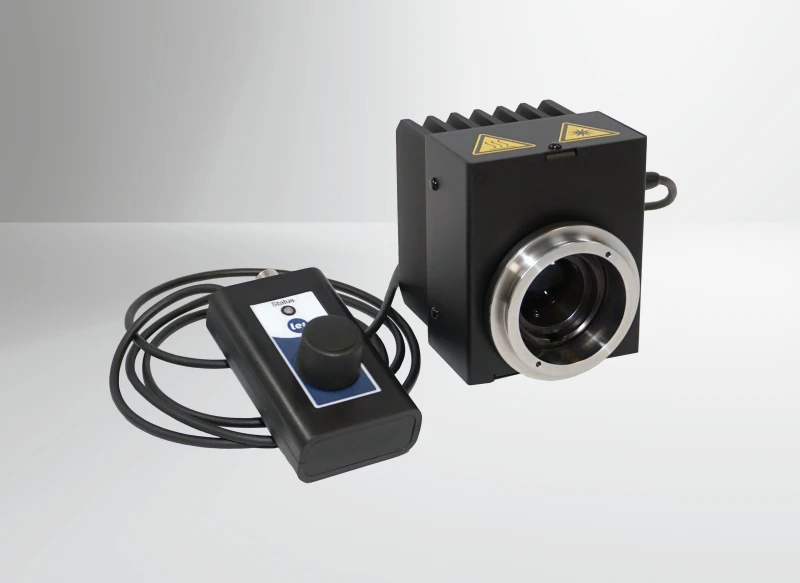
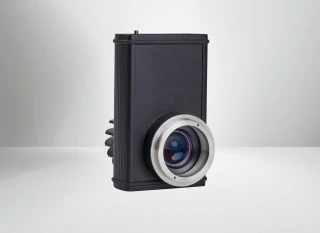
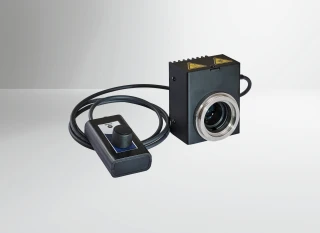
The luxyr LED FLUO is a compact, direct-fit visible (VIS) LED fluorescence light source designed as an entry-level yet high-performance solution for fluorescence microscopy and related imaging tasks. Covering the spectral range from approximately 400 to 650 nm (BFP to Cy5), it delivers more than 500 lumens of luminous flux and over 1,800 mW of optical output power, making it highly suitable for routine and advanced fluorescence applications in research, quality control, and industrial inspection. Unlike traditional mercury or metal halide lamps, this solid-state LED system offers a stable, low-maintenance alternative that supports consistent excitation and improved workflow efficiency.
Engineered for direct replacement of conventional fluorescence light sources in common upright and inverted microscopes, the luxyr LED FLUO integrates seamlessly via interchangeable microscope adapters. Compatible adapters are available for major microscope brands such as Zeiss, Leica, Nikon, and Olympus, and can also be customized for specific optical setups. This direct-fit concept allows users to upgrade existing microscopy systems to LED technology without extensive modifications, reducing downtime and simplifying integration into OEM platforms or laboratory instruments.
The LED engine is optimized for visible fluorescence excitation lines commonly used for dyes and fluorophores spanning from blue to far red, including regions suitable for BFP through Cy5. Its integral luminous flux above 500 lm within 400–650 nm ensures bright illumination for fluorescence microscopy, forensic analysis, multispectral imaging, and materials inspection. When compared with many legacy arc lamps, the luxyr LED FLUO offers improved stability, instant readiness without warm-up times, and significantly longer service life, making it particularly attractive for facilities seeking to lower operating costs and reduce consumable replacement cycles.
With an LED lifetime typically exceeding 20,000 operating hours, the luxyr LED FLUO minimizes maintenance requirements and mitigates the frequent bulb replacements associated with older lamp technologies. The noise- and vibration-free design creates a quiet, stable imaging environment that is especially important for sensitive fluorescence measurements, time-lapse experiments, and high-resolution imaging. This silent operation also contributes to a more comfortable laboratory atmosphere, especially in multi-user microscope rooms where acoustic noise and vibration can be disruptive.
The luxyr LED FLUO features a user-friendly fixed control panel for straightforward local operation, allowing users to adjust intensity and manage illumination settings directly at the microscope. For integration into automated systems or OEM instruments, the unit also supports external control through a TTL interface. In follow mode, the level-controlled TTL signal provides fast switching with rise and fall times in the microsecond range, enabling precise synchronization with cameras, scanning stages, or imaging software. This rapid, repeatable control is ideal for applications that require time-critical illumination, such as multispectral imaging sequences or high-speed fluorescence imaging.
In continuous (CW) mode, the luxyr LED FLUO operates with a controllable luminous flux and exceptionally low ripple of less than 0.5%. This high degree of temporal stability supports quantitative fluorescence measurements and image analysis workflows where illumination constancy is critical. The combination of stable output and fast electronic switching makes the system well suited for both manual microscopy and automated imaging platforms. Users can confidently perform intensity-based studies, thresholding, and image segmentation without the variability often encountered with traditional lamp systems.
Designed for compactness and ease of integration, the light source measures approximately 76 mm x 93 mm x 93 mm (W x H x L) and weighs around 0.5 kg including the control panel. This small footprint saves valuable space around the microscope and makes the unit suitable for benchtop setups, OEM assemblies, and portable systems. The device operates from a 12 V DC supply with a maximum power consumption of about 18 VA, supporting efficient, energy-conscious operation and simplifying power integration in multi-instrument environments.
Across the broader market of LED fluorescence light sources, the luxyr LED FLUO stands out as a robust entry-level solution that balances performance, cost-effectiveness, and ease of use. While high-end multi-channel illumination systems cater to complex multi-color experiments, this single-channel VIS unit focuses on reliable, straightforward fluorescence excitation in the BFP to Cy5 range, with sufficient power for routine imaging and documentation.
LEJ luxyr LED FLUO Direct Fit VIS Fluorescence Microscopy Light Source
Specifications
| Light Source Technology: | LED |
|---|---|
| Spectral Output: | White / broadband |
| Wavelength Range: | 400 – 650 nm |
| Number Of Channels: | 1 |
| Microscope Coupling: | Direct-fit adapter |
| Compatible Microscopes: | Zeiss, Leica, Nikon, Olympus/Evident, Custom |
| Application: | Fluorescence, Forensics, Inspection / machine vision, Metrology |
| External Control: | TTL, Control panel only |
| Light Source Type: | 1-channel VIS LED |
| Spectral Range: | 400–650 nm (BFP to Cy5) |
| Integral Luminous Flux: | > 500 lm |
| Optical Output Power: | > 1,800 mW |
| LED Lifetime: | > 20,000 h |
| CW Mode Ripple Of The Light: | < 0.5% |
| Follow Mode Rise Time (t10-90) + Signal Runtime: | < 10 μs + < 5 μs |
| Follow Mode Fall Time (t90-10) + Signal Runtime: | < 10 μs + < 5 μs |
| TTL Interface: | BNC socket for follow mode |
| Supply Interface: | Plug connector for supply |
| Optical Output: | Collimation optics with microscope adapter (Zeiss, Leica, Nikon, Olympus, customised) |
| Power Supply: | 12 V DC |
| Power Consumption: | Max. 18 VA |
| Light Source Dimensions (W X H X L): | 76 mm x 93 mm x 93 mm |
| Weight: | Approx. 0.5 kg (light source incl. control panel) |
Got questions about specs? Use the inquiry form to ask.
 Download Data Sheet

Features
- Direct-fit VIS LED fluorescence light source (entry-level) – Optimized for simple fluorescence applications across the visible range, ideal as a compact and cost-effective alternative to conventional mercury or metal-halide lamps.
- Broad excitation range: BFP to Cy5 (400–650 nm) – Covers common fluorophores such as BFP, DAPI (with suitable filters), FITC, GFP, TRITC, Texas Red, Cy3, and Cy5 for versatile fluorescence microscopy setups.
- High luminous flux & optical output – Delivers more than 500 lm integral luminous flux and over 1,800 mW optical output, providing bright, uniform illumination for demanding imaging tasks.
- Single-channel VIS LED design – 1-channel architecture for stable, repeatable excitation in routine fluorescence imaging, reducing complexity compared to multi-channel systems.
- Long LED lifetime & low maintenance – LED lifetime of more than 20,000 hours minimizes downtime, bulb changes, and running costs compared to traditional arc lamps.
- Noise- and vibration-free operation – Solid-state design ensures quiet, vibration-free illumination, supporting high-precision imaging and sensitive measurements.
- Continuous (CW) operation with high stability – CW mode with ripple < 0.5% delivers highly stable luminous flux, improving reproducibility and quantitative fluorescence microscopy performance.
- Fast TTL follow-mode for time-critical imaging – Level-controlled operation via TTL with preconfigured luminous flux enables rapid switching:
- Rise time (t10–90) + signal runtime: < 10 μs + < 5 μs
- Fall time (t90–10) + signal runtime: < 10 μs + < 5 μs
- External control via TTL (BNC) – Integrated TTL interface (BNC socket) allows precise, automated control from microscopes, cameras, and lab control systems.
- Integrated fixed control panel – Local user interface for direct operation, brightness control, and mode selection without the need for a separate computer.
- Interchangeable microscope adapters – Collimation optics with adapters available for Zeiss, Leica, Nikon, Olympus and custom solutions, ensuring seamless retrofit into existing microscope stands.
- Compact and lightweight housing – Space-saving design at approx. 76 mm x 93 mm x 93 mm (W x H x L) and roughly 0.5 kg including control panel, enabling easy integration on crowded lab benches or OEM systems.
- Energy-efficient operation – Runs on 12 V DC with a maximum power consumption of 18 VA, offering high brightness with low energy usage and reduced heat generation.
- Stable optical performance for imaging – Carefully designed collimation optics and direct-fit coupling provide homogeneous illumination at the sample plane, improving image quality and signal-to-noise ratio.
- Optimized for multiple application areas – Suitable for:
- Fluorescence microscopy – Routine imaging, teaching labs, and basic research.
- Forensic microscopy – Visualization of latent traces, fibers, and biological samples.
- Material and industrial microscopy – Inspection of coatings, polymers, and semiconductor materials.
- Multispectral imaging – Broad VIS spectrum supports multispectral and quantitative imaging workflows.
- OEM-ready solution – Designed as a Go-To OEM light source for microscope and imaging system manufacturers, with flexible adapter options and electrical interfaces for easy system integration.
- Safe, mercury-free illumination – Solid-state LED technology eliminates hazardous mercury, reduces warm-up time, and offers immediate on/off with no bulb alignment.
Applications
Applications of the luxyr LED FLUO – Direct-Fit VIS LED Fluorescence Light Source
The luxyr LED FLUO from Leistungselektronik JENA is a compact, direct-fit, 1-channel VIS LED light source designed as an entry-level illumination solution for simple to moderately demanding fluorescence applications from BFP to Cy5 (400–650 nm). With more than 500 lm integral luminous flux and over 1,800 mW output power, it is suitable for a wide range of OEM and laboratory systems requiring stable, low‑noise, and vibration‑free illumination.
Microscopy & Imaging Applications
- Fluorescence Microscopy
Ideal as a cost-efficient, direct-fit replacement or alternative to traditional mercury or metal-halide lamps in widefield fluorescence microscopes. Supports common fluorophores across the visible range (e.g., BFP, GFP, FITC, TRITC, Cy3, Cy5) in:- Basic fluorescence imaging in research and teaching labs
- Live-cell fluorescence observation where low heat and vibration-free operation are beneficial
- Endpoint fluorescence imaging in fixed cell and tissue samples
- Routine diagnostics in core and clinical microscopy facilities (where LED-based excitation is appropriate)
- Forensic Microscopy & Forensic Imaging
Provides stable, flicker-free illumination for forensic laboratories and crime-scene related analysis:- Detection and visualization of latent fingerprints using fluorescent dyes and powders
- Analysis of body fluids (blood, saliva, semen) under fluorescence contrast
- Examination of trace evidence such as fibers, inks, and security features
- Authenticity verification of documents, IDs, and banknotes with fluorescent markers
- Material Microscopy & Industrial Inspection
Suited for material science and industrial quality control where fluorescence or reflected-light imaging is required:- Fluorescence imaging of polymers, coatings, and functional materials
- Detection of micro-cracks or surface defects using fluorescent penetrant inspection (FPI)
- Inspection of solder joints, PCBs, and microelectronic components marked with fluorescent tracers
- Analysis of mineral and geological samples under fluorescence excitation
- Multispectral and Multichannel Imaging
Its defined VIS spectrum (400–650 nm) and fast electronic switching (TTL control with < 10 µs rise/fall time plus < 5 µs signal runtime) make it suitable for:- Multispectral imaging setups in the visible range (BFP to Cy5)
- Time-gated or triggered image acquisition using cameras synchronized via TTL
- Sequential excitation in systems using multiple LED modules for different wavelength bands
- Quantitative imaging workflows where low intensity ripple (< 0.5%) is required
Life Sciences & Biomedical Applications
- Routine Fluorescence in Cell Biology and Histology
A practical entry-level light source for:- Observation of fluorescently labeled cells and tissues (e.g., FITC, TRITC, Cy3, Cy5)
- Immunofluorescence imaging in pathology and research labs
- Fluorescent nuclear staining (e.g., DAPI/BFP region, where supported by the spectral output and appropriate filters)
- Microbiology and Molecular Biology Fluorescence
Useful in:- Visualization of fluorescently labeled bacteria and microorganisms
- Fluorescent reporter assays in genetically modified organisms (e.g., GFP-expressing strains)
- Basic nucleic acid and protein fluorescence imaging when used with compatible filter sets
- Teaching & Training Microscopy
Its long LED lifetime (> 20,000 h) and low operating cost make it well-suited for:- Teaching laboratories in universities and technical colleges
- Demonstration microscopes for fluorescence techniques
- Training setups in clinical and industrial education centers
OEM Integration & System Builders
- OEM Fluorescence Microscopy Systems
Designed as a direct-fit OEM light engine:- Integration into fluorescence research and routine microscopes
- Compact imaging systems where small footprint (76 mm × 93 mm × 93 mm) is critical
- Retrofit kits replacing mercury or xenon lamps in existing platforms
- Automated Imaging Platforms
The TTL-controlled follow mode enables:- Automated fluorescence screening instruments
- Motorized microscope stages with synchronized illumination
- High-throughput imaging platforms where fast on/off and stable intensity are required
Frequently Asked Questions
What is the luxyr LED FLUO and which fluorescence applications is it designed for?
Which microscopes and fluorescence filters are compatible with the luxyr LED FLUO?
How is the luxyr LED FLUO controlled and what is the difference between CW mode and Follow mode?
What are the key technical specifications, power requirements, and lifetime of the luxyr LED FLUO?
How does the luxyr LED FLUO compare to traditional mercury or metal-halide fluorescence light sources?
How can the luxyr LED FLUO be integrated into OEM microscopy and imaging systems?
For which fluorophores and imaging tasks is the luxyr LED FLUO particularly suitable, and what are its limitations?
Got more questions? Use the inquiry form to ask the supplier directly.
Similar Products
Your inquiry has been received.
Create an account by adding a password
Why create an account?
- Auto-complete inquiry forms
- View and manage all your past messages
- Save products to your favorites
- Close your account anytime — no hassle