
Description
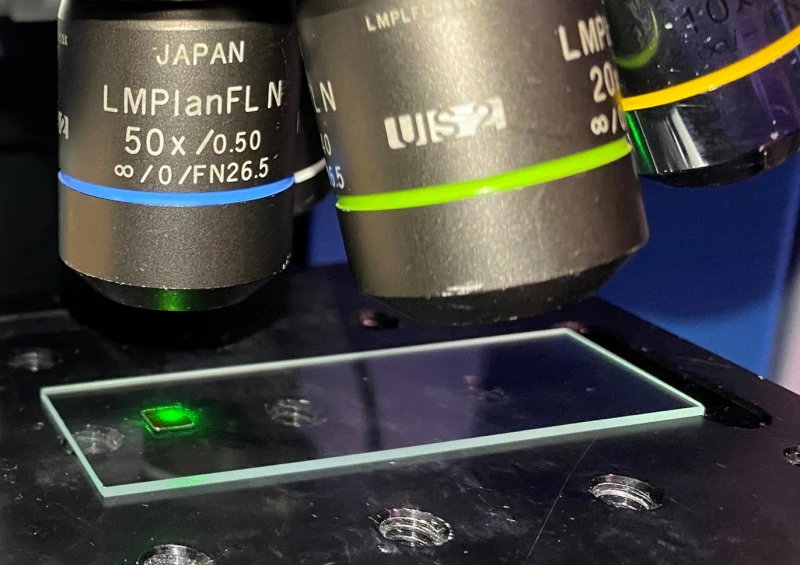
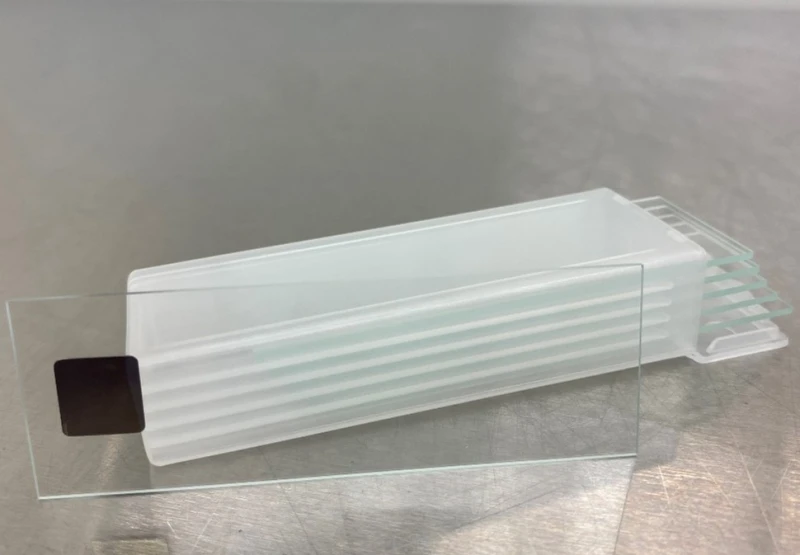
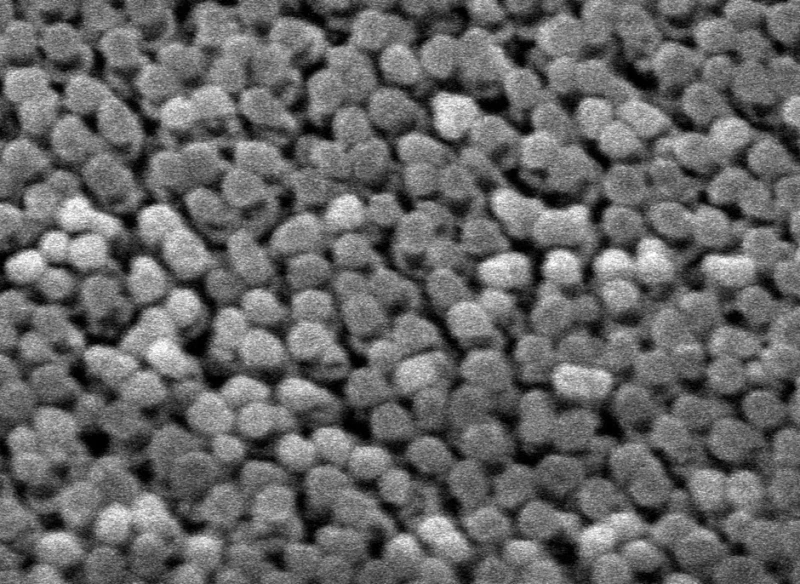
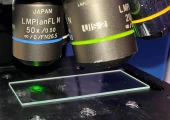
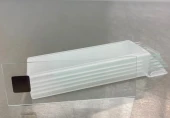
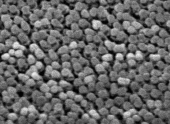
The P-AU-SRS-10M Gold Nanocaps SERS Substrate (Pack of 5) is engineered for Surface-Enhanced Raman Spectroscopy (SERS), providing ultra-sensitive molecular detection at parts-per-billion (ppb) levels. Each substrate features a precisely fabricated 10 mm x 10 mm active area composed of gold nanocaps on a flexible polymer base, affixed to a glass microscope slide for stability during measurements.
Surface-Enhanced Raman Spectroscopy (SERS) enhances Raman scattering - a rare event occurring in only about 1 in 1 million photons - by using metallic nanostructures to amplify the signal. This enhancement arises from two key mechanisms:
- Electric Field Enhancement: Localized surface plasmons generated by the gold nanocaps create a strong electric field, significantly increasing the probability of Raman scattering when molecules are within this field.
- Chemical Enhancement: Charge transfer between the metal surface and analyte molecules further enhances the Raman signal, enabling detection of ultra-low concentrations with reduced laser power compared to traditional Raman methods.
Key Benefits of Gold SERS Substrates:
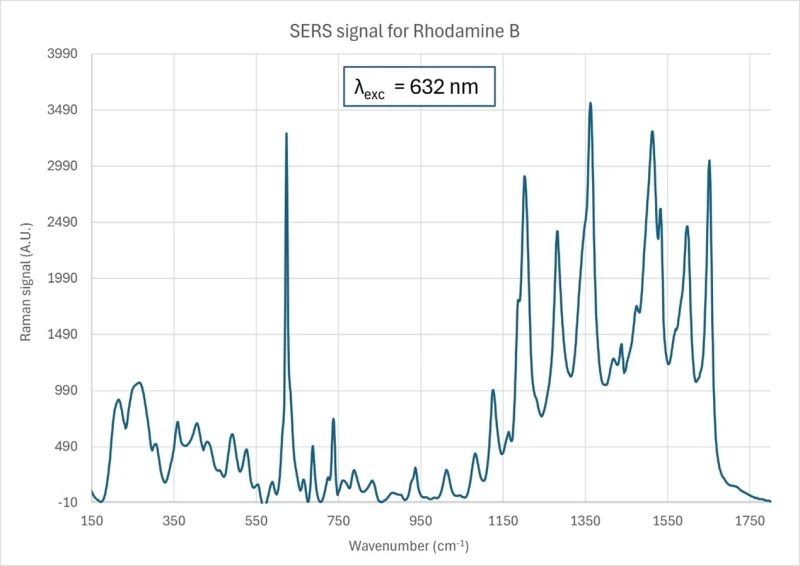
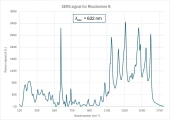
- Fluorescence Quenching: Reduces fluorescence interference even at shorter excitation wavelengths (e.g., 633 nm), enhancing signal-to-noise ratios. Raman measurements of Rhodamine B and Rhodamine 6G using these substrates exhibit minimal fluorescence.
- Broadband Excitation Range: Supports a wide wavelength range from 500 nm to 800 nm, providing flexibility for various Raman spectroscopy setups.
- Flexible Substrate Design: Fabricated on a flexible polymer and mounted on a rigid glass slide for easy handling, with options for customization on larger flexible substrates if required.
Designed for use with 532 nm, 633 nm, and 785 nm lasers, these substrates deliver high signal-to-noise ratios and minimize background interference through fluorescence quenching, ensuring clear and reliable Raman signals even at low analyte concentrations. The broadband excitation range from 500 nm to 800 nm ensures versatility across various experimental setups.
Manufactured using a patented process, these substrates provide reproducible Raman measurements with uniform signal intensity across the active surface. The robust design supports the drop deposition sampling method, making it ideal for trace-level analysis in pharmaceuticals, environmental monitoring, forensic science, and biomedical research. With a 1-year shelf life, these single-use substrates deliver consistent performance for demanding scientific applications.
Read more about SERS and the applications of SERS substrates:
Advancements in Surface-Enhanced Raman Scattering (SERS) Substrates for Molecular Detection
SERS Chemical Detection: Unlocking New Possibilities in Chemical Sensing
Pack of 5 Gold Nanocaps SERS Substrate (10 mm x 10 mm Active Area) – For Ultra-Sensitive Surface-Enhanced Raman Spectroscopy
Specifications
| Consumable Type: | SERS substrate |
|---|---|
| Active Material: | Gold Nanocaps |
| Active Area: | 10 mm x 10 mm |
| Substrate Material: | Flexible polymer adhered to a rigid glass microscope slide |
| Laser Wavelength Compatibility: | 532 nm, 633 nm, 785 nm (Broadband range: 500 nm – 800 nm) |
| Detection Sensitivity: | ppm to ppb (parts-per-million to parts-per-billion) |
| Fluorescence Quenching: | Yes – minimizes background fluorescence for clear Raman signals |
| Sampling Methods: | Drop deposition |
| Maximum Laser Power Density: | 20 W/cm² |
| Dimensions: | 75 mm x 25 mm x 1.1 mm (L x W x H) |
| Stability: | Up to 1 year from date of purchase |
| Production Method: | Patented scalable process |
| Packaging: | Pack of 5 single-use substrates |
| Manufacturer Part Number (MPN): | P-AU-SRS-10M |
| FindLight SKU: | FL-23390 |
Got questions about specs? Use the inquiry form to ask.
 Download Data Sheet

Features
- Gold Nanocaps Active Surface: 10 mm x 10 mm active area designed for enhanced Raman scattering.
- Ultra-Sensitive Detection: Enables molecular detection at ppm to ppb levels.
- Fluorescence Quenching: Reduces background fluorescence for high signal clarity, even at shorter wavelengths.
- Broadband Laser Compatibility: Supports excitation wavelengths from 500 nm to 800 nm, including 532 nm, 633 nm, and 785 nm lasers.
- Flexible Polymer Substrate: Mounted on a rigid glass slide for easy handling; customizable to larger flexible substrates if needed.
- High Stability: Maintains performance for up to 1 year from the date of purchase.
- Multiple Sampling Methods: Suitable for the drop deposition technique.
- Scalable Production: Manufactured using Nefer Ka’s patented roll-to-roll process for uniform, reproducible results.
- Single-Use Design: Ideal for precise, one-time measurements in demanding scientific applications.
Explore our 5mm SERS substrates here.
Applications
- Pharmaceutical Analysis: Detects trace-level active ingredients and contaminants for quality control.
- Chemical and Biological Threat Detection: Identifies hazardous chemicals and biological agents in real time.
- Food Safety Monitoring: Enables detection of contaminants, toxins, and adulterants in food samples.
- Environmental Analysis: Monitors pollutants and toxic substances in air, water, and soil samples.
- Forensic Science: Assists in the identification of drugs, explosives, and other forensic evidence.
- Biomedical Research: Supports early disease detection, biomarker identification, and molecular diagnostics.
- Material Science Studies: Characterizes novel materials and nanostructures through enhanced Raman analysis.
- Process Monitoring: Tracks chemical reactions and manufacturing processes in real-time settings.
Frequently Asked Questions
What is the active area of the P-AU-SRS-10M SERS substrate?
What laser wavelengths are compatible with this SERS substrate?
What is the detection sensitivity of these gold SERS substrates?
How does fluorescence quenching improve Raman measurements?
What is the substrate material and design?
What sampling methods are compatible with this SERS substrate?
What is the shelf life of these SERS substrates?
Can these substrates be customized?
What makes these gold SERS substrates unique?
Are these SERS substrates single-use?
Got more questions? Use the inquiry form to ask the supplier directly.
Similar Products
Your inquiry has been received.
Create an account by adding a password
Why create an account?
- Auto-complete inquiry forms
- View and manage all your past messages
- Save products to your favorites
- Close your account anytime — no hassle