
Description
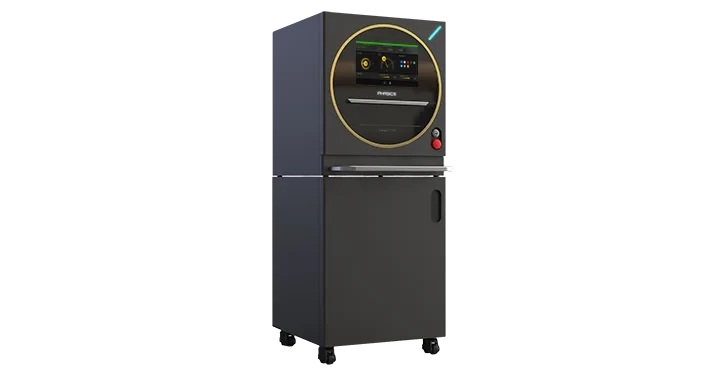
The Kaleo MTF from PHASICS is an automated optical metrology station designed for the comprehensive characterization of compact, complex imaging lenses with wide fields of view and high chief ray angles. Built for modern optical systems used in smartphones, automotive ADAS, drones, security cameras, AR/VR devices, and other high-performance imaging platforms, Kaleo MTF enables rapid evaluation of lens quality across the full field and multiple azimuths.
As lens designs continue to become smaller, faster, and more demanding, traditional lens testing methods can be limited when measuring off-axis behavior, high field angles, and high-CRA optical assemblies. Kaleo MTF addresses these challenges by combining MTF measurement and wavefront error analysis in a single automated station. It supports both on-axis and off-axis characterization, allowing users to assess real optical performance across different field positions, wavelengths, and orientations.
This automated measurement station is well suited for both production quality control and R&D optical development. In production environments, programmable measurement sequences help improve repeatability, reduce operator dependency, and increase throughput. In research and engineering laboratories, advanced acquisition and analysis tools support deeper investigation of optical aberrations, modulation transfer performance, through-focus behavior, distortion, field curvature, and other image-quality parameters.
Kaleo MTF is particularly valuable for testing lenses with large field of view requirements up to ±90° and chief ray angles up to 50°. Its multi-wavelength capability enables characterization across selected spectral bands, making it appropriate for visible and near-infrared imaging systems. This is especially important for applications where optical performance must be validated at several wavelengths, such as RGB imaging, NIR sensing, machine vision, biometric systems, and multispectral camera modules.
Unlike target-based MTF measurement approaches, Kaleo MTF provides access to a broad range of optical performance data through wavefront-based analysis. Users can evaluate parameters such as effective focal length, f-number, image height, point spread function, relative illumination, distortion, Zernike polynomial decomposition, and optical path difference. This makes it a complete lens characterization platform for correlating measured performance with optical design expectations and identifying manufacturing or assembly deviations.
The system is designed to simplify complex optical testing workflows. Users can define wavelengths, field angles, azimuths, and repetition counts, then execute automated measurements with minimal setup. Results can be reviewed by wavelength and azimuth, post-processed after acquisition, and compared with optical design data for efficient validation. This workflow helps optical engineers and production teams quickly determine whether a lens or lens assembly meets required imaging specifications.
With its combination of automation, high-CRA compatibility, multi-wavelength analysis, and full-field lens evaluation, PHASICS Kaleo MTF is a powerful solution for manufacturers and developers of advanced miniature camera optics. It provides the precision and repeatability required to characterize demanding optical assemblies used in next-generation imaging systems, from mobile devices and automotive vision modules to AR/VR optics and compact machine-vision cameras.
KALEO MTF - MTF & WFE Optical Testing Station
Specifications
| Measurement Capabilities: | Encircled Energy, Coma, Distortion, Distortion, Transmission, MTF, Chief Ray Angle, Field Curvature, Effective Focal Length, Astigmatism, Through-Focus MTF |
|---|---|
| Measurement Type: | Automated MTF & WFE measurement |
| Lens Support: | High CRA lenses |
| MTF Measurement: | On-axis and off-axis |
| OPD Measurement: | On-axis and off-axis |
| Measured Parameters: | MTF, OPD, EFL, F#, image height, CRA, field curvature, distortion, PSF, through focus MTF, Zernike polynomials, relative illumination |
| Optical Setup: | Infinite to finite configuration |
| Wavelength Range: | 405 to 940 nm |
| Number Of Wavelengths: | Up to 8 |
| Example Wavelengths: | 455 nm, 530 nm, 656 nm |
| Entrance Pupil Diameter: | Up to 8.8 mm |
| F-number: | > 1.7 |
| Focal Length Range: | 5 to 40 mm |
| Flange Focal Length: | 8 to 33 mm |
| Field Of View: | Up to ±90° |
| Chief Ray Angle: | Up to 50° |
| Optical Design Compatibility: | Zemax |
Got questions about specs? Use the inquiry form to ask.
 Download Data Sheet

Features
- Automated MTF & WFE Measurement Station: The Kaleo MTF is designed for fast, repeatable characterization of complex optical lenses, including on-axis and off-axis MTF and wavefront error measurements.
- Optimized for High CRA Lenses: Measures lenses with very high Chief Ray Angles up to 50°, making it ideal for modern compact camera modules, wide-angle optics, smartphone lenses, ADAS cameras, AR/VR optics, drone cameras, and security imaging systems.
- Wide Field-of-View Testing: Supports optical characterization across large fields of view up to ±90°, enabling complete performance mapping of wide-angle and fisheye-type lenses.
- On-Axis and Off-Axis MTF Measurement: Provides accurate Modulation Transfer Function analysis across the full lens field, helping users evaluate resolution, contrast, and image quality at multiple field positions.
- Wavefront Error and OPD Analysis: Measures WFE and Optical Path Difference on-axis and off-axis to identify aberrations and evaluate optical system quality beyond standard MTF testing.
- Multi-Wavelength Lens Characterization: Supports up to 8 wavelengths from 405 nm to 940 nm, allowing chromatic performance analysis for visible, near-infrared, and multi-spectral optical systems.
- Complete Optical Performance Metrics: Delivers comprehensive lens data including MTF, OPD, EFL, F-number, image height, CRA, field curvature, distortion, PSF, through-focus MTF, Zernike polynomials, and relative illumination.
- Automated Measurement Sequences: Enables programmable test sequences for production environments, reducing operator dependency and improving throughput, repeatability, and quality control efficiency.
- R&D and Production Ready: Suitable for both advanced laboratory characterization and high-throughput manufacturing inspection of miniature lenses, camera modules, and optical assemblies.
- Target-Free MTF Measurement: Measures MTF at any spatial frequency without requiring a physical target, simplifying setup and improving measurement flexibility for complex lens testing.
- All-Azimuth and Multi-Field Analysis: Characterizes lens performance across selected field angles and azimuths, providing a detailed understanding of asymmetries, off-axis aberrations, and field-dependent behavior.
- Fast Setup with Minimal Alignment: Designed for quick sample setup and automated operation, helping reduce measurement time and streamline optical quality assurance workflows.
- High Accuracy and Reproducibility: Provides consistent and repeatable measurements for demanding optical inspection applications where precision and traceability are critical.
- Through-Focus MTF Capability: Evaluates focus-dependent performance to help determine best focus position, depth of focus, and lens behavior across different image planes.
- Zernike Aberration Analysis: Provides Zernike polynomial decomposition for detailed analysis of optical aberrations such as astigmatism, coma, spherical aberration, defocus, and field-related errors.
- Field Curvature and Distortion Mapping: Measures geometric and focus-related lens performance over the entire field, supporting design validation and production quality monitoring.
- Relative Illumination Measurement: Evaluates light falloff across the image field, helping characterize vignetting and illumination uniformity in compact imaging lenses.
- Flexible Optical Configuration: Supports an infinite-to-finite optical setup for testing a broad range of lens designs and imaging configurations.
- Broad Lens Compatibility: Accommodates entrance pupil diameters up to 8.8 mm, focal length ranges from 5 mm to 40 mm, flange focal lengths from 8 mm to 33 mm, and lenses with F/# greater than 1.7.
- Intuitive Touch-Screen Interface: Provides easy control of acquisitions, analysis settings, measurement status, and data review through a user-friendly interface optimized for efficient operation.
- Real-Time Acquisition Monitoring: Allows users to track measurement progress and analysis status in real time for improved workflow visibility and process control.
- Advanced Data Management: Enables users to access, organize, post-process, and compare results for each wavelength, field point, and azimuth, simplifying reporting and trend anal
Applications
- High-CRA lens testing: Automated characterization of optical systems with chief ray angles up to 50°, ideal for compact camera modules and advanced imaging lenses.
- Wide field-of-view lens measurement: On-axis and off-axis MTF and wavefront error measurement for lenses with fields of view up to ±90°.
- Automotive ADAS camera validation: Optical quality control for automotive camera lenses used in driver assistance, surround-view, lane detection, object recognition, and autonomous driving systems.
- Smartphone camera module testing: Production and R&D measurement of miniature lenses, multi-camera modules, wide-angle lenses, and high-performance mobile imaging optics.
- AR/VR and mixed reality optics characterization: Testing of compact, wide-FOV lenses used in augmented reality, virtual reality, wearable displays, and immersive imaging systems.
- Drone and UAV camera lens inspection: MTF, distortion, field curvature, and relative illumination measurement for lightweight aerial imaging optics and wide-angle drone lenses.
- Security and surveillance lens testing: Optical performance verification for CCTV, machine vision, night-vision, fisheye, and wide-angle security camera lenses.
- Production quality control of optical assemblies: Fast, automated pass/fail inspection of assembled lenses using repeatable MTF, OPD, PSF, CRA, distortion, and image-height measurements.
- R&D lens development and design validation: Comprehensive comparison of measured optical performance against design expectations, including compatibility with Zemax optical design data.
- Multi-wavelength optical testing: Lens characterization across up to 8 wavelengths from 405 nm to 940 nm for visible, near-infrared, and multi-spectral imaging applications.
- Wavefront aberration analysis: Measurement of wavefront error, OPD maps, Zernike polynomials, and aberrations for detailed diagnosis of lens performance and manufacturing defects.
- Through-focus MTF measurement: Evaluation of best focus position, depth of focus, focus shift, and imaging performance over focus for precision lens alignment and validation.
- Lens assembly alignment and optimization: Identification of decentering, tilt, field curvature, astigmatism, coma, and other assembly-related issues in complex lens systems.
- Fisheye and ultra-wide-angle lens characterization: Measurement of distortion, field performance, CRA, image height, and relative illumination across the full field and multiple azimuths.
- Compact camera module qualification: Optical inspection of small-format lenses for consumer electronics, embedded vision, robotics, medical imaging, and industrial imaging devices.
- Infrared and near-infrared imaging lens testing: Characterization of lenses used with NIR illumination, biometric sensing, machine vision, surveillance, and 3D sensing systems.
- Manufacturing process monitoring: Automated repeatability studies and programmable measurement sequences for tracking lens production stability and yield.
- Incoming inspection of lenses and optical components: Verification of supplier lens quality before integration into imaging systems, camera modules, or optical assemblies.
- Metrology for high-performance imaging optics: Complete MTF, WFE, EFL, F-number, PSF, distortion, field curvature, CRA, and relative illumination analysis for demanding optical applications.
Frequently Asked Questions
What is the Phasics Kaleo MTF automated MTF and WFE measurement station used for?
Can the Kaleo MTF measure high CRA and wide field-of-view lenses?
What wavelengths are supported by the Kaleo MTF lens measurement system?
Does Kaleo MTF measure both MTF and wavefront aberrations?
Is the Kaleo MTF suitable for production environments?
Can Kaleo MTF be used for optical R&D and lens design validation?
What types of lenses and optical assemblies can be tested with the Kaleo MTF?
Got more questions? Use the inquiry form to ask the supplier directly.
Your inquiry has been received.
Create an account by adding a password
Why create an account?
- Auto-complete inquiry forms
- View and manage all your past messages
- Save products to your favorites
- Close your account anytime — no hassle