
Description
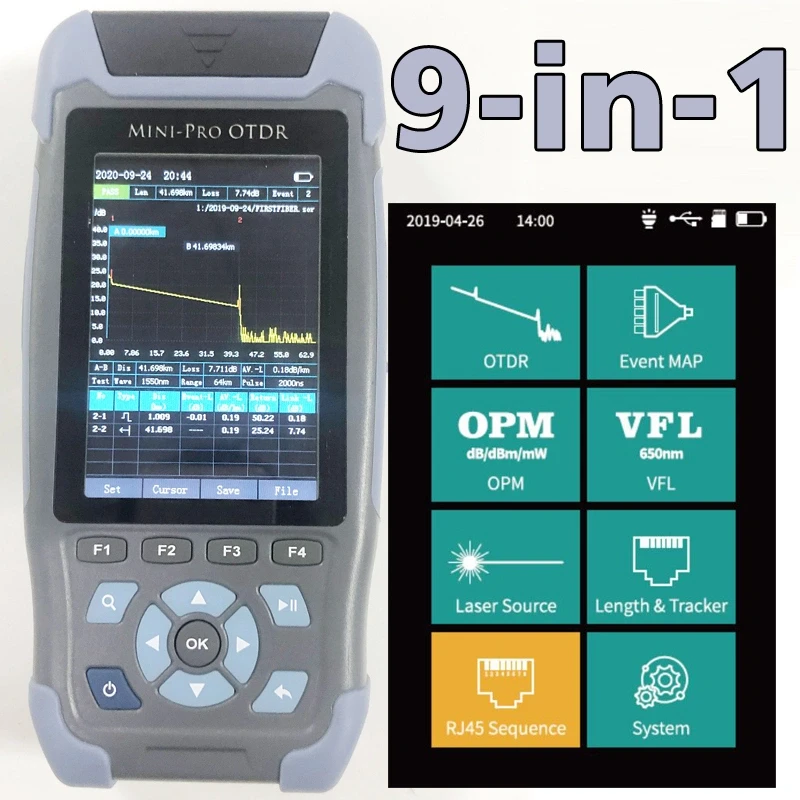
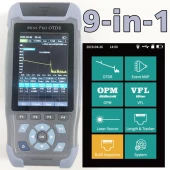
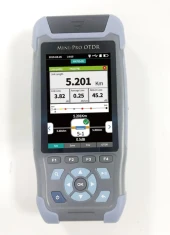
The FF-980REV Mini Pro OTDR is a compact, professional-grade optical time-domain reflectometer designed for technicians who need fast, accurate testing in the field without carrying multiple instruments. Engineered for FTTx, data center, access network, and CATV maintenance, this mini OTDR combines high precision with true portability, delivering an ultra‑short 3 m event dead zone and a broad dynamic range of 24 dB at 1310 nm and 22 dB at 1550 nm. With its integrated optical power meter, light source, visual fault locator, and RJ45 cable analysis tools, the FF-980REV provides a complete solution for both fiber optic and copper network troubleshooting in one robust handheld device.
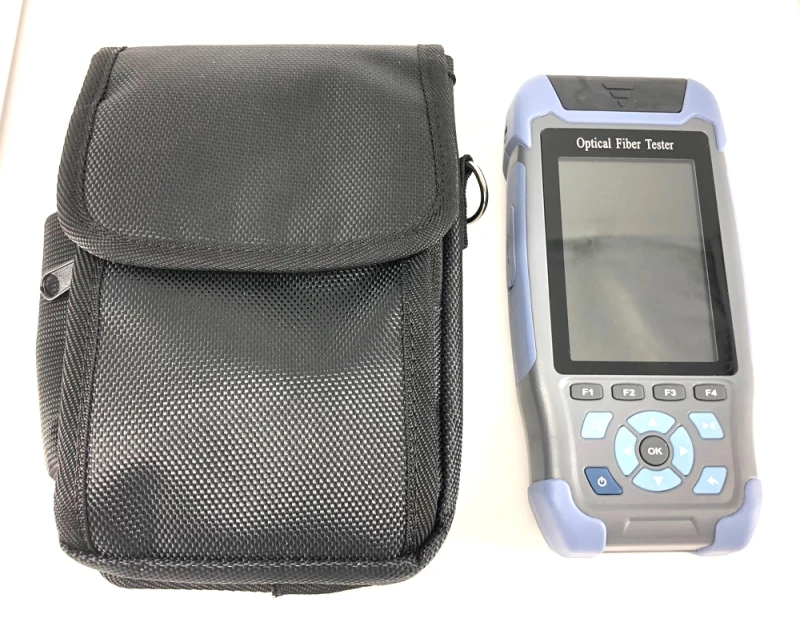
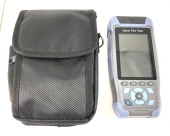
Designed from the ground up for demanding field environments, the FF-980REV offers a durable, rubberized housing for shock protection and reliable operation across a wide temperature and humidity range. Its 173 × 82 × 37 mm form factor and 350 g weight (including battery) make it easy to carry on a tool belt or in a compact case, while the 3.5‑inch color display presents crisp OTDR traces and event maps in bright outdoor light or dim equipment rooms. Whether deployed in central offices, communication rooms, high‑rise MDU installations, or outdoor cabinets, the instrument is tailored for rapid deployment and consistent performance under real-world conditions.
At the heart of the FF-980REV is a versatile OTDR module supporting 1310/1550 nm testing with multiple acquisition modes, including Auto Test, Average Test, and Real‑Time Test. This flexibility allows both novice and expert users to optimize measurements for very short drops, distribution networks, or longer access links. The device’s ultra‑short event dead zone enables clear detection of closely spaced connectors, splices, and splitters, making it especially suitable for densely patched FTTx deployments and data center environments where conventional OTDRs may miss near-end events. With linearity ≤0.2 dB/dB, high sampling resolution down to 0.05 m, and up to 128,000 sampling points, it provides the detailed trace quality expected from larger bench‑top instruments.
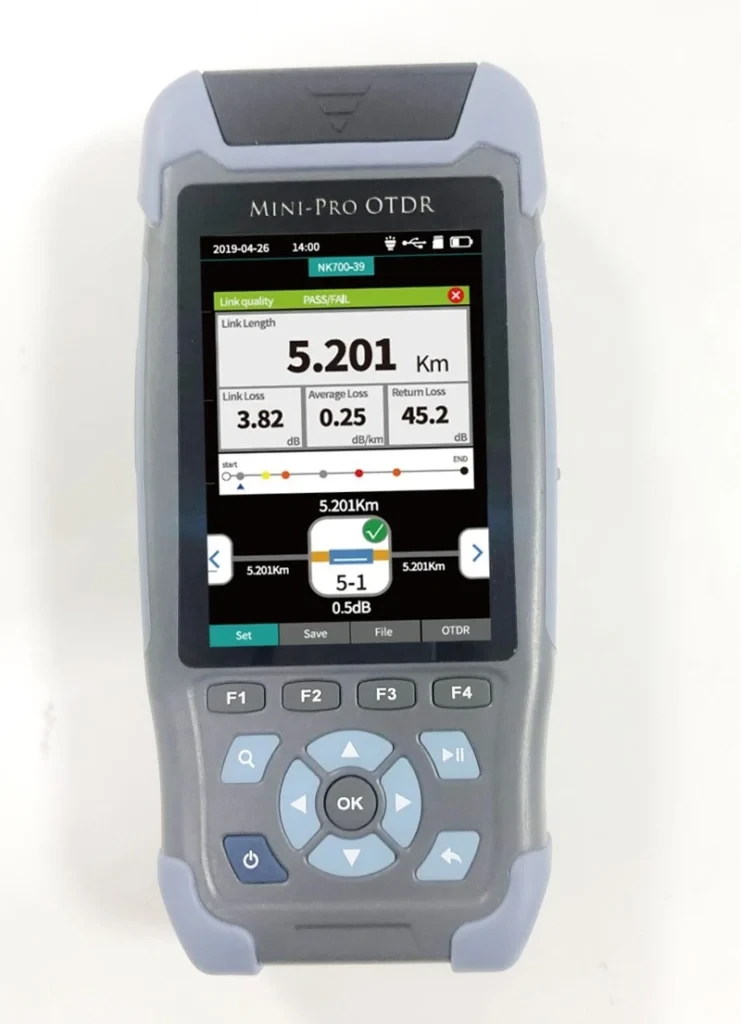
The FF-980REV is built for practical, day‑to‑day workflow efficiency. The integrated Event Map function automatically interprets OTDR traces to highlight key events such as splices, connectors, macro‑bends, and breaks, reducing analysis time and helping to avoid interpretation errors in fast-paced installation or maintenance projects. Real‑time testing mode is ideal for fiber bending detection and live adjustment, while average mode supports detailed acceptance testing and documentation. Dual cursors allow straightforward measurements of distance and loss between any two points, and curve storage is extensive with internal memory for more than 600 traces and TF card support up to tens of thousands of results for long-term project recording and reporting.
Beyond its OTDR capabilities, the FF-980REV functions as a fully equipped optical test toolkit. The integrated optical power meter supports a wide wavelength range (including 850/980/1300/1310/1490/1550/1625/1650 nm), enabling accurate verification of loss budgets and system power levels across typical telecom and data communication bands. Measurement ranges of either –70 to +10 dBm or –50 to +26 dBm (depending on configuration) support both low‑power access links and higher power backbone signals. With an uncertainty of ±5% and resolution down to 0.01 dB, the power meter is suitable for both quick verification and more rigorous acceptance testing. A stabilized light source and built‑in VFL make continuity checks, identification of fibers, and pinpointing of near-end faults straightforward, even in dense patch panel environments.
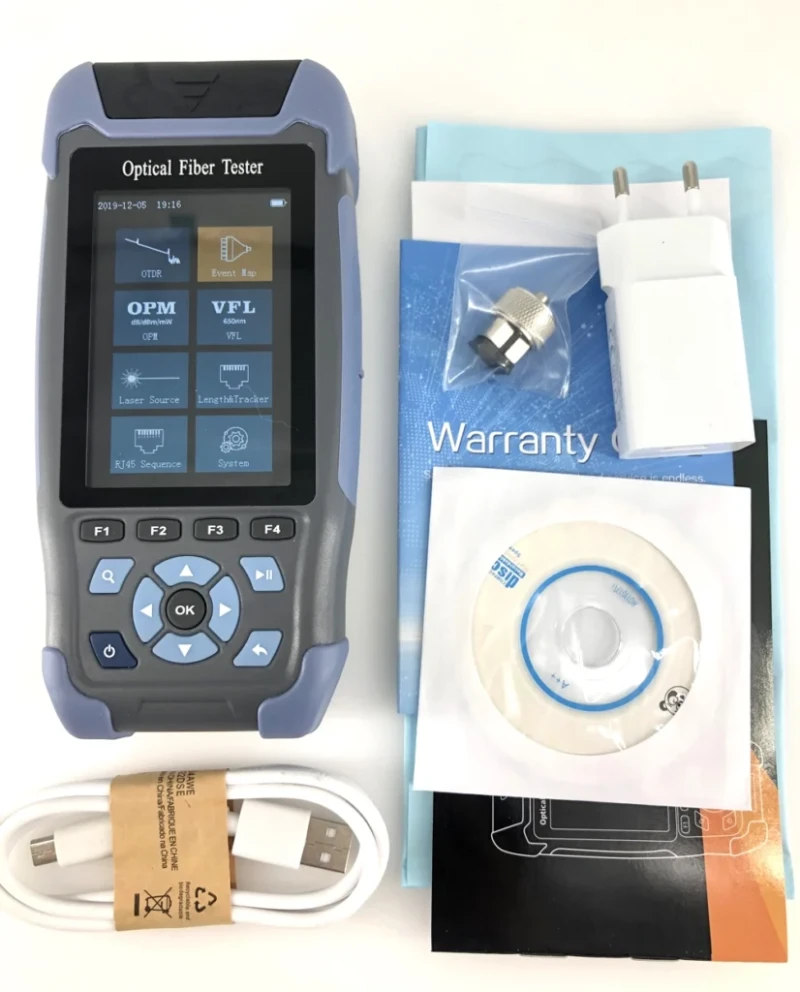
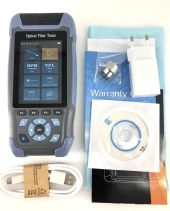
For copper infrastructure, the FF-980REV integrates a dedicated RJ45 toolkit that includes cable tracking, cable sequence identification, and length testing. The handheld main unit works in tandem with the included RJ45 remote unit to help locate, map, and measure structured cabling in office networks, residential wiring, and small data centers. This multi‑function approach is particularly beneficial for technicians who support converged networks where fiber backbones feed copper drops, as it dramatically reduces the number of separate testers required and simplifies jobsite logistics.
Practical field usability is further enhanced by an ergonomic physical layout and thoughtful auxiliary features. The instrument provides clearly labeled ports for OTDR/Light Source, Optical Power Meter, Visual Fault Locator, and RJ45, each protected by dust covers to help maintain long‑term optical cleanliness and reliability. A built‑in LED flashlight improves visibility when working inside racks, manholes, or poorly lit closets, and the rubberized exterior offers a secure grip even when wearing gloves.
FF-980REV mini pro OTDR
Specifications
| Instrument Type: | Multifunction field tester |
|---|---|
| Fiber Type: | Single-mode |
| Wavelengths: | 1310 nm, 1550 nm |
| Dynamic Range: | 24 dB |
| Event Dead Zone: | 3 m |
| Attenuation Dead Zone: | 8 m |
| Max Distance Range: | 64 km |
| Integrated Functions: | OPM, Light source, VFL, Event map, Ethernet / RJ45 tests |
| IOR Setting Range: | 1.0–2.0, step 0.0001 |
| Sampling Resolution: | Min 0.05 m, Max 8 m |
| Sampling Points: | 16,000–128,000 points |
| Linearity: | ≤0.2 dB/dB |
| Averaging Time: | User settable |
| Reflectance Accuracy: | ≤±3 dB |
| Distance Accuracy: | ±(1 m + measuring distance × 3×10^-5 + sampling resolution), excluding IOR uncertainty |
| Loss Threshold: | 0.01 dB |
| Loss Resolution: | 0.001 dB |
| Distance Resolution: | 0.01 m |
| OTDR Distance Range: | 500 m, 1 km, 2 km, 4 km, 8 km, 16 km, 32 km, 64 km |
| OTDR Trace Format: | Telcordia GR-196-CORE Issue 2 2010 |
| Live Signal Warning: | Supported |
| OTDR Cursors: | 2 cursors, distance and loss between two points |
| OPM Wavelengths: | 850/980/1300/1310/1490/1550/162/1650 nm |
| OPM Test Range: | -70 to +10 dBm or -50 to +26 dBm |
| OPM Accuracy: | ±0.35 dB ± 1 nW |
| OPM Uncertainty: | ±5% |
| OPM Modulation Detection: | CW / 270 Hz / 330 Hz / 1 kHz / 2 kHz |
| OPM Reference Function: | Supported |
| TF Card Capacity: | >230,000 curves (8G/32G/64G) |
| Size: | 173 x 82 x 37 mm |
| Weight: | 350 g (battery included) |
| Display: | 3.5 inch color screen |
| Interfaces: | USB, TF Card Port, RJ45 Port, OTDR Port, VFL Port, Power Meter Port, Charging Port |
| Power Supply Input: | 100–240 V AC, 50–60 Hz, 0.6 A |
| Power Supply Output: | 5 V DC, 2 A |
| Battery Capacity: | 4000 mAh / 3.7 V lithium battery |
| Continuous Working Time: | >12 hours |
| Standby Time: | >20 hours |
| Auto Power Off: | Never / 1 min / 5 min / 10 min / 30 min / 60 min |
| Internal Memory Capacity: | >600 curves |
| Model: | FF-980REV |
| Languages: | Chinese, English, Russian, Portuguese, Vietnamese, French, Spanish (optional) |
| Protection: | Rubber for shockproof |
| Operating Temperature: | -10℃ to +50℃ |
| Operating Humidity: | ≤95% (non-condensing) |
| Storage Temperature: | -40℃ to +70℃ |
| Storage Humidity: | ≤95% (non-condensing) |
| Operating Altitude: | 0–5000 m above sea level |
| OTDR Wavelengths: | 1310 nm / 1550 nm |
| OTDR Dynamic Range: | 24 dB @1310 nm / 22 dB @1550 nm (display range 0–40 dB) |
| OTDR Pulse Widths: | 3 ns, 5 ns, 10 ns, 20 ns, 30 ns, 50 ns, 80 ns, 160 ns, 320 ns, 500 ns, 800 ns, 1 μs, 2 μs, 5 μs, 10 μs |
Got questions about specs? Use the inquiry form to ask.
 Download Data Sheet

Features
- 9-in-1 Multifunction Fiber & Copper Tester – Combines OTDR (auto/average/real‑time), event map, optical power meter, stabilized light source, visual fault locator (VFL), RJ45 cable tracker, RJ45 cable sequence tester, RJ45 length meter, and LED flashlight in a single compact unit, reducing the need for multiple instruments in the field.
- High‑Precision Mini OTDR for FTTx, LAN & Access Networks – Dual‑wavelength 1310/1550 nm OTDR optimized for short‑haul links, PON/FTTx, data centers, and campus networks, enabling technicians to quickly locate fiber breaks, splices, bends, and connectors with carrier‑grade accuracy.
- Ultra‑Short Event Dead Zone (~3 m) for Dense Patch Panels – Short event and attenuation dead zones make it ideal for detecting closely spaced events in data centers, FTTH distribution frames, and high‑density ODFs, where conventional OTDRs often miss near‑end or back‑to‑back connectors.
- Robust Dynamic Range (24/22 dB) for Versatile Link Testing – 24 dB at 1310 nm and 22 dB at 1550 nm (0–40 dB display range) provide enough margin for typical FTTx, access, and enterprise links, enabling clear trace capture and reliable event detection on both short and medium‑distance fibers.
- Flexible Pulse Widths & Distance Ranges – Wide pulse selection from 3 ns to 10 μs and distance ranges from 500 m to 64 km let you fine‑tune tests for either high‑resolution short links or longer access routes, minimizing dead zones while preserving dynamic range.
- High‑Resolution Traces with Up to 128,000 Sampling Points – Adjustable sampling resolution (0.05–8 m) and up to 128k points provide detailed OTDR traces, improving event location accuracy and enabling precise documentation for certification and troubleshooting.
- Accurate Distance & Loss Measurements – Linearity ≤0.2 dB/dB, loss resolution of 0.001 dB, distance resolution of 0.01 m, and distance accuracy of ±(1 m + distance×3×10⁻⁵ + sampling resolution) allow pinpoint fault location and precise splice/connector loss analysis.
- Live Fiber Detection & Safety Warning – Live signal warning protects both the instrument and the network by alerting the user when testing a fiber carrying active traffic or light, a feature often found in higher‑end OTDRs.
- Intuitive Event Map & Dual Cursor Analysis – Auto‑generated event maps and dual‑cursor measurement simplify complex OTDR traces, enabling quick interpretation of events, distances between points, and cumulative losses even for less‑experienced technicians.
- Telcordia‑Compliant Trace Format for Easy Reporting – Saves OTDR traces in Telcordia GR‑196‑CORE Issue 2 (2010) format, ensuring compatibility with industry‑standard analysis and reporting tools used by operators and contractors worldwide.
- Integrated Optical Power Meter (OPM) for Loss Testing – Wide wavelength coverage (850/980/1300/1310/1490/1550/1620/1650 nm) and large measurement range (‑70 to +10 dBm or ‑50 to +26 dBm depending on model) allow accurate link loss verification for multimode and single‑mode systems.
- High OPM Accuracy & Multiple Modulation Detection – Power meter accuracy of ±0.35 dB ±1 nW, uncertainty ≤5%, and support for CW, 270 Hz, 330 Hz, 1 kHz, and 2 kHz modulation make it suitable for identifying tone sources and verifying signal levels to industry standards.
- Built‑In Stable Light Source for Insertion‑Loss Testing – Integrated optical light source pairs with the OPM (local or remote) for performing bi‑directional and end‑to‑end insertion‑loss tests without the need for a separate external source.
- Visual Fault Locator (VFL) for Quick Fiber Continuity Checks – Dedicated VFL port outputs a visible red laser for rapid identification of macrobends, breaks, and mis‑patches in patch cords and short links, ideal for on‑the‑spot verification during installation.
- RJ45 Cable Tracking & Identification – Built‑in RJ45 tracker and included remote unit allow technicians to trace active or inactive copper network cables in patch panels, walls, and conduits without guesswork, speeding up port identification.
- RJ45 Sequence & Length Testing for Copper Networks – Detects wire‑map issues such as opens, shorts, crossovers, and split pairs, and measures cable length, supporting basic qualification of Ethernet cabling during installation or troubleshooting.
- Compact, Lightweight & Field‑Ready Design – At only 173 × 82 × 37 mm and ~350 g (including battery), the FF‑980REV fits easily in one hand or a small tool bag, making it well‑suited for tower climbs, ladders, cramped racks, and mobile technicians.
Applications
Applications of the FF-980REV Mini Pro OTDR 1. FTTH, FTTB, and FTTP Deployment and Maintenance
- End-to-end testing of Fiber-to-the-Home (FTTH) access networks from OLT to ONU/ONT.
- Verification and troubleshooting in Fiber-to-the-Building (FTTB) and Fiber-to-the-Premises (FTTP) architectures.
- Characterization of PON links with splitters using the ultra-short event dead zone for precise detection of closely spaced events.
- Commissioning new drops, identifying high-loss connections, bends, and breaks in last‑mile access fiber.
2. CATV, ISP, and Telecom Backbone Networks
- Installation and maintenance of long-haul and metro fiber backbones for carriers and ISPs.
- Verification of optical loss budgets at 1310/1550 nm for CATV and telecom transmission links.
- Locating fiber faults and reflections in point-to-point and PON infrastructure.
- Routine OTDR testing on feeder, distribution, and core networks in central offices and POP sites.
3. Data Center and Enterprise Structured Cabling
- Characterization and certification of intra‑data‑center fiber links between switches, servers, and storage.
- Testing of OMx/OSx structured cabling in enterprise campuses and office buildings.
- Using the ultra-short event dead zone to resolve closely spaced connectors, patch panels, and cross‑connects.
- Documentation of fiber infrastructure with stored OTDR traces for SLA and capacity planning.
4. 4G/5G Mobile Fronthaul, Midhaul, and Backhaul
- Fiber link qualification for 5G fronthaul between BBUs and RRUs in C‑RAN architectures.
- Verification of midhaul and backhaul optical routes from cell sites to aggregation points.
- Real‑time detection of fiber degradation impacting low-latency mobile transport networks.
5. Industrial, Energy, and Transportation Fiber Networks
- Commissioning and maintenance of utility and smart‑grid fiber (substation interconnects, SCADA links).
- Testing of fiber routes along railways, highways, and pipelines for signaling and monitoring.
- Verification of industrial plant fiber rings and point‑to-point links in harsh environments.
- Use in oil & gas, mining, and manufacturing facilities thanks to wide operating temperature and rugged design.
6. Field Installation, Commissioning, and Acceptance Testing
- On‑site acceptance tests for new fiber installations by contractors and system integrators.
- Validation of third‑party installations against Telcordia GR‑196 trace formats and customer specifications.
- Creation of baseline reference traces for future troubleshooting and network comparison.
- Generation of test reports using internal memory and TF card storage for large‑scale projects.
7. Routine Maintenance and Fault Localization
- Periodic preventive maintenance of existing fiber networks using automatic OTDR test modes.
- Rapid fault localization of breaks, severe bends, high-reflection connectors, and macrobends.
- Use of Visual Fault Locator (VFL) to quickly identify near-end breaks, polarity errors, and bad splices.
- Use of Optical Power Meter (OPM) to verify live link power levels and transceiver output.
8. Multi-Service Test Tool for Field Technicians
- All‑in‑one handheld tool combining OTDR, OPM, light source, VFL, and RJ45 cable tester for mixed fiber/copper sites.
- Ideal for field service teams working on converged networks (fiber backbones and Ethernet distribution).
- One-instrument solution for installers to test both optical links and LAN cables during turn‑up.
9. LAN, Ethernet, and RJ45 Copper Cable Testing
- Verification of RJ45 cable sequence (wire map) for Cat5e/Cat6/Cat6A structured cabling.
- Measurement of RJ45 cable length and identification of open, short, and crossed pairs.
- RJ45 cable tracking for locating specific cable runs in patch panels, racks, and wall outlets.
- Useful for office, campus, and industrial Ethernet installation and maintenance
Frequently Asked Questions
What is the FF-980REV Mini Pro OTDR and what applications is it best suited for?
What are the key OTDR specifications of the FF-980REV Mini Pro and how do they compare to similar handheld OTDRs?
How long can the FF-980REV operate on battery and what are its power and charging features?
What built‑in test functions does the FF-980REV provide besides OTDR testing?
How much data can the FF-980REV store and in what formats can OTDR traces be exported?
Is the FF-980REV Mini Pro OTDR rugged enough for field use and what are its environmental ratings?
What accessories and interfaces are included with the FF-980REV, and is it easy to integrate into existing test workflows?
Got more questions? Use the inquiry form to ask the supplier directly.
Your inquiry has been received.
Create an account by adding a password
Why create an account?
- Auto-complete inquiry forms
- View and manage all your past messages
- Save products to your favorites
- Close your account anytime — no hassle