
Description
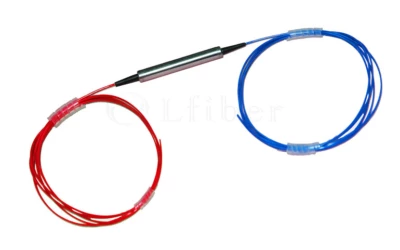
The In-line Linear Polarizer (High Extinction Ratio) from Lfiber is a precision fiber‑optic component designed to provide stable, well‑defined linear polarization for demanding photonic systems. Engineered for low insertion loss and ultra‑high extinction ratio, this device is ideal for applications where polarization purity, signal integrity, and long‑term reliability are critical. Comparable to advanced in‑fiber polarizers used in research laboratories and high‑end industrial systems worldwide, it offers excellent performance across a wide spectral range from the visible to the near‑infrared.
Covering popular telecom and specialty wavelengths including 460 nm, 630 nm, 780 nm, 850 nm, 980 nm, 1064 nm, 1310 nm, 1550 nm, and 2000 nm, this in‑line polarizer is available with both polarization‑maintaining (PM) and single‑mode (SM) fiber types. Supported fibers include PM1550, PM1310, PM980, HI1060, PM850, HI780, PM780, PM630, 630‑HP, PM460, 460‑HP, and standard SMF‑28e. This broad compatibility allows seamless integration into existing fiber networks and experimental setups, enabling precise control of polarization states in a wide variety of optical architectures.
The device is optimized for low insertion loss at room temperature, typically in the range of 0.5 to 1.8 dB depending on wavelength, while maintaining a minimum extinction ratio up to 40 dB for select configurations. Such high extinction ratios are comparable to or better than many standard in‑fiber polarizers found in fiber sensing, coherent communication, and test equipment, ensuring efficient suppression of the unwanted polarization component. This performance is particularly valuable in polarization‑sensitive systems such as interferometers, fiber gyroscopes, and coherent detection schemes, where residual orthogonal polarization can degrade accuracy and stability.
With a return loss of ≥50 dB, the polarizer minimizes back reflections that can destabilize laser sources or introduce noise into high‑precision measurements. Multiple power‑handling options up to 5 W (CW) make it suitable for both low‑power metrology and higher‑power fiber‑based laser systems. The robust design and manufacturing process ensure high reliability and stability over time, even under continuous operation. The specified operating temperature range from 0 to +70 °C and storage range from −40 to +85 °C further support usage in both laboratory and field environments, including industrial and telecom infrastructures where thermal variations are common.
Mechanically, the In-line Linear Polarizer is packaged in a compact cylindrical housing with a typical size of Φ5.5 × 35 mm. This small footprint simplifies installation into tightly packed optical assemblies, rack‑mounted instruments, and compact sensor heads. A variety of fiber jackets and lengths are available, including 250 μm bare fiber, 900 μm loose tube, and standard connectorized patch‑cord configurations. Users can select from common connector types such as FC/UPC, FC/APC, SC/UPC, SC/APC, LC/UPC, LC/APC, or opt for non‑connectorized pigtails for fusion splicing directly into their systems.
The default configuration aligns the transmitted linear polarization along the slow axis of the polarization‑maintaining fiber, which is consistent with typical PM fiber handling conventions and helps simplify system design and alignment. For systems that require different polarization states, customized versions are available, including configurations with PM fiber on the input, non‑PM on the output, and vice versa. Lfiber can also provide specially tailored extinction ratios, fiber types, fiber lengths, and connector options to match specific experimental or production requirements.
This in‑line polarizer is particularly well suited for fiber‑optic instruments, electro‑optic modulators, fiber gyroscopes, and other advanced polarization‑sensitive applications. In fiber optical instruments and test setups, it serves as a stable polarization reference or as a key element for polarization control chains. In electro‑optic modulation systems, it ensures that the input light has a clean polarization state, improving modulation efficiency and reducing residual amplitude modulation. In fiber gyroscopes and other interferometric sensors, it enhances measurement accuracy by preserving a well‑defined polarization state along the sensing coil and associated optics.
Compared with many standard in‑fiber polarizers on the market, this High Extinction Ratio series stands out with its combination of low insertion loss, wide wavelength coverage, high extinction ratios up to 40 dB, and flexible power handling. These characteristics make it a strong choice for designers and engineers seeking a robust, production‑ready solution for precision polarization control.
In Line Fiber Optic Linear Polarizer High Extinction Ratio PM SMF
Specifications
| Center Wavelength: | 460 nm |
|---|---|
| Operating Wavelength Range: | 440 – 2030 nm |
| Typical Insertion Loss: | 0.3 dB |
| Min Return Loss: | 50 dB |
| Typical Extinction Ratio: | 20 dB |
| Max Optical Power (CW): | 300 mW |
| Product: | In-line Linear Polarizer (High Extinction Ratio) |
| Center Wavelength Options: | 2000, 1550, 1310, 1064, 980, 850, 780, 630, 460 nm |
| Operating Wavelength Range (2000 Nm): | ±30 nm |
| Operating Wavelength Range (1550, 1310 Nm): | ±50 nm |
| Operating Wavelength Range (1064 Nm): | ±30 nm |
| Operating Wavelength Range (980, 850, 780, 630, 460 Nm): | ±20 nm |
| Insertion Loss @ 23°C (2000 Nm): | ≤1.0 dB |
| Insertion Loss @ 23°C (1550, 1310 Nm): | ≤0.5 dB |
| Insertion Loss @ 23°C (1064 Nm): | ≤0.6 dB |
| Insertion Loss @ 23°C (980 Nm): | ≤0.8 dB |
| Insertion Loss @ 23°C (850 Nm): | ≤1.0 dB |
| Insertion Loss @ 23°C (780 Nm): | ≤1.0 dB |
| Insertion Loss @ 23°C (630 Nm): | ≤1.3 dB |
| Insertion Loss @ 23°C (460 Nm): | ≤1.8 dB |
| Min. Extinction Ratio @ 23°C (2000 Nm): | 20, 24, 28, 32, 35, 40 dB |
| Min. Extinction Ratio @ 23°C (1550, 1310, 1064, 980, 850, 780, 630, 460 Nm): | 20, 24, 28, 32 dB |
| Input & Output Fiber Type (1550 Nm): | PM1550 or SMF-28e |
| Input & Output Fiber Type (1310 Nm): | PM1310 or SMF-28e |
| Input & Output Fiber Type (1064 Nm): | PM980 or HI1060 |
| Input & Output Fiber Type (980 Nm): | PM980 or HI1060 |
| Input & Output Fiber Type (850 Nm): | PM850 or HI780 |
| Input & Output Fiber Type (780 Nm): | PM780 or HI780 |
| Input & Output Fiber Type (630 Nm): | PM630 or 630-HP |
| Input & Output Fiber Type (460 Nm): | PM460 or 460-HP |
| Return Loss: | ≥50 dB |
| Power Handling: | 0.3, 1, 2, 3, 5 W |
| Operating Temperature: | 0 to +70 °C |
| Storage Temperature: | -40 to +85 °C |
| Package Dimensions: | Φ5.5 × L35 mm |
| Connector Impact On IL: | Insertion Loss +0.3 dB with connector |
| Connector Impact On RL: | Return Loss −5.0 dB with connector |
| Connector Impact On ER: | Extinction Ratio −2.0 dB with connector |
| Standard Polarization Alignment: | Output linear polarization aligned along slow axis of PM fiber |
| Available Fiber Jacket: | Φ250 μm bare fiber, Φ900 μm loose tube |
| Standard Fiber Length Options: | 0.5 m, 0.8 m, 1.0 m, 1.5 m, 2.0 m |
| Connector Options: | None, FC/UPC, FC/APC, SC/UPC, SC/APC, LC/UPC, LC/APC, Others |
Got questions about specs? Use the inquiry form to ask.
 Download Data Sheet

Features
- Ultra‑High Extinction Ratio (ER) – Delivers extinction ratios up to 40 dB and above (depending on wavelength option), ensuring superior polarization purity for demanding interferometric and sensing applications.
- Low Insertion Loss – Typical insertion loss as low as ≤0.5 dB (at 1310/1550 nm) and ≤0.6–1.8 dB across other wavelengths, minimizing signal attenuation and maximizing optical system performance.
- Wide Wavelength Coverage – Available center wavelengths from 460 nm to 2000 nm (460, 630, 780, 850, 980, 1064, 1310, 1550, 2000 nm) with defined operating ranges (±20–50 nm), suitable for both telecom bands and specialty wavelengths.
- Multiple Fiber Types Supported – Compatible with a broad range of SM and PM fibers, including PM1550, SMF‑28e, PM1310, PM980, HI1060, PM850, HI780, PM780, PM630, 630‑HP, PM460, 460‑HP, enabling easy integration into existing fiber networks.
- High Return Loss – Return loss of ≥50 dB reduces back‑reflections and enhances system stability in sensitive optical setups.
- Robust Power Handling – Supports optical power levels of 0.3, 1, 2, 3, and 5 W (configuration‑dependent), making it suitable for both low‑power metrology and higher‑power laser systems.
- Compact In‑Line Package – Slim cylindrical housing with Φ5.5 mm × L35 mm dimensions saves space and simplifies integration into fiber‑based modules and instruments.
- Polarization Alignment on PM Fibers – By default, output linear polarization is aligned to the slow axis of the PM fiber, simplifying alignment in polarization‑sensitive systems such as interferometers and gyroscopes.
- Connector and Pigtail Options – Offered with bare fiber or jacketed pigtails (e.g., φ250 µm bare fiber, φ900 µm loose tube) and a full range of connector options: FC/UPC, FC/APC, SC/UPC, SC/APC, LC/UPC, LC/APC, and others for plug‑and‑play deployment.
- Customizable Performance – ER level, wavelength, fiber type (PM vs. non‑PM for input/output), jacket type, pigtail length, and connector configuration are all customizable to meet specific application requirements.
- Stable Operation Across Temperature – Designed for an operating temperature range of 0 to +70 °C and storage from –40 to +85 °C, ensuring long‑term reliability in laboratory and field environments.
- High Reliability and Environmental Robustness – Engineered for long‑term stability with low polarization drift, suitable for continuous operation in fiber gyroscopes, sensing systems, and communication links.
- Ideal for Polarization‑Sensitive Applications – Optimized for use in fiber optical instruments, electro‑optic modulators, fiber gyroscopes, interferometric sensors, and other polarization‑critical setups.
- Optional Circular Polarizer Version – Custom configurations available as circular polarizers, providing circularly polarized transmitted light on request.
- Connectorized Versions Available – Optionally supplied with connectors; note that connectorized units typically exhibit +0.3 dB higher insertion loss, –5 dB lower return loss, and –2 dB lower ER, which can be considered during system design.
- Flexible Integration for Single‑ or Dual‑PM Configurations – Can be configured with PM on both ports, PM on input only, PM on output only, or non‑PM on both ports, allowing precise matching to different system architectures.
Applications
- Polarization Control in Fiber Optic Test & Measurement – Ideal for laboratory and production test setups requiring precise linear polarization, such as characterizing polarization-sensitive fiber components, validating system PDL/PMD, and stabilizing polarization in measurement benches.
- Integration in Fiber Optic Instrumentation – Used inside optical spectrum analyzers, tunable laser setups, optical power meters, and polarization analyzers to define and maintain a stable polarization state over a wide wavelength range.
- Electro‑Optic Modulator (EOM) Optimization – Ensures linearly polarized light aligned to the modulator axis in LiNbO3 and other electro‑optic modulators, improving modulation depth, extinction ratio, and system linearity in high‑speed communication links and research systems.
- Fiber Laser Cavity Polarization Management – Controls polarization in fiber laser resonators and amplifiers, improving output stability, suppressing unwanted modes, and enabling linearly polarized laser output for industrial, medical, and scientific applications.
- Polarization‑Maintaining (PM) Fiber Systems – Aligns and preserves a defined polarization along the slow axis of PM fibers, enabling high‑performance PM networks, interferometers, and coherent detection systems.
- Fiber Optic Gyroscopes (FOG) – Provides high extinction ratio polarization filtering in interferometric fiber gyroscopes, increasing bias stability, reducing drift, and improving rotation sensing accuracy in navigation and inertial measurement systems.
- Interferometric and Coherent Sensing – Enhances fringe visibility and measurement precision in Mach‑Zehnder, Michelson, Sagnac, and Fabry‑Perot interferometers used in metrology, vibration sensing, and coherent optical ranging.
- Polarization‑Sensitive Optical Coherence Tomography (PS‑OCT) – Provides stable linear polarization for OCT and PS‑OCT systems at 780 nm, 850 nm, 980 nm, 1064 nm, 1310 nm, and 1550 nm, improving contrast, tissue birefringence measurements, and imaging depth.
- Quantum Optics and Quantum Communication – Conditions and filters polarization states in fiber‑based quantum key distribution (QKD), entangled photon experiments, and quantum interferometry, where high extinction ratio and low insertion loss are critical.
- Optical Communication Systems and Coherent Receivers – Used in coherent detection front‑ends, polarization‑division multiplexing (PDM) systems, and polarization‑discriminating receivers to increase signal fidelity and reduce crosstalk between polarization channels.
- Polarization‑Sensitive Detectors and Sensors – Ensures that photodiodes, avalanche photodiodes (APDs), and other detectors receive a single well‑defined polarization, improving accuracy in polarization‑dependent responsivity measurements and fiber sensor readout.
- Raman, Brillouin, and Nonlinear Fiber Optics – Controls and stabilizes polarization in stimulated Raman scattering, Brillouin scattering, four‑wave mixing, and supercontinuum generation experiments, allowing reproducible nonlinear interaction conditions.
- Fiber‑Coupled Spectroscopy and Ellipsometry – Provides linear polarization for fiber‑coupled absorption, reflection, and scattering spectroscopy, as well as ellipsometric or polarization‑resolved measurements in materials research and surface analysis.
- Polarization Cleaning in Fiber Networks – Removes unwanted polarization components after polarization controllers or in complex fiber paths, “cleaning” the polarization state before sensitive components such as isolators, circulators, and modulators.
- Biomedical and Endoscopic Imaging – Delivers linearly polarized light through fiber probes for polarization‑sensitive imaging and diagnostics (e.g., differentiating tissue structures via birefringence), where compact in‑line components are required.
- Precision Fiber Sensor Systems – Improves stability in interferometric fiber sensors for strain, temperature, pressure, and acoustic sensing by fixing the polarization state, which reduces signal fading and measurement uncertainty.
- High‑Power Fiber Delivery with Polarization Control – At supported power levels, transmits and filters polarized light in industrial machining, micromachining, and materials processing setups that require a defined linear polarization at the workpiece.
Frequently Asked Questions
What is an in-line linear polarizer and how is Lfiber’s high extinction ratio version used in fiber optic systems?
What wavelengths and fiber types are available for the Lfiber in-line linear polarizer?
What extinction ratio and insertion loss can I expect from this high extinction ratio in-line polarizer?
How much optical power can the Lfiber in-line linear polarizer handle and what is its return loss?
What are the mechanical dimensions, fiber jackets, and connector options for this in-line linear polarizer?
How is the polarization axis aligned in the Lfiber in-line polarizer and can I get circular polarization?
What environmental conditions can the in-line linear polarizer operate in, and can it be customized for my application?
Got more questions? Use the inquiry form to ask the supplier directly.
Similar Products
Your inquiry has been received.
Create an account by adding a password
Why create an account?
- Auto-complete inquiry forms
- View and manage all your past messages
- Save products to your favorites
- Close your account anytime — no hassle