


Description
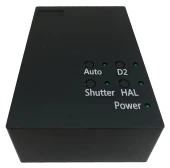
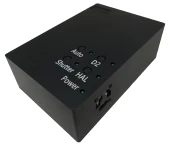
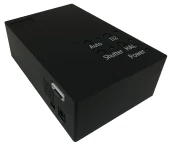
The Evolve Sensing Light Source Series is engineered to deliver highly stable, wideband optical output for demanding UV, visible, and near-infrared measurements. Covering a broad spectral range from 185 nm up to 2500 nm (model dependent), these sources are ideal for precision transmittance and absorbance measurements, as well as a wide variety of spectroscopic techniques. By combining balance, halogen, deuterium-halogen, deuterium, and wideband architectures in a single family, the series provides optimal illumination solutions across laboratory, industrial, and quality control environments.
Each model in the Light Source Series is designed to offer excellent long-term stability and low drift, meeting the requirements of high-accuracy optical measurements. With stability as low as 0.15% on select models and carefully controlled warm-up profiles, users can achieve consistent, repeatable results over extended periods of operation. Lamp lifetimes up to 30,000 hours (model dependent) reduce maintenance and total cost of ownership, supporting continuous use in production lines, R&D labs, and automated test systems. This balance of performance and durability makes the series competitive with leading UV–Vis–NIR light sources commonly used in spectroscopy, materials analysis, and process monitoring.
The LS-BA balanced model is intended for applications that demand broad spectral coverage and stable output across the visible and near-infrared regions, making it well suited for general-purpose transmittance and absorbance measurements. The LS-HA halogen source delivers a smooth, continuous spectrum into the NIR region, ideal for reflectance and color measurements, optical component characterization, and general spectroscopy where high-intensity visible and NIR illumination is critical. For users needing seamless coverage from deep UV to NIR in a single platform, the LS-DH-4 deuterium-halogen configuration combines a deuterium lamp for 185–400 nm with a halogen lamp for 400–2500 nm, offering a wide dynamic range and excellent baseline performance across the full UV–Vis–NIR span.
When UV performance is the highest priority, the LS-D2 deuterium light source focuses on the 185–400 nm range, supplying intense, stable UV illumination for applications such as chemical absorbance measurements, photolithography characterization, photodegradation studies, and environmental analysis. For visible-centric and high-reliability use cases, the LS-WB wideband model is optimized for the 400–1000 nm region, with an exceptionally long lamp life of up to 30,000 hours. This makes LS-WB an excellent choice for high-throughput quality control, inline inspection, and OEM integration, where long maintenance intervals and robust, consistent light output are essential.
Beyond their optical characteristics, the Evolve Sensing Light Source Series is designed to integrate smoothly into modern measurement and automation environments. Select models offer manual front-panel controls for straightforward, stand-alone operation, while others include potentiometer control for fine intensity adjustment. Many units feature compatibility with SpectraSmart software and SDKs, enabling users to turn sources on and off, adjust parameters, and monitor system status directly from a PC or custom software environment. GPIO and PWM control options on certain models further simplify integration with spectrometers, motion stages, embedded controllers, and PLC-based test stands, aligning the series with the capabilities of advanced light sources used across scientific and industrial markets.
The overall system design emphasizes low-noise, repeatable performance to support both routine and advanced optical measurements. Careful thermal management and electronic regulation minimize drift over time, reflected in drift levels as low as <0.25% per hour on specific configurations. This makes the Light Source Series well suited for long measurement campaigns, multi-shift production testing, and continuous monitoring applications where stability is just as important as spectral coverage. Researchers and engineers can rely on these sources not only for high-quality spectroscopic data, but also for robust operation in real-world conditions.
Typical uses for the Evolve Sensing Light Source Series include UV–Vis–NIR spectroscopy, transmission and absorption studies of liquids and solids, optical filter and coating characterization, color and radiometric testing, and materials and chemical analysis. The combination of multiple spectral ranges, source types, and control options in a single product family allows users to select precisely the model that matches their wavelength requirements, stability targets, and integration preferences. Whether deployed in a research laboratory, integrated into a production-line&
Evolve Sensing Stable Wideband UV Visible NIR Spectroscopy Light Source Series
Specifications
| Type Of Lamp: | Tungsten Halogen Lamp |
|---|---|
| Spectral Output Range: | 185 - 1100 nm |
| Spectral Coverage: | 185–2500 nm (model dependent) |
| Light Source Types: | Balance, Halogen, Deuterium-Halogen, Deuterium, Wideband |
| Stability: | As low as 0.15% (model dependent) |
| Lamp Life: | Up to 30,000 hours (model dependent) |
| Control Options: | Manual and/or software control (model dependent) |
| External Control: | GPIO with SpectraSmart / SDK support (select models) |
| LS-BA Light Source Type: | Balance |
| LS-BA Wavelength Range: | 350–2500 nm |
| LS-BA Lamp Life: | 10,000 hr |
| LS-BA Control: | Potentiometer; SpectraSmart / SDK on/off |
| LS-BA AC Input: | 100–240 VAC |
| LS-HA Light Source Type: | Halogen |
| LS-HA Stability: | 0.5% |
| LS-HA Drift: | <0.3%/hour |
| LS-HA Lamp Life: | 10,000 hr |
| LS-HA Warm-Up: | 0.5 hr |
| LS-DH-4 Light Source Type: | Deuterium-Halogen |
| LS-DH-4 Wavelength Range (D2): | 185–400 nm |
| LS-DH-4 Wavelength Range (HAL): | 400–2500 nm |
| LS-DH-4 Stability: | 0.15% |
| LS-DH-4 Drift: | <0.25%/hour |
| LS-DH-4 Lamp Life (D2): | >1,000 hr |
| LS-DH-4 Lamp Life (HAL): | >2,000 hr |
| LS-DH-4 Control: | Manual / SpectraSmart / SDK / GPIO |
| LS-DH-4 AC Input: | 100–240 VAC |
| LS-D2 Light Source Type: | Deuterium |
| LS-D2 Wavelength Range: | 185–400 nm |
| LS-D2 Drift: | <±0.25% |
| LS-D2 Lamp Life: | 1,500 hr @ 230 nm |
| LS-D2 Warm-Up: | 30 sec |
| LS-D2 Control: | Manual / GPIO / SpectraSmart / SDK; PWM |
| LS-WB Light Source Type: | Wideband |
| LS-WB Wavelength Range: | 400–1000 nm |
| LS-WB Lamp Life: | 30,000 hr |
| LS-WB Warm-Up: | 15 min |
Got questions about specs? Use the inquiry form to ask.
 Download Data Sheet

Features
- Wide Spectral Coverage (185–2500 nm) – Model-dependent wavelength ranges span deep UV, visible, and NIR, enabling a single platform to support diverse spectroscopy and photonics applications.
- Multiple Light Source Types – Available in Balanced (LS-BA), Halogen (LS-HA), Deuterium-Halogen (LS-DH-4), Deuterium (LS-D2), and Wideband (LS-WB) configurations to optimize performance for specific measurement tasks.
- Optimized for Transmittance & Absorbance Measurements – Engineered for high stability and repeatability in transmission and absorption spectroscopy across UV, visible, and NIR ranges.
- High Output Stability – Intensity stability as low as 0.15% (model dependent), minimizing baseline drift and improving signal-to-noise ratio for demanding R&D and QC workflows.
- Low Drift Performance – Typical drift as low as <0.25–0.3%/hour on select models, supporting long-duration measurements and automated test sequences without frequent recalibration.
- Long Lamp Lifetime – Extended lamp life up to 30,000 hours (model dependent) reduces maintenance, operating costs, and downtime in continuous or production-line operation.
- Fast & Predictable Warm-Up – Defined warm-up times (e.g., 30 seconds for LS-D2, 0.5 hour for LS-HA, 15 minutes for LS-WB) allow users to plan measurements and achieve stable output quickly.
- High-Performance UV Coverage – Deuterium and deuterium-halogen models provide strong, stable emission in the 185–400 nm range, ideal for UV absorbance, chemical analysis, and environmental monitoring.
- Broadband VIS–NIR Illumination – Halogen and wideband models deliver continuous spectra up to 2500 nm, supporting material characterization, optical component testing, and fiber-optic measurements.
- Balanced Source Option – Balanced light source configuration offering 350–2500 nm coverage for applications requiring smooth spectral output spanning visible to NIR.
- Manual & Software Control – Models support manual potentiometer-based control and/or SpectraSmart software / SDK for flexible local and remote operation.
- External I/O & GPIO Control – Select models integrate GPIO for external triggering, digital on/off, and system-level control, ensuring seamless integration into automated measurement setups.
- Shutter & PWM Control (Select Models) – Available electronic shuttering and PWM (pulse-width modulation) options allow dynamic intensity control and synchronization with detectors or spectrometers.
- SpectraSmart / SDK Integration – Native support for SpectraSmart software and developer SDK offers scripting, data logging, and integration with external spectrometers and custom test platforms.
- Universal AC Input – Wide-range 100–240 VAC input (model dependent) supports global deployment in laboratories, production lines, and field systems.
- Designed for Scientific & Industrial Use – Suitable for scientific research and development, production-line testing, and quality control, with reliability and stability comparable to leading laboratory-grade light sources.
- Ideal for UV–VIS–NIR Spectroscopy – Configurations tailored for UV, visible, and NIR spectroscopy across applications such as chemical analysis, life sciences, materials characterization, and optical metrology.
- Flexible System Integration – Compact, instrument-ready design with external I/O, software control, and standardized electrical interfaces simplifies integration with spectrometers, fiber-optic probes, and turnkey measurement systems.
- Application-Focused Models – Choice of models allows users to match spectral range, stability, and lifetime to specific needs, from routine quality control checks to high-precision research measurements.
Applications
- UV-Vis-NIR Spectroscopy – Ideal broadband light source for UV, visible, and near-infrared spectrometers covering approximately 185–2500 nm. Suitable for single-beam and dual-beam spectrometers, fiber‑optic spectrometers, and benchtop lab instruments where high spectral stability and low drift are critical.
- Transmittance Measurements – Stable illumination for measuring light transmission through optical components, thin films, filters, glasses, plastics, and liquids. Used in optical material characterization, filter validation, anti‑reflection coating evaluation, and optical window testing.
- Absorbance and Extinction Measurements – Designed for absorbance, extinction, and optical density measurements in liquids and solids. Common in chemical analysis, life science assays, colorimetric testing, and concentration determination using Beer–Lambert law.
- UV Spectroscopy and Deep-UV Applications – Deuterium and deuterium–halogen models (185–400 nm) support deep‑UV applications such as protein and nucleic acid analysis at 230–280 nm, UV photodegradation studies, UV curing characterization, and UV transmission of specialized optics and polymers.
- NIR and Short-Wave Infrared (SWIR) Spectroscopy – Halogen and wideband models (up to 2500 nm) provide strong output in the NIR/SWIR range for moisture, fat, protein, and chemical content analysis in agriculture, food, pharmaceuticals, and industrial raw materials.
- Material Characterization and Optical Property Measurement – Used to determine refractive index, absorption coefficient, scattering, and bandgap of semiconductors, glasses, polymers, coatings, and nanomaterials. Suitable for ellipsometry support, thin‑film metrology, and optical constants studies.
- Colorimetry and Reflectance Measurements – Stable wideband source for color measurement of paints, textiles, plastics, displays, LED materials, and consumer goods. Supports reflectance, diffuse reflectance, specular reflectance, and color consistency testing according to industry standards.
- Quality Control and Inline Process Monitoring – Integrated into production‑line spectroscopic systems for continuous monitoring of product quality. Applications include layer thickness verification, coating uniformity, color quality control, and detection of contaminants or formulation deviations.
- Scientific Research and Development – General-purpose laboratory light source for spectroscopy experiments in physics, chemistry, biology, materials science, and environmental science. Suitable for custom optical benches, education labs, and university research where flexible spectral coverage is required.
- Environmental and Atmospheric Measurements – UV‑Vis sources for measuring absorbance of gases and liquids (e.g., NOx, SO2, ozone, organics in water) using optical cells or multipass cells. Support for DOAS, gas-phase spectroscopy, and water quality analysis.
- Biomedical and Life Science Spectroscopy – Used in UV‑Vis absorbance for biomolecule quantification (DNA, RNA, proteins), enzyme kinetics, cell culture media monitoring, and optical characterization of biological tissues and dyes. Suitable for integration into microplate readers and flow cells.
- Optical Filter and Lens Testing – Characterization of bandpass, long‑pass, short‑pass, and neutral density filters, as well as lenses and optical assemblies. Enables high‑accuracy spectral transmission and blocking measurements for imaging, laser, and sensor systems.
- Fiber Optic Component Testing – Broadband illumination source for characterizing fiber optic cables, couplers, splitters, and connectors across UV‑Vis‑NIR. Useful in telecom component R&D (400–1700+ nm) and specialty fibers for sensing and spectroscopy.
- Remote and Probe-Based Sensing – Excitation light for reflection and transmission probes, dip probes, process probes, and immersion probes used in inline spectroscopy for liquids, slurries, and solids. Suitable for harsh industrial environments when coupled via fiber optics.
- Optical Coatings and Thin Film Metrology – Measurement of transmission and reflection spectra of AR coatings, mirror coatings, dielectric stacks, and interference filters over wide wavelength ranges. Supports design verification and production QA of optical coating processes.
- Solar Cell and Photovoltaic Characterization – Broadband illumination to support EQE (external quantum efficiency) and spectral response measurements of solar cells, photodiodes, and photodetectors, especially when combined with monochromators or spectrometers.
Frequently Asked Questions
What is the Evolve Sensing Light Source Series and what wavelength ranges does it cover?
Which model should I choose for my UV‑Vis‑NIR spectroscopy or absorbance/transmittance application?
How stable are these light sources and how long do the lamps typically last?
Can the Evolve Sensing light sources be controlled by software or integrated with my spectrometer and automation system?
What are the typical warm‑up times and why are they important for accurate measurements?
What are common applications of the Evolve Sensing Light Source Series in labs and industry?
How does the Evolve Sensing Light Source Series compare to other UV‑Vis‑NIR light sources on the market?
Got more questions? Use the inquiry form to ask the supplier directly.
Your inquiry has been received.
Create an account by adding a password
Why create an account?
- Auto-complete inquiry forms
- View and manage all your past messages
- Save products to your favorites
- Close your account anytime — no hassle