
SPR vs SERS is the topic of this blog article.
This article is brought to you by Ocean Optics, a leading manufacturer of spectroscopy solutions.
Surface plasmon-based technologies have transformed the fields of biosensing, spectroscopy, and chemical analysis. Among the most important techniques built upon plasmonic phenomena are Surface Plasmon Resonance (SPR) and Surface-Enhanced Raman Scattering (SERS). Both rely on the interaction of light with free electrons in metallic nanostructures, yet they serve very different purposes and produce fundamentally different types of information.
Because both techniques involve plasmonic effects, they are often confused or mistakenly viewed as competing technologies. The purpose of this article is to discussed the SPR vs SERS – differences, applications, benefits. In reality, SPR and SERS are complementary methods that can even be combined within a single sensing platform. Understanding their differences is essential for researchers, engineers, and product developers working in photonics, biotechnology, environmental monitoring, pharmaceuticals, and materials science.
In this article, we explore the physics behind SPR and SERS, explain how they differ, and discuss their respective strengths, limitations, and applications.
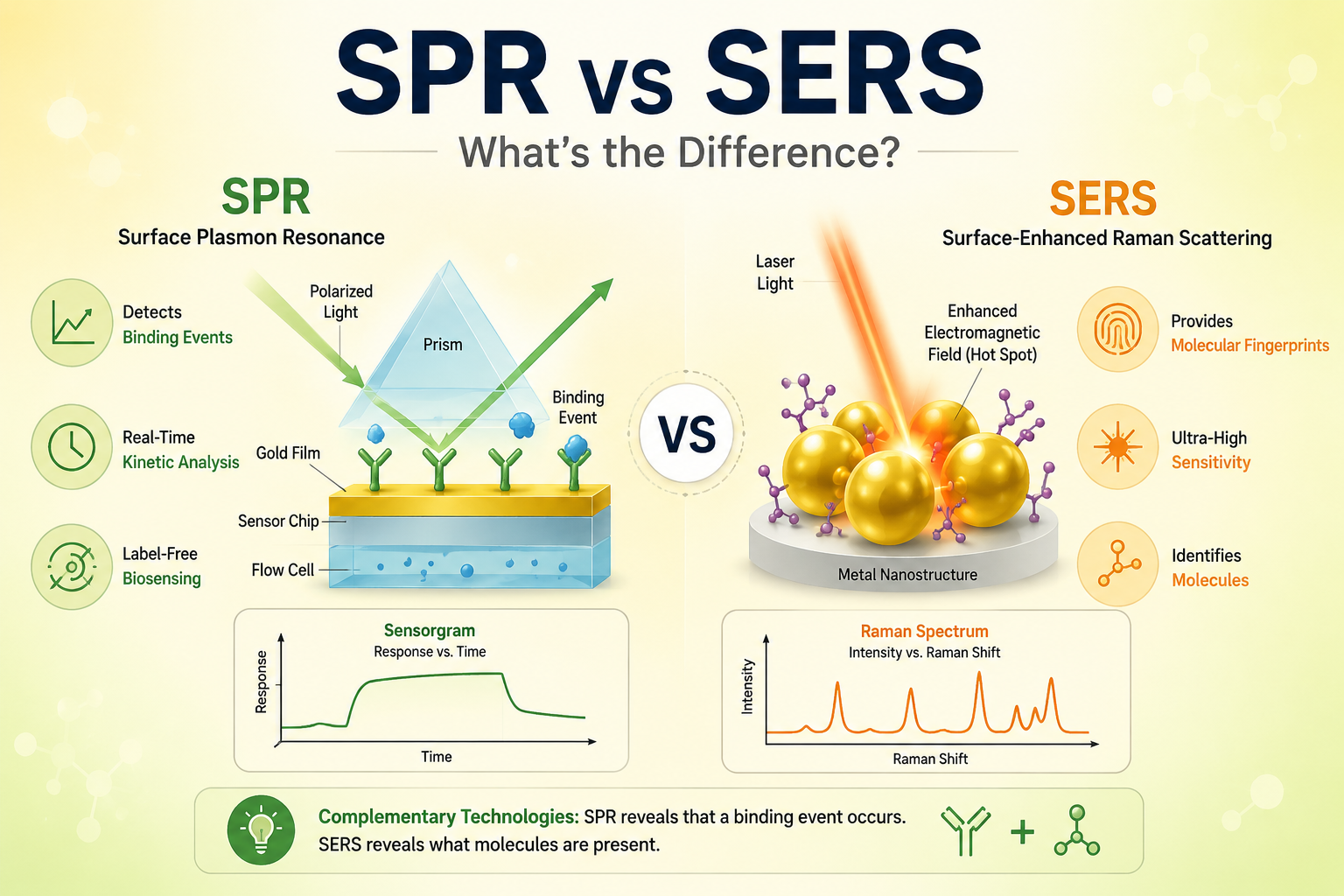
SPR vs SERS: Competitors or Complementary Technologies
Understanding Surface Plasmons
To understand both SPR and SERS and whether you need SPR vs SERS in your application, we first need to understand surface plasmons.
Metals such as gold and silver contain large numbers of free conduction electrons. When light interacts with a metallic surface under appropriate conditions, these electrons can collectively oscillate in response to the electromagnetic field of the incident light. These collective electron oscillations are known as plasmons.
When plasmons exist at the interface between a metal and a dielectric material, such as air, water, or glass, they are called surface plasmons. The resonance condition that occurs when incident light efficiently excites these oscillations is known as surface plasmon resonance.
The resulting electromagnetic interactions can be extremely sensitive to the local environment and can dramatically amplify optical signals. These properties form the foundation of both SPR and SERS technologies.
For plasmons to be excited, several conditions must be satisfied. First, the wavelength of the incoming light must be close to the natural resonance frequency of the electron oscillations in the metal. Second, the metal must contain a high density of free conduction electrons, which is why noble metals such as gold and silver are commonly used in plasmonic devices.
What Is Surface Plasmon Resonance (SPR)?
Surface Plasmon Resonance is an optical sensing technique that measures changes occurring near a metal surface. The most common SPR systems use a thin gold film deposited on a glass substrate.
When polarized light is directed through a prism onto the metal film at a specific angle, surface plasmons can be excited. At resonance, a portion of the light energy is transferred into the plasmon mode, producing a measurable dip in reflected light intensity.
One subtle but important requirement for exciting surface plasmons is known as momentum matching. While a photon and a surface plasmon may have the same energy, they do not necessarily have the same momentum. In fact, a propagating surface plasmon at a metal-dielectric interface possesses a larger wavevector than a photon traveling through free space. For efficient coupling to occur, the component of the photon’s momentum parallel to the metal surface must match the plasmon momentum.
The wavevector of a photon in free space is:

In a typical SPR system, a prism with refractive index n is used to increase the photon’s effective momentum. Inside the prism, the wavevector becomes:

When light strikes the metal film at an angle θ, only the component of momentum parallel to the surface contributes to plasmon excitation:
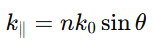
By carefully selecting the prism material and illumination angle, this parallel momentum can be made equal to the momentum of the surface plasmon polariton (SPP):
When this condition is satisfied, light can efficiently transfer its energy into a surface plasmon mode, producing the resonance phenomenon that underpins SPR sensing. This requirement also explains why SPR instruments rely on prisms, gratings, or waveguides rather than simply shining light directly onto a metal film.
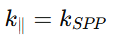
The resonance condition is highly sensitive to the refractive index near the metal surface. When molecules bind to the surface, the local refractive index changes, causing the resonance angle or resonance wavelength to shift.
This property makes SPR an exceptionally powerful label-free sensing technology.
Researchers can monitor biomolecular interactions in real time without fluorescent labels or chemical markers. The technique allows direct observation of:
- Antibody-antigen interactions
- Protein binding events
- DNA hybridization
- Drug-target interactions
- Cell-surface interactions
Rather than identifying a molecule directly, SPR detects the presence and quantity of material accumulating near the sensor surface.
How SPR Sensors Work
A typical SPR biosensor consists of several components:
- Light source
- Optical coupling system
- Thin metallic film
- Functionalized sensing surface
- Detector
The sensor surface is often coated with capture molecules designed to bind specific targets. As analyte molecules bind to the surface, the resonance condition shifts.
By monitoring these shifts over time, researchers can determine:
- Binding affinity
- Association rates
- Dissociation rates
- Molecular concentration
This capability has made SPR a standard tool in pharmaceutical research, life sciences, and biotechnology laboratories worldwide.
What Is Surface-Enhanced Raman Scattering (SERS)?
Surface-Enhanced Raman Scattering is a spectroscopic technique that dramatically amplifies Raman signals from molecules located near metallic nanostructures.
Raman spectroscopy itself is a powerful analytical method that provides molecular fingerprints based on vibrational energy levels. However, conventional Raman scattering is inherently weak. Only a tiny fraction of incident photons undergo Raman scattering, making trace detection challenging.
SERS overcomes this limitation through plasmonic enhancement.
When molecules are positioned near metallic nanoparticles or nanostructured surfaces, localized plasmon resonances create intense electromagnetic fields. These fields can increase Raman scattering signals by factors ranging from millions to billions. As a result, SERS can detect extremely low concentrations of analytes and, in some cases, even individual molecules.
Raman scattering occurs when incident photons interact with molecular vibrations, causing a small fraction of the scattered light to shift in frequency. The intensity of the Raman signal is proportional to the square of the induced molecular polarization:

where P is the induced polarization, α is the molecular polarizability, and E is the local electric field experienced by the molecule.
The intensity of Raman scattering scales approximately as:
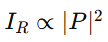
Combining these relationships gives:
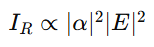
In conventional Raman spectroscopy, the local field E is simply the incident optical field. However, when a molecule is located near a plasmonic nanoparticle or nanostructured metal surface, localized surface plasmons can dramatically amplify the electromagnetic field. If the local field enhancement factor is
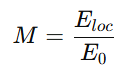
the SERS enhancement factor is approximately:
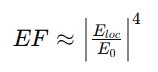
This relationship is commonly known as the E⁴ rule and represents the fundamental reason behind the extraordinary sensitivity of SERS.
Unlike SPR, which measures refractive index changes, SERS provides detailed chemical and molecular information.
The Role of Localized Surface Plasmon Resonance
The plasmonic mechanism responsible for SERS is typically Localized Surface Plasmon Resonance (LSPR).
While conventional SPR involves propagating plasmon waves traveling along a continuous metal surface, LSPR occurs in metallic nanoparticles and nanostructures where electron oscillations remain confined to a small region.
Examples include:
- Gold nanoparticles
- Silver nanoparticles
- Nanorods
- Nanostars
- Nanoantennas
- Nanogap structures
These structures can generate highly concentrated electromagnetic fields known as “hot spots.” When a molecule resides within a hot spot, both the incident and scattered electromagnetic fields are amplified, leading to massive Raman signal enhancement. This electromagnetic enhancement mechanism is responsible for the majority of the SERS effect.
SPR vs SERS: Key Differences
Although SPR and SERS share common plasmonic origins, they differ significantly in operation and output.
SPR Measures Surface Binding
SPR detects changes in refractive index caused by material accumulating near a sensing surface.
The technique answers questions such as:
- Is binding occurring?
- How much material has bound?
- How fast is the interaction?
SPR is primarily concerned with monitoring molecular interactions.
SERS Identifies Molecules
SERS measures enhanced Raman spectra and provides molecular fingerprints.
The technique answers questions such as:
- What molecule is present?
- What chemical species are in the sample?
- How does molecular composition change?
SERS focuses on molecular identification and chemical characterization.
SPR Produces Kinetic Information
SPR excels at measuring binding kinetics and interaction dynamics. Researchers can monitor association and dissociation processes in real time and calculate quantitative binding parameters.
SERS Produces Spectral Information
SERS generates vibrational spectra that reveal molecular structure and composition. The resulting data can distinguish between chemically similar compounds that might appear identical using other sensing methods.
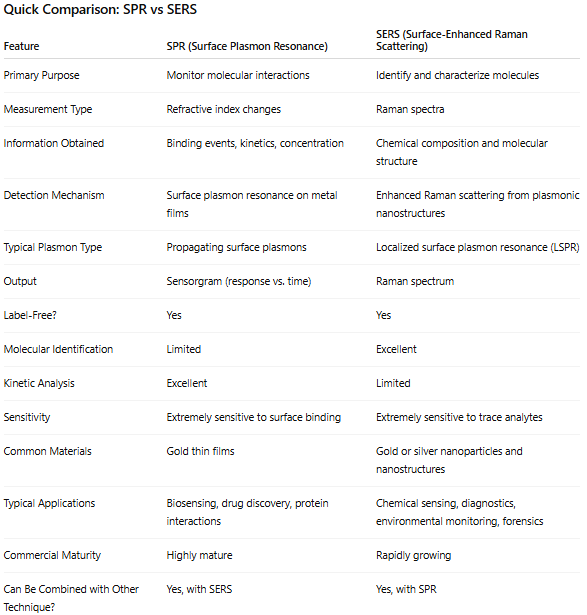
Table 1. SPR vs SERS – key differences between the two techniques.
While both techniques rely on plasmonic effects at metallic surfaces, they answer fundamentally different questions. SPR is primarily concerned with whether molecules are interacting and how strongly they bind, whereas SERS focuses on determining exactly which molecules are present. For this reason, the two methods are often viewed as complementary rather than competing technologies.
SPR vs SERS: Comparing SPR and SERS Performance
Sensitivity is often discussed when comparing the two technologies, but sensitivity means different things in each context.
SPR can detect extremely small changes in surface mass and refractive index. It is highly effective for monitoring molecular binding events.
SERS, however, can detect extraordinarily low concentrations of specific molecules because of its signal amplification capabilities.
In practical terms:
- SPR is generally better for studying interactions.
- SERS is generally better for identifying substances.
The choice depends on the analytical question being asked.
Advantages of SPR
SPR offers several important advantages:
Label-Free Detection
No fluorescent tags or molecular labels are required.
Real-Time Monitoring
Binding events can be observed continuously as they occur.
Quantitative Kinetic Analysis
Researchers can calculate binding constants and reaction rates.
Mature Technology
Commercial SPR instruments are widely available and supported by established methodologies.
Limitations of SPR
Despite its strengths, SPR has limitations.
Limited Chemical Specificity
SPR can detect that binding has occurred but often cannot identify the exact chemical composition of the bound material.
Surface Dependence
Measurements occur only within a short distance from the sensor surface.
Potential Nonspecific Binding
Background interactions can sometimes complicate interpretation.
Advantages of SERS
SERS provides several unique benefits.
Molecular Fingerprinting
Each molecule produces a characteristic Raman spectrum.
Exceptional Sensitivity
Trace analytes can often be detected at extremely low concentrations.
Multiplexing Capability
Multiple compounds can be identified simultaneously from a single spectrum.
Minimal Sample Preparation
Many applications require little or no labeling.
Limitations of SERS
SERS also presents several challenges.
Substrate Reproducibility
Producing highly uniform SERS substrates can be difficult.
Signal Variability
Enhancement depends strongly on nanoparticle geometry and hot-spot distribution.
Complex Spectral Analysis
Interpreting Raman spectra often requires specialized expertise.
Applications of SPR
SPR has become a cornerstone technology in life science research and biosensing.
Common applications include:
- Drug discovery
- Antibody characterization
- Protein interaction studies
- Clinical diagnostics
- Food safety testing
- Environmental monitoring
The pharmaceutical industry relies heavily on SPR for screening drug candidates and evaluating molecular interactions.
Applications of SERS
SERS is widely used when molecular identification is critical.
Important applications include:
- Chemical sensing
- Explosive detection
- Environmental pollutant monitoring
- Food contamination analysis
- Medical diagnostics
- Pathogen detection
- Forensic investigations
Researchers are increasingly exploring SERS for liquid biopsy analysis, cancer diagnostics, and rapid pathogen identification.
Can SPR and SERS Be Combined?
Rather than viewing SPR and SERS as competing technologies, many researchers now combine them into hybrid sensing platforms.
Such systems can simultaneously provide:
- Binding information from SPR
- Molecular identification from SERS
For example, a biosensor may first detect the presence of a binding event using SPR and then identify the captured molecule using SERS.
This combination offers both quantitative interaction analysis and chemical specificity.
Hybrid SPR-SERS platforms represent an active area of research in advanced biosensing and nanophotonics.
Future Trends in Plasmonic Sensing
Advances in nanofabrication, materials science, and machine learning are rapidly expanding the capabilities of both SPR and SERS.
Researchers are developing:
- Integrated photonic sensors
- Portable point-of-care devices
- AI-assisted spectral analysis systems
- Nanostructured plasmonic chips
- Lab-on-a-chip diagnostic platforms
As these technologies mature, plasmonic sensing is expected to play an increasingly important role in healthcare, environmental monitoring, industrial process control, and security applications.
Conclusion
SPR and SERS both exploit plasmonic phenomena, but they address fundamentally different analytical challenges. SPR is primarily a label-free sensing technique used to monitor molecular interactions through refractive index changes near a metal surface. It excels at measuring binding kinetics, affinity, and concentration. SERS, by contrast, uses plasmonic enhancement to amplify Raman scattering signals, enabling highly sensitive molecular identification and chemical analysis.
The two techniques are not competitors but complementary tools. SPR tells researchers that a molecular interaction has occurred, while SERS reveals the molecular identity of the interacting species. Together, they provide a powerful toolkit for modern biosensing, spectroscopy, nanophotonics, and analytical science. As plasmonic technologies continue to evolve, the combination of SPR and SERS is likely to enable a new generation of highly sensitive, information-rich sensing platforms capable of transforming diagnostics, environmental monitoring, and advanced scientific research.


