
The topic of this article is plant health monitoring using photonics-based techniques.
Courtesy of MDPI
This article is brought to you by Ocean Optics, a leading developer and manufacturer of spectrometry solutions
Plant Health Monitoring – Introduction
Plant health plays a central role in food security, climate stability, and sustainable agriculture. As the global population expands and environmental stresses intensify, scientists and engineers are seeking technologies that can monitor crops noninvasively and in real time. Photonics, the science of light generation and detection, is revolutionizing how we study plants and do plant health monitoring. By examining how light interacts with plant tissues, photonics provides valuable information about photosynthesis efficiency, water stress, nutrient status, and even disease onset.
Unlike traditional agronomic methods that require destructive sampling, photonic tools enable continuous, contactless monitoring, offering an early warning system for environmental stress and physiological imbalance. This article explores how photonics is being used for plant health monitoring, improving agricultural productivity, and promoting environmental sustainability.
How Photonics Transforms Agricultural Science
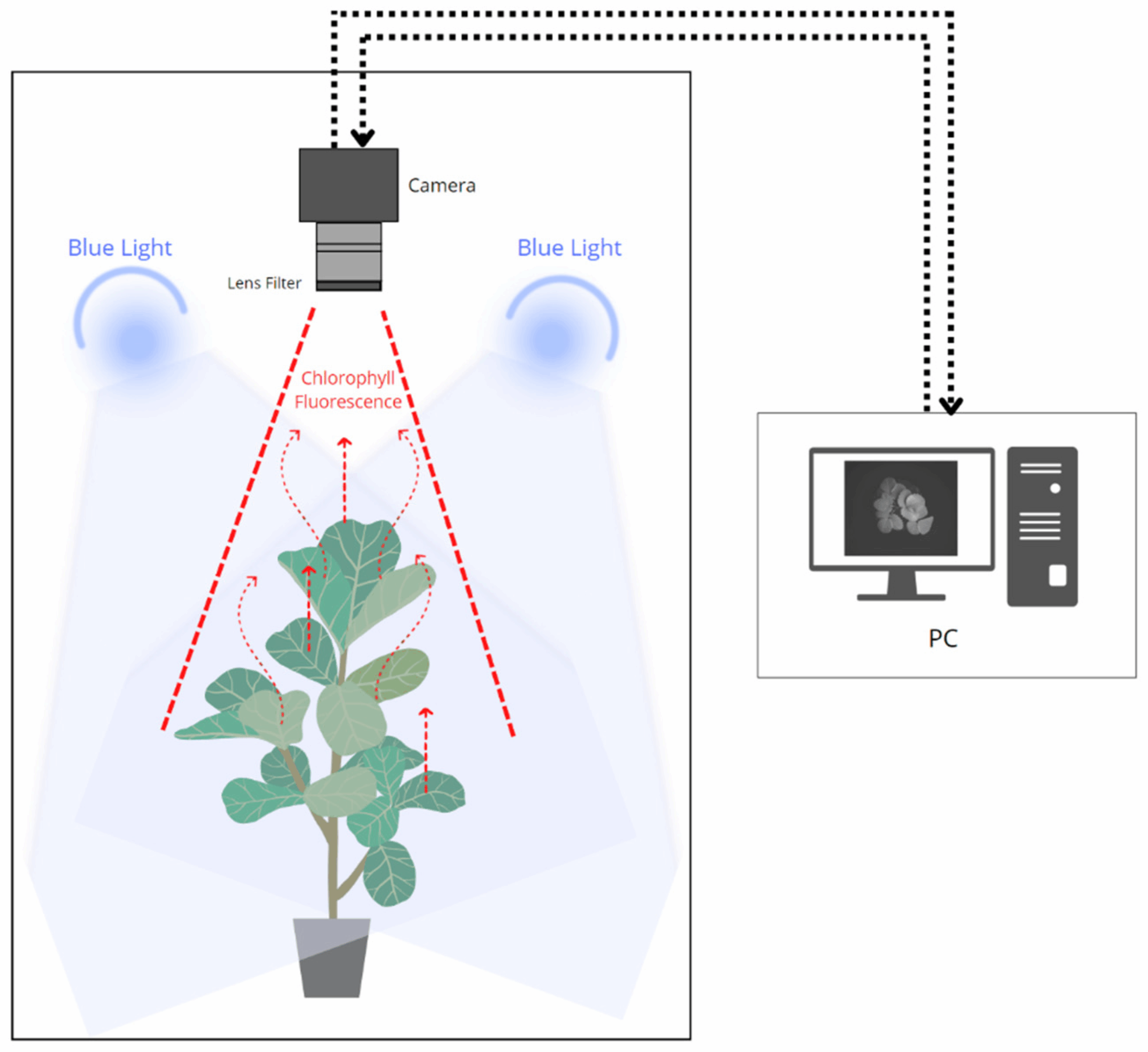
Photonics offers a new language for interpreting plant physiology. When light interacts with leaves, part of it is absorbed by pigments like chlorophyll, another part is scattered or reflected, and a small fraction is re-emitted as fluorescence. Each of these signals carries physiological information.
Absorption spectra reveal the presence and concentration of pigments such as chlorophylls and carotenoids.
Reflectance and transmittance spectra indicate structural characteristics of leaves and water content.
Fluorescence provides insight into photosynthetic performance and stress response.
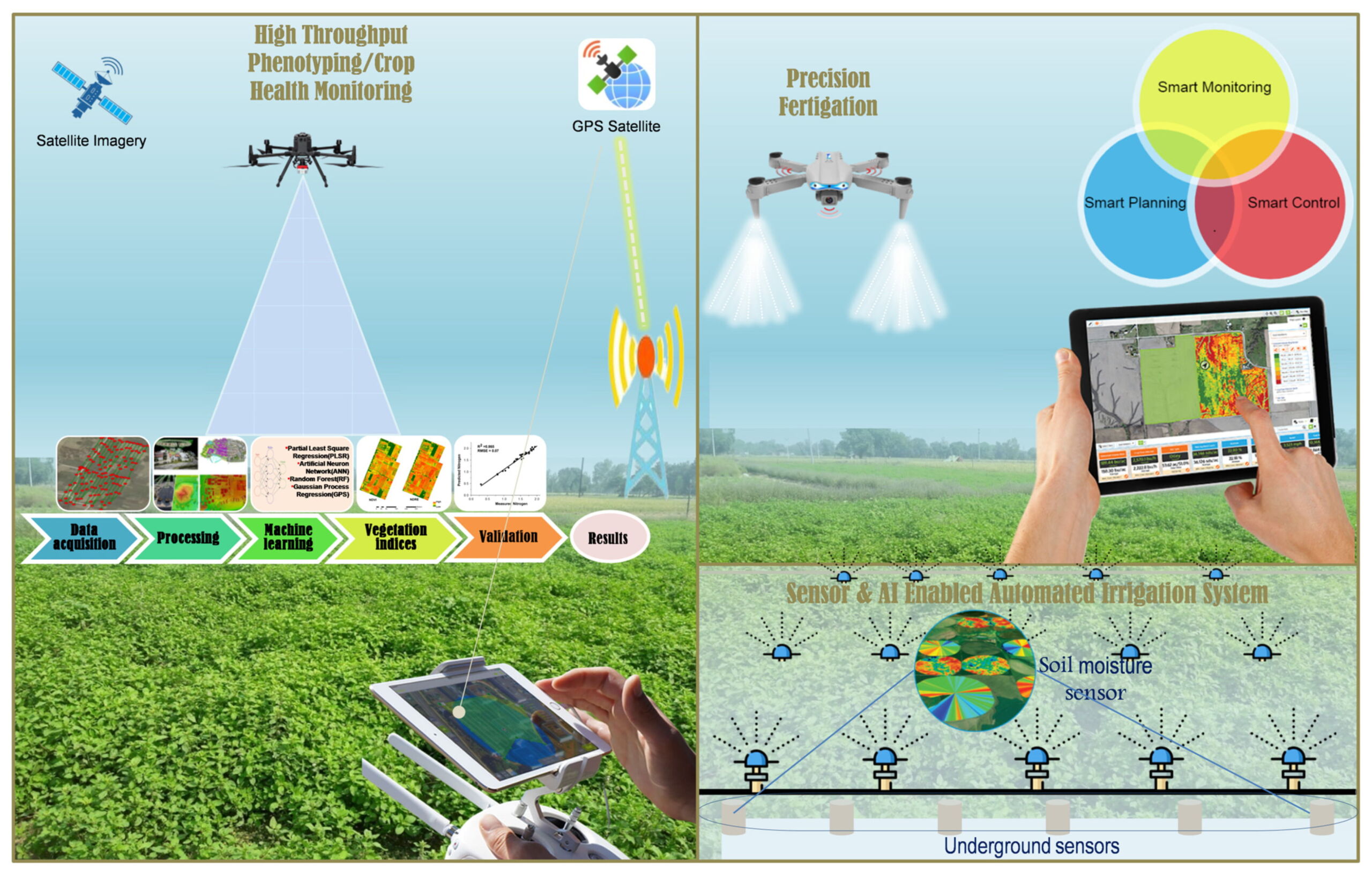
Over the last decade, photonic technologies ranging from compact spectrometers to drone-mounted hyperspectral cameras have become indispensable in precision agriculture. These tools allow farmers and researchers to assess crop health remotely, optimize irrigation and fertilization, and detect diseases before they spread.
Optical Techniques for Plant Health Monitoring
Different optical methods serve different diagnostic purposes. The table below summarizes key techniques used for plant health analysis, their measurable parameters, and primary applications.
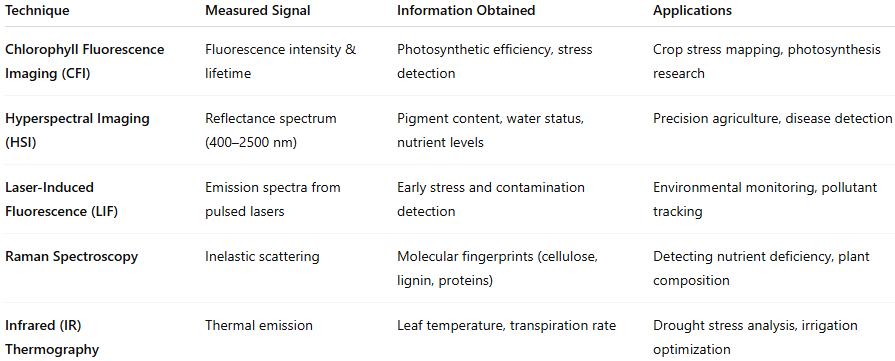
These complementary approaches allow a comprehensive assessment of plant function. When combined with data analytics and machine learning, they can uncover subtle physiological changes before visual symptoms appear.
Courtesy of MDPI
Advances in Spectroscopy and Hyperspectral Imaging
Among all photonic tools, spectroscopy and hyperspectral imaging are leading the charge in precision agriculture. Spectroscopy measures how much light is absorbed or reflected at specific wavelengths, revealing chemical and structural information about plant tissues.
Visible and near-infrared (VNIR) spectroscopy is particularly valuable for assessing chlorophyll and water content. Researchers at Wageningen University and NASA’s Jet Propulsion Laboratory have demonstrated hyperspectral systems that can predict photosynthetic efficiency at the canopy scale, providing early indicators of stress due to drought, heat, or nutrient imbalance.
Hyperspectral cameras mounted on drones or satellites capture hundreds of narrow spectral bands across large fields. This generates a “spectral fingerprint” for each pixel, which can then be analyzed to map crop health and detect anomalies. Modern data pipelines employ AI algorithms to translate these spectra into actionable insights for farmers, such as identifying nitrogen deficiency or disease hotspots.
Meanwhile, shortwave infrared (SWIR) spectroscopy (1000–2500 nm) penetrates deeper into leaf tissue, offering additional sensitivity to water and lignin content. Combined with visible-light imaging, SWIR enables the detection of subtle physiological variations long before they manifest visually.
Laser-Induced Fluorescence and Raman-Based Diagnostics
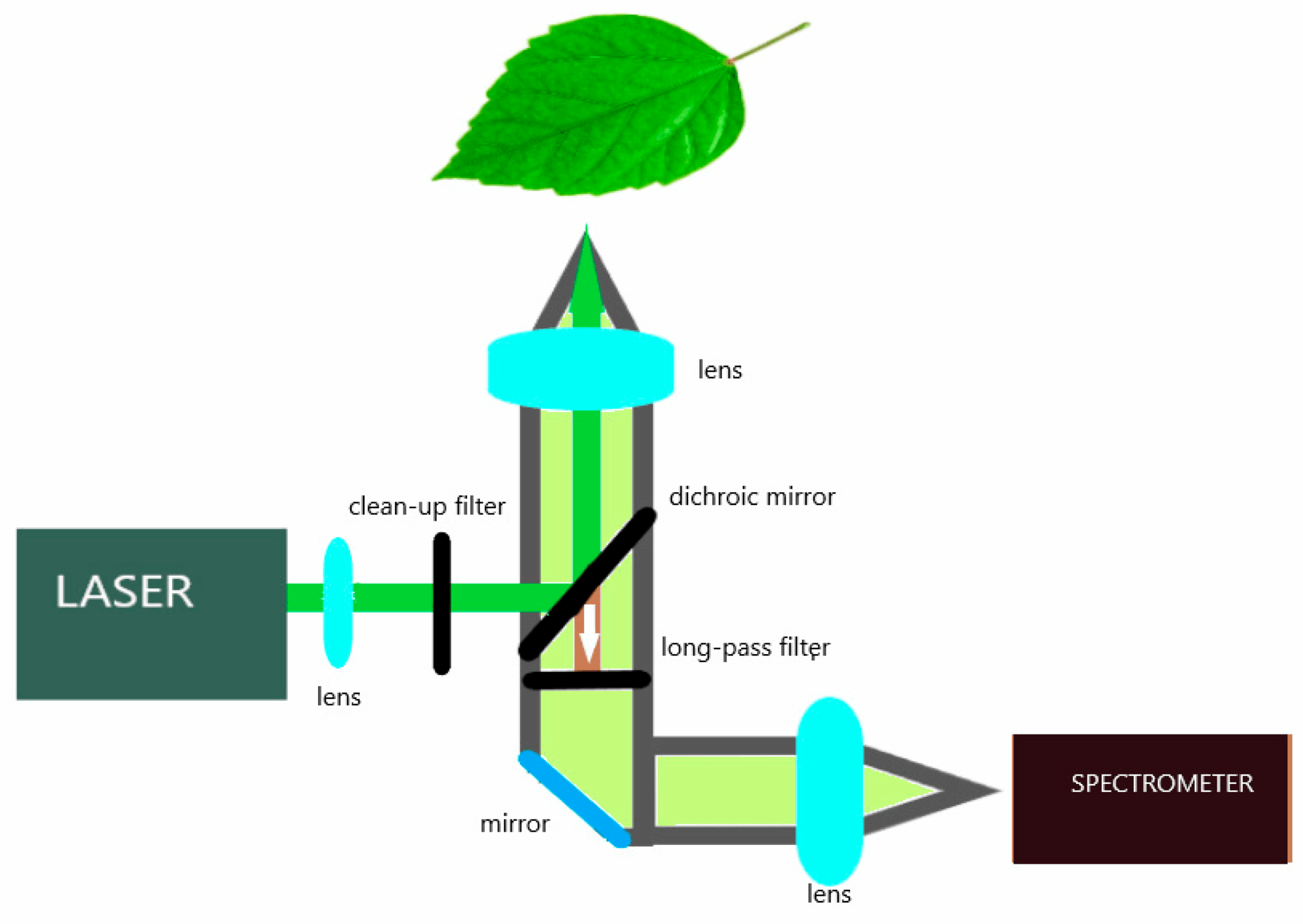
Laser-induced fluorescence (LIF) systems provide a rapid and sensitive means of probing photosynthetic pigments. When a laser excites chlorophyll molecules, they emit light at characteristic wavelengths, typically around 685 nm and 740 nm. The intensity and ratio of these emissions can reveal the efficiency of photosystem II and indicate early stress from pollutants, temperature fluctuations, or water scarcity.
Recent portable LIF systems, such as those developed by the European Space Agency for space-grown plants, can perform real-time, non-contact diagnostics. Similar instruments are now being used in greenhouse and field studies, where laser beams scan plant surfaces to detect photosynthetic inhibition or pathogen infection.
Raman spectroscopy complements fluorescence by providing molecular-level information. Using inelastic scattering of laser light, it can identify biochemical constituents like cellulose, lipids, and carotenoids. Raman-based sensors are increasingly employed to monitor nutrient uptake and the impact of fertilizers or pesticides at the molecular scale.
Courtesy of MDPI
Photonics Enabling Next-Generation Biosensing
Recent progress in integrated photonic sensors and fiber-optic biosensing is accelerating the evolution of plant monitoring technologies. Silicon photonics, long used in telecommunications, now serves as a powerful miniaturization platform for lab-on-chip plant sensors.
Researchers at the University of Cambridge and KAUST have demonstrated micro-ring resonator sensors capable of detecting volatile organic compounds (VOCs) emitted by plants under stress. These devices operate by measuring tiny shifts in optical resonance caused by molecular adsorption on the chip surface. Such compact sensors could one day be deployed directly in soil or leaf environments, providing round-the-clock monitoring of crop health.
In addition, fiber Bragg grating (FBG) sensors are being adapted for agricultural use. Originally designed for structural health monitoring, FBGs embedded in soil or plant stems can track micro-changes in temperature, humidity, and strain. When combined with optical interrogation units, these sensors offer a distributed sensing network that transmits real-time plant data through optical fibers.
Meanwhile, research in plasmonic biosensors and photonic crystal resonators aims to detect plant pathogens at the molecular level. Using localized surface plasmon resonance (LSPR), these systems enhance light–matter interaction, enabling label-free detection of bacterial or fungal infections before visible symptoms occur.
Integration with AI and IoT for Smart Agriculture
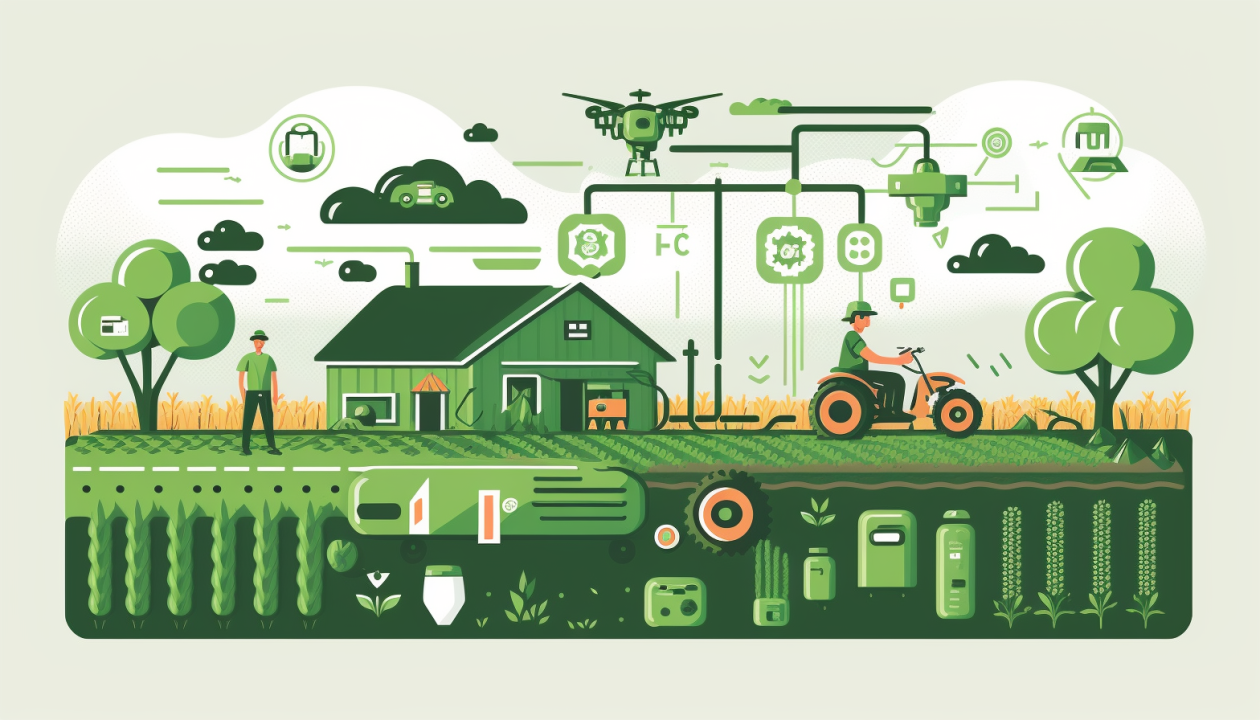
Photonics alone provides the raw data, but true agricultural intelligence comes from integrating optics with digital technologies such as AI, machine learning, and the Internet of Things (IoT).
AI algorithms can interpret complex spectral and fluorescence data, identifying stress patterns that human observers might miss. When photonic sensors are linked to IoT networks, farmers can receive automatic alerts on their smartphones, triggering targeted interventions such as adjusting irrigation or applying specific nutrients.
For instance, hyperspectral imaging systems on autonomous drones can capture field-wide data, which AI models then analyze to estimate chlorophyll content, canopy temperature, and yield potential. This synergy of photonics and data science is leading toward fully autonomous crop monitoring systems, capable of self-calibration, adaptive measurement, and predictive modeling.
Courtesy of LinkedIn
Challenges and Future Outlook
Despite significant advances, several challenges remain. Photonic instruments can be expensive and require calibration under varying environmental conditions. Atmospheric interference, changing illumination, and complex plant geometries complicate the interpretation of optical data.
Future efforts will focus on:
Cost reduction through integrated photonic chips and miniaturized sensors.
Improved calibration algorithms for field conditions.
Enhanced data fusion, combining optical, thermal, and soil sensor data.
Standardized spectral libraries for different crops and ecosystems.
As these technologies mature, photonics will become a cornerstone of sustainable agriculture, offering farmers precise, timely insights into plant physiology and ecosystem health.
Further Reading
Lichtenthaler, H. K. (1999). “Vegetation Stress: An Introduction to the Stress Concept in Plants.” Journal of Plant Physiology.
Govender, M. et al. (2009). “Review of hyperspectral remote sensing and its application in vegetation and water resource studies.” Water SA.
Meroni, M., & Colombo, R. (2006). “Leaf level chlorophyll fluorescence by laser-induced fluorescence.” Remote Sensing of Environment.
Ryu, Y. et al. (2019). “Advances in photonics-based plant monitoring.” Frontiers in Plant Science.
Behmann, J., et al. (2015). “Specim hyperspectral imaging in precision agriculture.” Computers and Electronics in Agriculture.


